

Different, But Still Findable
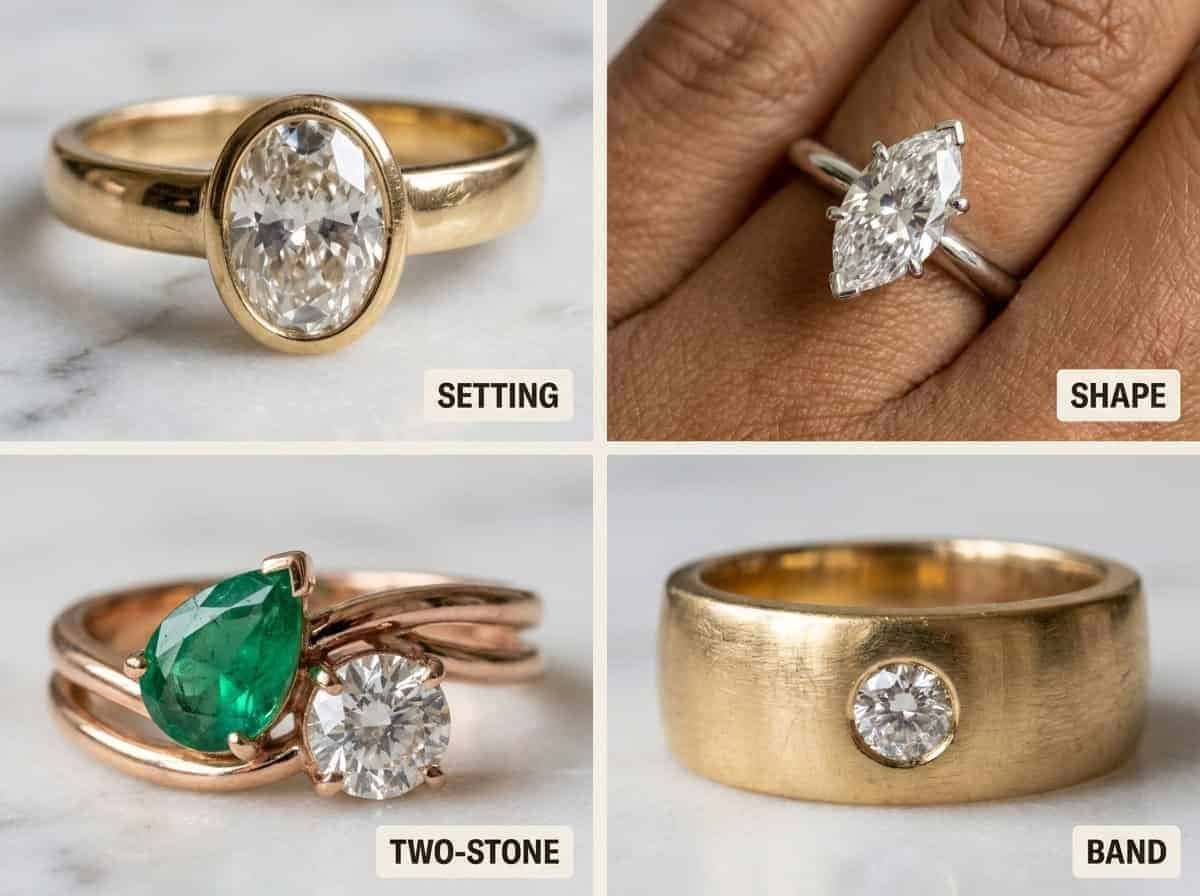
Wanting something unique is easy. Describing it to a jeweller is the hard part. That’s why every ring below is a real, named style you can search, price, and actually buy, rather than a vague idea of something different, and knowing the correct term is genuinely the difference between finding your ring and scrolling for months. The good news is that 2026 has been an unusually good year for this. The whole market has shifted toward individuality: bezel settings replacing traditional claws, east-west orientations turning familiar stones sideways, antique cuts with softer facets, chunky sculptural bands replacing dainty pavé, and colour appearing where a white diamond used to be automatic. Lab-grown stones have widened what’s possible at every budget. I’ve gathered 22 unique engagement rings organized by what actually makes each one different, with what defines it, who it suits, and an honest note. Save the names, not just the pictures, because the names are what get you the ring.
How to Shop for Unique Without Regret
Four things worth knowing before you fall in love. Learn the vocabulary, because a jeweller can source almost anything if you can name the setting, the cut, and the metal, and ‘something different’ will get you shown solitaires. Consider daily wear honestly, since bezels and low profiles are the most snag-resistant, high-set stones and exposed points on marquise or pear shapes need more care, and some settings are harder to resize later. Ask about lab-grown versus natural early, as lab-grown diamonds have let couples prioritize both design and size, and the answer changes your budget more than any other single decision. And see it on a real hand, in daylight, because photographs flatter every ring and only your own hand tells you about proportion, comfort, and whether the stone sits where you want it. Then choose the one you’d still want if nobody ever commented on it.
Direction 1: Settings That Change Everything
1. The East-West Setting
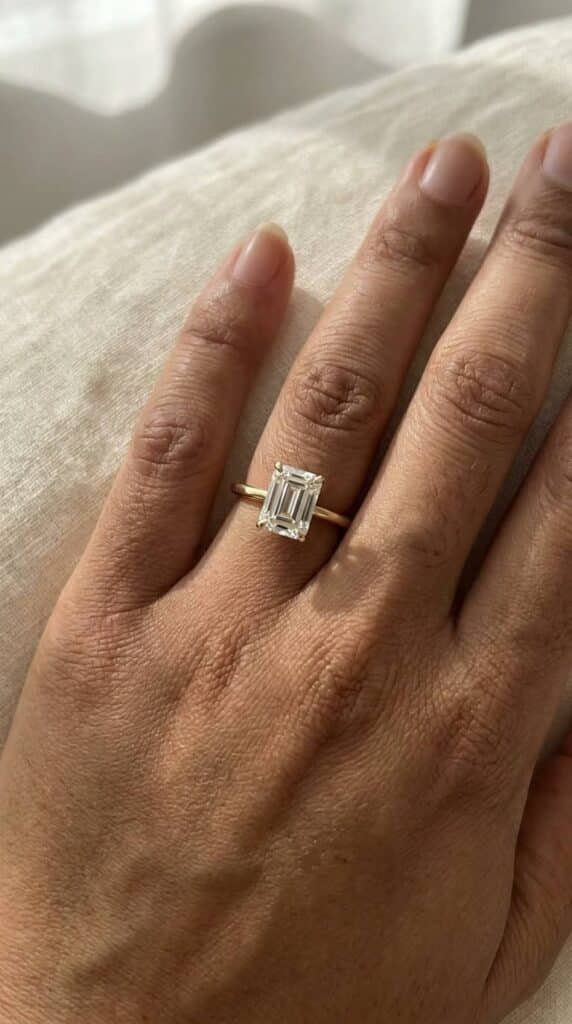
The centre stone is set horizontally across the band instead of vertically, and it transforms a completely familiar shape into something that reads modern. It’s one of the most sought-after styles of 2026, boosted by Zendaya’s engagement ring, though the orientation actually dates to 1920s Art Deco design. It works best with elongated cuts, emerald, oval, marquise, or elongated cushion, where the sideways placement genuinely changes the silhouette.
2. The Bezel Setting
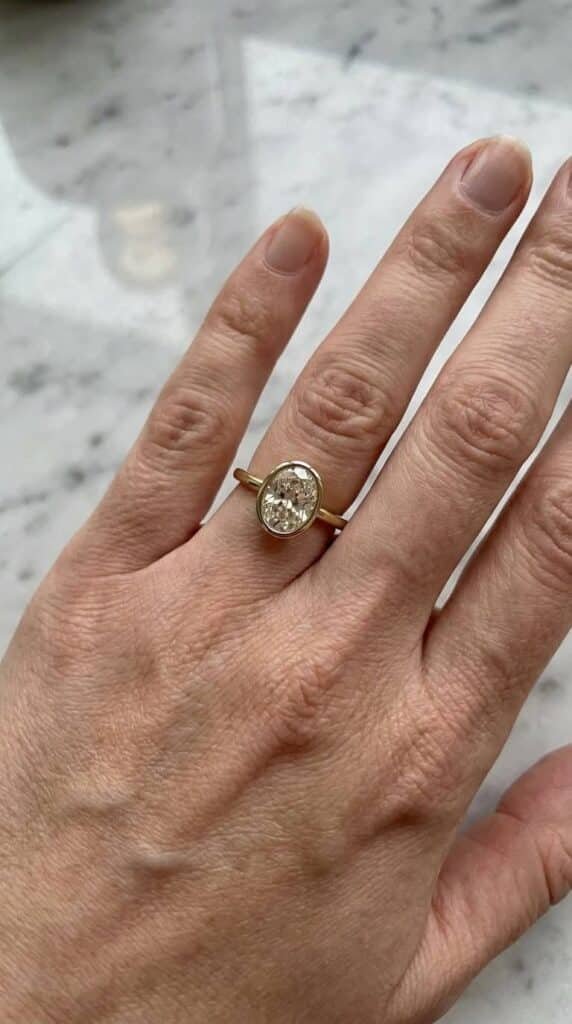
A thin rim of metal encircles the entire stone instead of holding it with claws. Jewellers report clients moving toward bezels as a cleaner alternative to traditional prongs, and they strike a rare balance between modern looks and everyday practicality. It’s the most snag-resistant setting there is, which matters if you work with your hands, and a gold bezel frame flatters a stone beautifully.
3. The Bombé or Sculptural Setting
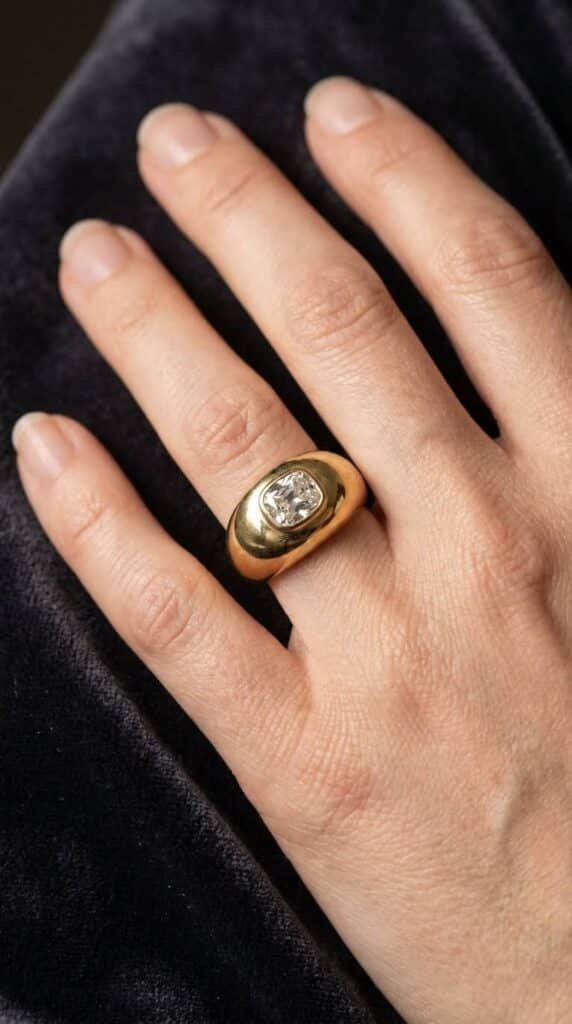
The metal swells and curves around the stone in a domed, sculpted form so the setting itself is part of the design rather than a support. Miley Cyrus’s east-west cushion on a bombé setting is the reference point most couples bring in. It suits anyone who wants the ring to look designed rather than assembled.
4. The Hidden Halo
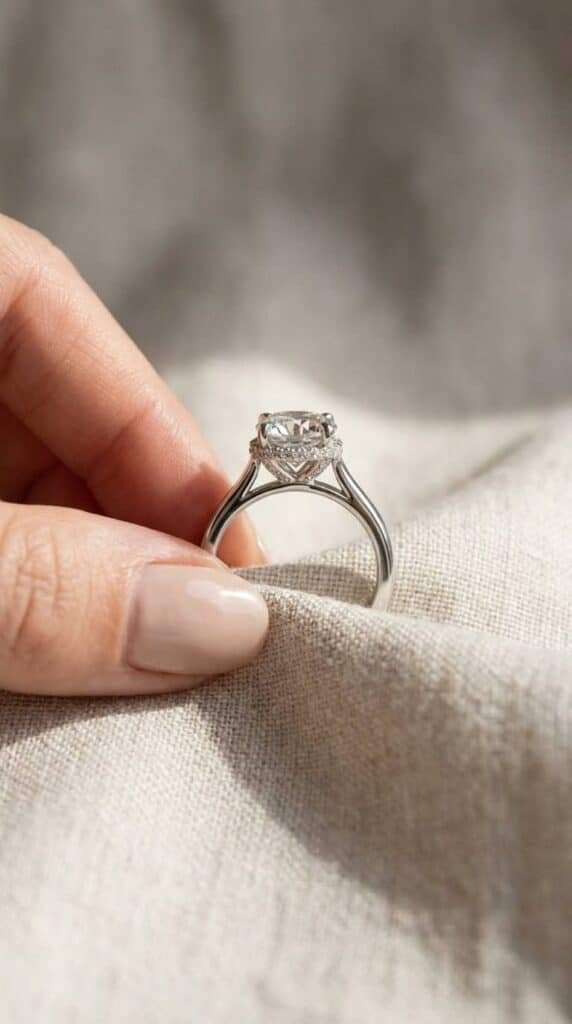
A ring of small stones sits underneath the centre stone where only you can see it, adding sparkle from the side profile without a visible halo from above. It’s the compromise for people who want the look of a solitaire from the top and something more from every other angle. Ask to see the profile view specifically, because that’s the entire point of it.
5. The Compass Setting
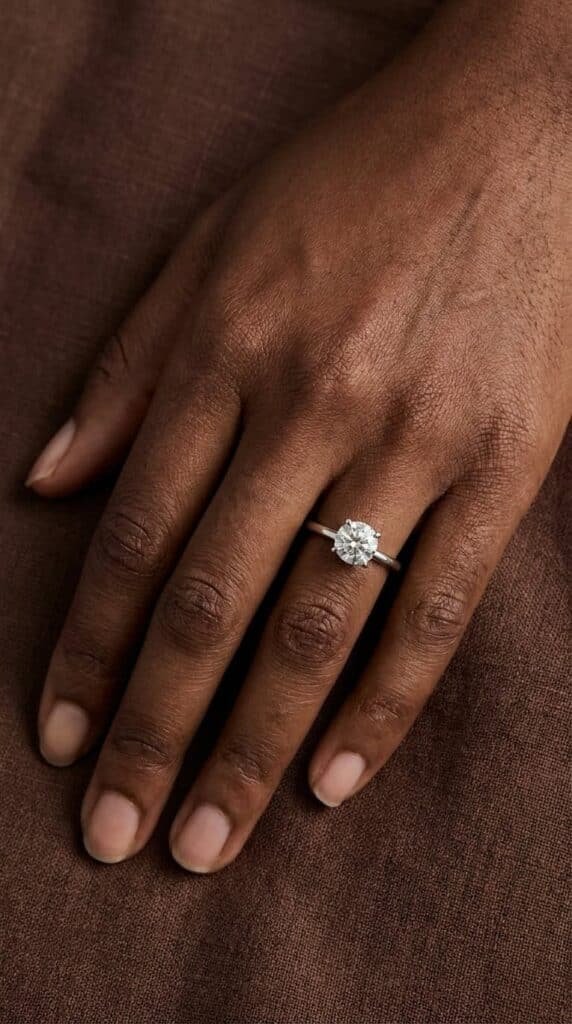
The prongs are positioned at north, south, east and west rather than at the diagonals, so the stone reads slightly rotated and more architectural. It’s a small change with a surprisingly strong effect, particularly on round and cushion stones. It’s also one of the least expensive ways to make a classic setting feel deliberate.
Direction 2: Stone Shapes That Stand Apart
6. The Marquise Cut
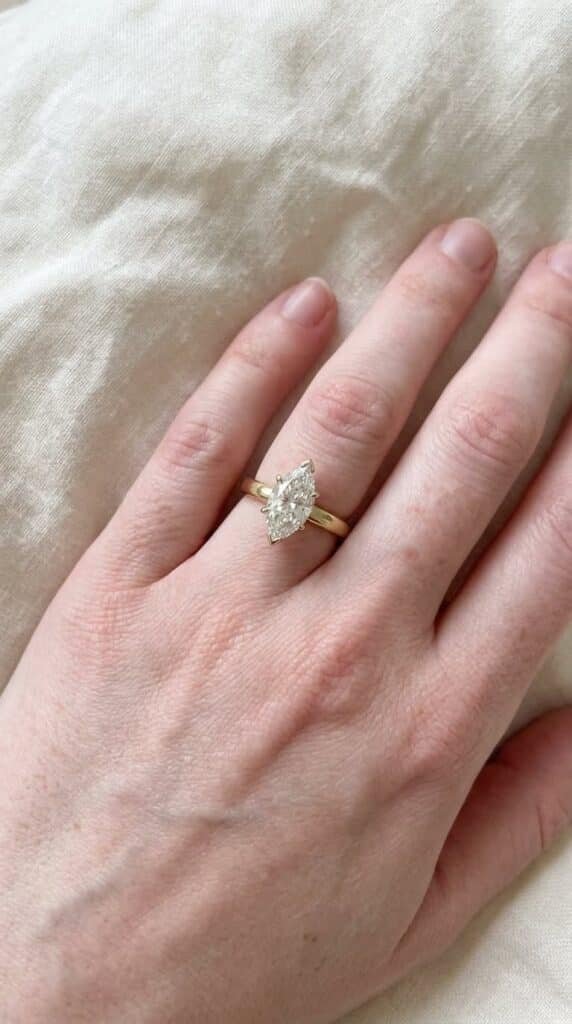
An elongated stone with tapered points at both ends, regal and dramatic, and genuinely back after decades out of favour. Selena Gomez’s marquise engagement ring sent couples looking for the shape, and it flatters the finger by drawing the eye lengthwise. The points need protective prongs, so ask how they’re secured.
7. The Elongated Cushion
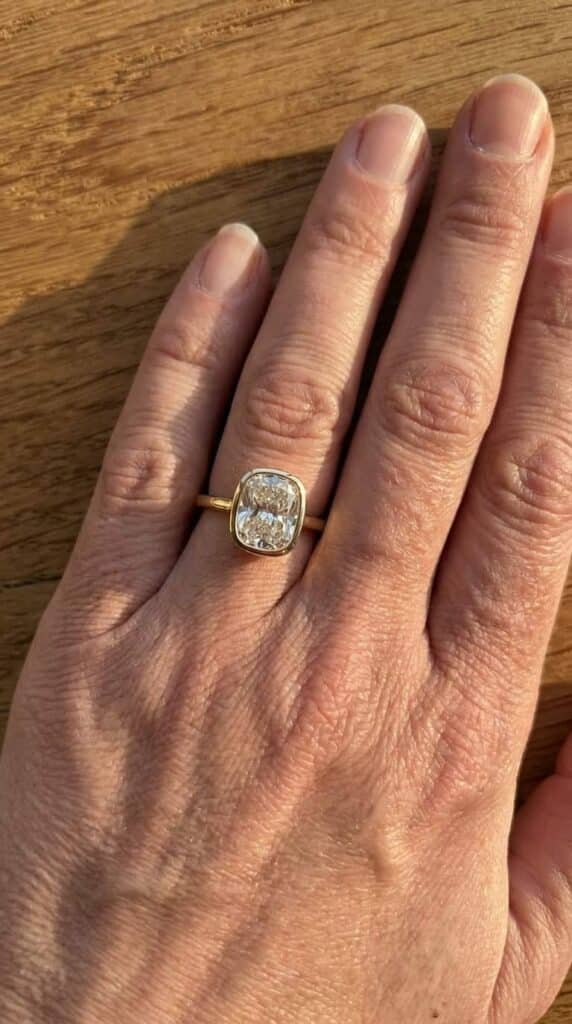
A cushion cut stretched longer than it is wide, with soft rounded corners and antique warmth. It’s a favourite for east-west settings because the length is what makes the horizontal placement work. It reads softer than an emerald cut and less expected than a standard cushion.
8. The Old Mine Cut
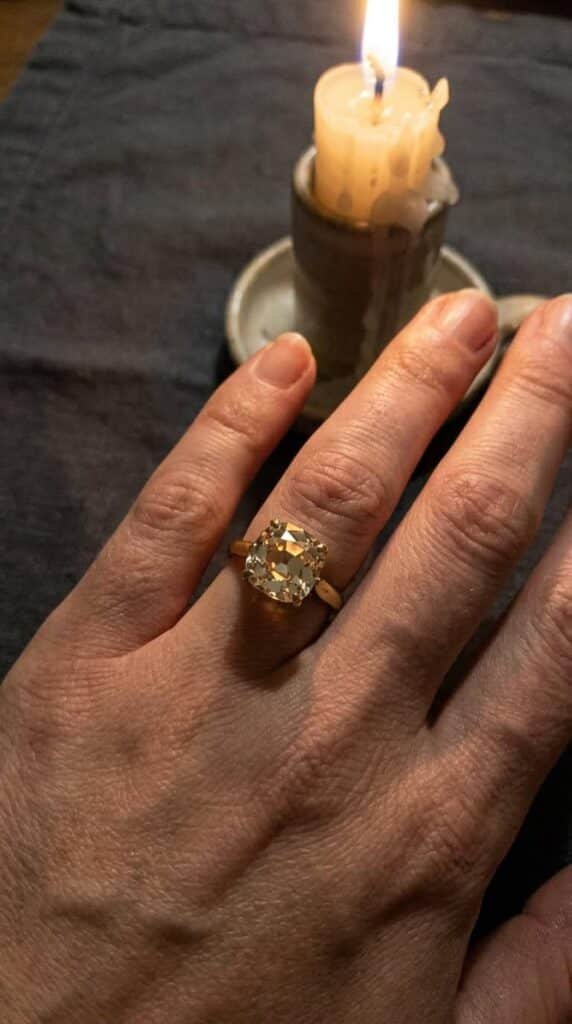
A historic cut with a squarish outline, high crown, small table and chunky facets that glow rather than flash, especially in candlelight. It became one of the most requested centre stones of 2026 after a very high-profile celebrity engagement. Modern jewellers now offer bespoke Old Mine cutting, so you no longer have to find an antique.
9. The Rose Cut
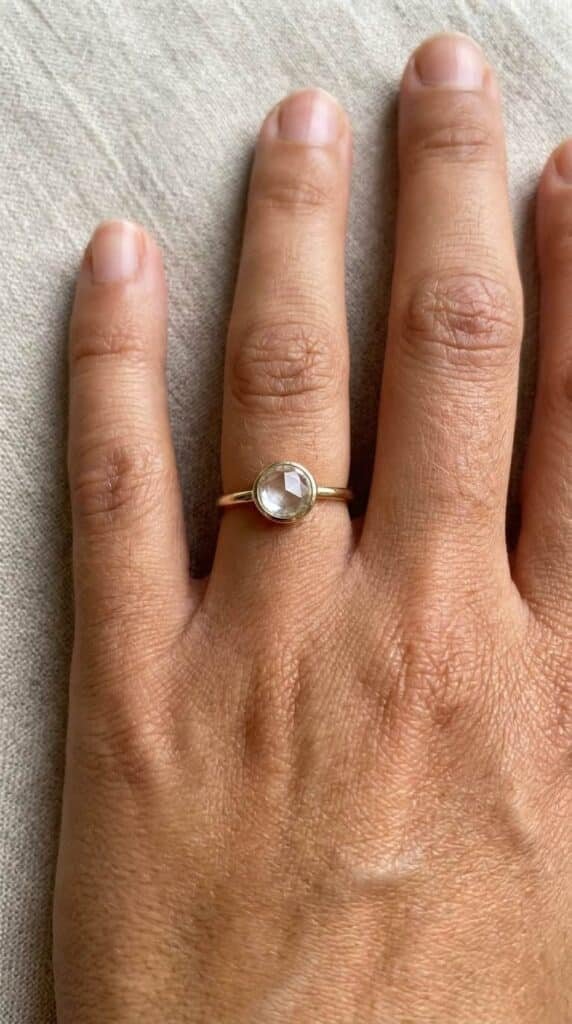
A flat-bottomed stone with a domed, faceted top and no pavilion beneath, giving a soft, watery shimmer instead of brilliance. It sits very low on the hand, which makes it quietly practical as well as unusual. It’s a strong choice for anyone who finds conventional diamond sparkle too much.
10. The Hexagon or Kite Cut
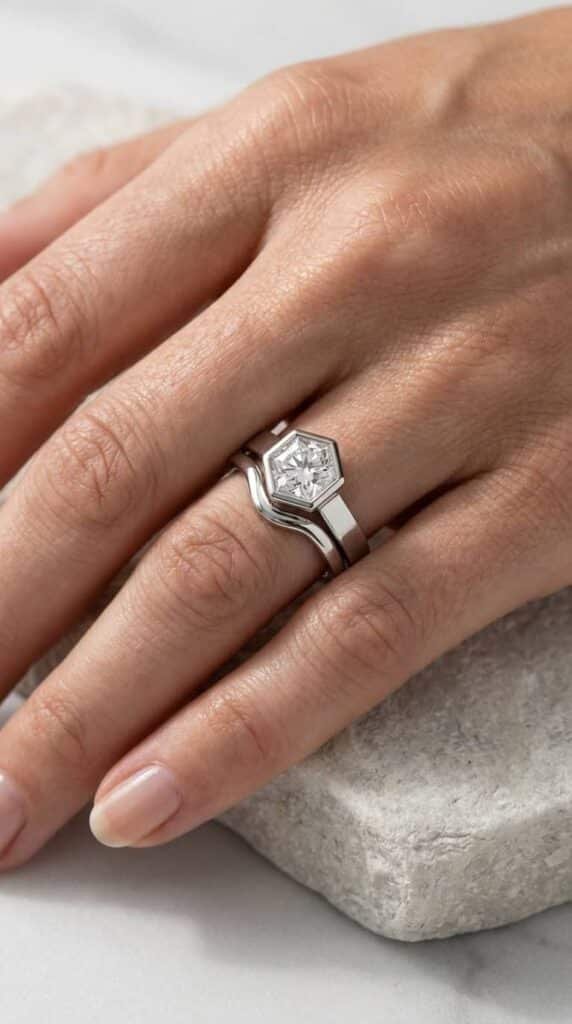
Geometric shapes with straight edges and hard angles, sitting firmly in the architectural end of the market. They pair naturally with bezel settings and Art Deco-inspired detailing. Because the outlines are less standard, ask about the matching wedding band early, not after.
Direction 3: Colour and Character Stones
11. The Blue Sapphire
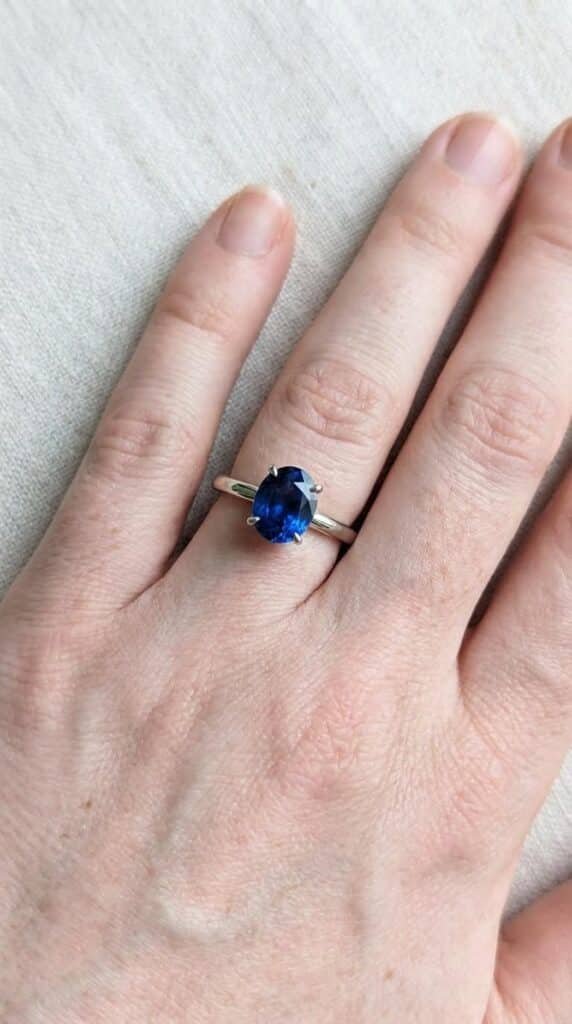
A deeply saturated blue sapphire is the most established coloured alternative there is, with real historical precedent behind it. Sapphire ranks just under diamond for hardness, which makes it one of the few coloured stones genuinely suited to daily wear. White metals sharpen the contrast dramatically.
12. The Emerald
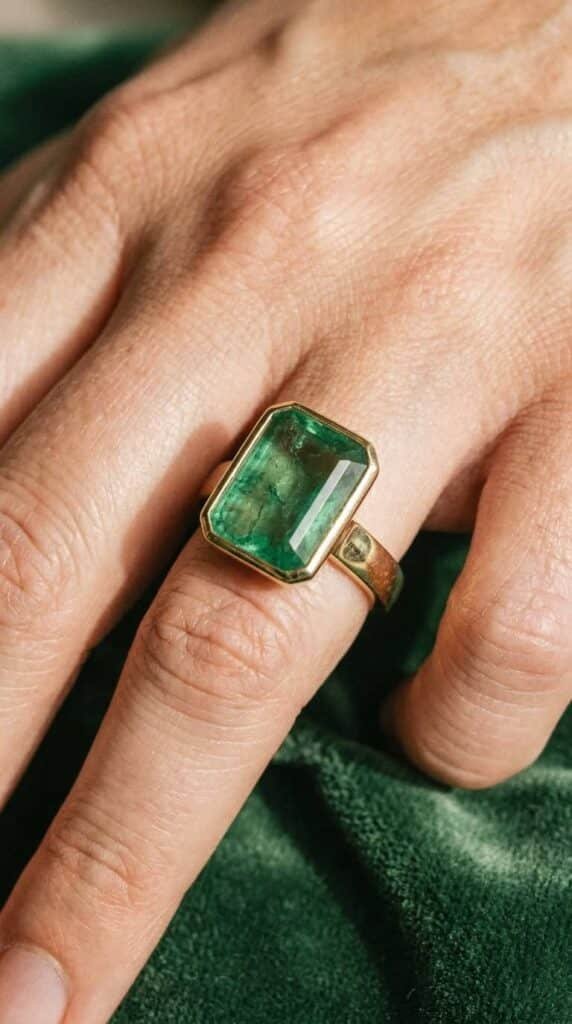
Rich green, unmistakable, and increasingly common as a centre stone as couples move away from automatic white diamonds. Emeralds are softer and more included than sapphires, so a protective setting like a bezel matters here more than anywhere else. Ask specifically about care, they don’t love ultrasonic cleaning.
13. The Salt-and-Pepper Diamond
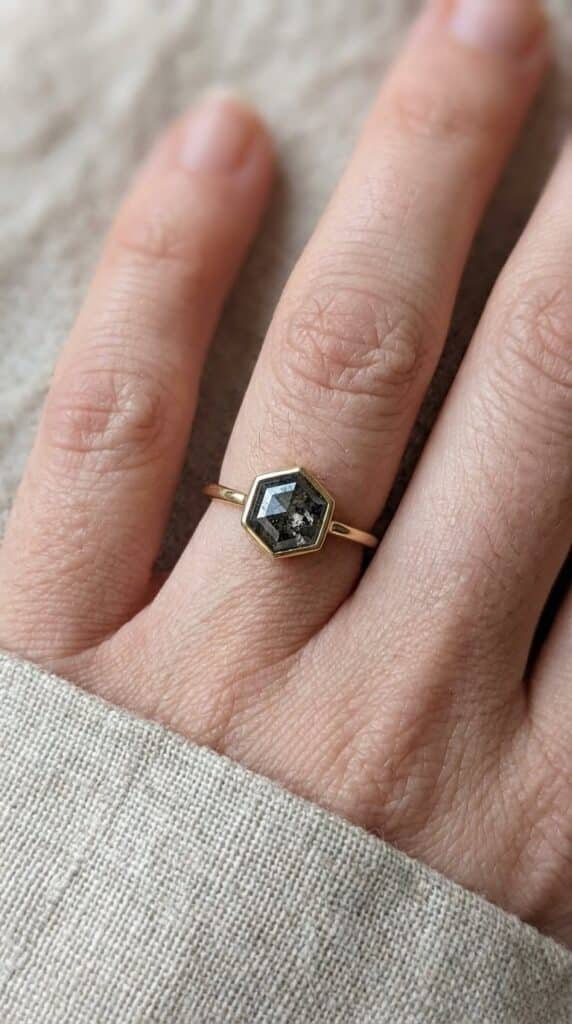
A diamond full of visible black and white inclusions, so each one is genuinely unrepeatable, with a smoky, galaxy-like appearance instead of clarity. It’s the antithesis of the flawless-stone tradition and priced very differently as a result. Look at several in person, the variation between stones is enormous.
14. The Champagne or Honey Diamond
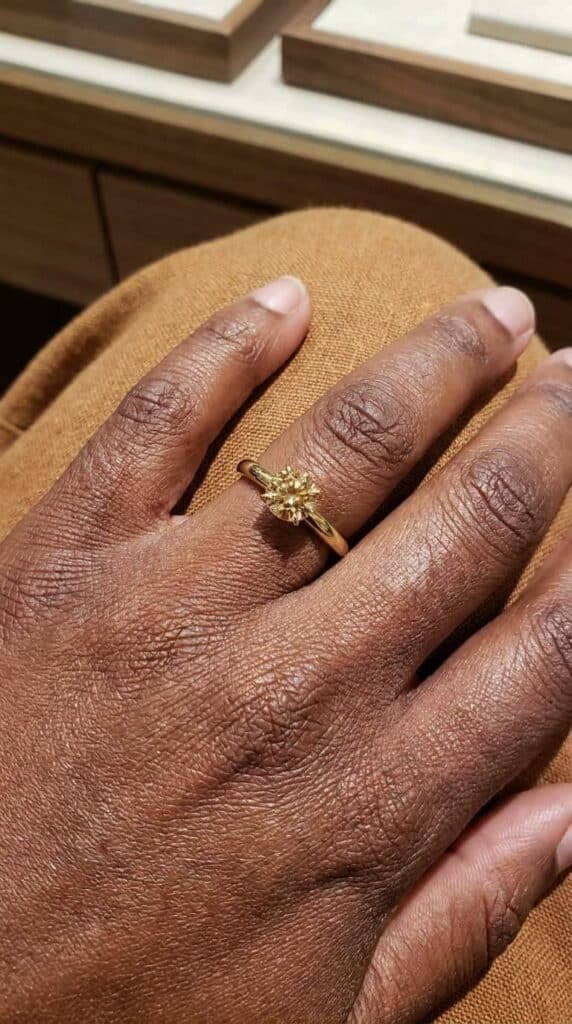
A warm brown-gold fancy coloured diamond, glowing rather than icy, and beautiful set in yellow gold where the metal amplifies the warmth. Honey-hued stones have been one of the defining colour stories of 2026. It’s the option for someone who wants a diamond but not a white one.
Direction 4: Arrangements With a Story
15. The Toi et Moi
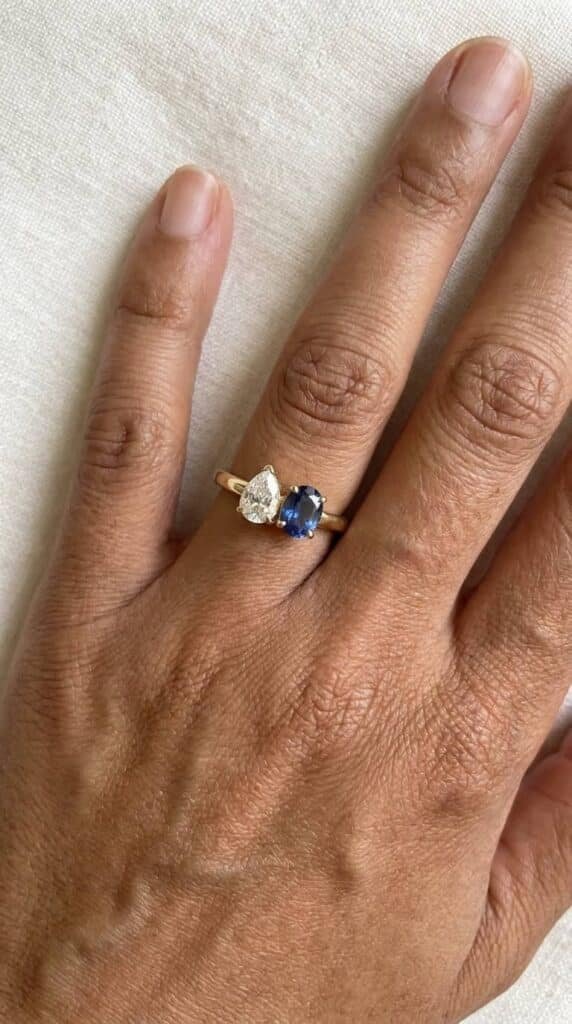
Two stones sitting side by side on one band, French for ‘you and me’, with genuine historical pedigree behind the design. Most couples choose two different shapes or two different stones to represent the pair. It’s among the most-cited unique styles of 2026 and it photographs unlike anything else.
16. The Mixed-Shape Trilogy
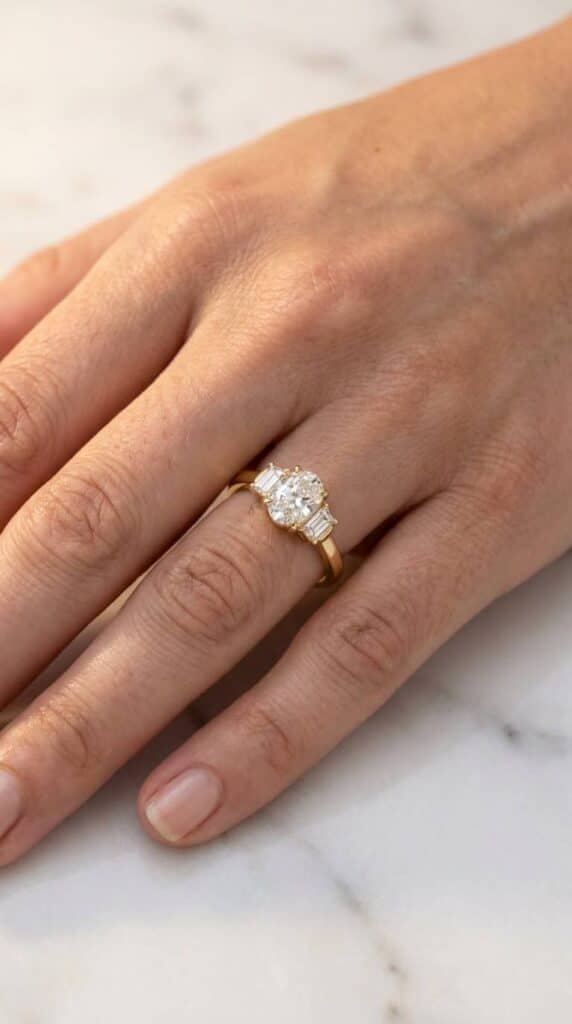
A three-stone ring where the shapes deliberately differ, an oval flanked by trapezoids, a round between two kites, rather than the traditional matched set. Mixed-shape three-stone rings have come back strongly this year. The classic reading of past, present and future still applies if you want it to.
17. The Cluster Setting
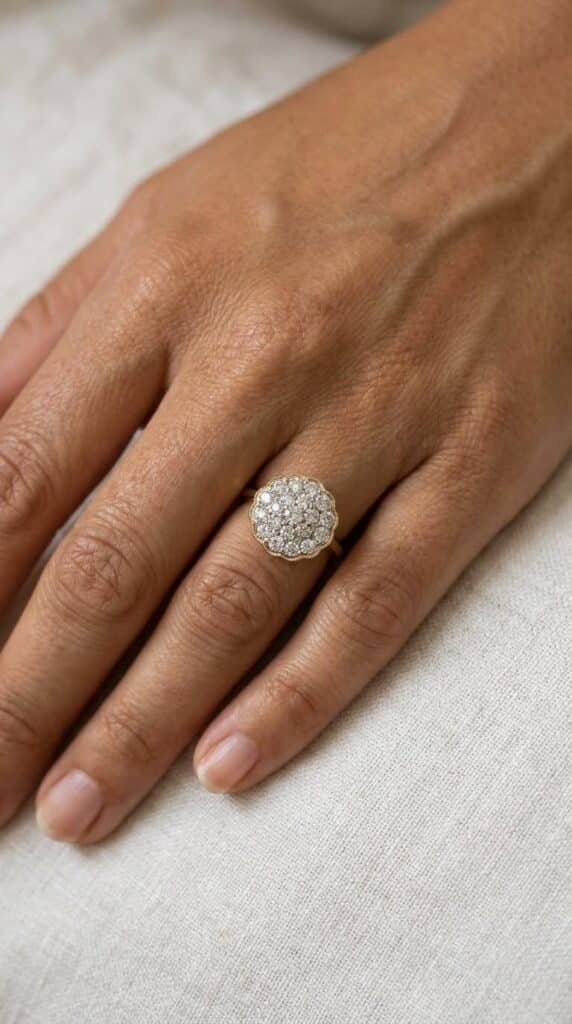
Multiple smaller stones arranged together to form one larger shape, often floral or geometric. Jewellers point out that clusters deliver more visual impact than a single stone of the same total weight, which makes them one of the best value-per-sparkle options available. Antique-inspired clusters in particular look nothing like a modern solitaire.
18. The Bypass or Open Band
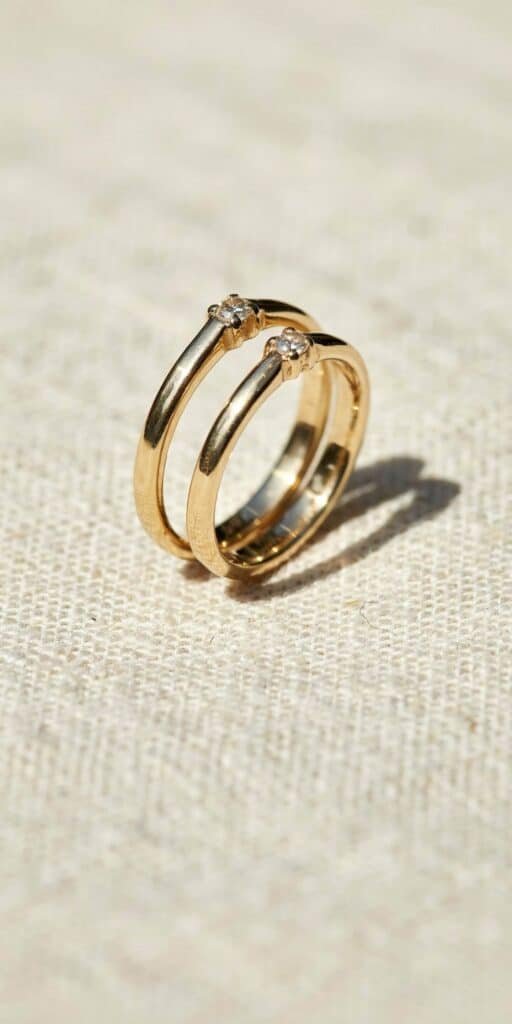
The band doesn’t close in a circle, instead the two ends sweep past each other, often with a stone at each tip. It’s fluid and asymmetric, and it sits beautifully with a curved wedding band. Confirm how it’s sized, open bands adjust differently from closed ones.
Direction 5: Bands, Metals and Hidden Details
19. The Chunky Cigar Band
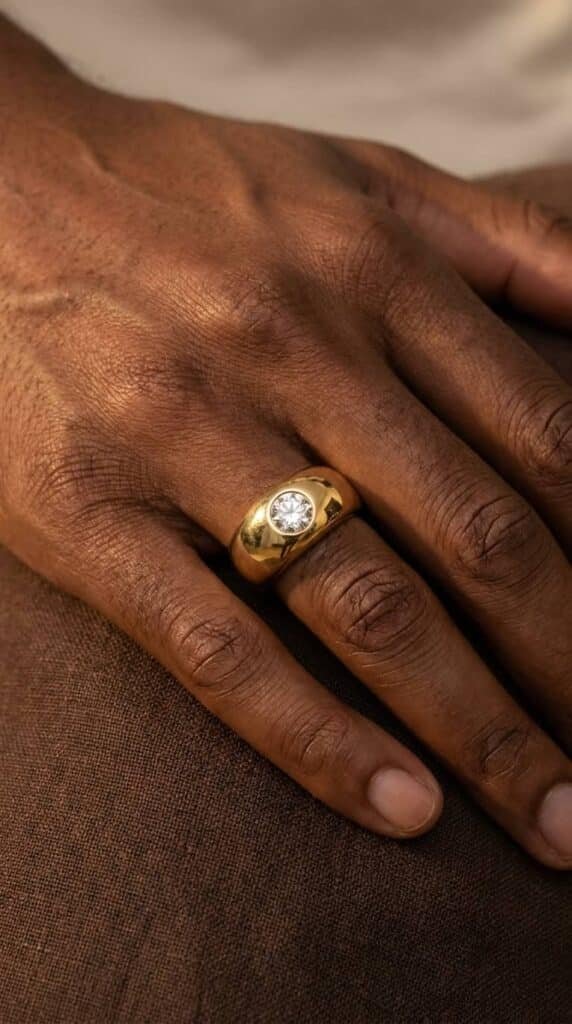
A wide, substantial gold band with the stone set into it, the direct reaction against years of delicate pavé. Dua Lipa’s round brilliant on a domed cigar band brought this style into wide view, and the band becomes as much of the design as the stone. It’s also comfortable and hard-wearing, which is not a small consideration.
20. The Mixed-Metal Ring
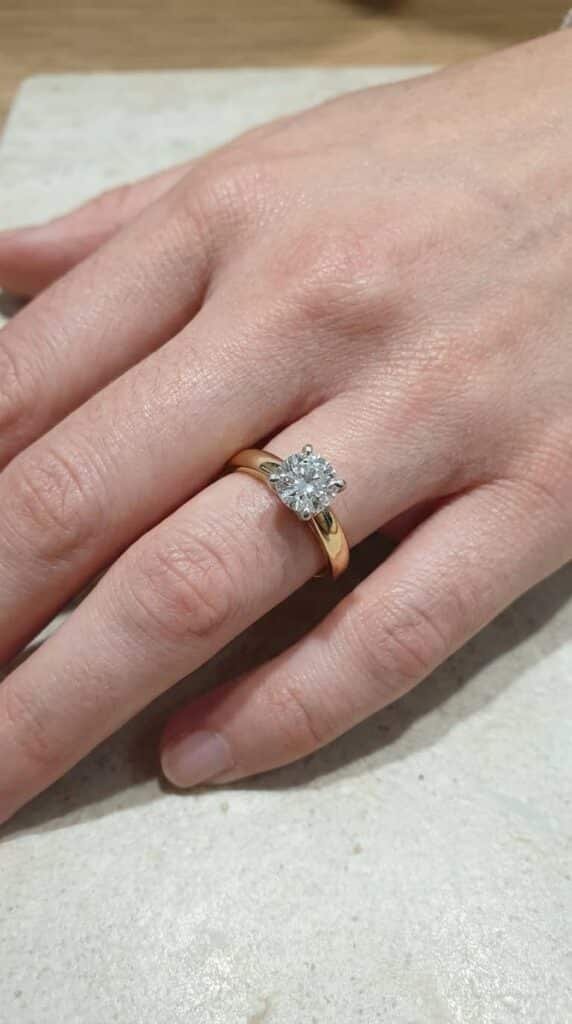
A yellow gold band with a white gold or platinum setting, or two metals braided through the design. It solves the very common problem of loving one metal on your hand and another around the stone. It also means the ring works with whatever jewellery you already own.
21. The Art Deco Step-Cut
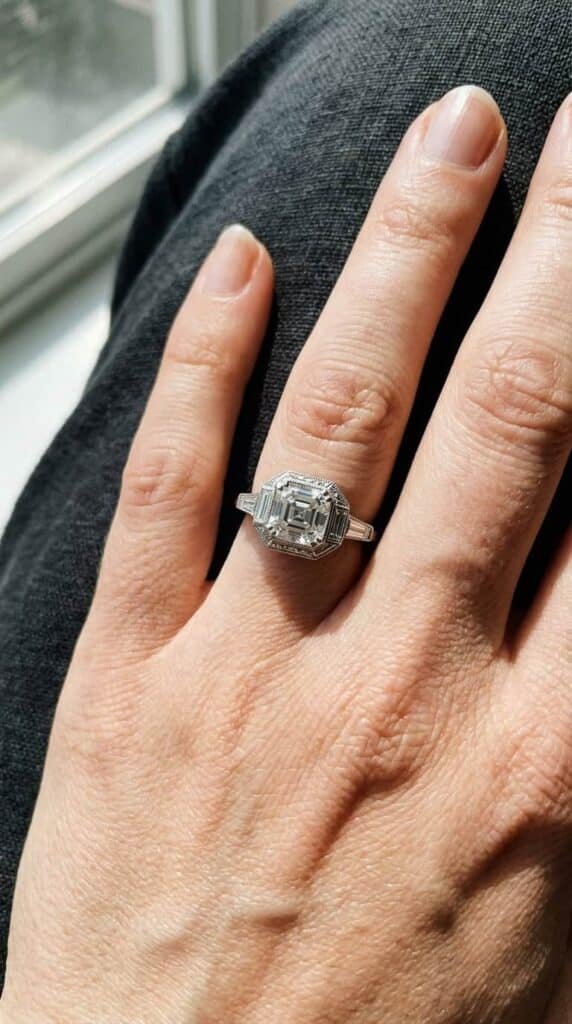
Asscher or emerald cuts with milgrain edges, geometric metalwork and architectural lines, drawn from 1920s design. What separates today’s versions from genuine antiques is the execution, cleaner lines and more precise stone setting while keeping the era’s character. It suits anyone who finds brilliant-cut sparkle too showy.
22. The Hidden Engraving or Secret Stone
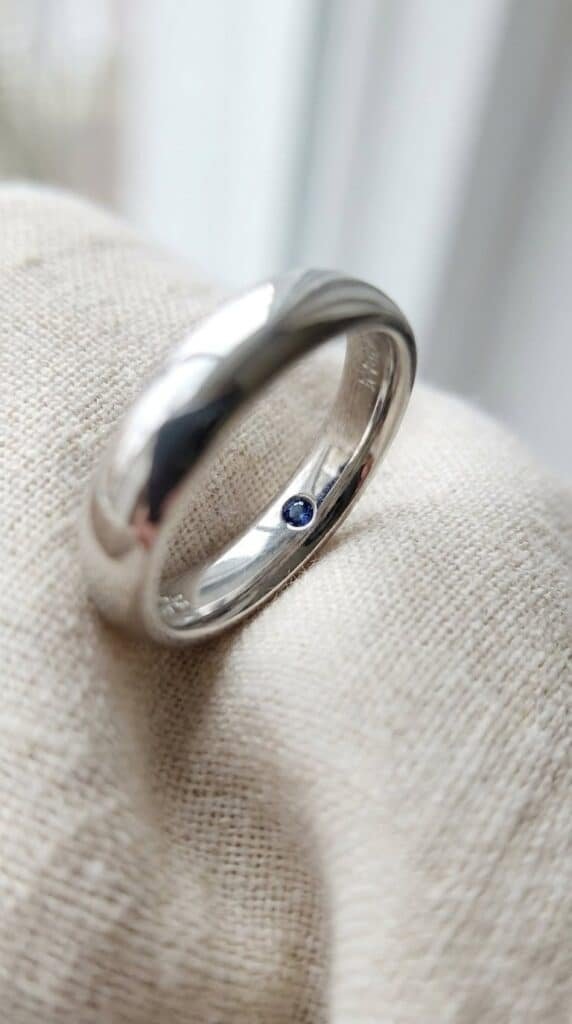
A date, initials, or coordinates engraved inside the band, or a tiny birthstone set on the inner surface where it touches the skin. It’s completely invisible to everyone else, which is the entire appeal. It costs very little to add and it’s the detail people describe most fondly years later.
Getting It Right the First Time
Ask for the setting name in writing. Once you know you want, for example, a bezel-set elongated cushion in an east-west orientation on a 14-karat yellow gold band, almost any independent jeweller can quote it and many can make it. Vagueness is what makes ring shopping take six months.
Sort the wedding band question now. Marquise, kite, hexagon, bypass and east-west settings can all sit awkwardly against a straight band, so ask to see the matching or contoured band at the same appointment. Couples who skip this step are the ones redesigning a band a year later.
And be honest about your hand and your life. Try the shape you love next to the shape that suits your finger, wear the setting for a few minutes, and think about your work, your hobbies, and whether you’ll take it off. The most unique ring in the world is the wrong one if it lives in a drawer, and the right one is the one you forget you’re wearing until you catch it in the light.
If I’m Picking Three to Start With
The bezel setting because it’s the most wearable modern look on this list, the east-west orientation because it transforms a familiar stone for very little extra cost, and the toi et moi if you want a ring that tells your story before you explain it. Save this list to your wedding board on Pinterest before your first jeweller appointment, and take the style names with you, that’s the part that actually gets you the ring.
