


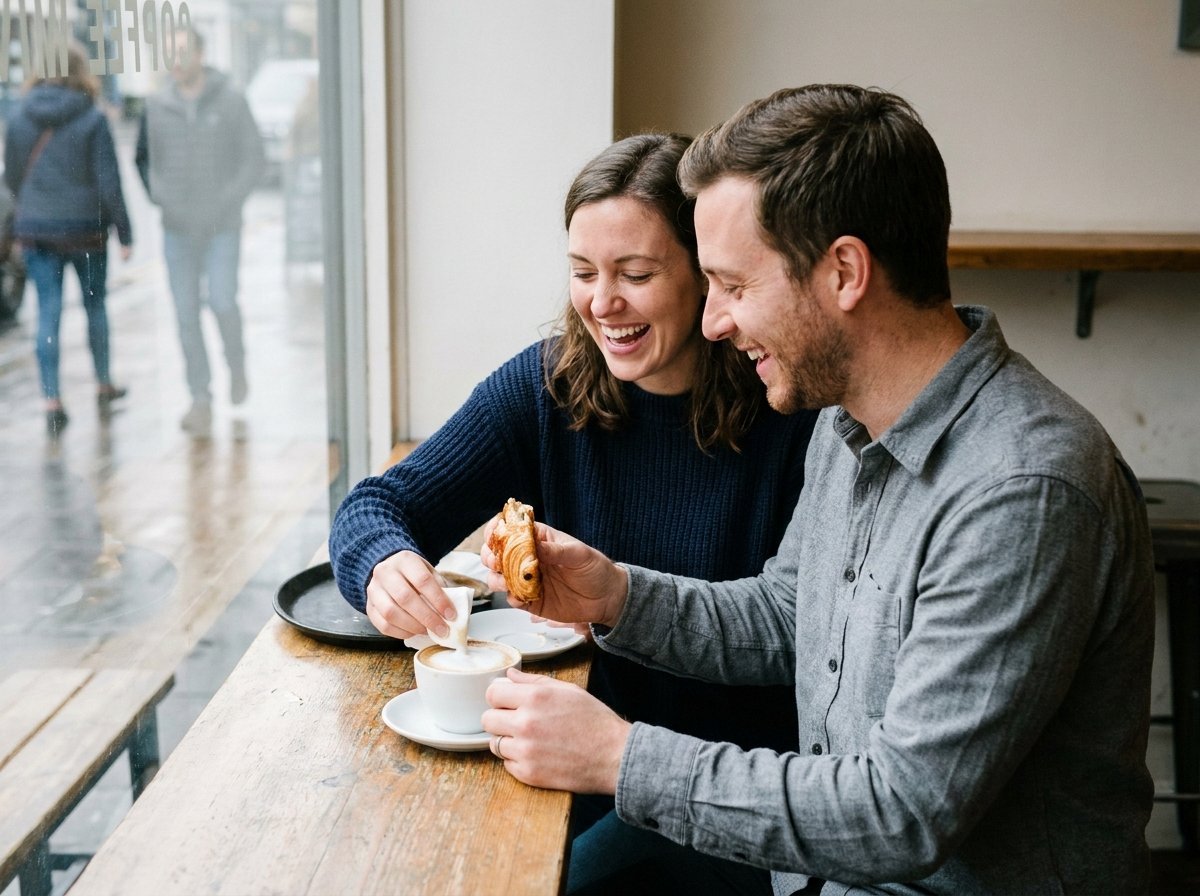
Engagement shoot ideas have moved away from standing in a pretty field and smiling on command. In 2026, the pictures people are saving feel more like a date someone happened to photograph. That might mean coffee at your usual table, a windy walk by the water, a direct-flash dance after dark, or a quiet portrait in a studio. I grouped these 16 ideas into real dates, movement, editorial settings, and personal stories. Pick the one that already sounds like something you would do together. That familiarity is usually what makes a camera-shy couple settle in.
Why engagement shoot ideas feel different in 2026
The current shift is toward a documentary and editorial mix. Photographers still guide couples toward good light and useful movement, but the finished frames look candid. Film grain, true color, direct flash, and intentional motion blur are part of that look. The trick is restraint. One blurred running picture can carry energy. A whole gallery of soft faces can feel dated fast.
Location matters more than a complicated pose list. A place tied to your first date, Sunday routine, or favorite neighborhood gives you something to talk about and do. It also makes save-the-date photos feel specific. Coordinate clothes by weight and color rather than wearing identical shades. One casual outfit and one more polished outfit can create variety, provided there is enough time to change without turning the session into a race.
Make a real date of it
1. Coffee shop first date replay
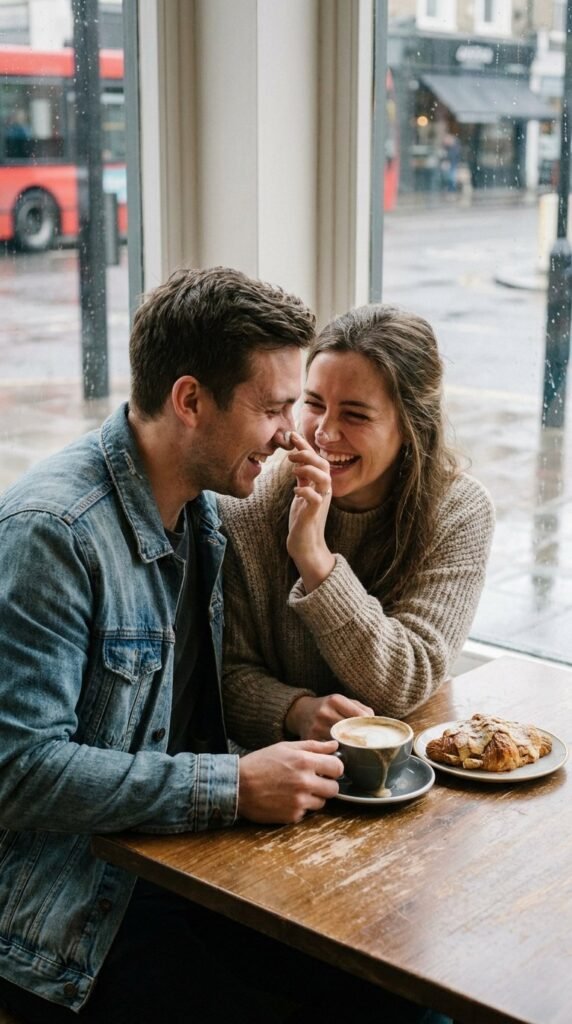
Go back to the cafe where you first met, or choose a small place you visit together. Order what you actually drink, sit by a window, and let the photographer work around the conversation. A shared pastry, a badly poured latte, and the moment one of you starts laughing will feel more personal than a row of formal poses.
2. Saturday market wander
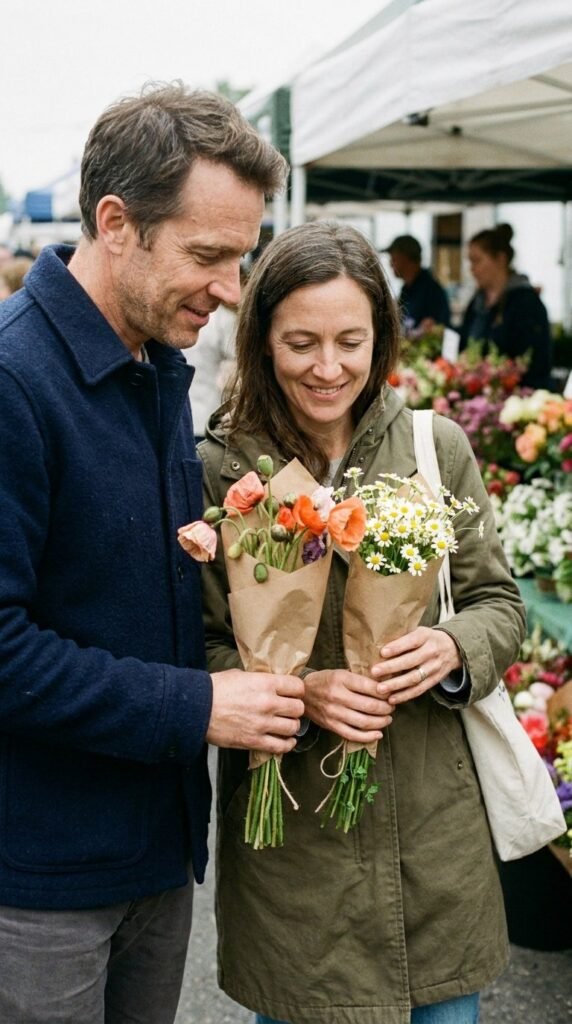
A flower or farmers market gives nervous hands something useful to do. Walk slowly, pick out fruit, compare bouquets, and stop for a snack. Ask the photographer to stay a little farther back so the frames feel observed rather than arranged. Go early for softer light and fewer strangers.
3. Cook your comfort meal at home
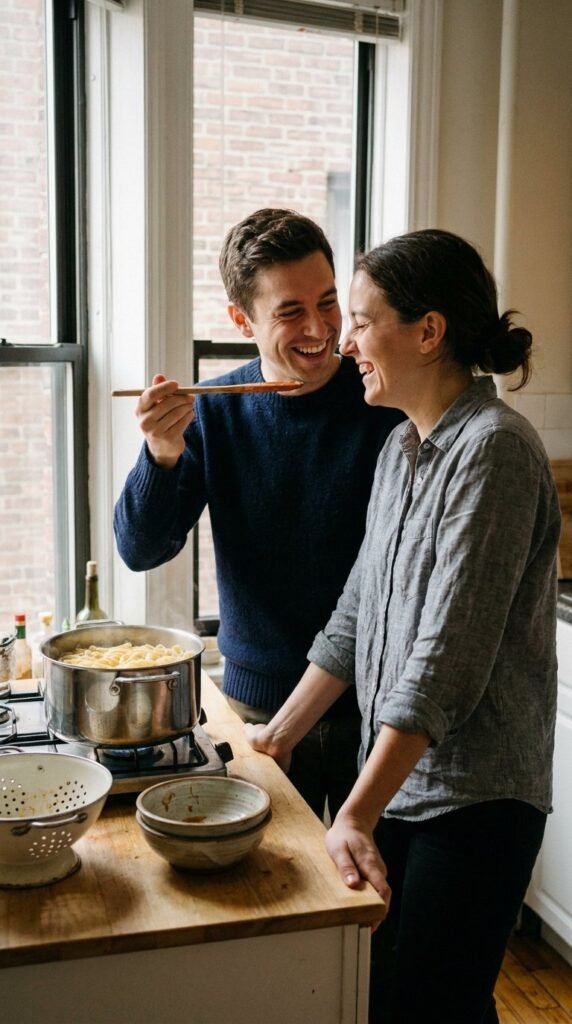
An at-home cooking session works because you already know how to move in the space. Make a simple meal, pour two drinks, and leave the kitchen as it normally looks. A little flour on the counter is fine. The best frames tend to happen while one person tastes the sauce or steals something from the cutting board.
4. Record store and listening booth
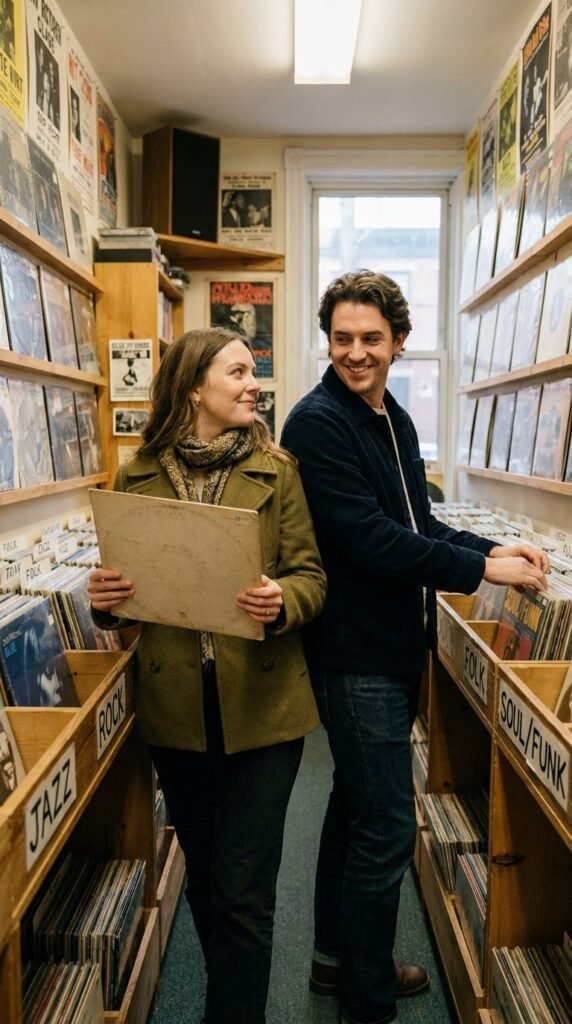
Browse separate bins, trade albums, then listen to one together if the shop allows it. This suits couples who want a city session without standing in the middle of a busy street. Keep the styling simple and let album covers add color. Check the store policy before bringing a camera inside.
Use movement instead of poses
5. Run through a golden field
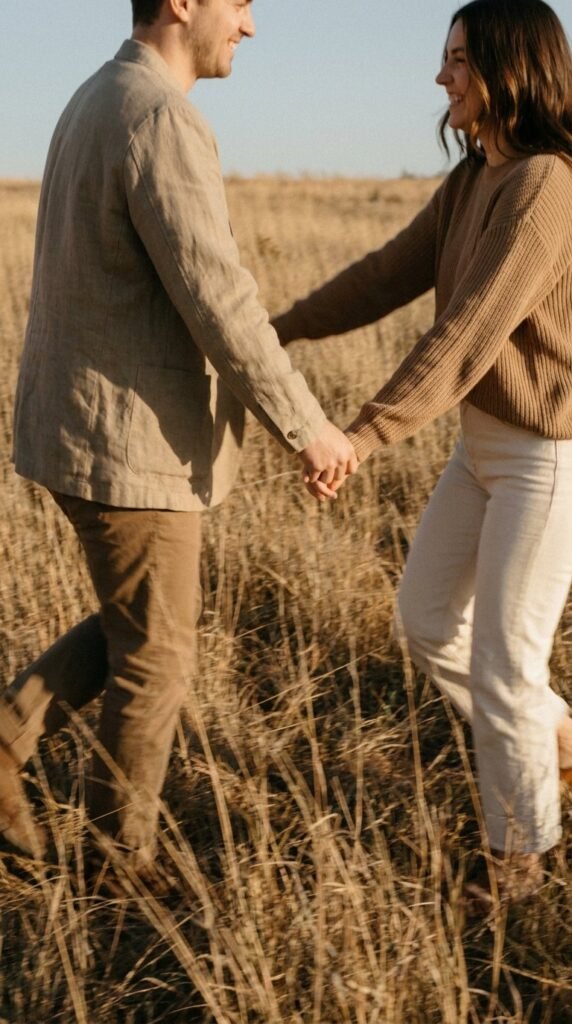
Movement blur is everywhere in 2026, but it works best as a small part of a balanced gallery. Walk first, then jog a few steps while holding hands. Ask for one slow-shutter frame and one sharp version of the same moment. You get the dreamy streak of motion without losing every clear expression.
6. Dance under direct flash
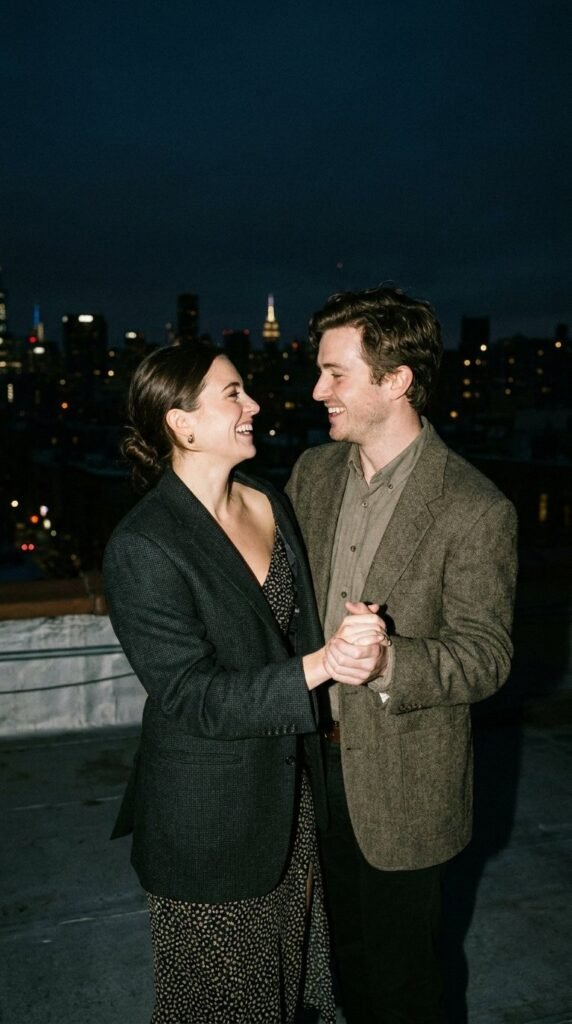
Choose a rooftop, parking deck, or quiet corner after dusk and play a song you both know. Direct flash gives the pictures a lively late-night texture. Keep the background plain, dance close, and accept imperfect hair or a crooked jacket. Those details are what stop the photographs from feeling like an advertisement.
7. Windy shoreline walk
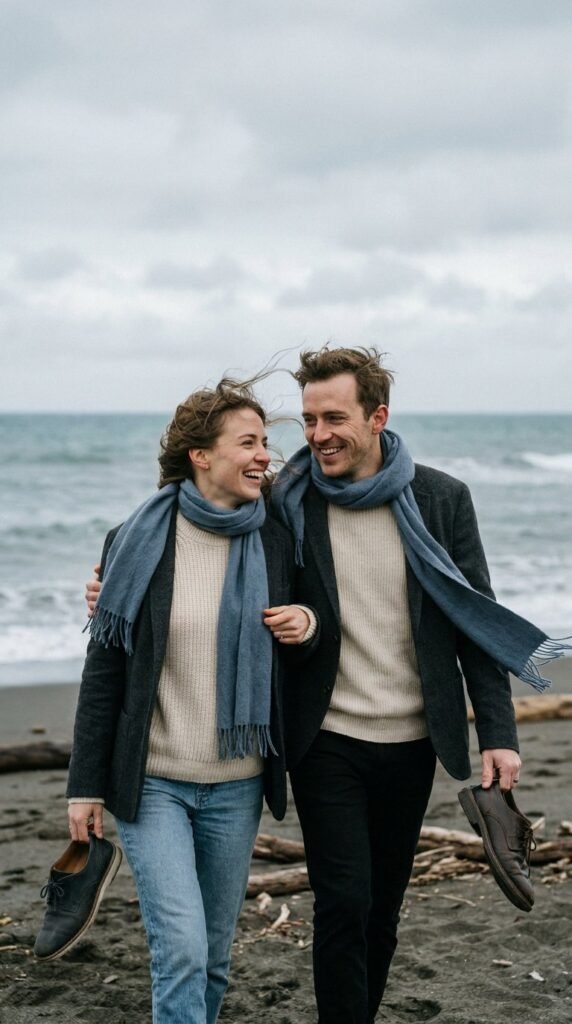
A beach session does not need bare feet and matching white clothes. Walk near the water in layers that move, then turn into each other when the wind gets strong. Muted blue, cream, charcoal, and sand photograph cleanly. Bring a towel and shoes you can actually walk in.
8. Bike ride with a roadside pause
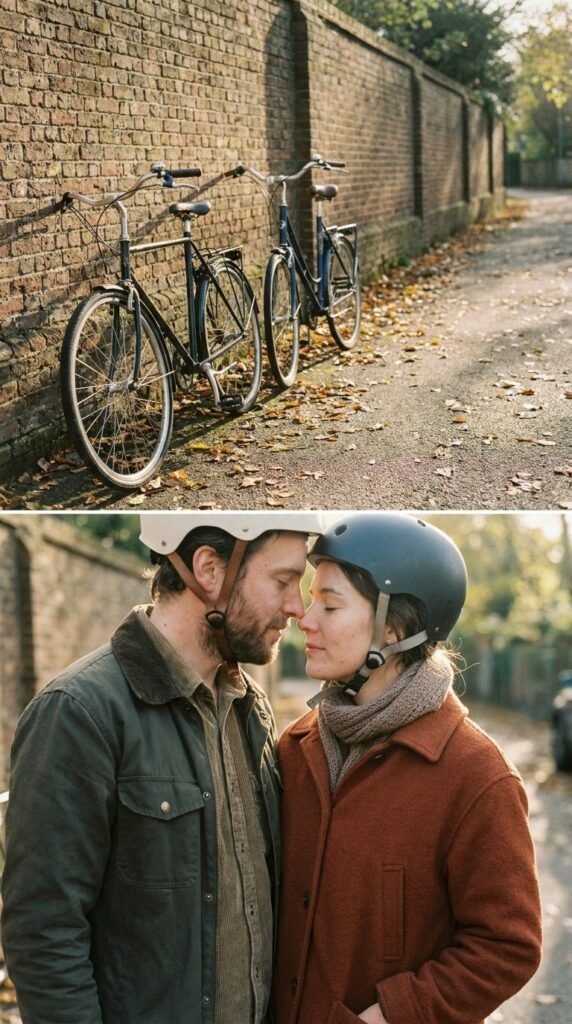
Use bikes only if riding is already part of your life. Start with a few moving frames, then lean the bikes against a wall and take a breather. The pause usually creates better expressions than the ride itself. Choose a low-traffic path and skip complicated props that need constant arranging.
Borrow a little editorial drama
9. Hotel lobby in evening clothes
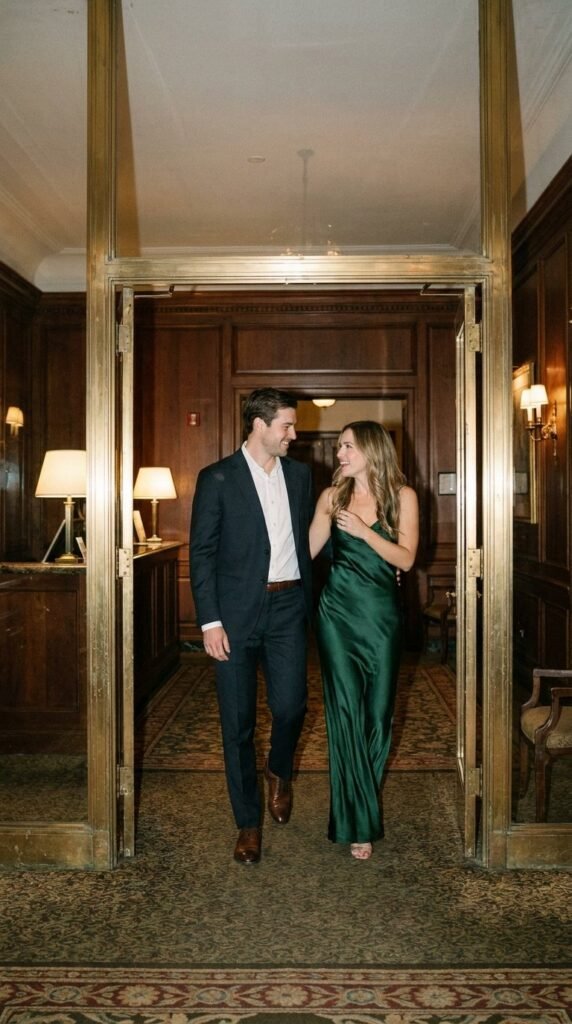
A quiet hotel lobby can carry a formal look without requiring a full studio. Dress as if you are heading to dinner, walk through the doorway together, then sit for a drink. Ask permission in advance. One polished portrait, one candid conversation, and one flash frame are enough to establish the mood.
10. Black-and-white studio portraits
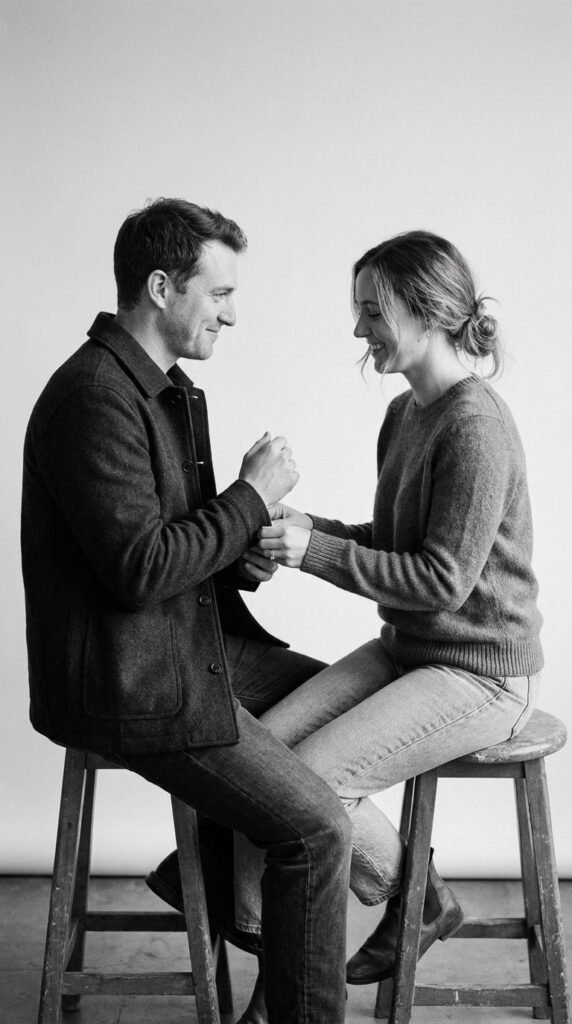
A plain studio keeps attention on faces, hands, and the way you stand together. Start with a clean seated portrait, then loosen up with music and conversation. Black and white suits the graphic setting, but keep a few true-color files too. Simple clothes with different textures prevent the image from looking flat.
11. City crosswalk at blue hour
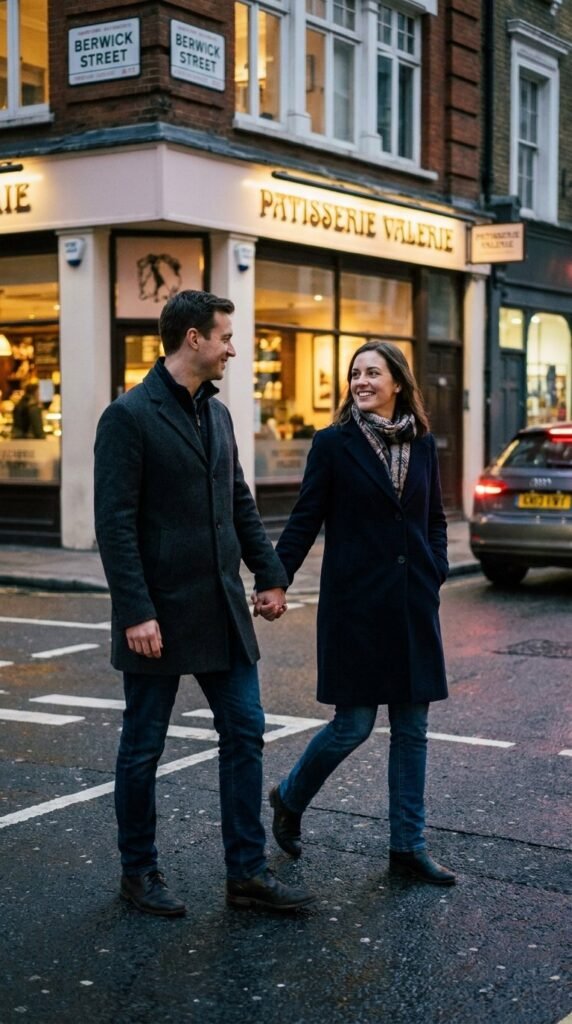
For an urban engagement shoot, choose one recognizable block rather than chasing five landmarks. Cross on the walk signal, wait at a corner, and share an umbrella if the weather turns. Blue-hour light mixed with storefront glow feels cinematic, while a few direct-flash frames add a spontaneous street-photo edge.
12. Museum courtyard geometry
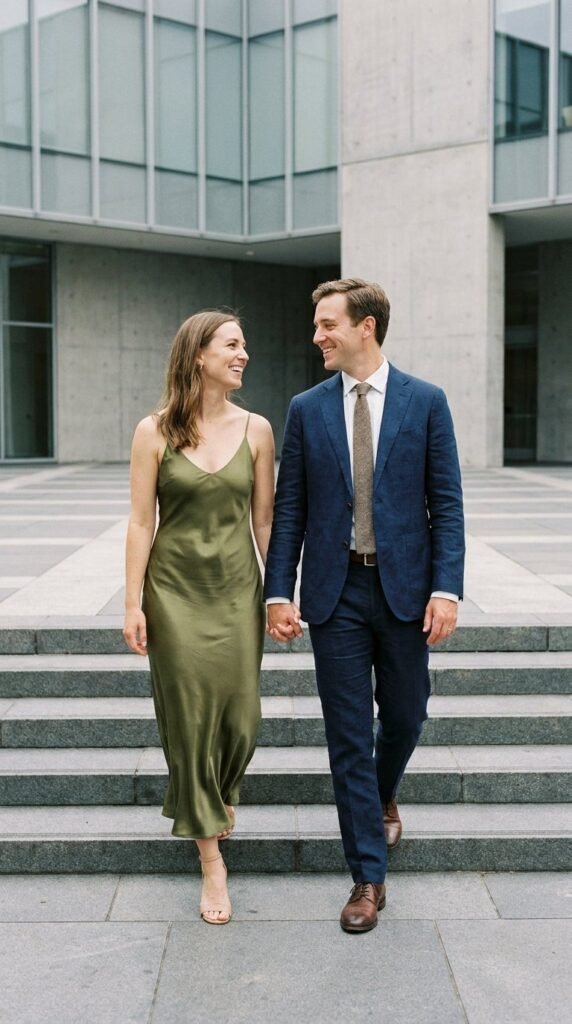
Strong columns, stairs, or tiled walls give an editorial photograph structure. Wear coordinated tones rather than matching outfits, and move through the space instead of holding one pose. A tailored jacket beside a softer dress or knit creates enough contrast. Confirm photography rules and avoid blocking visitors.
Tell the part that belongs to you
13. Rainy-day corner shop stop
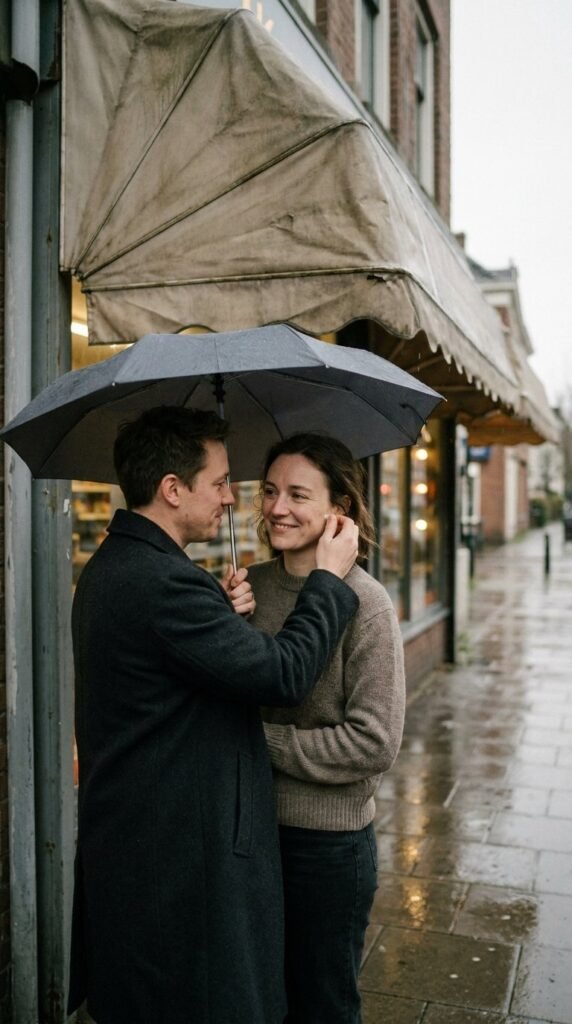
Rain can make a session better if you plan for it. Meet under the awning of a neighborhood shop, share one umbrella, and step into the drizzle for a minute. Reflections on wet pavement carry the color. Pack a small towel and choose hair and clothes that can survive real weather.
14. Bookstore note exchange
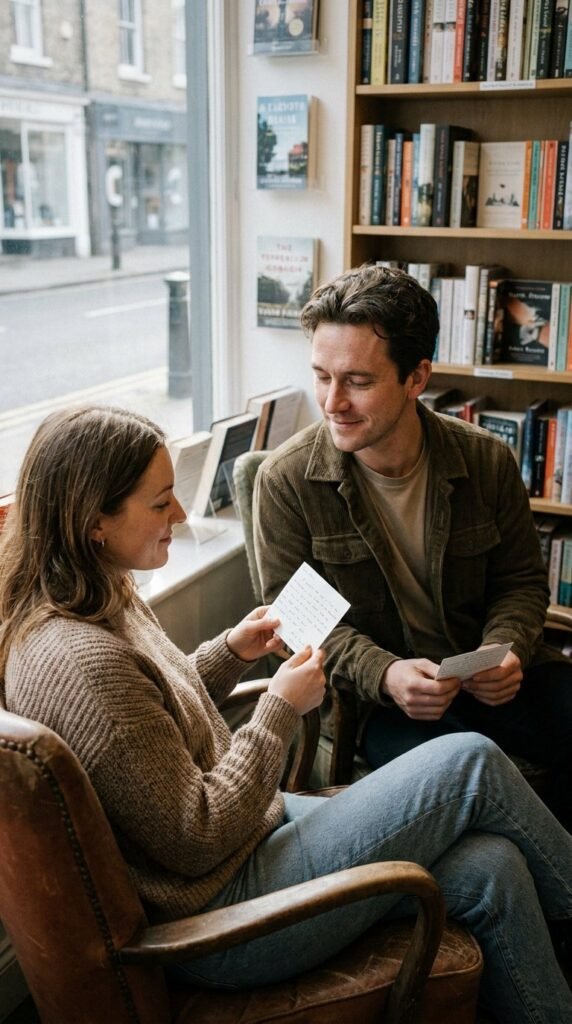
Pick books for each other, write a short note inside a blank card, and read the notes near a window. The activity gives the session a beginning and an ending, which helps the gallery feel like a story. Ask the owner first, keep voices low, and leave the ring close-ups until you are seated.
15. Family picnic with a vintage camera
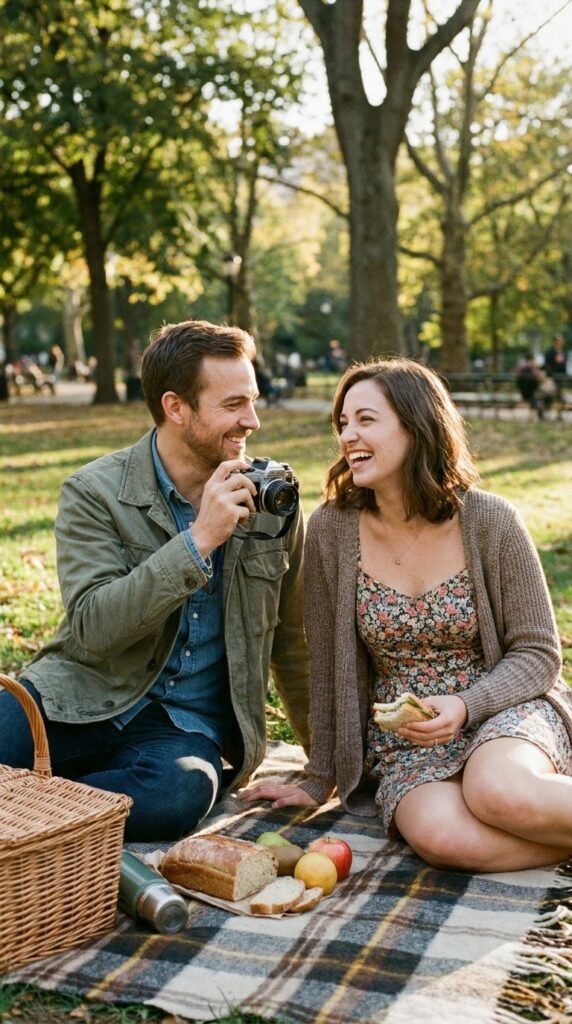
Spread a familiar blanket in a park and bring food you would really eat. A working 35mm camera can add a few frames from each partner’s point of view, but it should not become a costume prop. Mix the film photographs with clean digital portraits so the gallery has texture and dependable keepsakes.
16. Late-night diner booth
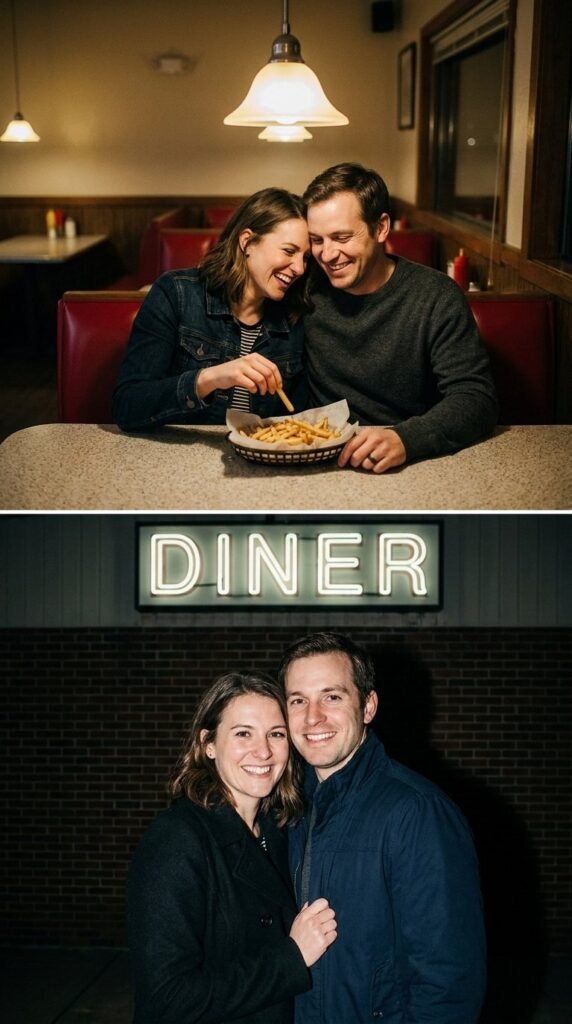
A diner is ideal for couples who relax once they have fries in front of them. Sit on the same side of the booth for close frames, then move outside for one flash portrait under the sign. Call ahead, visit outside the rush, tip well, and keep equipment compact. The result can feel playful without looking staged.
A few practical choices before you book
Start with the way you want the pictures to feel, then choose a photographer whose full galleries already have that quality. A portfolio may contain three beautiful flash images, but a complete gallery shows how the photographer handles skin tones, midday light, bad weather, and quiet moments. Ask how much direction they give. Some couples want prompts every few minutes. Others relax when the photographer backs away.
Keep the route small. One flexible location with several backgrounds is often better than losing half the session to traffic. If you want two outfits, begin with the one that matters most. Bring walking shoes, water, blotting paper, and a layer for changing temperatures. Leave phones and bulky keys with the photographer before shooting.
Tell your photographer about anything that makes you self-conscious, along with the parts of your relationship you want remembered. A good prompt gives you an action, such as walking, whispering, or choosing a song. It does not force a performance. Build the final gallery around mostly clear, true-color photographs, then season it with blur, flash, black and white, or film.
If I am picking three to start with
I would choose the coffee shop replay for a low-pressure beginning, the city crosswalk for one sharper editorial sequence, and the late-night diner for the last half hour. Together they cover conversation, movement, and playful direct flash. Save the ideas that sound like your real life, then share this list with your photographer. The best plan leaves enough room for something unplanned to happen.
