


The Season Bridesmaid Dressing Gets Interesting
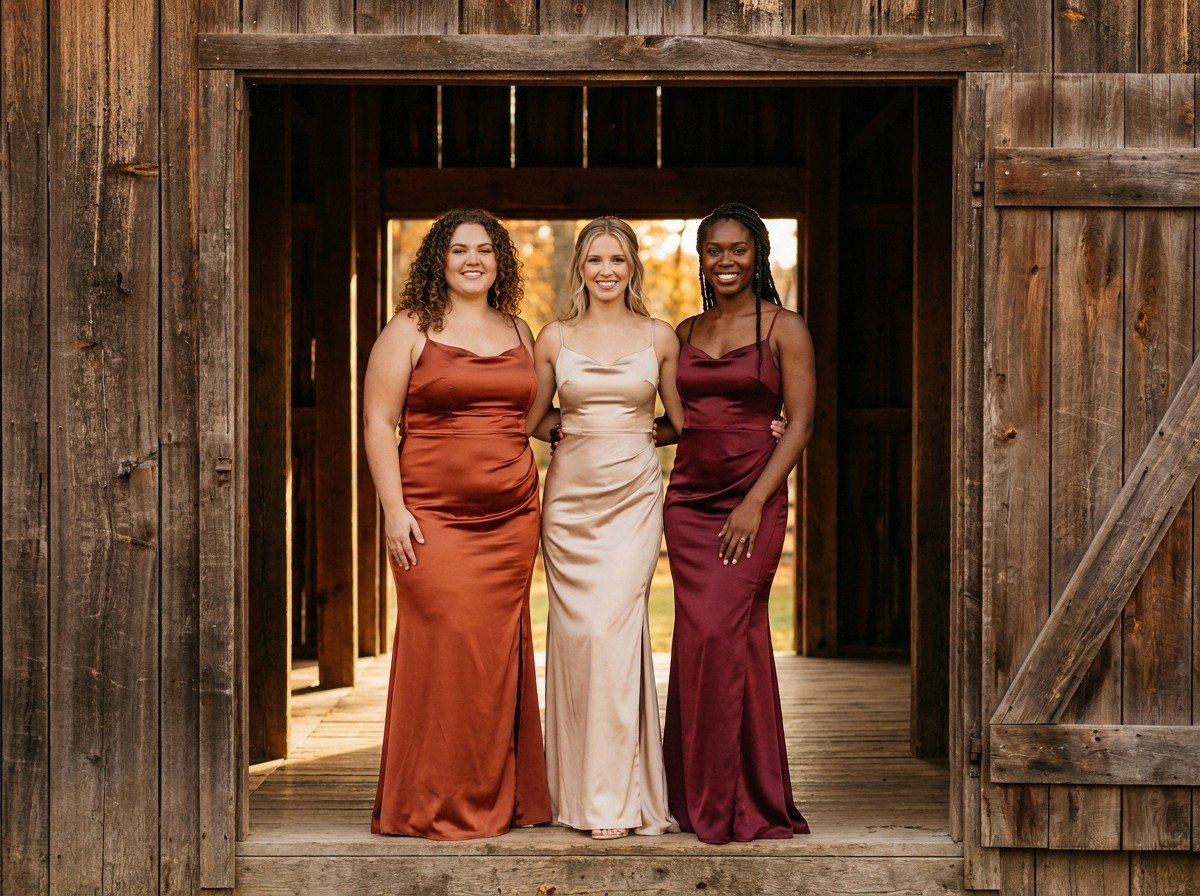
Autumn is the best season to dress a bridal party, and 2026 is the year it stopped being about matching. The single biggest shift is tonal dressing: rather than putting every bridesmaid in one identical shade, brides are mixing complementary hues from the same family, so each woman gets her own moment while the party still tells one visual story. Autumn palettes are leaning into rich chocolate, terracotta, olive and warm mocha, and the result reads intentionally styled rather than rigidly coordinated. The colour news is worth knowing too. Warm brown, spanning caramel, chocolate, espresso and tan, is the breakout colour of the 2026 bridesmaid market. Terracotta has become the signature fall shade of the decade and is now styled mixed with rust and cinnamon rather than worn as a single flat colour. And velvet has properly returned for autumn, bringing depth that chiffon simply cannot. I’ve gathered 42 fall bridesmaid dress ideas across colour, palette-building, fabric, silhouette and the practical decisions, each with what defines it and an honest note.
How to Approach the Decision
Four things settle most of it. Start with the venue and the light, because a candlelit November barn and a golden-hour September vineyard flatter completely different palettes, and warm-toned dresses glow against changing leaves in a way cool tones don’t. Choose the fabric before the silhouette, since velvet, satin, chiffon and crepe behave so differently that the same cut reads formal in one and casual in another. Let your bridesmaids choose within a boundary you set, giving them a palette or a fabric and letting them pick the neckline, because comfort shows in every photograph and a bridesmaid who likes her dress stands differently in it. And be honest about the rewear question, as the will-I-wear-this-again problem is finally being answered with a genuine yes through versatile silhouettes and colours that work outside a wedding, which matters when you’re asking people to spend their own money.
Direction 1: The Colour Story
1. Burgundy
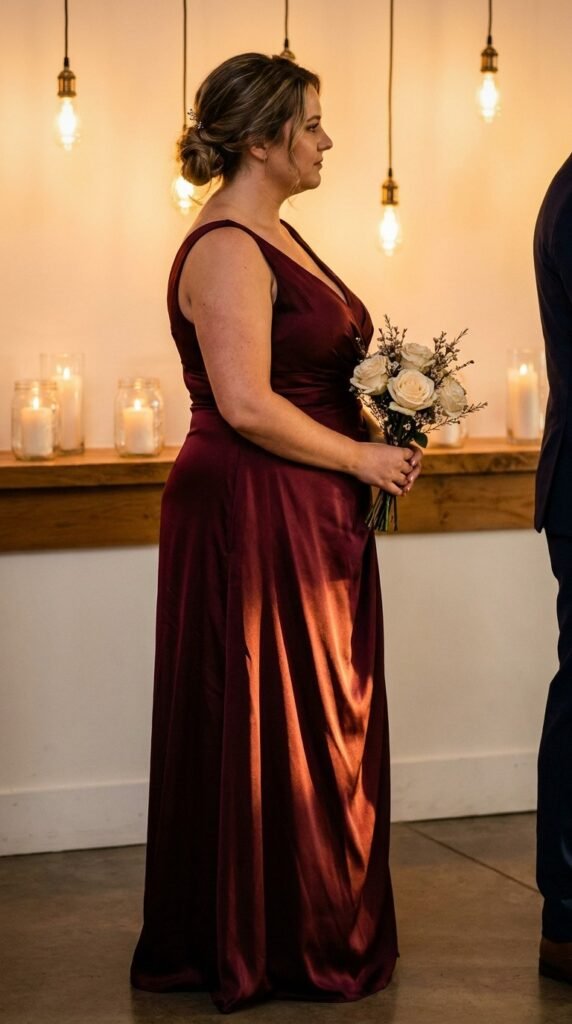
The most-swatched red of the year, a deep classic wine that reads formal and photographs beautifully in low light. It’s the safest bold choice for autumn and suits nearly every complexion. In velvet it becomes genuinely luxurious for a November wedding.
2. Terracotta
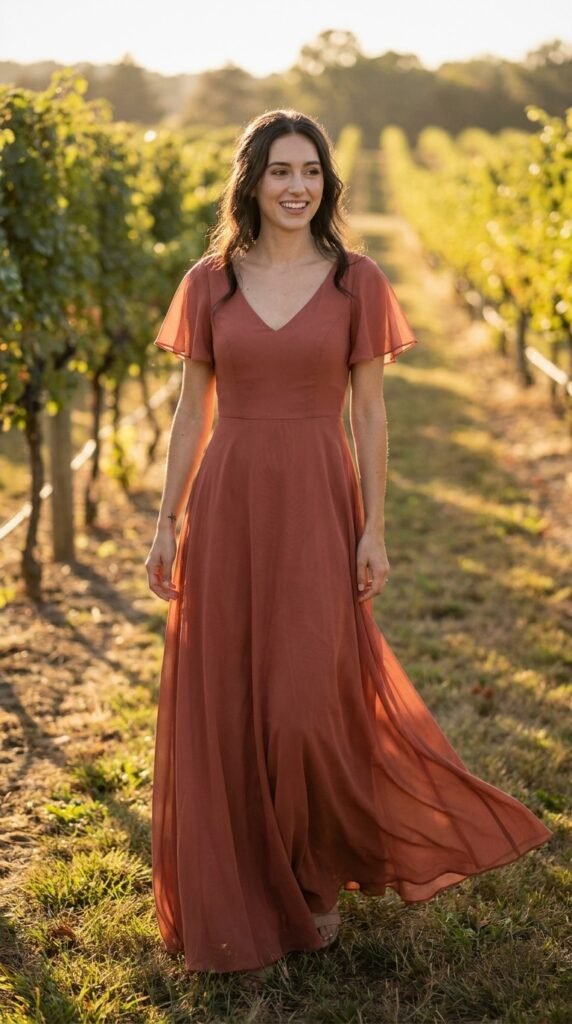
The signature fall bridesmaid colour of the decade, a muted clay red that reads modern and slightly boho. The 2026 update is styling it mixed with rust and cinnamon rather than as a single flat shade. It’s made for vineyard, desert and outdoor autumn venues.
3. Chocolate Brown
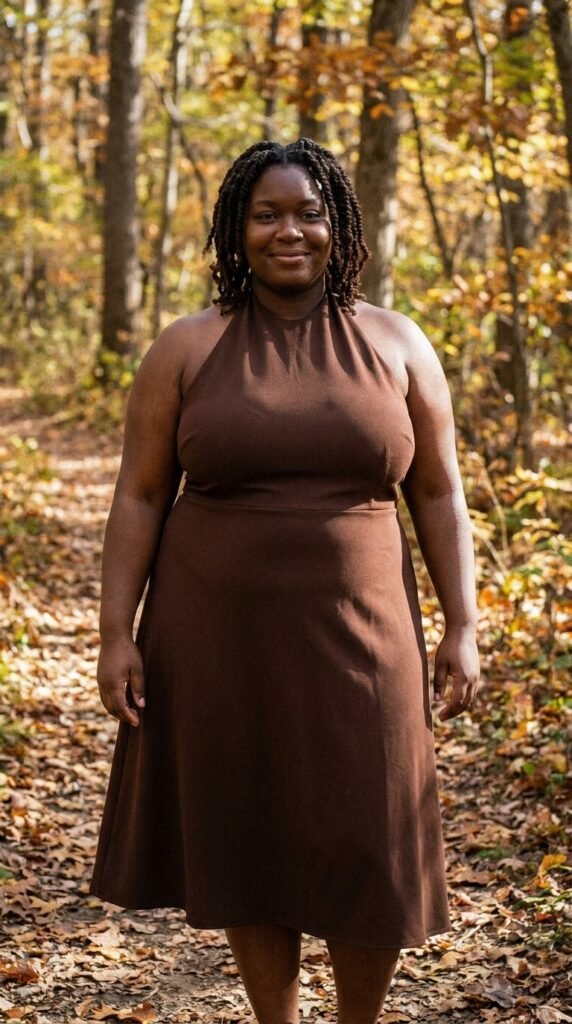
Warm brown is the breakout colour of the 2026 bridesmaid market, and chocolate is its richest expression. It’s unexpected, deeply flattering, and it glows against autumn foliage. Pair it with cream florals so it doesn’t read heavy.
4. Rust
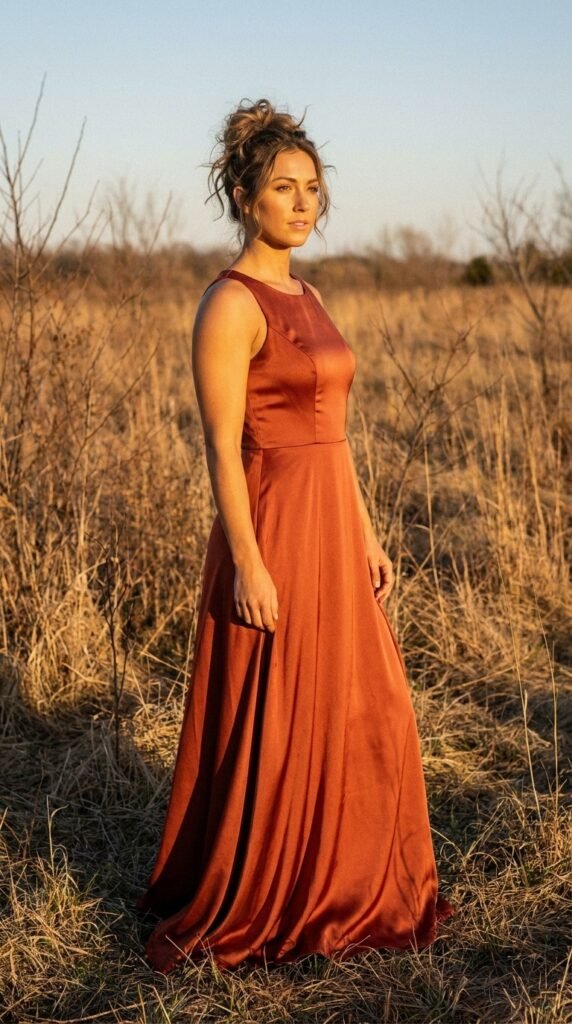
A warm earthy red-orange that is quite simply made for fall. It’s the shade that most obviously says autumn without tipping into costume. It photographs warmest at golden hour, so time your portraits accordingly.
5. Emerald Green
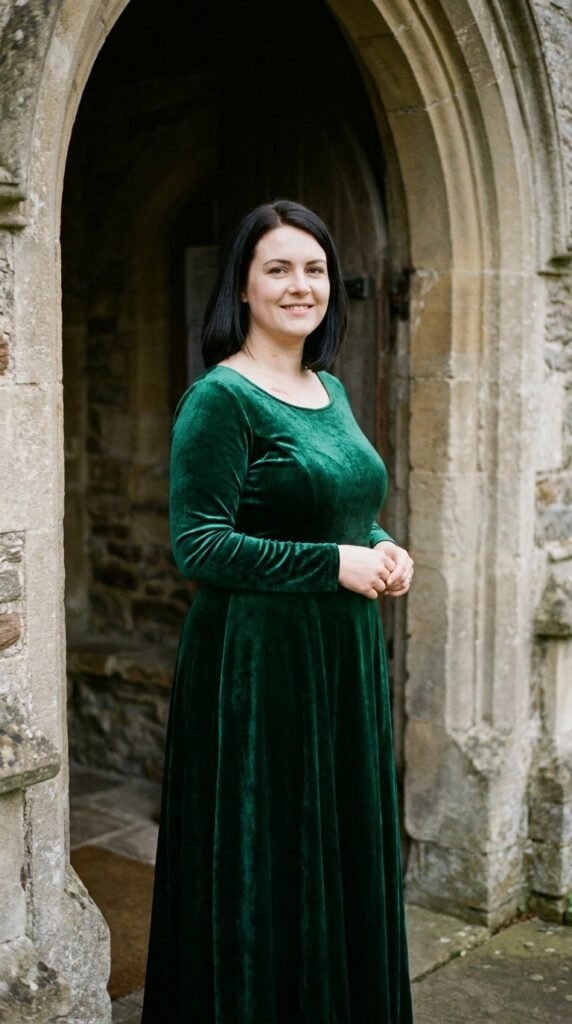
The bolder end of the green spectrum, richer and more saturated than sage, with genuine jewel-tone depth. In 2026 it’s being paired with tan and warm-grey suits rather than the traditional black, which reads far more modern. Emerald velvet is particularly strong for autumn.
6. Olive
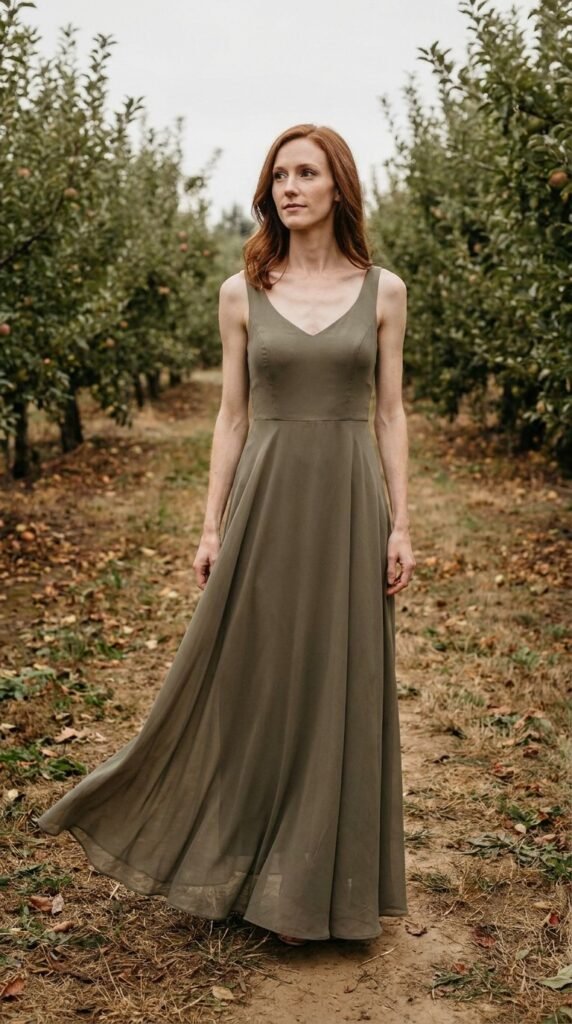
A muted, earthy green that sits beautifully in an autumn landscape without competing with it. It’s the quieter alternative to emerald and mixes especially well with brown and terracotta. It also happens to be one of the most rewearable colours here.
7. Eggplant and Deep Plum
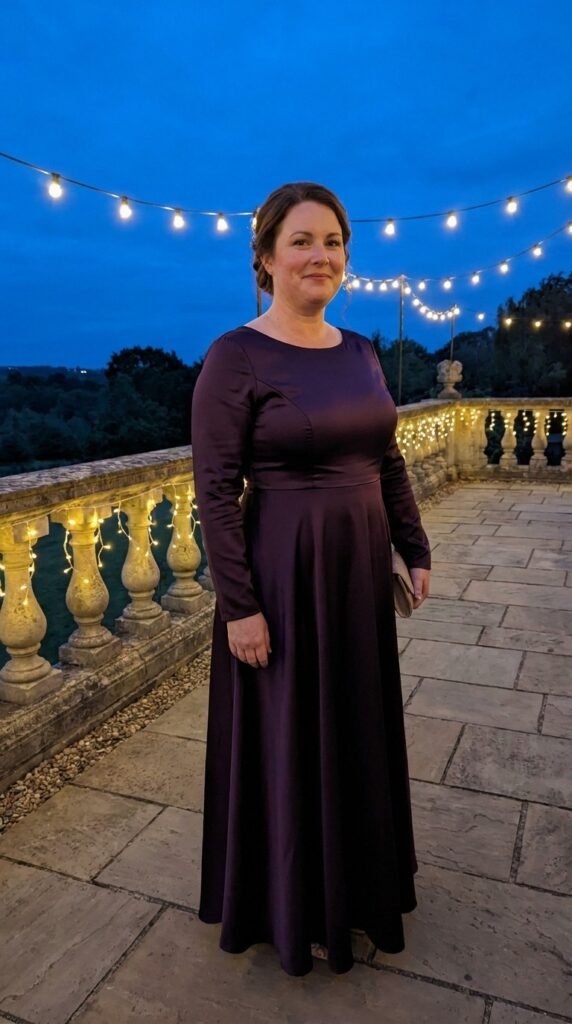
Purple is more popular than most brides expect, and the deep end of the family is firmly an autumn and winter shade. Eggplant reads dramatic and formal where lilac reads spring. It’s a strong choice for evening and black-tie autumn weddings.
8. Navy
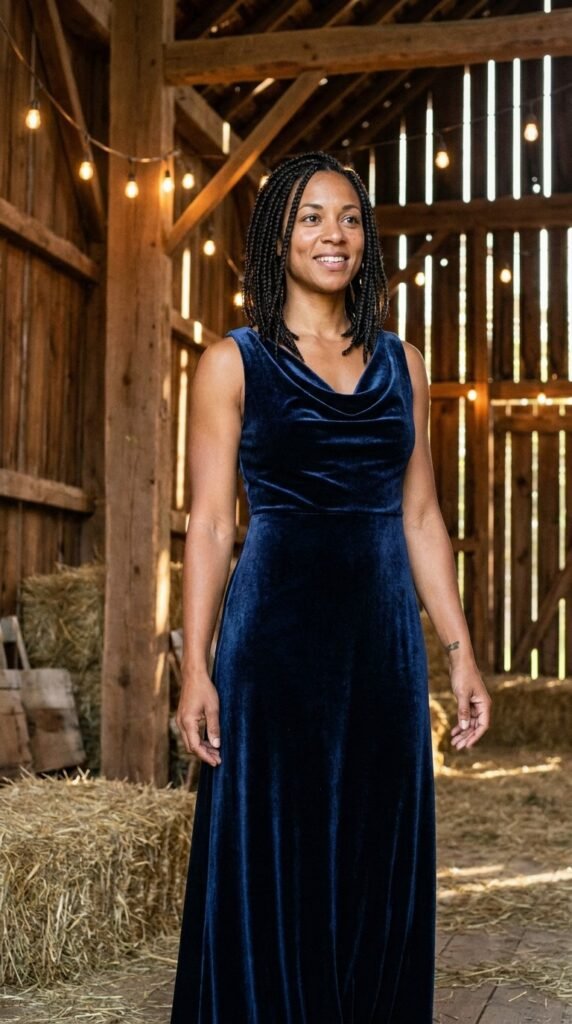
The dependable dark neutral that works at every formality level and in every fabric. It’s less expected than black and warmer in photographs. Navy velvet in particular looks far more expensive than it costs.
9. Cinnamon and Sienna
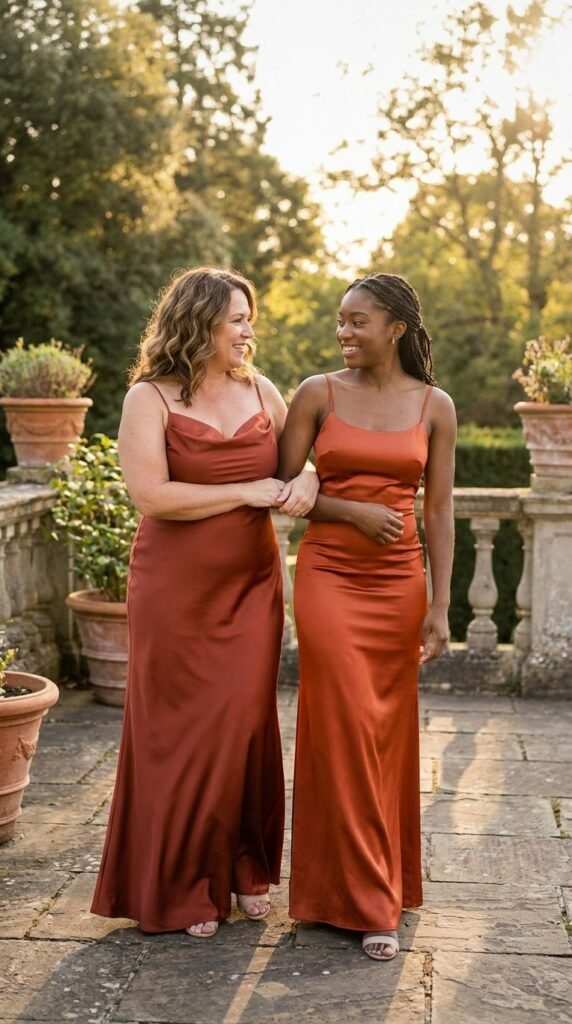
Earthy red-spice and burnt orange-red, the shades that sit between rust and brown. They’re the connective colours in a mixed autumn palette and rarely chosen as a single shade. Use them to bridge two stronger colours rather than as the lead.
10. Champagne and Taupe
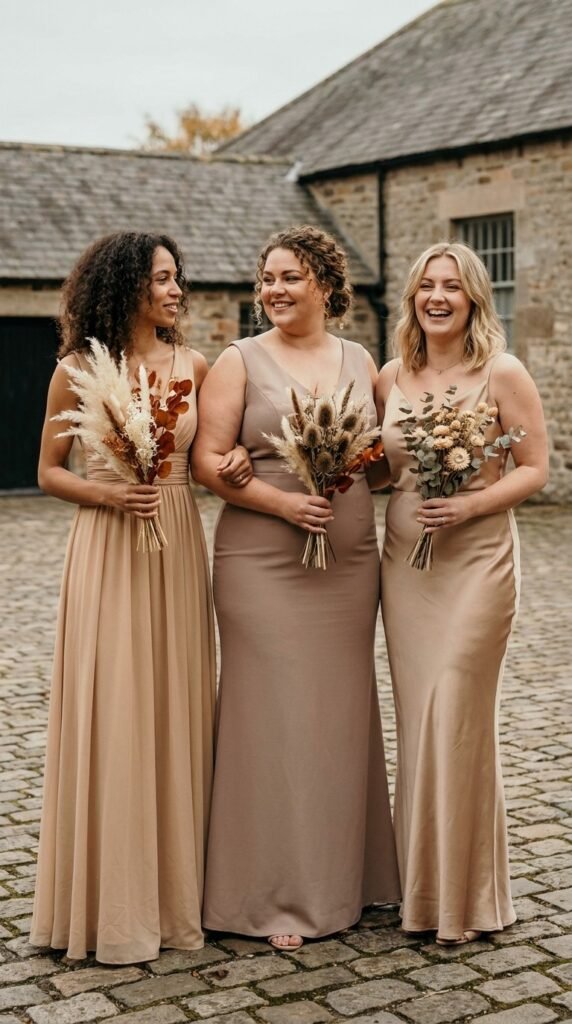
Warm neutrals that let the florals and the venue do the talking. Taupe is a genuinely balanced neutral and easy to coordinate around. It’s the choice for brides who want the party soft rather than saturated.
Direction 2: Building a Mixed Palette
11. The Tonal Family
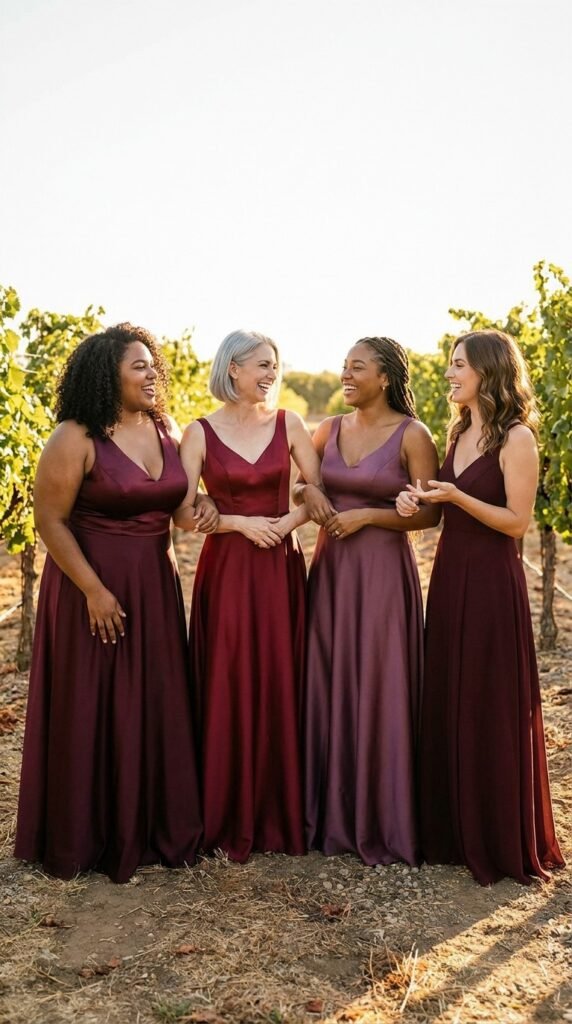
Three or four shades from one colour family, burgundy, wine and plum, worn across the party. It’s the defining 2026 approach and it photographs as one cohesive story. Keep the fabric identical so the shades read deliberate rather than accidental.
12. The Warm Earth Palette
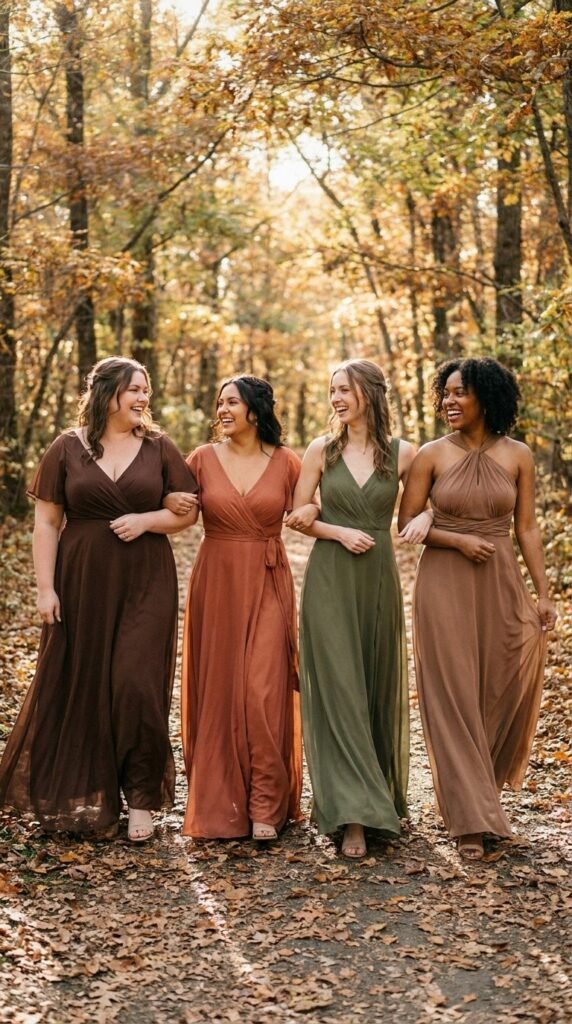
Chocolate, terracotta, olive and warm mocha together, creating depth without sacrificing cohesion. It’s the palette autumn weddings are leaning into hardest this year. Order swatches and photograph them together outdoors before committing.
13. The Rust and Burgundy Blend
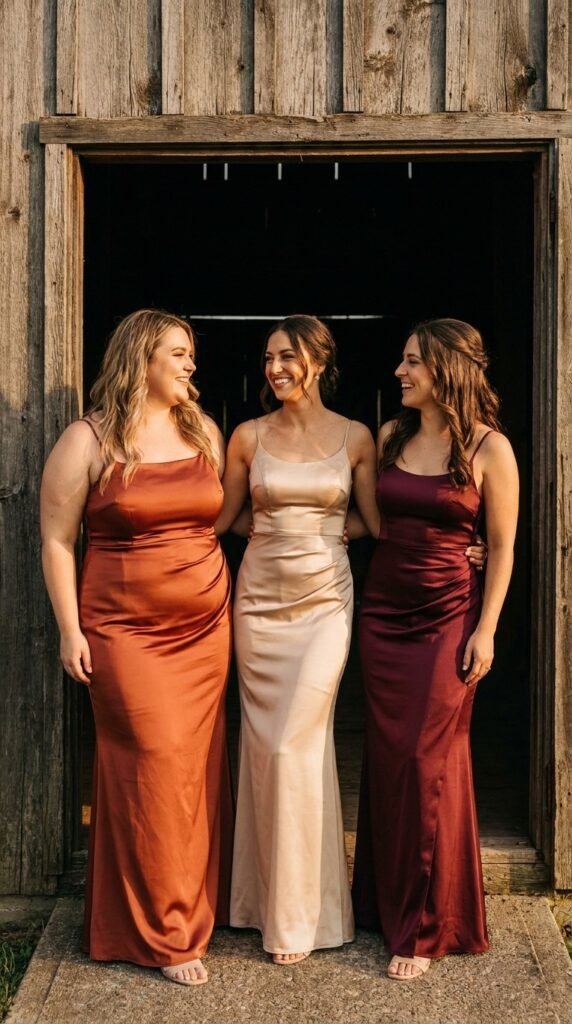
Two strong autumn reds worn side by side with a neutral between them. The tension between the orange-red and the wine-red is what makes it interesting. A champagne or taupe dress in the middle stops them competing.
14. The Jewel Mix
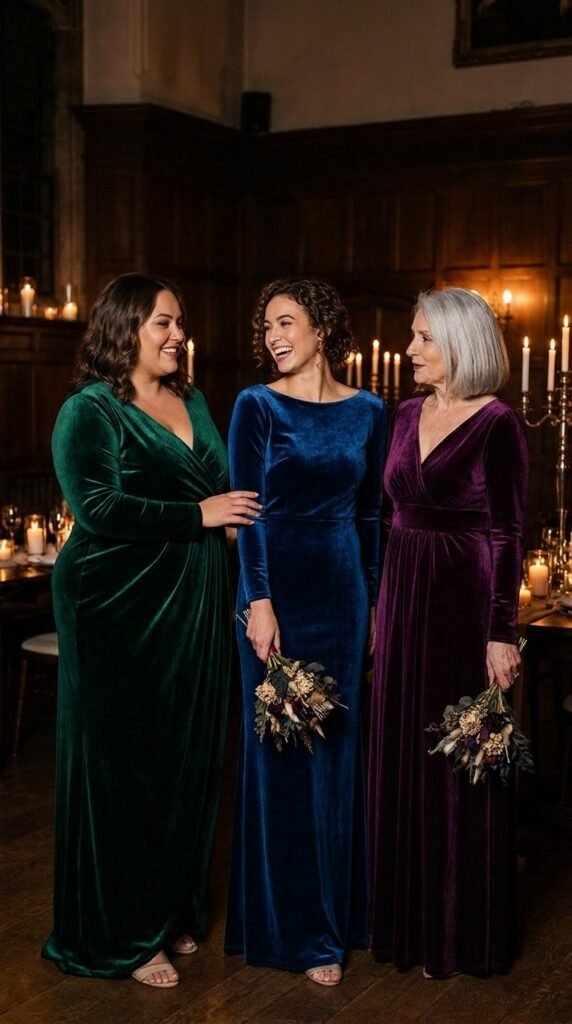
Emerald, sapphire and deep plum worn together for a richer, more formal autumn party. It’s dramatic and suits evening and candlelit venues. Match the fabric weight across all three so the party looks unified.
15. The Neutral Base With One Accent
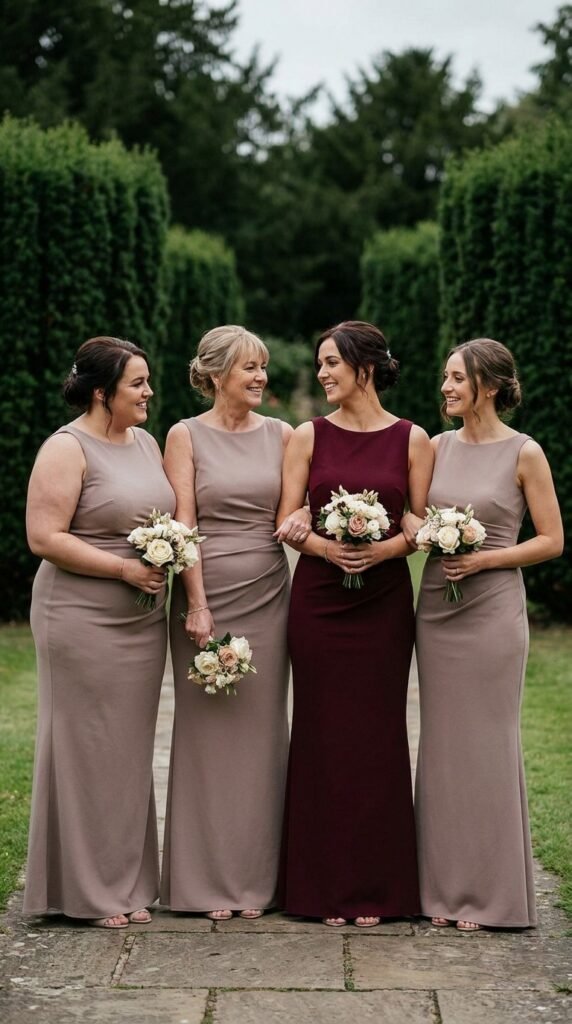
Most of the party in taupe or champagne with one or two in a saturated shade. It’s the easiest mixed palette to get right and costs the least in coordination stress. Put the accent colour on the maid of honour if you want a clear focal point.
16. Same Colour, Different Fabric
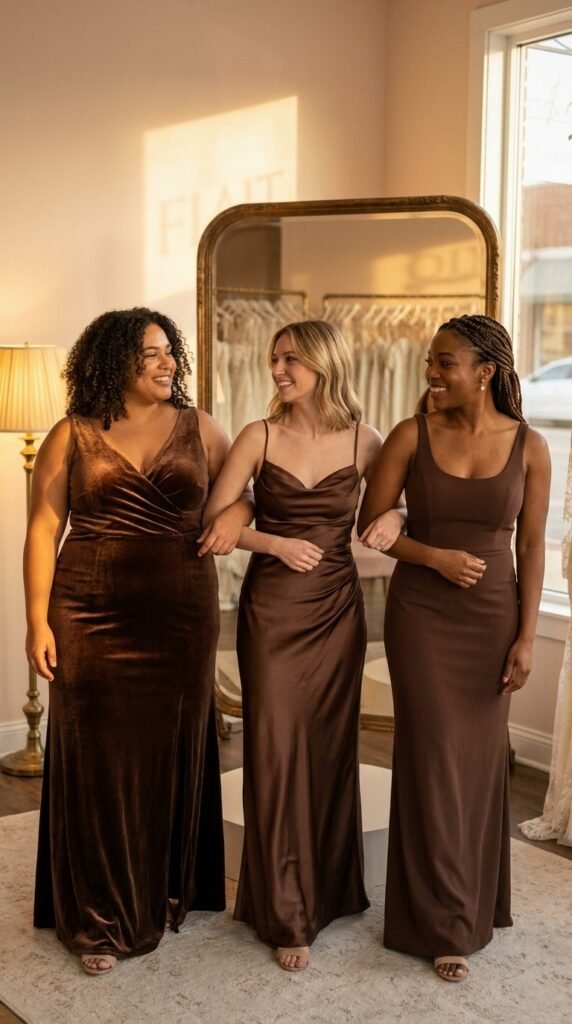
One shade across the party but split between velvet, satin and crepe. The texture variation does the work that colour variation usually does. It’s the subtlest version of mix-and-match and reads extremely polished.
Direction 3: Fabrics for Autumn
17. Velvet
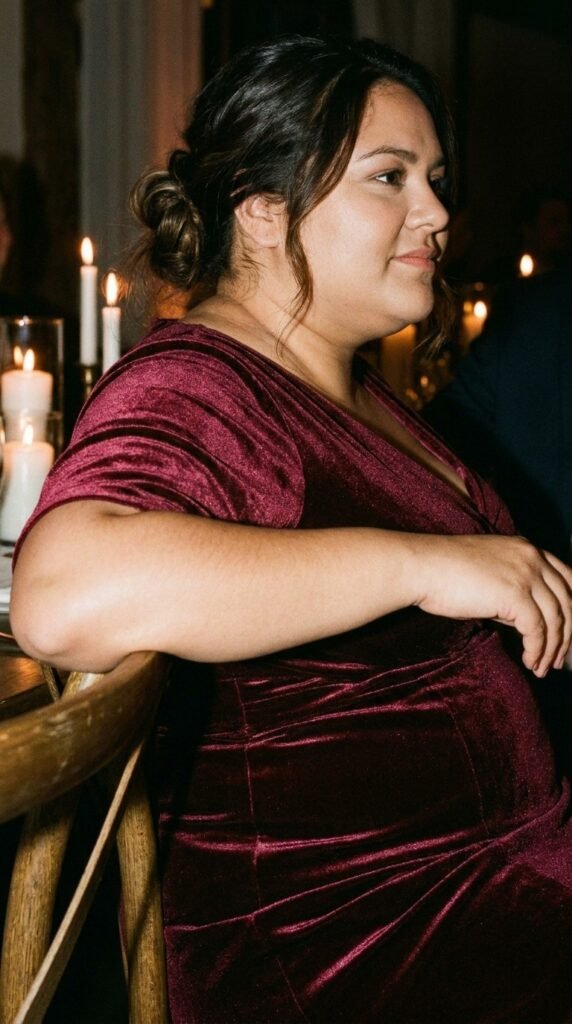
The fabric that defines autumn and winter bridesmaid dressing, with a depth and richness chiffon can’t reach. It photographs beautifully in candlelight because the pile catches light along its direction. It’s warm, which is a genuine advantage in November and a consideration in September.
18. Satin
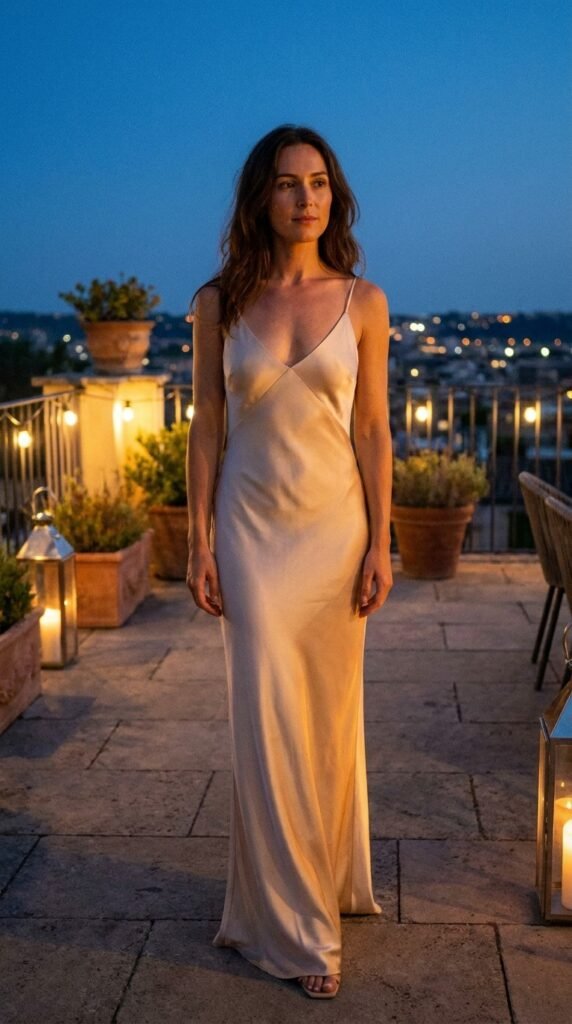
Polished, liquid and year-round, catching light along every fold. It reads formal and works from vineyard to ballroom. Matte satin is more forgiving in photographs than high-shine.
19. Chiffon
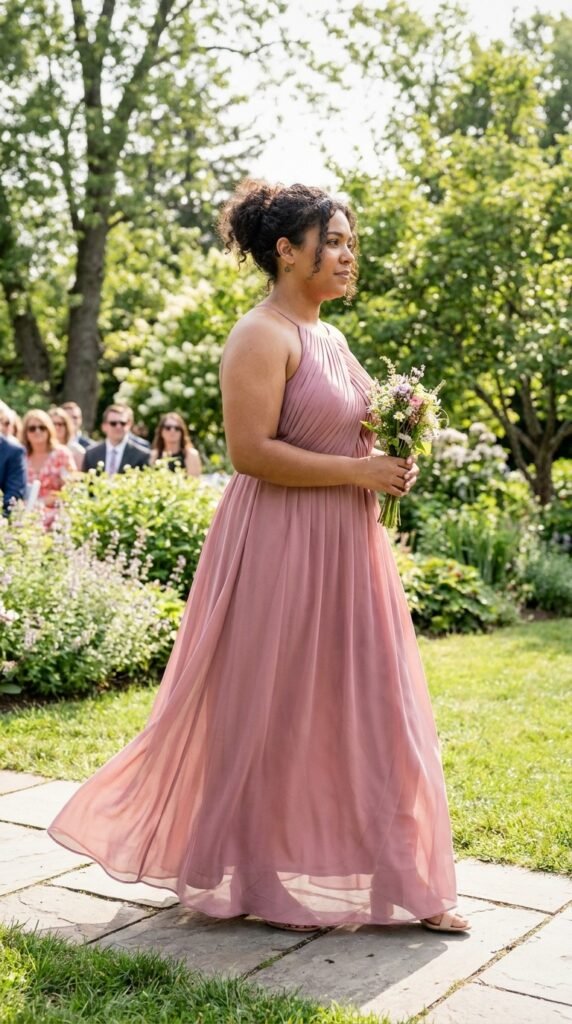
Light, floaty and forgiving, the traditional bridesmaid fabric for a reason. It’s the coolest option if your autumn is still warm, and it suits outdoor and garden ceremonies. Layer it over a warm-toned lining for autumn depth.
20. Crepe
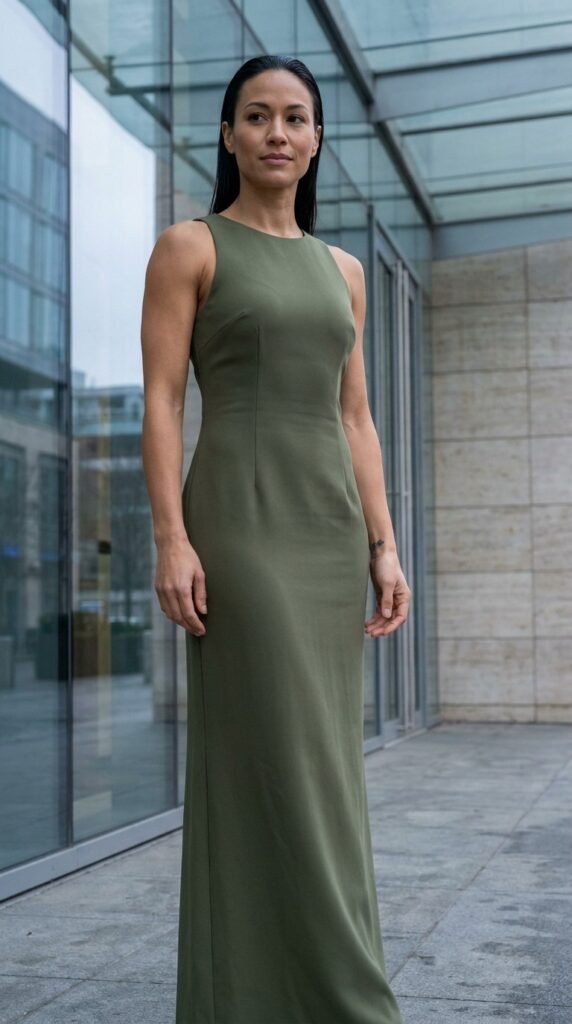
Structured, matte and modern, holding a clean silhouette without clinging. It’s the most fashion-forward of the four and the most likely to be worn again. It suits minimalist and city weddings particularly well.
21. Sequin and Metallic
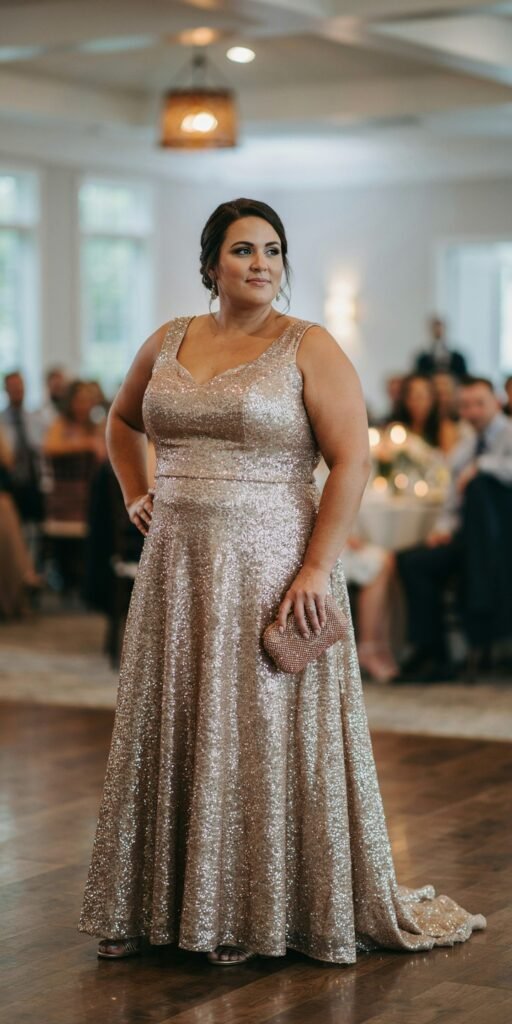
Gold, copper or bronze sequins for evening and black-tie autumn weddings. It’s the highest-impact option and catches every bit of low light. One sequinned party works, or one sequinned maid of honour among matte dresses.
22. Lace Detailing
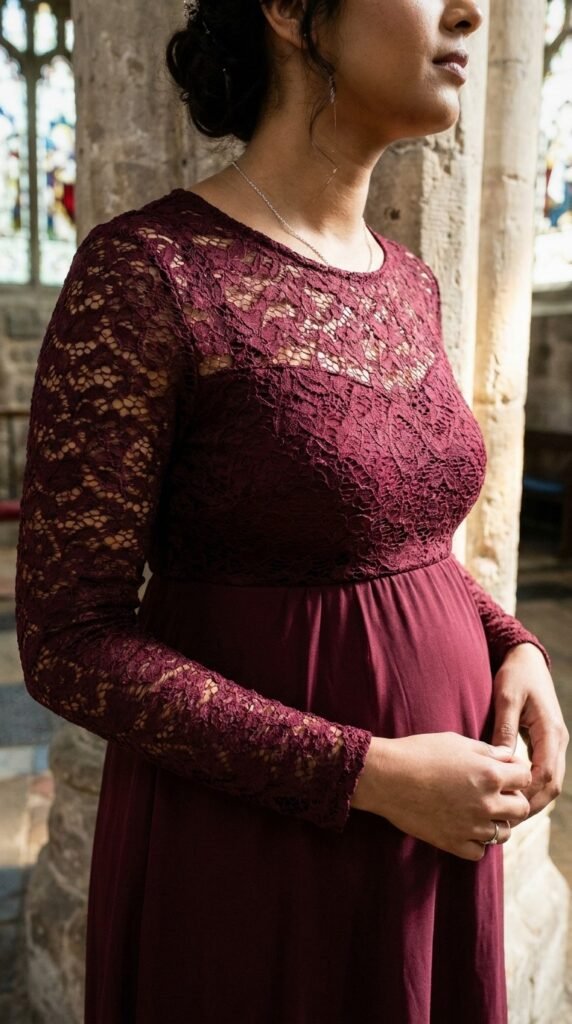
Lace bodices or sleeves over a solid autumn colour, adding texture without pattern. It’s romantic and suits historic and church venues. Tonal lace on the same colour reads far more expensive than contrast.
23. Botanical and Embroidered Prints
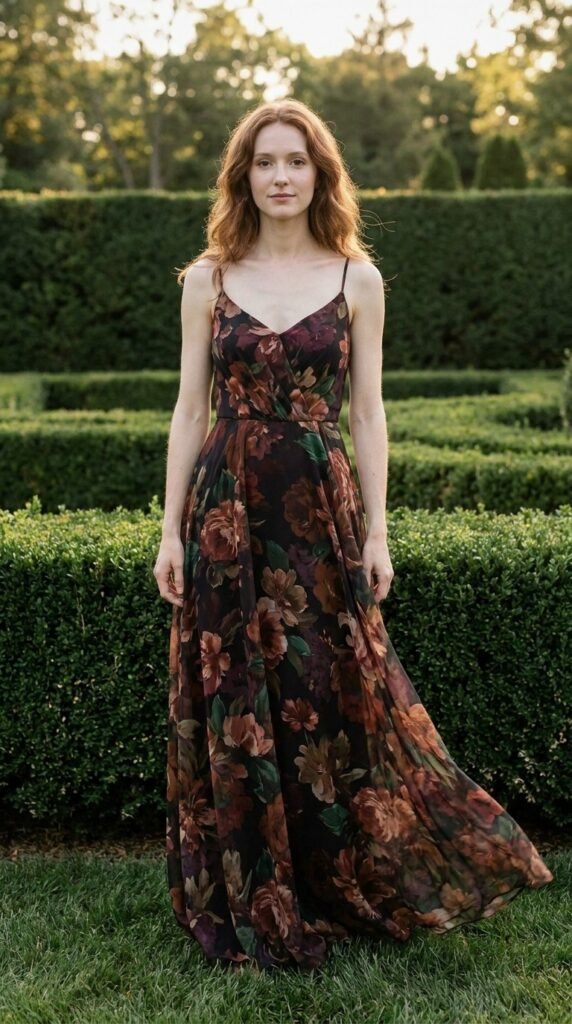
Boldly botanical, toile-inspired or delicately embroidered prints, which now feel like a fashion choice rather than a default. A well-chosen floral can anchor an entire wedding’s visual identity, especially at garden, vineyard and estate venues. Keep the florals in the bouquets simple if the dresses are printed.
Direction 4: Silhouettes and Necklines
24. The Halter Neck
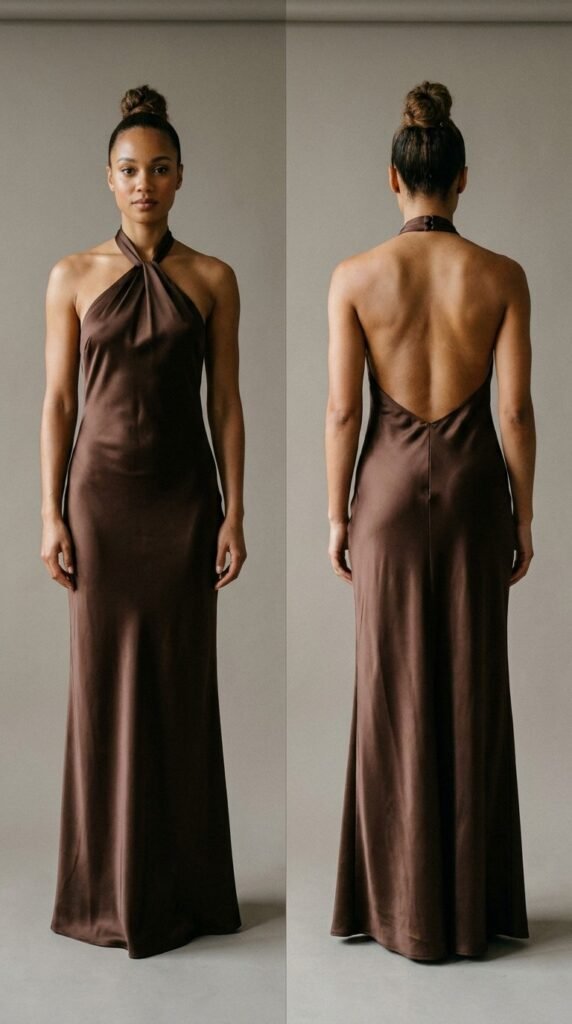
A sleek, modern neckline that frames the shoulders and elongates the whole line. It’s one of the strongest silhouettes in autumn collections this year. It suits every body and needs no strapless engineering.
25. The Cowl Neck
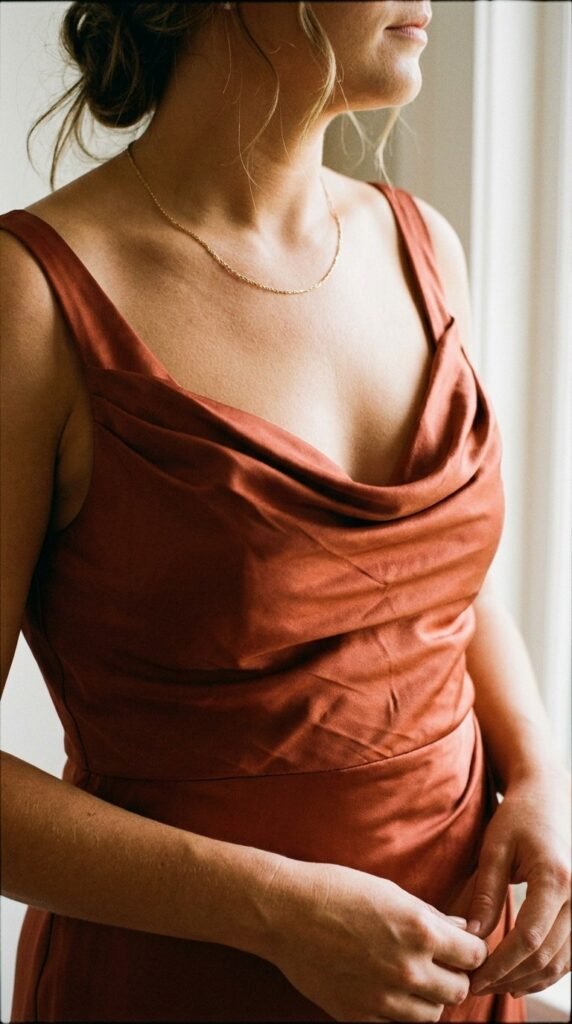
Soft draped fabric at the neckline, particularly beautiful in satin where it catches light. It’s flattering, comfortable and requires no adjusting all day. It reads elegant without any embellishment.
26. The Square Neck
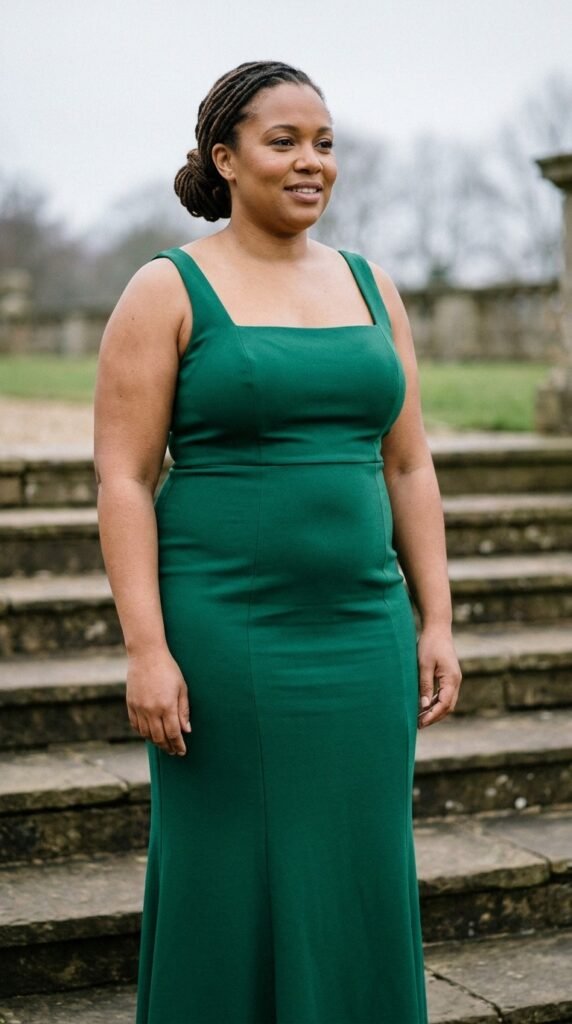
A clean straight neckline that photographs beautifully and suits every shoulder shape. It’s the quiet achiever of bridesmaid necklines. It works equally well with straps or short sleeves.
27. The One-Shoulder
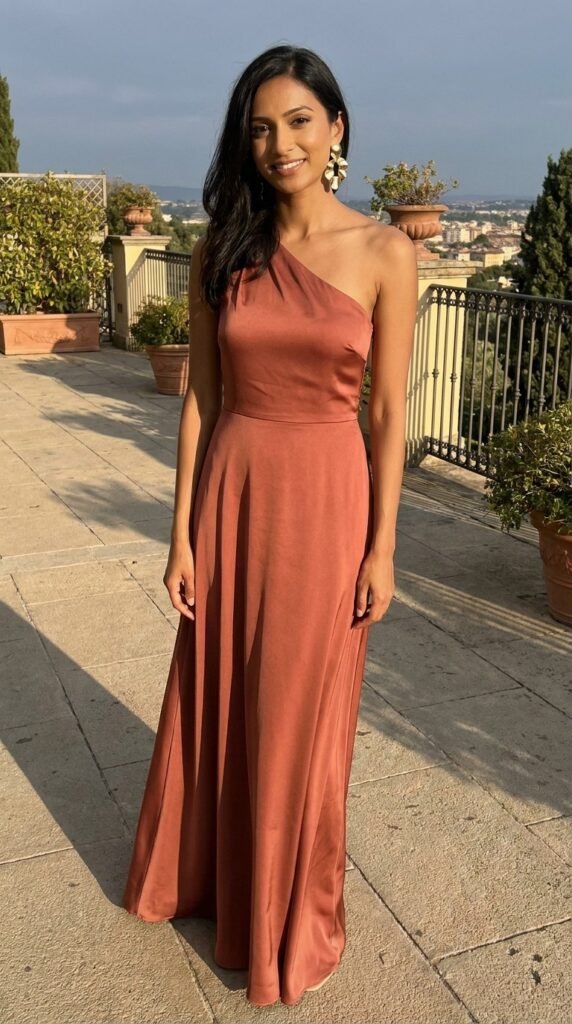
A single asymmetric strap, modern and slightly editorial. It gives a mixed party visual variety when combined with other necklines in the same color. Earrings on the bare side, hair swept to the other.
28. The Long Sleeve
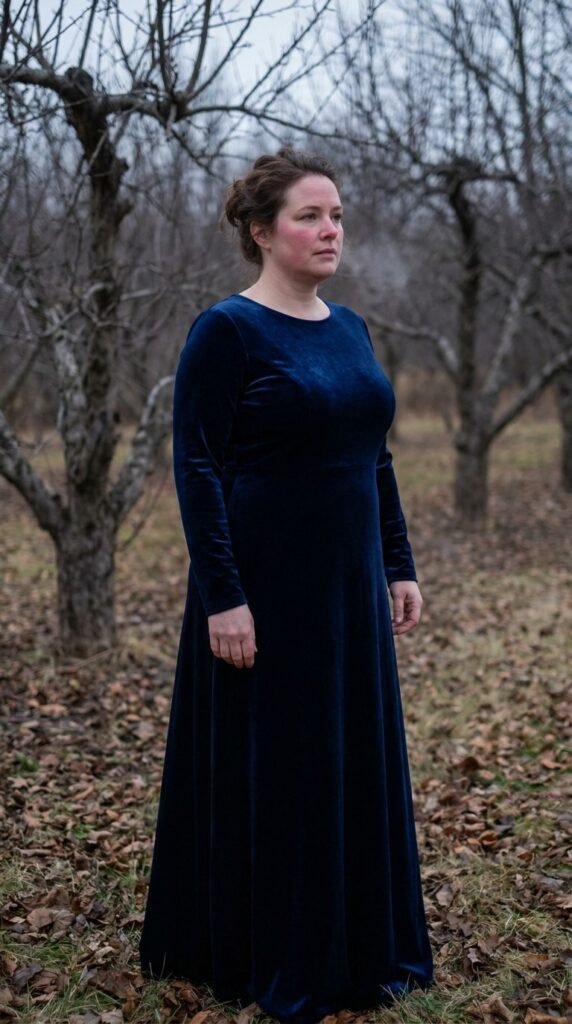
Full sleeves in velvet, crepe or lace, genuinely practical for late-autumn ceremonies. It’s the warmest option here and reads sophisticated rather than covered up. Sheer sleeves give the look without the heat.
29. The Slip Dress
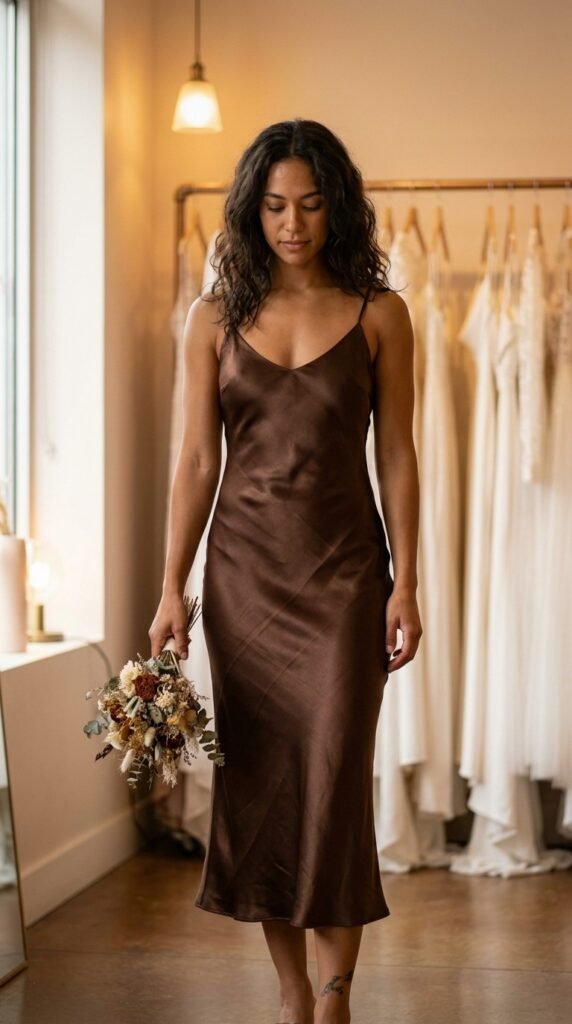
A bias-cut satin slip, minimal and modern. It’s the single most rewearable silhouette on this list. It needs the right underwear and a proper hem, so budget for alterations.
30. The A-Line
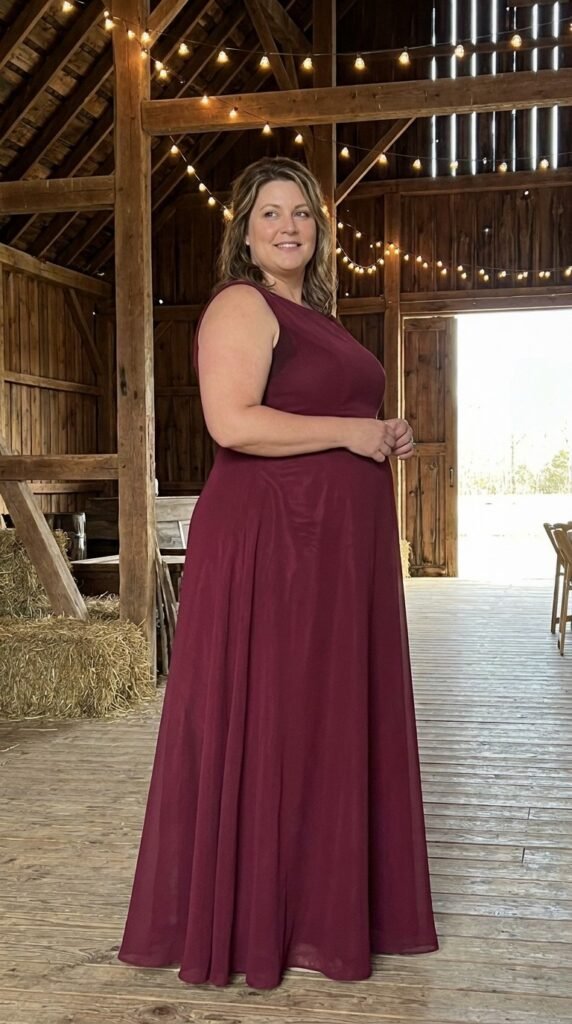
A fitted bodice releasing into a soft skirt, the most universally comfortable cut available. It’s the safest choice for a party with genuinely varied body types. It photographs well standing, seated and dancing.
31. The Wrap Dress
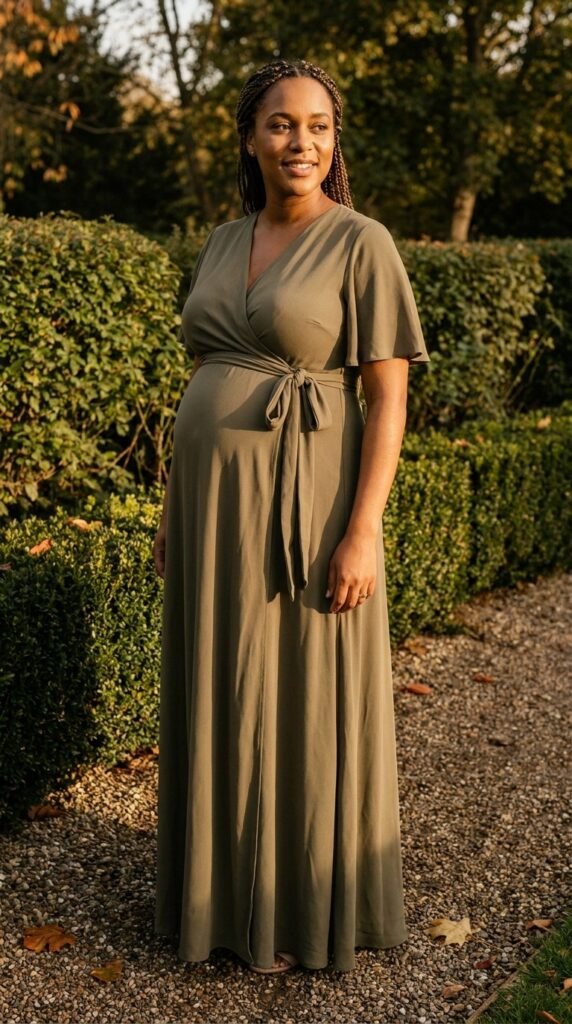
A true wrap that adjusts to the wearer rather than the reverse. It’s the most forgiving option for a party ordering months in advance or for pregnant bridesmaids. It also solves sizing changes without alterations.
32. The Two-Piece Set
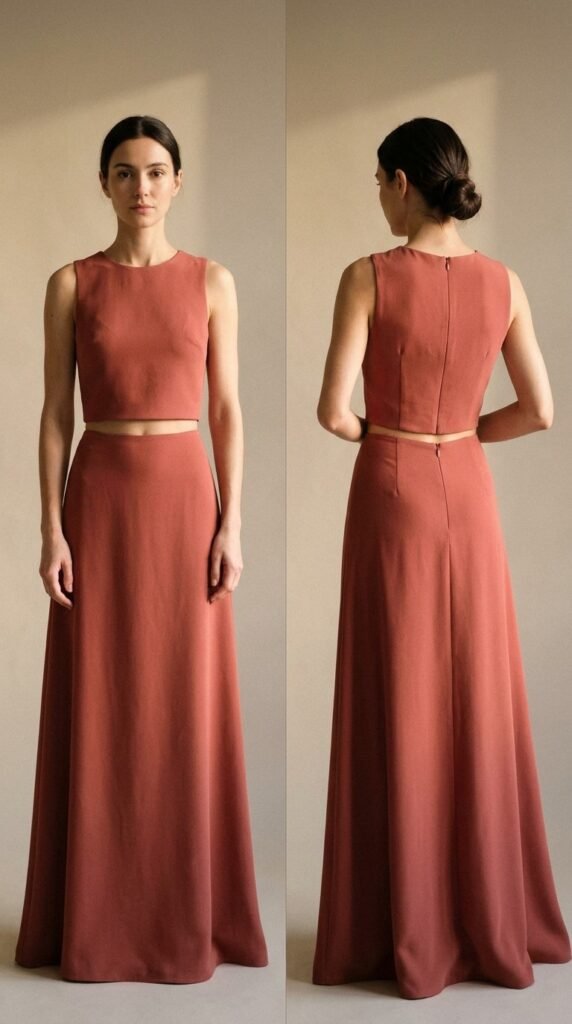
A separate top and skirt in matching fabric, which each bridesmaid can rewear independently. It answers the rewearability question better than almost anything else here. It also solves the problem of one party spanning many sizes.
Direction 5: The Practical Decisions
33. Let Them Choose the Neckline
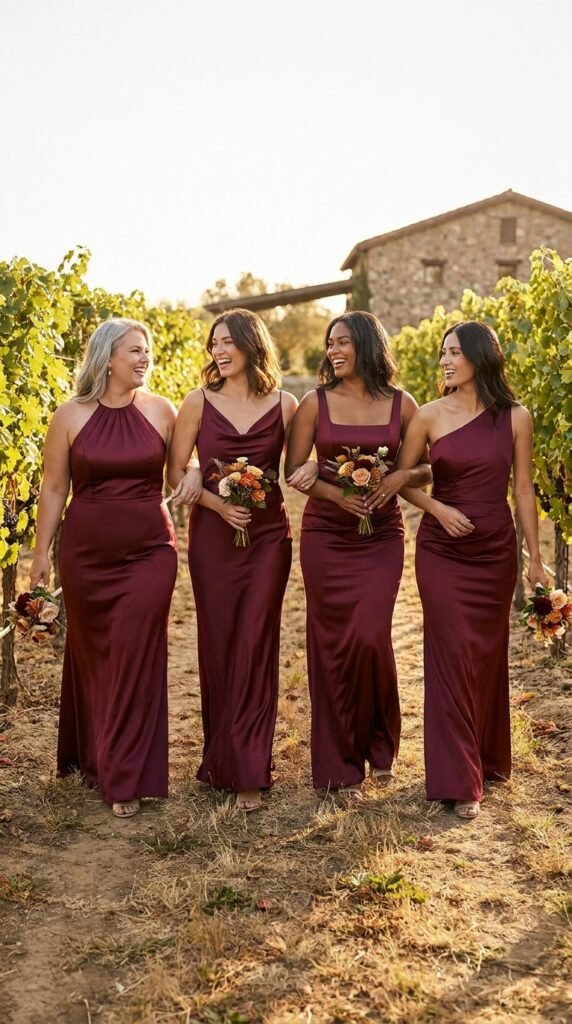
Set the colour and fabric, then let each bridesmaid pick her own cut from a designer’s range. It’s the most requested approach right now and it costs the bride nothing. Every woman knows what she feels good in better than you do.
34. Order Swatches Before Anything
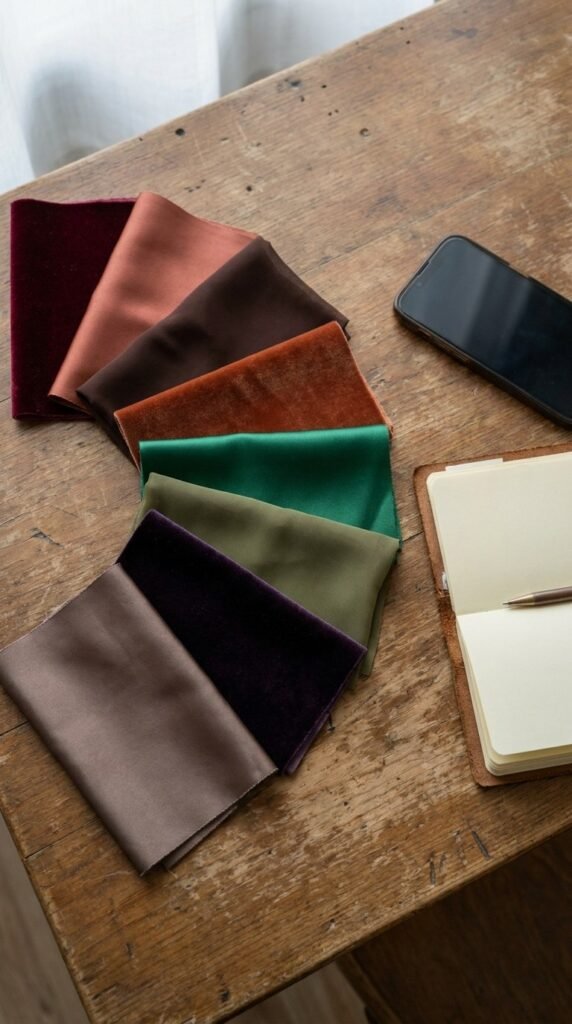
Get physical swatches of every shade you’re considering and photograph them together in daylight and candlelight. Screens lie about colour constantly, and terracotta on a monitor is not terracotta in a barn. This step prevents the single most common regret.
35. Coordinate With the Suits Deliberately
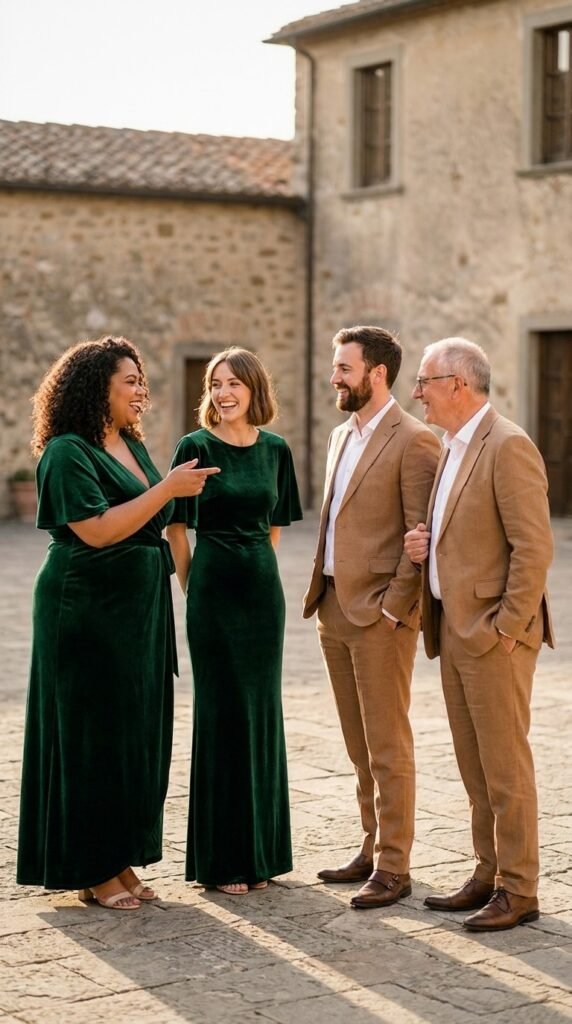
Decide the groomsmen’s suits alongside the dresses rather than after. Emerald with tan or warm grey rather than black is the modern pairing this year, and warm-toned suits flatter autumn palettes far better than black does. Photograph a suit swatch beside a dress swatch.
36. Plan for the Temperature Honestly
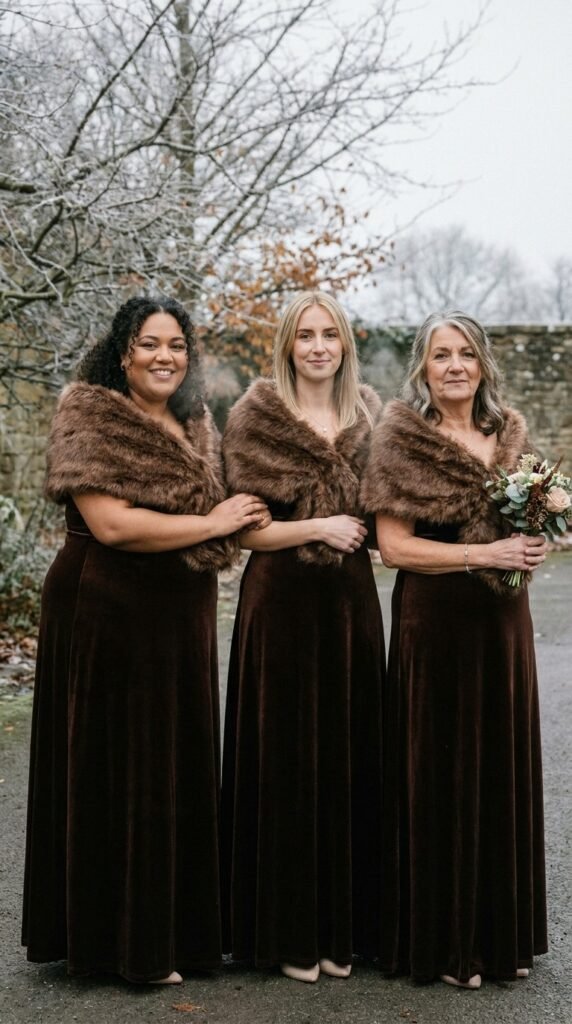
An outdoor October ceremony is cold, and a bridesmaid shivering through photographs is visible in every frame. Velvet, long sleeves, or matching wraps and faux-fur stoles solve it. Buy the wraps at the same time as the dresses, not the week before.
37. Choose Shoes That Survive Grass
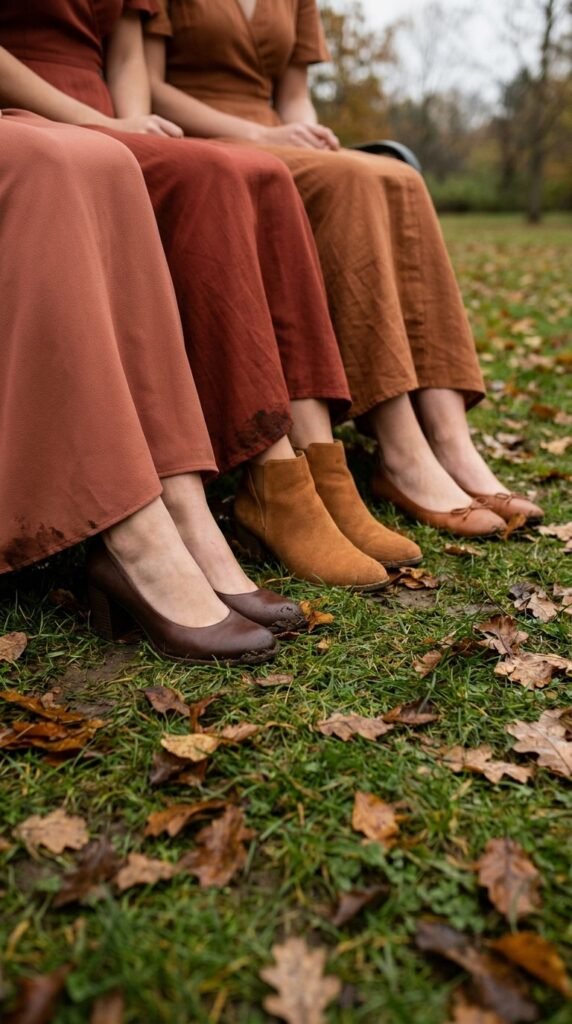
Block heels or boots for outdoor autumn venues, because stilettos and damp lawns are a well-documented disaster. Boots under a floor-length dress are invisible and genuinely warm. Let each bridesmaid wear a height she can actually stand in.
38. Order Early for Autumn
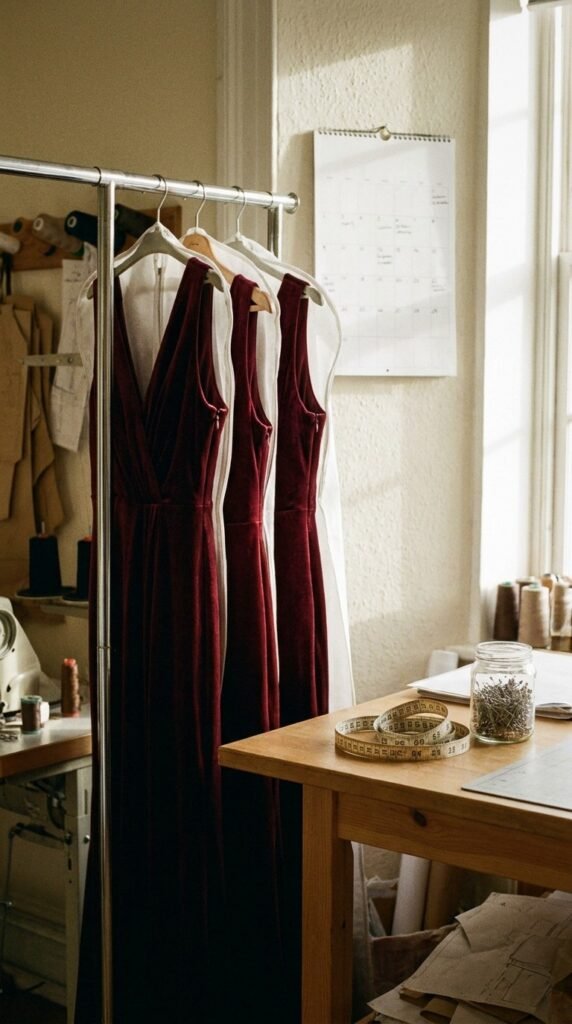
Bridesmaid dresses typically take months, and velvet and specialty fabrics take longer. Ordering six to eight months out avoids rush fees and gives time for alterations. Late orders are where budgets quietly break.
39. Budget for Alterations From the Start
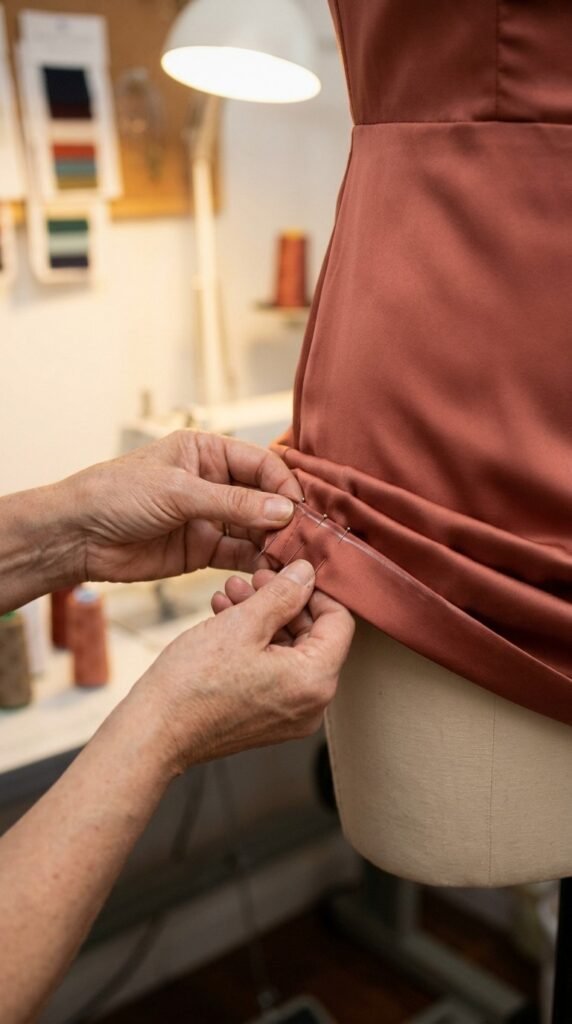
Almost every bridesmaid dress needs hemming at minimum, and that cost lands on the bridesmaid. Mentioning it upfront when you announce the dress is a kindness. A hem and a strap adjustment transform an off-the-rack dress entirely.
40. Prioritise Rewearability
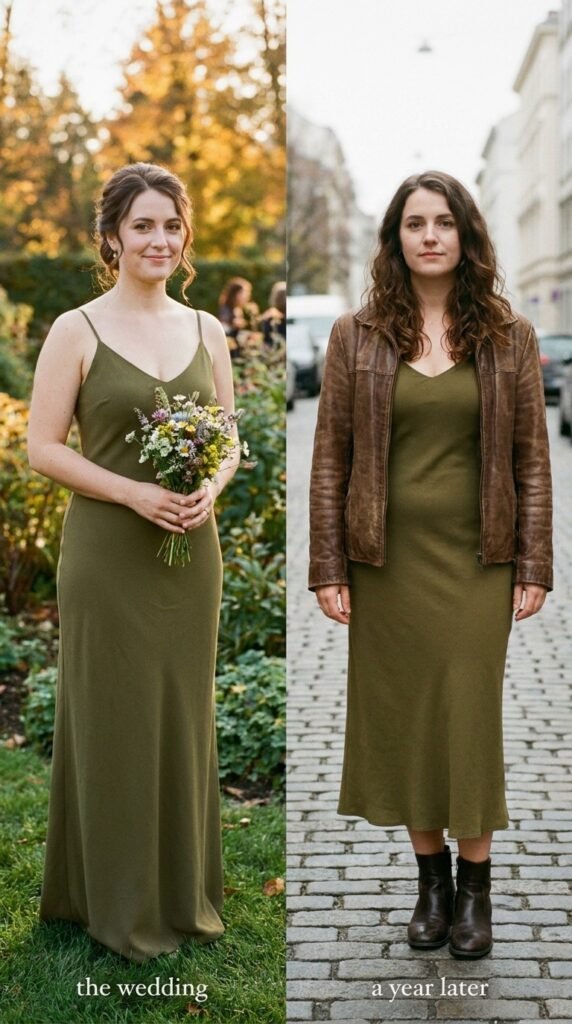
Choose silhouettes, fabrics and colours that work outside a wedding context, which is now a genuine design priority rather than a hopeful claim. Olive, navy, chocolate and taupe all live comfortably in a normal wardrobe. It reflects both a sustainability mindset and a practical one.
41. Accommodate Every Body From the Start
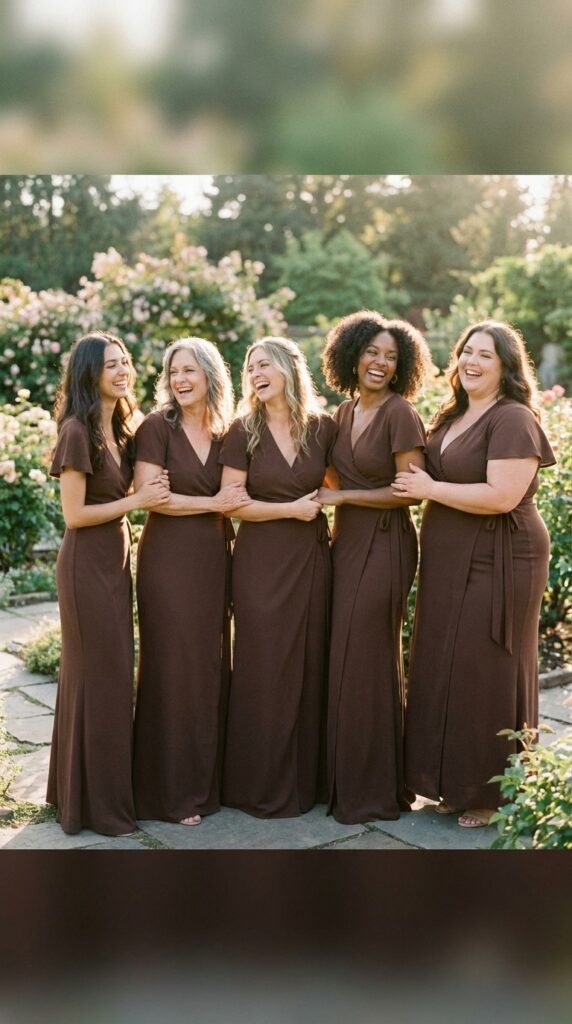
Choose a designer with a genuinely wide size range and a silhouette that works across it, rather than picking a dress and hoping. Wrap dresses, A-lines and two-piece sets scale best across a varied party. Ask before you announce, not after.
42. Keep the Bouquets Simple When the Dresses Are Rich
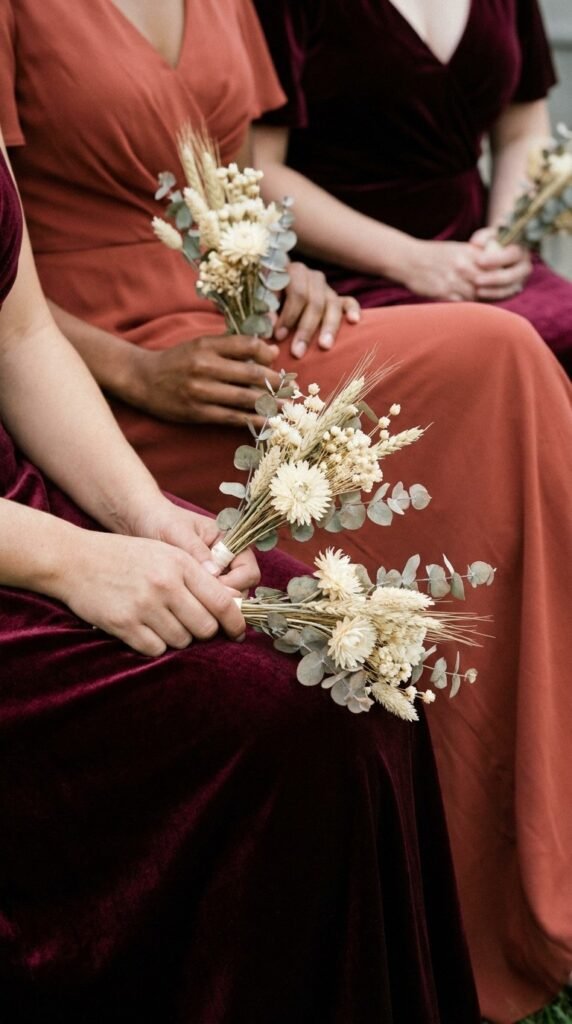
Deep jewel tones and printed fabrics need restraint in the flowers, or the photographs become busy. Cream, white and dried textures let a burgundy or terracotta party breathe. The reverse is also true, quiet dresses can carry dramatic bouquets.
Getting the Party Ready
Announce the dress with the full cost. Tell your bridesmaids the dress price, the likely alteration cost and whether shoes or wraps are expected, all at once. Clear numbers early prevent the resentment that builds when costs arrive in instalments.
Photograph the palette before you commit. Lay every swatch together on a table, photograph it in daylight and again in warm indoor light, and look at it on a phone screen. If the palette survives all three, it will survive your wedding.
And remember what the party is for. The dresses exist to make a group of people you love look and feel good standing beside you, which is a different goal from making them match. The 2026 approach, one palette, individual choice, genuine comfort, exists precisely because it produces better photographs and happier bridesmaids at the same time.
If I’m Picking Three to Start With
Chocolate brown because it’s the breakout colour of the year and flatters everyone, the tonal family palette because it’s the approach defining 2026, and letting your bridesmaids choose their own neckline because it costs you nothing and improves every photograph. Save this list to your wedding board on Pinterest before you order a single swatch, and send it to your bridal party so they can see the palette rather than a single dress.
Where the Trends Come From
Trend and colour guidance from Green Wedding Shoes’ 2026 fall bridesmaid trend report, Kennedy Blue’s bridesmaid colour trend data, Revelry’s 2026 bridesmaid colour analysis, Loverly’s 2026 and 2027 bridesmaid trend coverage, 100 Layer Cake’s bridesmaid trend report, and current autumn wedding fashion reporting. Colours render differently on every screen; order physical swatches and view them in your actual venue light before committing.
