


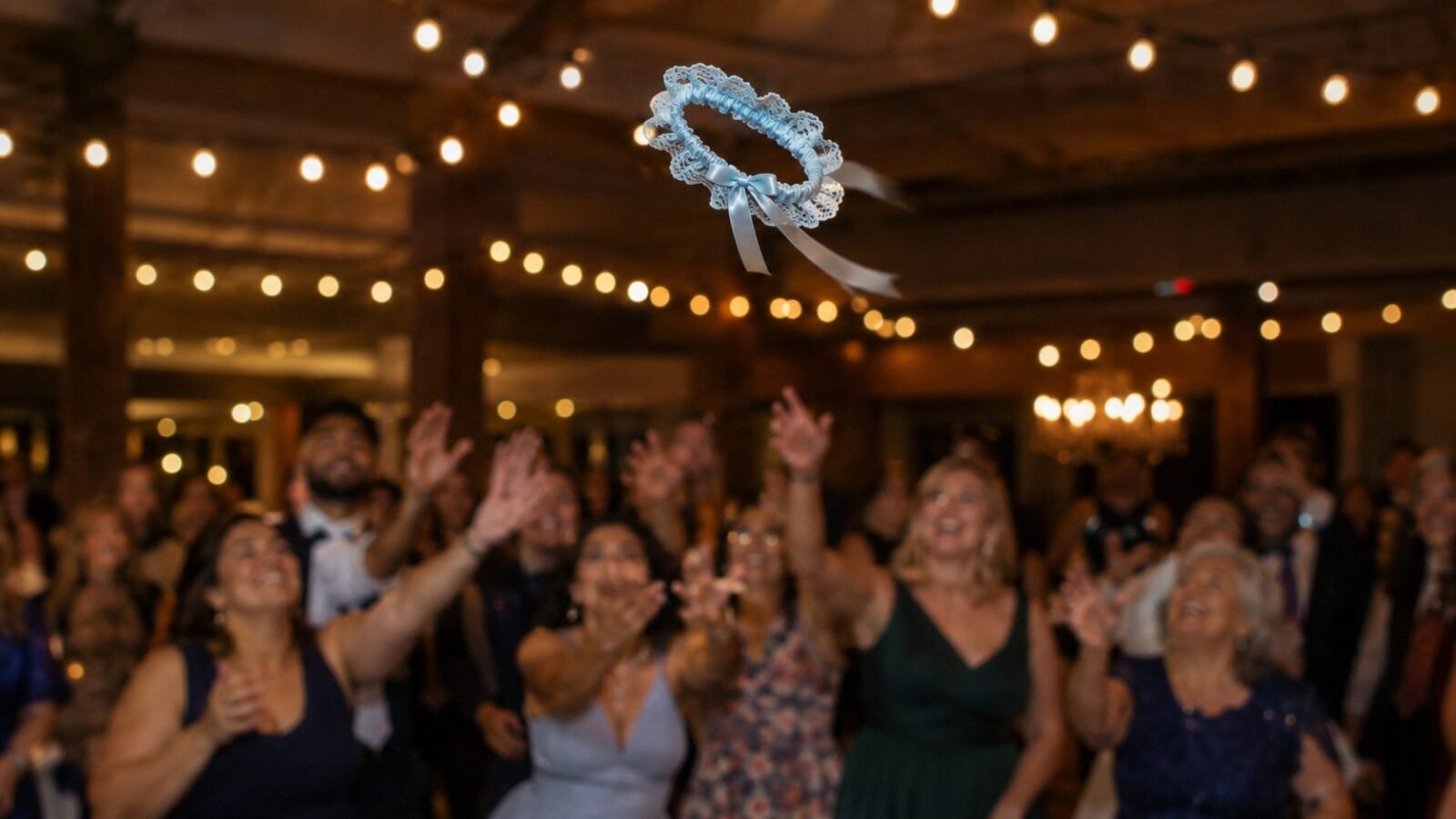
The garter outlived the toss
Here is the thing nobody says plainly enough. Brides are still wearing garters in 2026, but the garter toss itself has quietly fallen away. Photographers and planners report it is now genuinely rare compared with a decade ago, particularly at modern and relaxed weddings, and plenty of couples have dropped it alongside the bouquet toss in favour of something that includes everyone. What has survived is the garter as an object. A hidden detail under the dress, a keepsake to put in a box afterwards, and for a lot of brides the easiest possible answer to something blue. That shift is worth knowing before you shop, because it changes what you are actually buying. If nobody is going to see it, comfort and sentiment matter more than drama. Twenty-three ideas below, covering whether to wear one at all, the styles worth knowing, how to personalise it, getting the fit right, and what people are doing instead of the toss.
Three honest answers before you decide
Wearing one is entirely optional, and skipping it is not a failure of tradition. Plenty of brides in 2026 wear no garter at all, plenty wear one purely as a private detail, and neither choice is wrong. Anyone telling you it is required is quoting a rule that has not applied for a long time.
You can wear one and still skip the toss. This is the middle ground most brides land on now, keeping it for photographs and sentiment and simply never mentioning it during the reception. Some take it off before the reception starts and put it straight into a keepsake box.
And the history is stranger than the accessory suggests. The tradition goes back to medieval Europe, where guests would tear pieces from the bride’s dress for luck, and the garter was offered up instead to spare the gown. Knowing that makes it easier to feel relaxed about adapting it however you like, because the original version has already been through several hundred years of editing.
Direction 1: Deciding whether to wear one
1. As your something blue
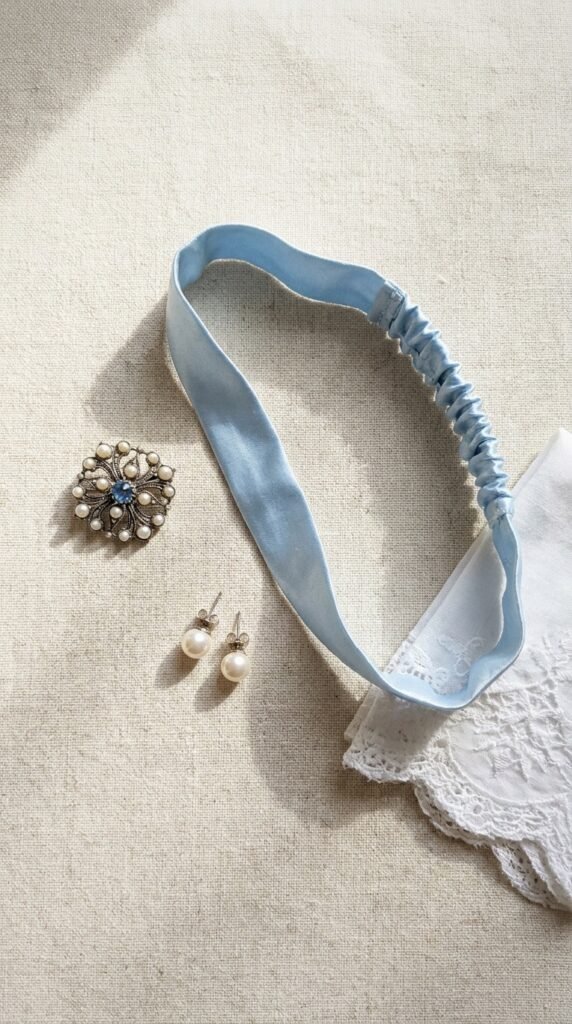
A blue garter, or a white one with a blue ribbon or trim. It is the most popular reason brides wear one at all, and it is the tidiest solution to the rhyme because it stays hidden. It also counts as something new if you have just bought it.
2. As a keepsake only
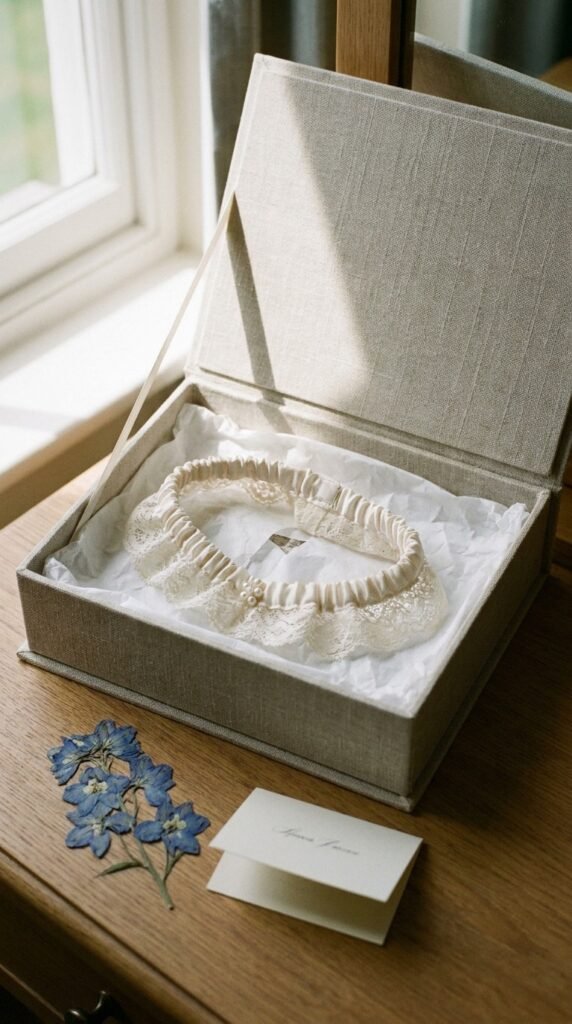
Worn for the day, photographed with the rest of your details, then kept. This is the dominant approach now, with the garter treated as a memento rather than a prop. It is also the easiest version to justify spending a little more on.
3. Worn for photos, removed before the reception
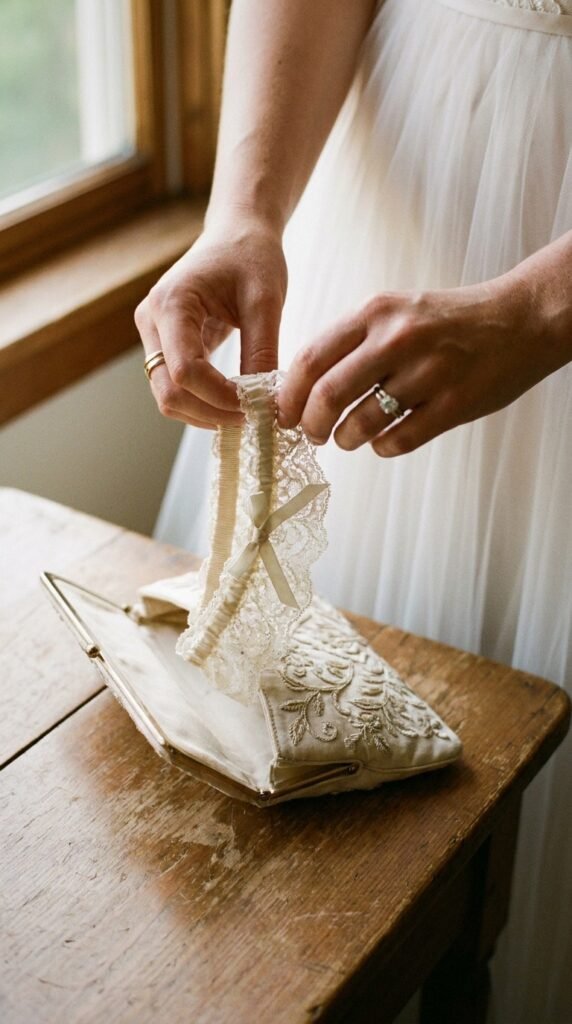
On for the ceremony and portraits, off before dinner. It gives you the detail shots and the sentiment without carrying anything through hours of dancing. Hand it to whoever is holding your things so it does not get lost.
4. Skipping it entirely
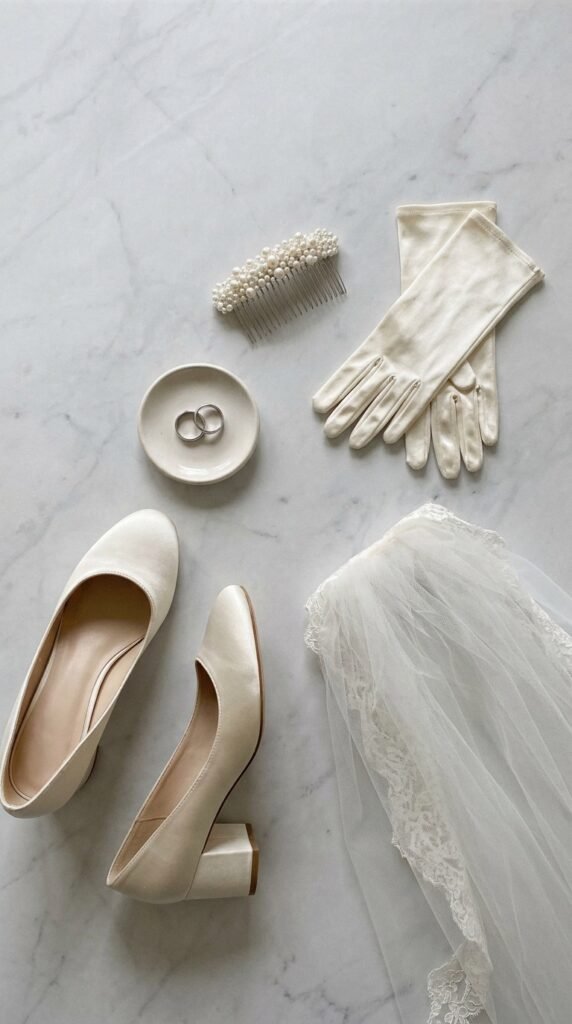
No garter, no toss, no explanation owed to anybody. A meaningful number of brides do exactly this and nobody notices. If the only reason you are considering one is that you feel you should, that is your answer.
Direction 2: The styles worth knowing
5. Classic white or ivory lace
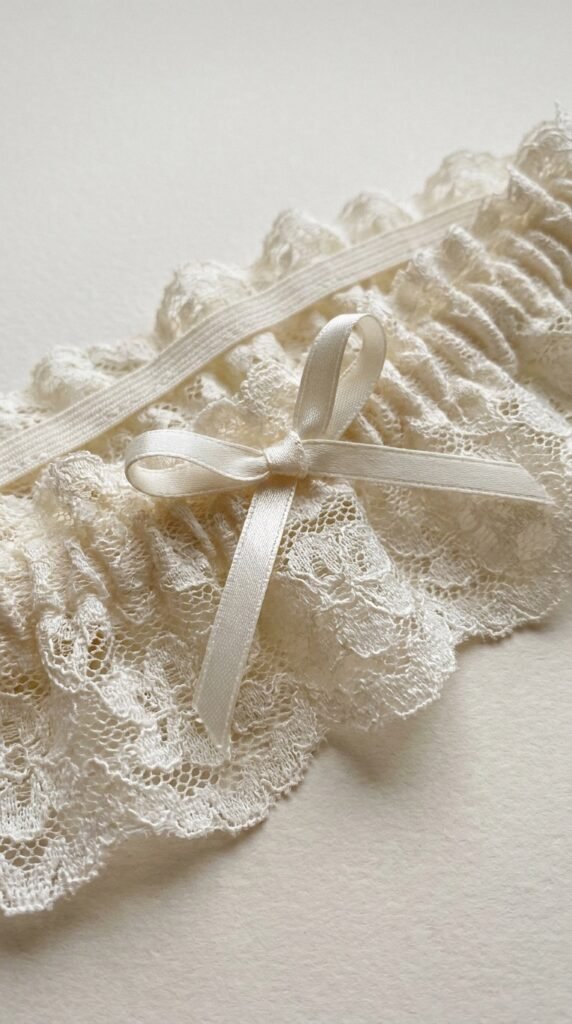
A traditional lace band in white or ivory, usually with a small ribbon detail. It is the version most people picture and it photographs beautifully against a gown. Match ivory to ivory rather than putting bright white against a warmer dress.
6. Satin ribbon
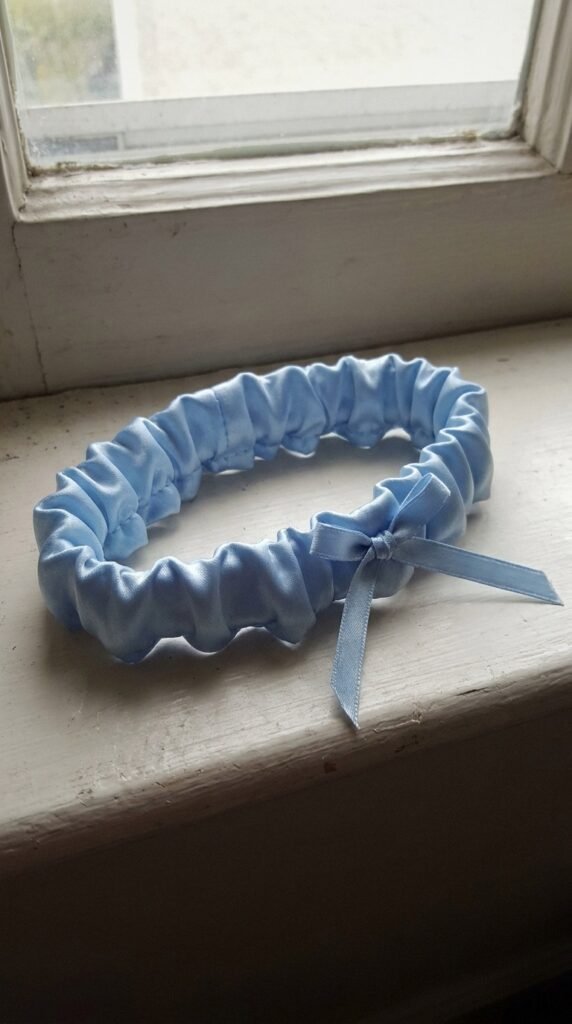
A simple satin band with a bow, with no lace at all. It is the quietest and most comfortable option, and it sits flatter under a fitted dress than lace does. Pale blue satin covers the something blue question in one purchase.
7. Dusty blue
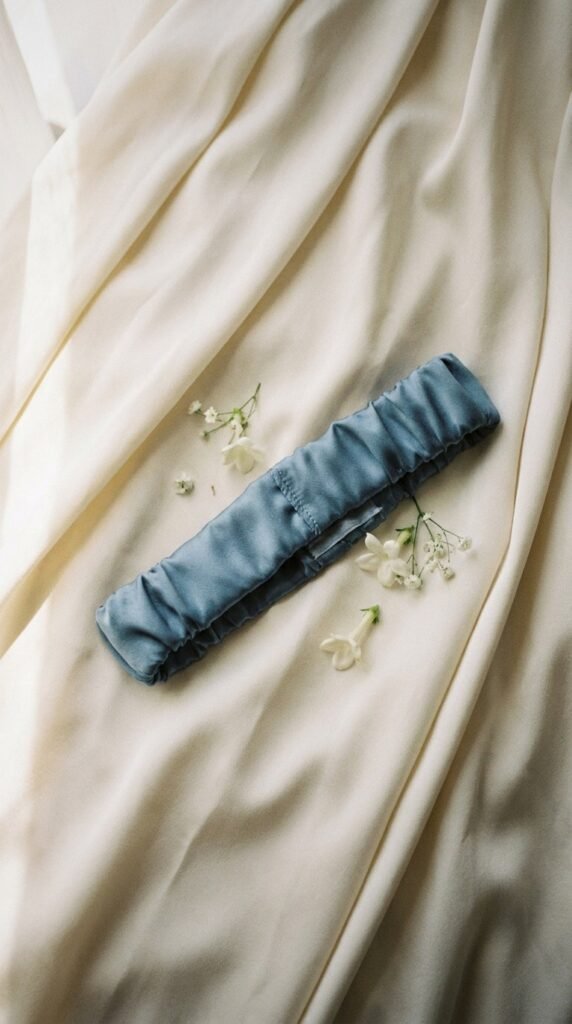
A soft muted blue that suits garden and romantic weddings. It is gentler than a bright blue and it coordinates with most modern palettes. It photographs well in daylight detail shots.
8. Navy or royal blue
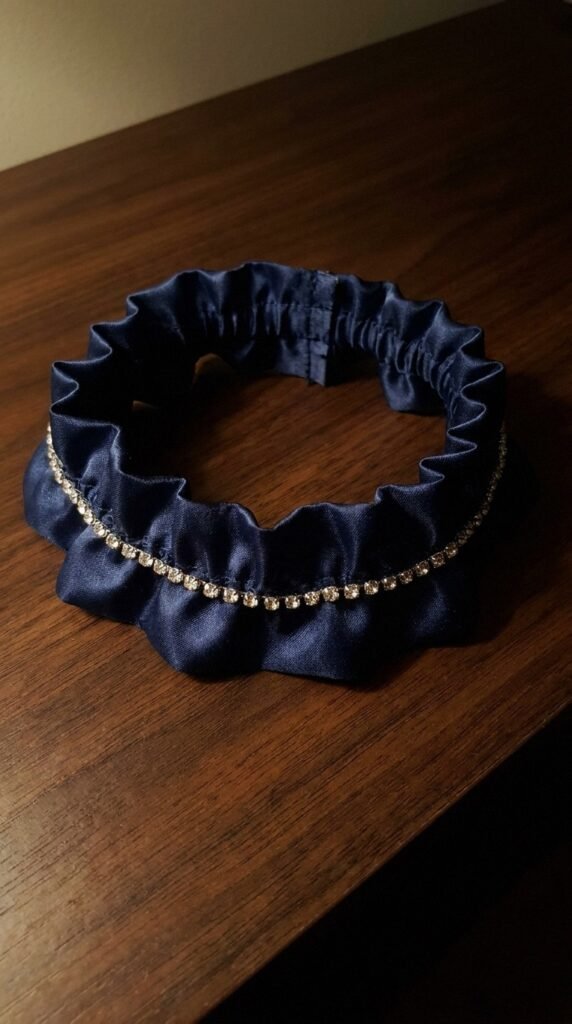
A deeper, more saturated blue for formal weddings. It adds a bit of drama to an otherwise pale set of details. Navy velvet in particular looks far more expensive than it costs.
9. Velvet
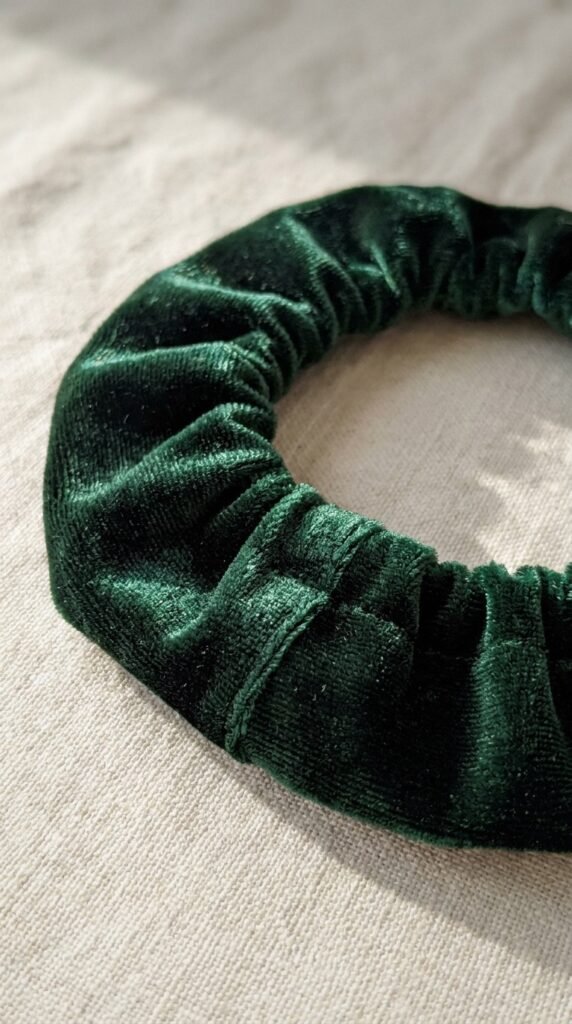
A velvet band in blue, burgundy or forest green. It suits autumn and winter weddings and it has real depth in photographs where flat fabrics go plain. It is also softer against the skin than stiff lace.
10. Crystal and beaded detail
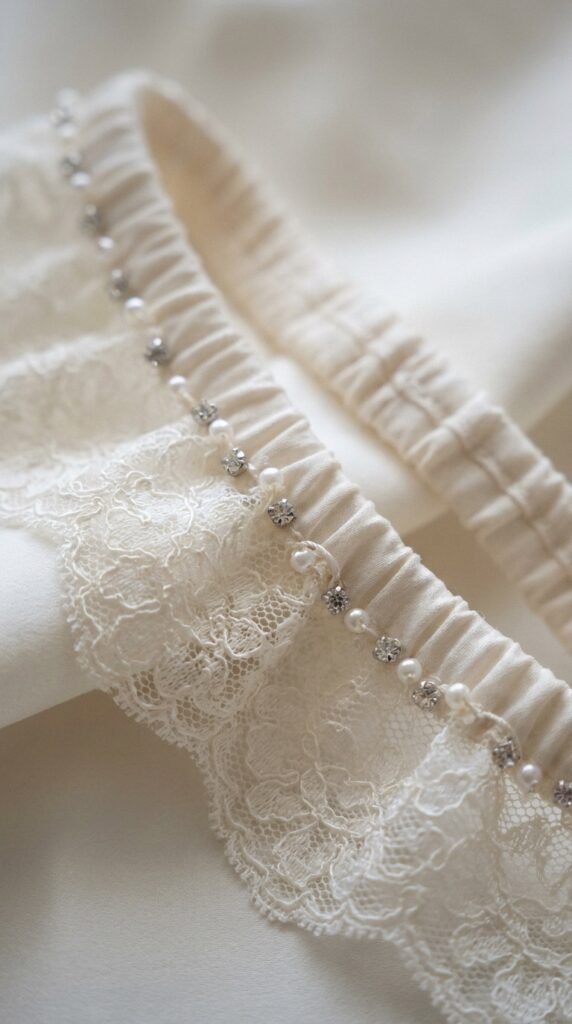
Lace or satin with small crystals, pearls or beadwork along the band. It catches light in detail shots and it pairs naturally with an embellished gown. Keep the beading to one edge so it does not press into your leg.
11. Something bold
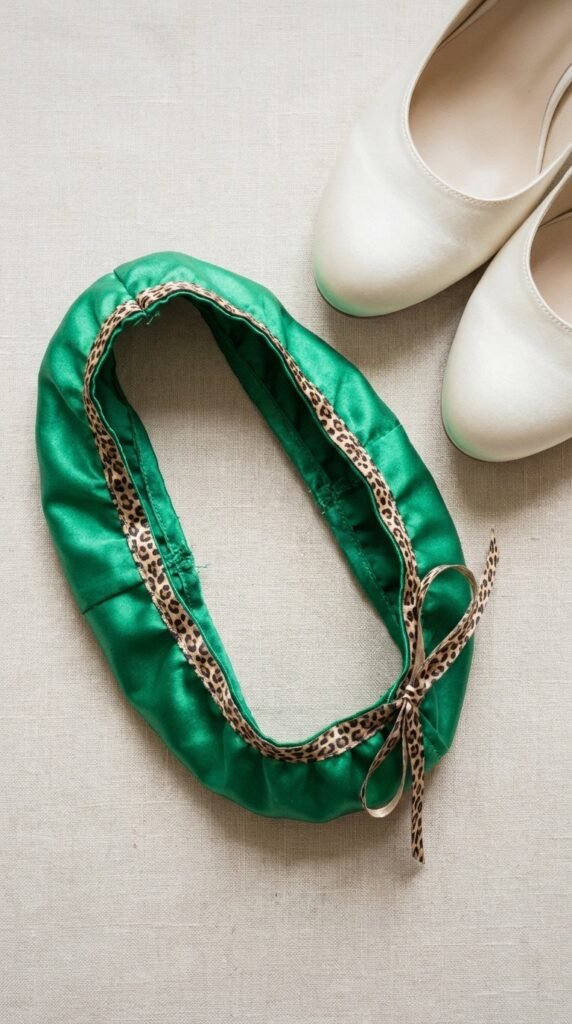
A bright colour, a print, or something with genuine personality. Because it sits under the dress, a garter does not have to match your wedding theme at all, which makes it one of the few places you can be completely self-indulgent. Plenty of brides use it as a private joke.
Direction 3: Personalising it
12. Embroidered with your date
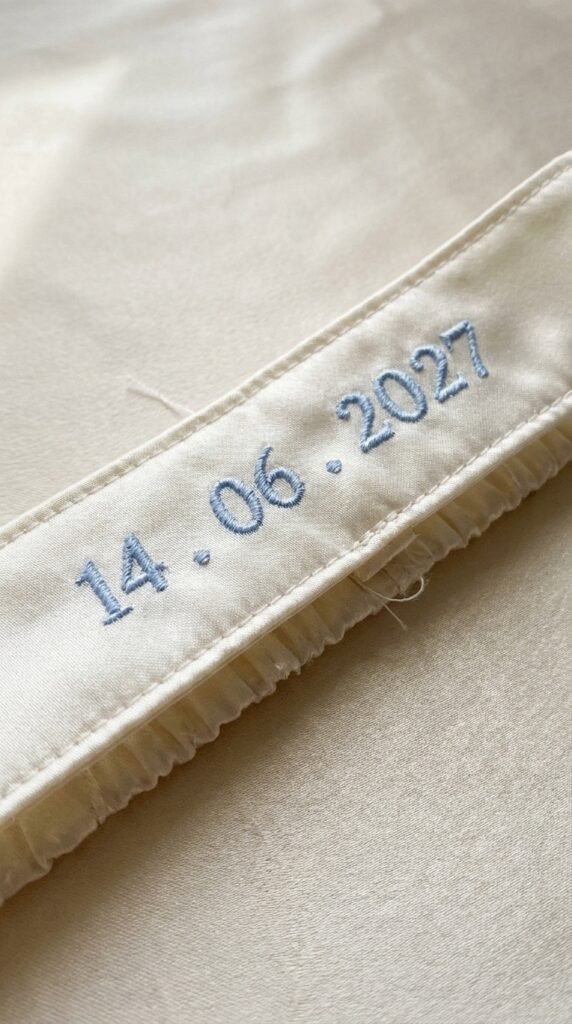
Your wedding date stitched into the ribbon or the underside of the band. It is the most common personalisation and it turns the garter straight into a dated keepsake. Confirm the date format before you order.
13. Embroidered with initials or a phrase
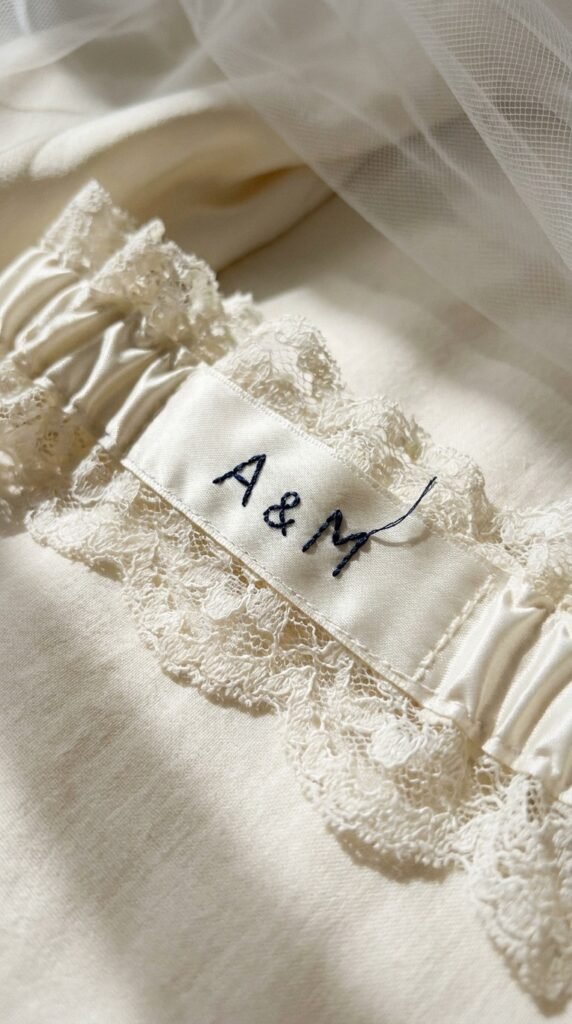
Your initials, your new surname, or a short line that means something to the two of you. It reads as far more personal than a date and it is usually the same price. Keep it short so the stitching stays legible.
14. Fabric from something meaningful
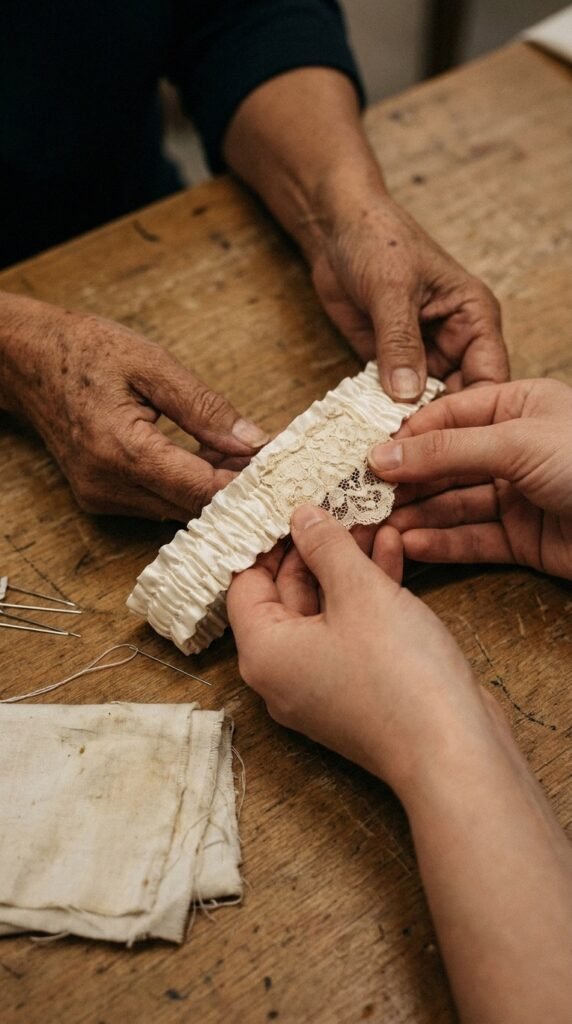
A piece of a mother’s or grandmother’s dress, a handkerchief, or a scrap of something from your family sewn into the band. It is the most sentimental option here and it handles something old at the same time. Find a seamstress who has done it before.
15. An heirloom garter
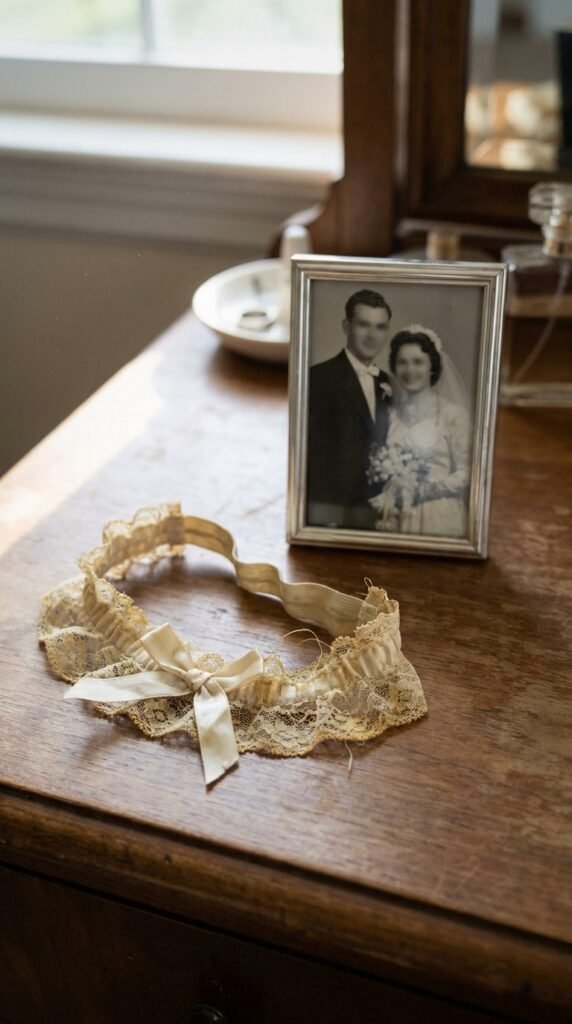
Wearing one that has already been worn by someone in your family. It carries more meaning than anything you can buy and it costs nothing. Check the elastic, because decades-old elastic almost always needs replacing.
Direction 4: Fit, comfort and actually wearing it
16. Measure your thigh, not your dress size
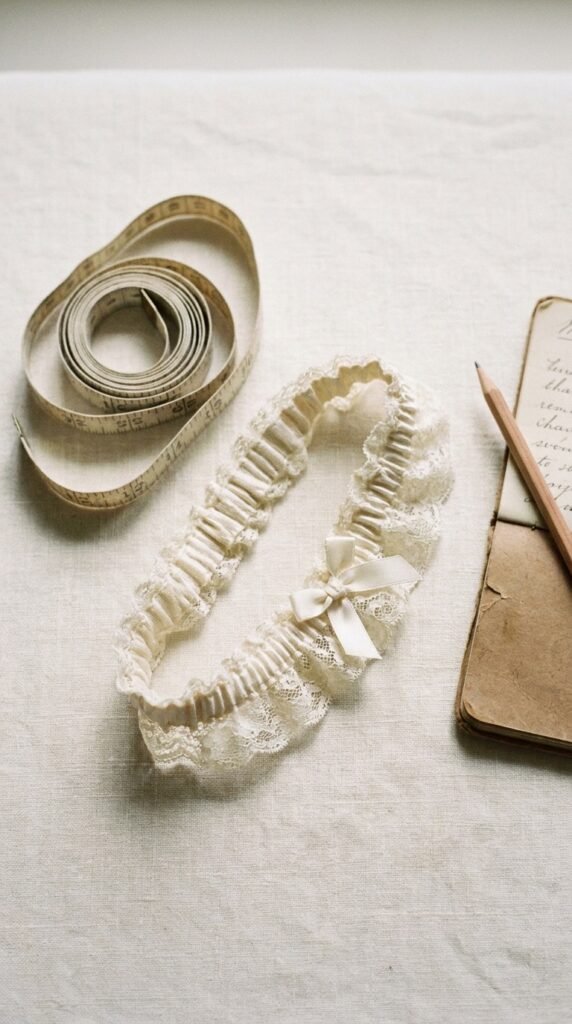
Measure around your thigh where the garter will actually sit, which is higher than people expect. Garter sizing has nothing to do with dress size and getting it wrong is the single most common complaint. Measure while sitting down as well as standing.
17. Choose secure over tight
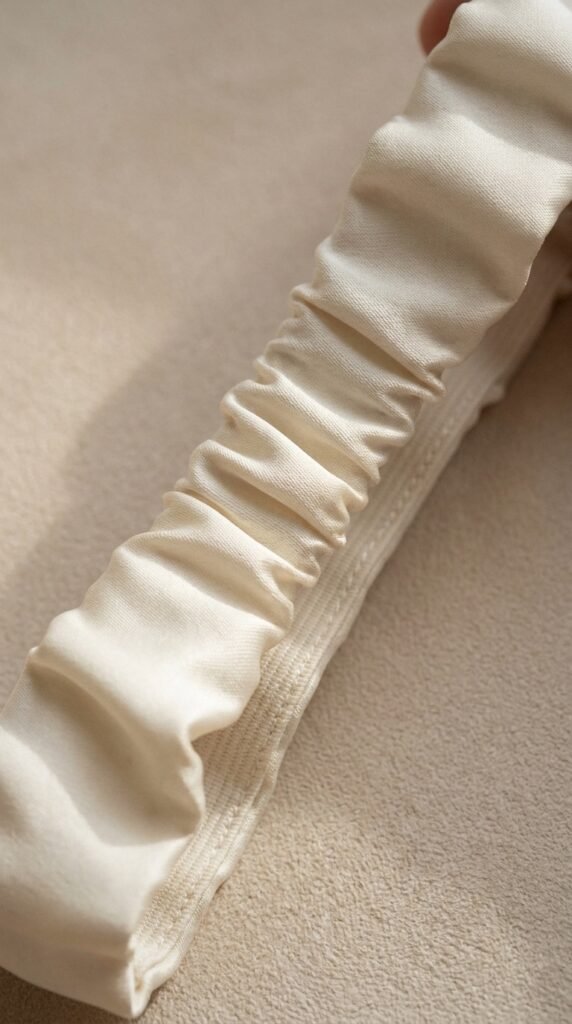
It should stay put without leaving a mark or needing adjustment. A garter that has to be tight to stay up is the wrong size, and you will be aware of it for twelve hours. Comfort matters more than anything else on this list.
18. Check it under the actual dress
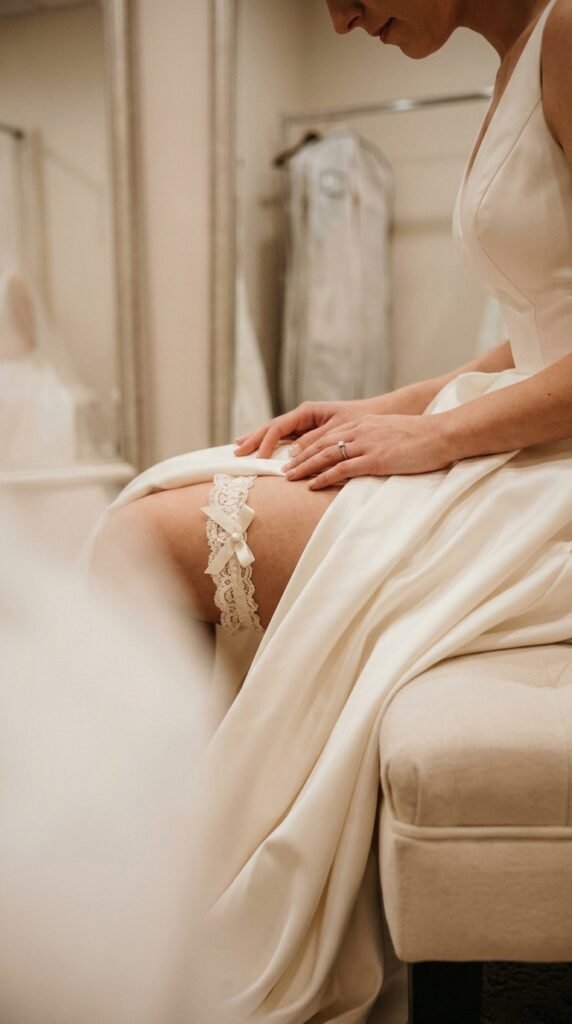
Try it on at a dress fitting rather than at home. A beaded band can show through a fitted satin column, and a wide lace one can create a visible line. Take it to the fitting and look in the mirror.
19. Wear two if you are tossing one
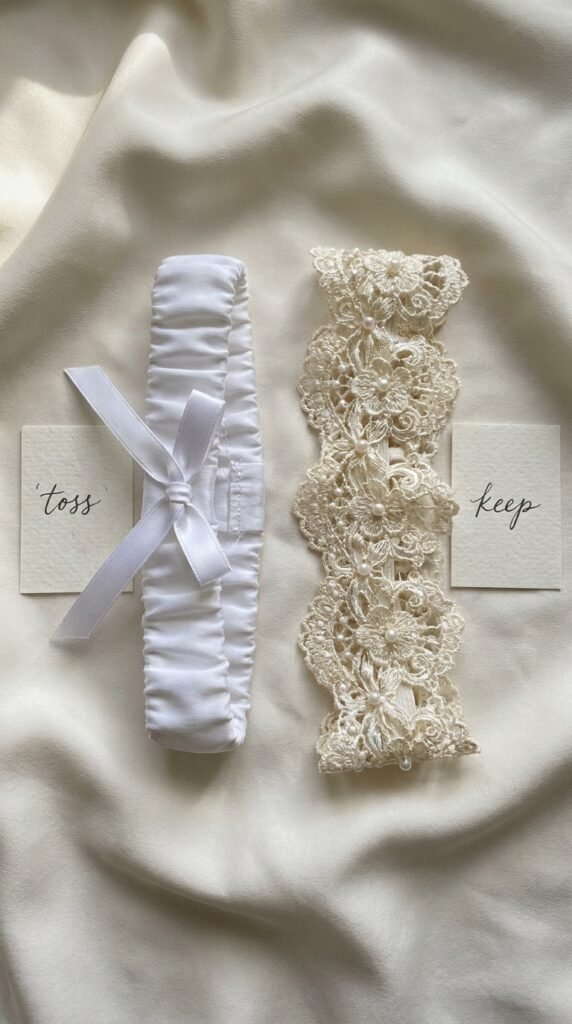
One to throw and one to keep, worn together. It is a long-standing solution and it means your sentimental one never leaves your possession. Make the toss one the cheaper of the two.
20. Know which leg and how high
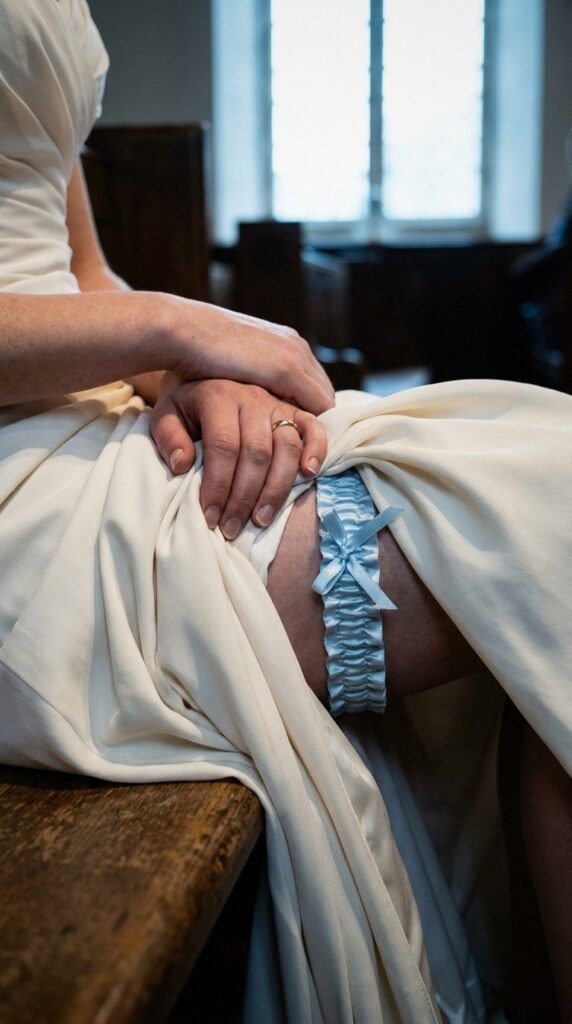
There is no rule, but just above the knee is more comfortable for a long day than high on the thigh, and it is easier to reach discreetly. Most brides wear it on the right leg out of habit rather than requirement. Do whatever sits best.
Direction 5: The toss, and what people do instead
21. If you do the toss
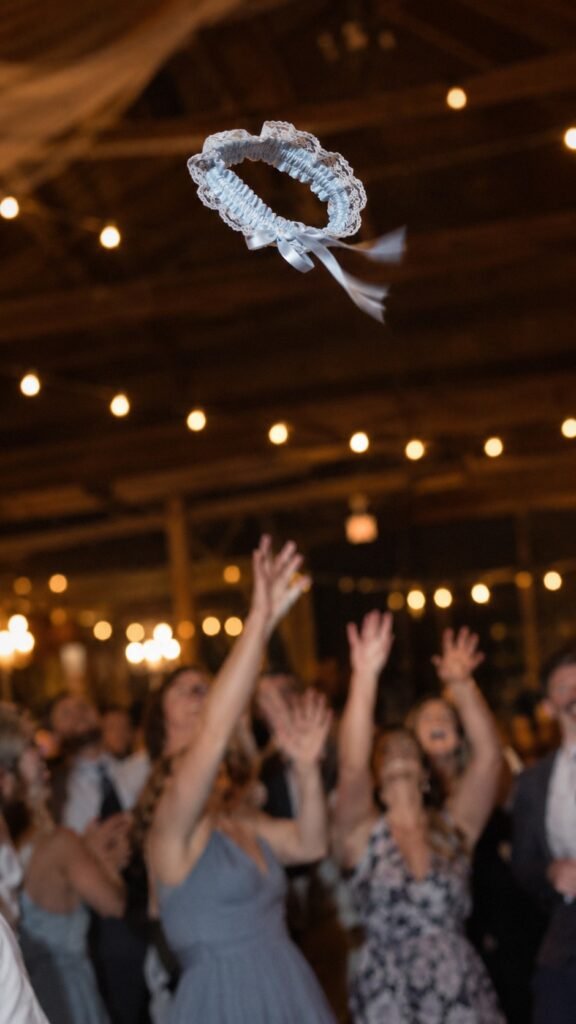
Tell your photographer and your band or DJ in advance so it does not derail the evening, and agree with your partner beforehand exactly how it will go. Set the terms you are both comfortable with rather than leaving it to the room. It is your reception and you are allowed to keep it brief and low-key.
22. The anniversary dance instead
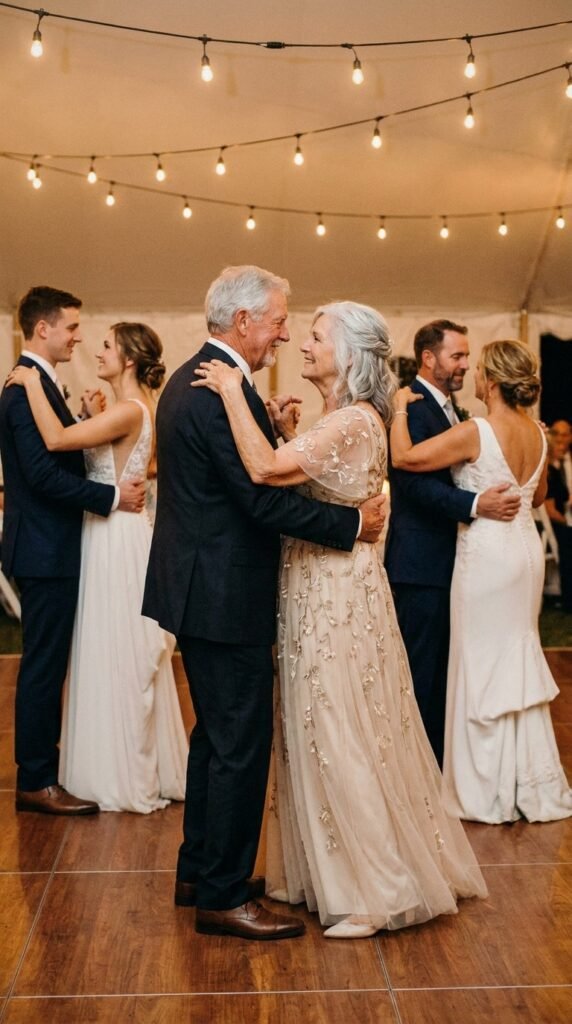
Inviting all married couples onto the floor and narrowing by years together until the longest-married couple remains. It includes everyone rather than singling out single guests, and it tends to produce genuinely lovely photographs. It is the most popular replacement right now.
23. A private moment instead
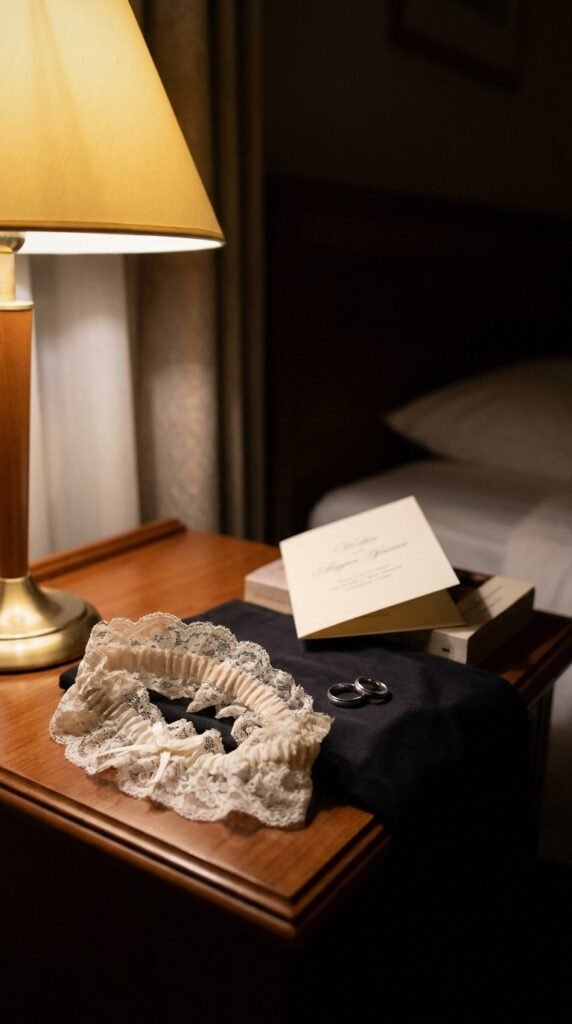
Keeping the garter entirely to yourselves, with no announcement and no crowd. Couples are increasingly choosing personal alternatives over public traditions, and this is the simplest version of that. The tradition survives, it just stops being a performance.
A few practical notes
Buy it early enough for personalisation. Embroidery and custom colours take weeks, and heirloom alterations take longer, so order at the same time as your other accessories rather than in the final month.
Decide who is carrying it. If you are removing it before the reception, someone needs to be responsible for it, otherwise it ends up in a hotel room or a bridal suite you have already checked out of. This happens more often than you would think.
And put it away properly afterwards. If the point is the keepsake, it needs to end up in a box rather than a drawer. Store it flat, away from light, with anything else you are keeping from the day.
If I am picking three to start with
A simple satin band in dusty blue, because it solves something blue, sits flat under any dress and costs very little. Embroidery with your date or initials if you want it to be a genuine keepsake, because it is the cheapest way to make it specific to you. And measuring your thigh properly, because comfort is the only part of this that you will actually notice on the day. Save this to your wedding board on Pinterest, and decide about the toss separately from deciding about the garter, because they are two different questions.
