
Yellow came back, and it grew up
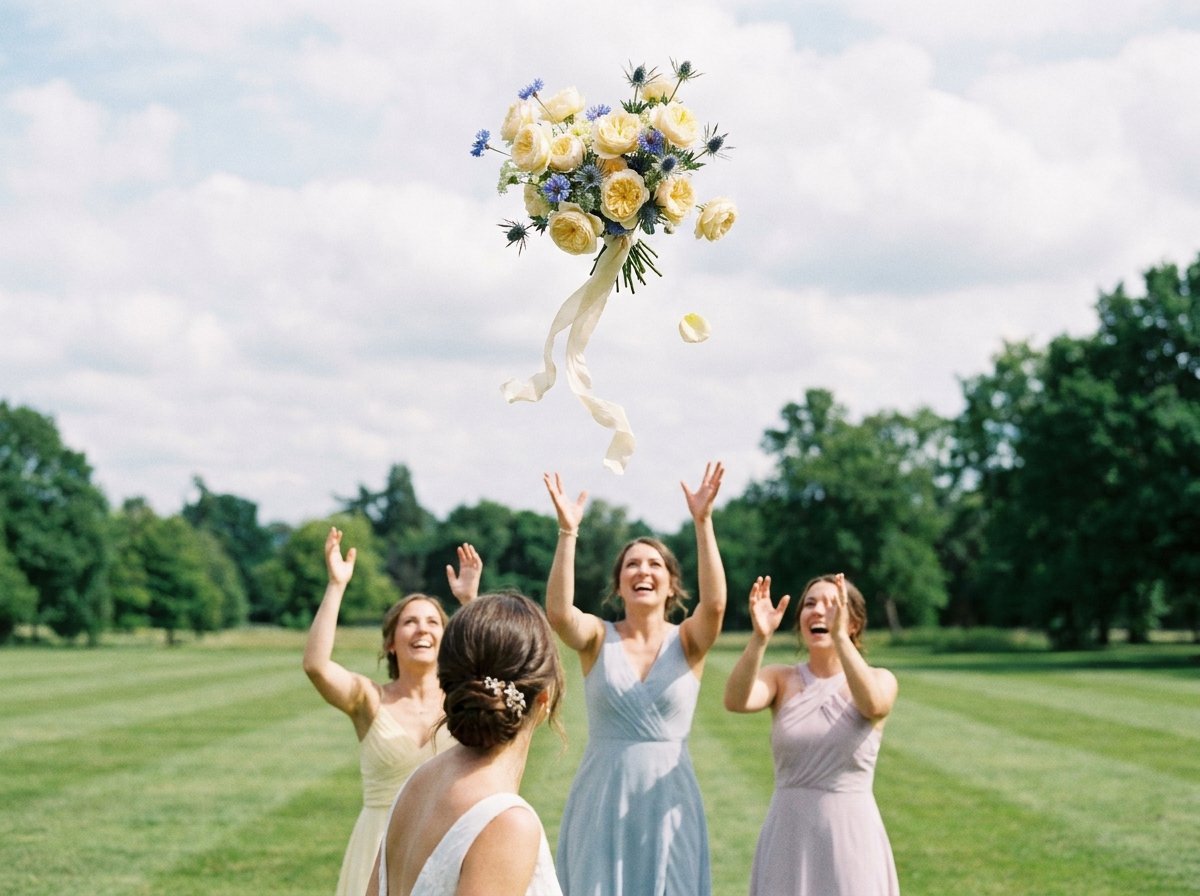
Yellow at a wedding does something no neutral palette manages. It changes the energy of a room the moment you walk in, warm and alive rather than tasteful and quiet. And it is having a genuine comeback for 2026, but not in the sunflower-heavy way people remember from a decade ago. Couples are working with butter yellow, marigold, lemon cream, golden honey, pale citrus and mustard, layered rather than used flat, and the results look considerably more expensive than the old version ever did. Butter yellow in particular has become one of the strongest wedding colour trends of the year. One thing worth knowing before you brief a florist. Your bouquet is the most photographed floral element of the entire day. It appears in the getting-ready shots, the ceremony portraits, the couple’s photos, the toss, and dozens of candids in between, so the shape you choose affects how your photographs look and how comfortable you are holding it for six hours. Twenty-two ideas below, across shades, shapes, flowers and colour pairings.
Three things to settle with your florist
Pick your shade of yellow before your flowers. Butter, lemon cream, golden honey, marigold and mustard read completely differently in a photograph, and the softer end suits airy meadow-style arrangements while the richer end wants darker greenery and more texture. Saying yellow to a florist is not enough information.
Go looser than feels natural. Yellow florals look most modern when arrangements have movement rather than being packed into a perfect dome, and that airy garden-gathered quality is what reads editorial right now. Ask for asymmetry and let a few stems escape.
And ask what is actually in season for your date. Tulips, ranunculus, garden roses, dahlias and marigolds all peak at different points of the year, and choosing in-season means better flowers at a lower price. A good florist will tell you honestly if a bloom you want will be poor quality in your month.
Direction 1: The shades of yellow
1. Butter yellow
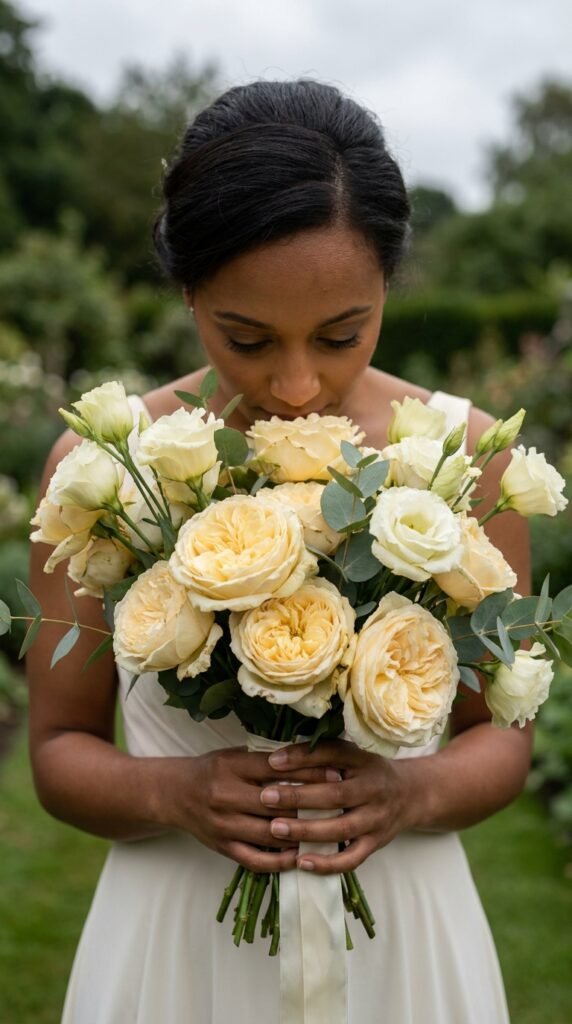
The softest, creamiest yellow, closer to pale cream than gold. It is the standout wedding colour of 2026 because it feels romantic rather than loud, and it photographs beautifully in soft light. Pair it with airy blooms and meadow textures rather than dense florals.
2. Lemon cream
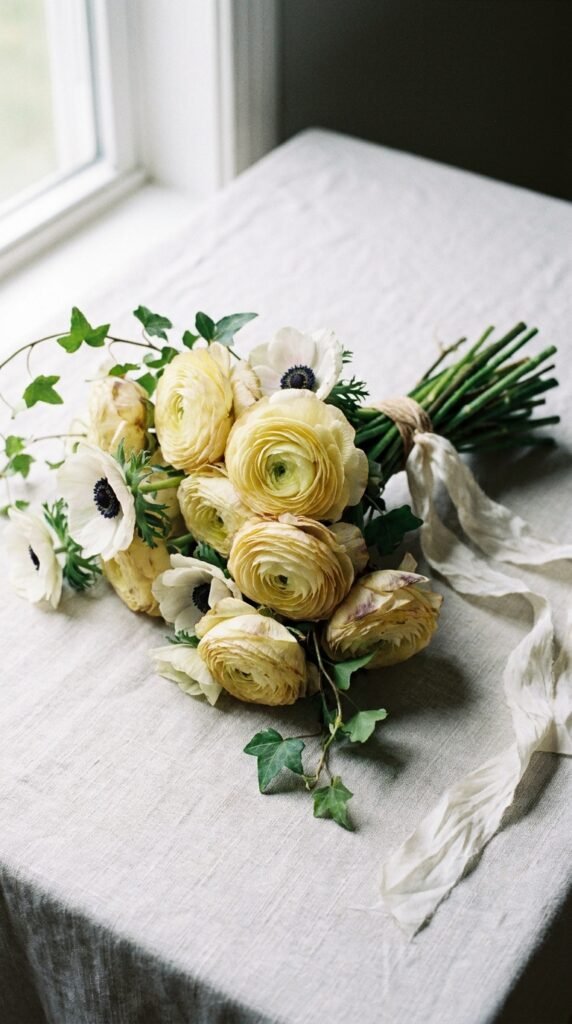
A step brighter than butter but still gentle, with a touch more zest. It suits spring and early summer ceremonies and sits well against white gowns without competing. Add plenty of white for a fresh, crisp effect.
3. Golden honey
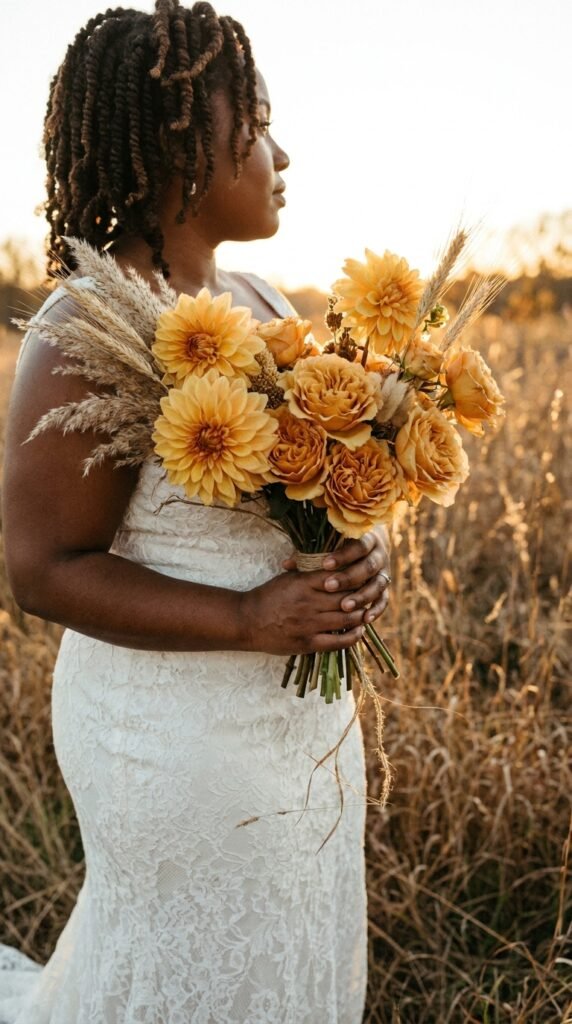
A warm amber-leaning yellow with real depth. It is the shade that works best in late afternoon light and at autumn weddings. It pairs naturally with brown and rust tones.
4. Marigold
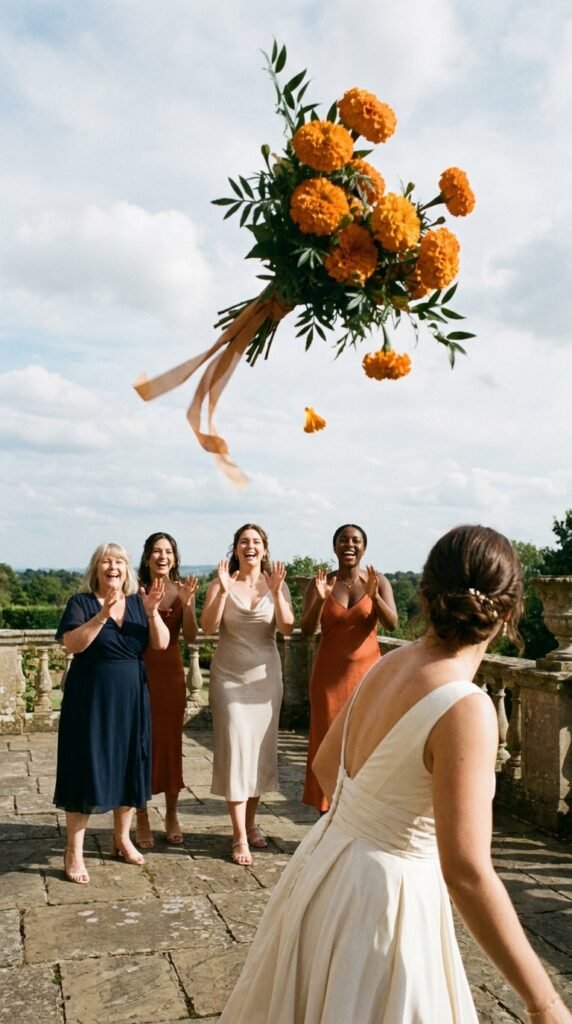
A saturated orange-yellow, bold and unapologetic. It carries real energy and it suits celebrations that want colour rather than softness. Balance it with dark greenery so it does not overwhelm.
5. Mustard
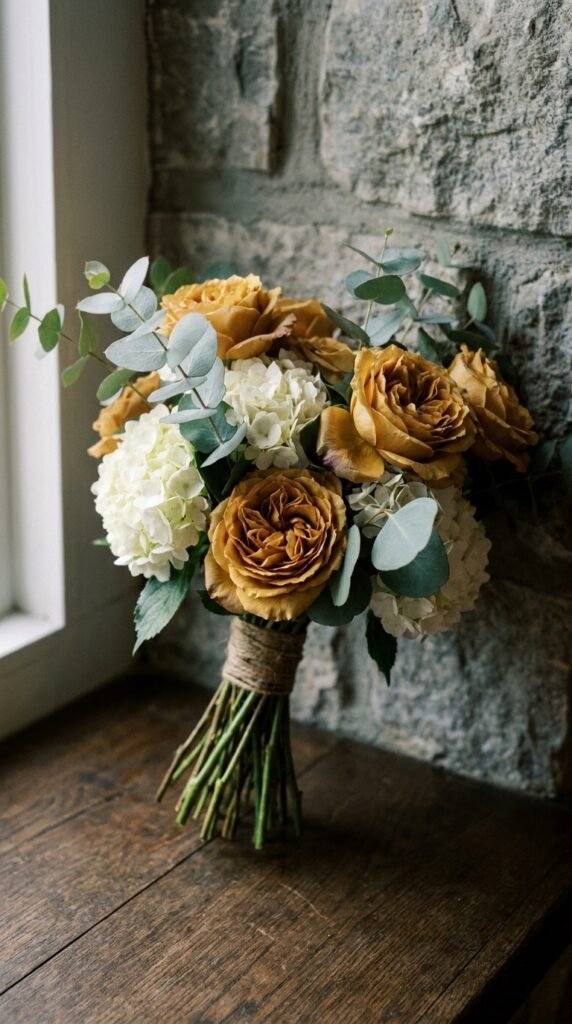
The deepest and most muted of the yellows, closer to ochre. It reads autumnal and slightly vintage, and it is the most unexpected choice here. White hydrangeas and silver dollar eucalyptus look genuinely lovely against it.
Direction 2: The bouquet shapes
6. The round bouquet
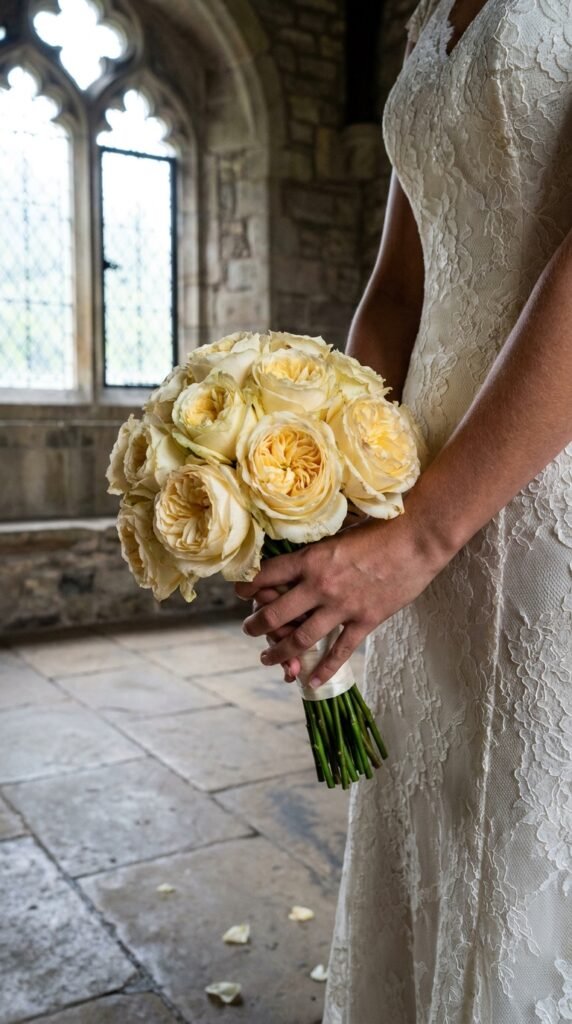
Compact and dome-shaped, usually ten to fourteen inches across. It is the most popular bridal shape and the most flattering across every dress style, and it photographs well from every angle. It is also the easiest to hold for hours and the easiest to throw.
7. The nosegay
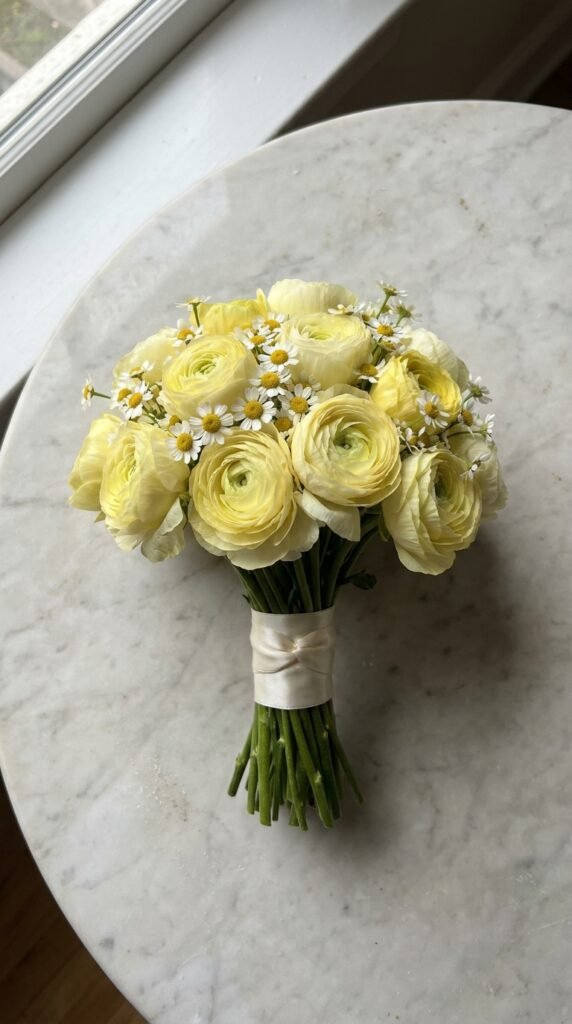
A smaller, tightly packed round bouquet of six to eight inches. It suits petite brides and anyone who finds a full bouquet unwieldy, and it works beautifully for bridesmaids alongside a larger bridal one. The small scale makes dense yellow blooms feel intentional.
8. The presentation bouquet
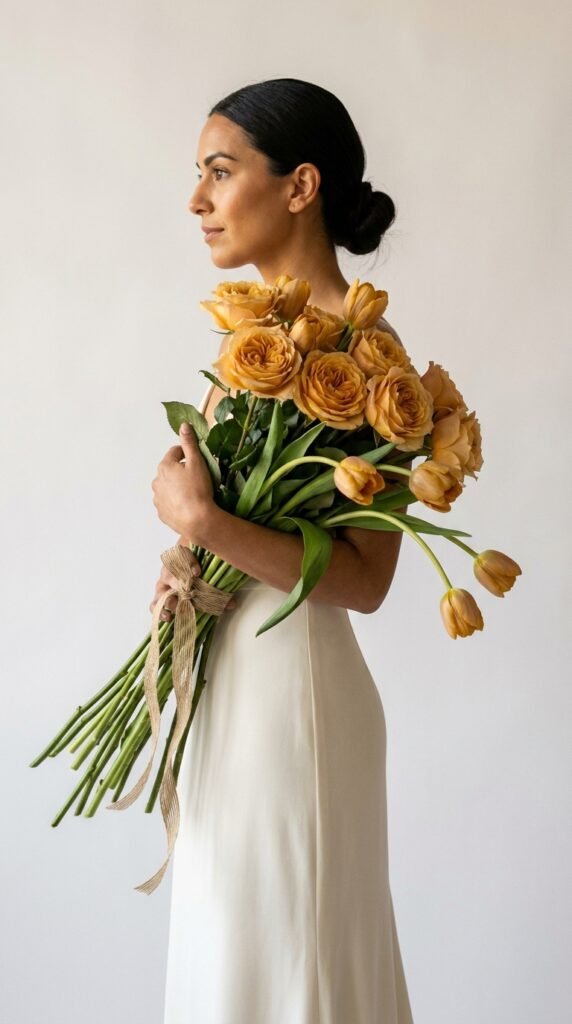
Long stems cradled in one arm, the shape a pageant winner carries. Presentation bouquets are having a real moment in 2026 as brides look for something other than the standard handheld shape. Long-stemmed roses, calla lilies and French tulips in yellow suit sleek column and sheath gowns because the lines echo each other.
9. The delicate cascade
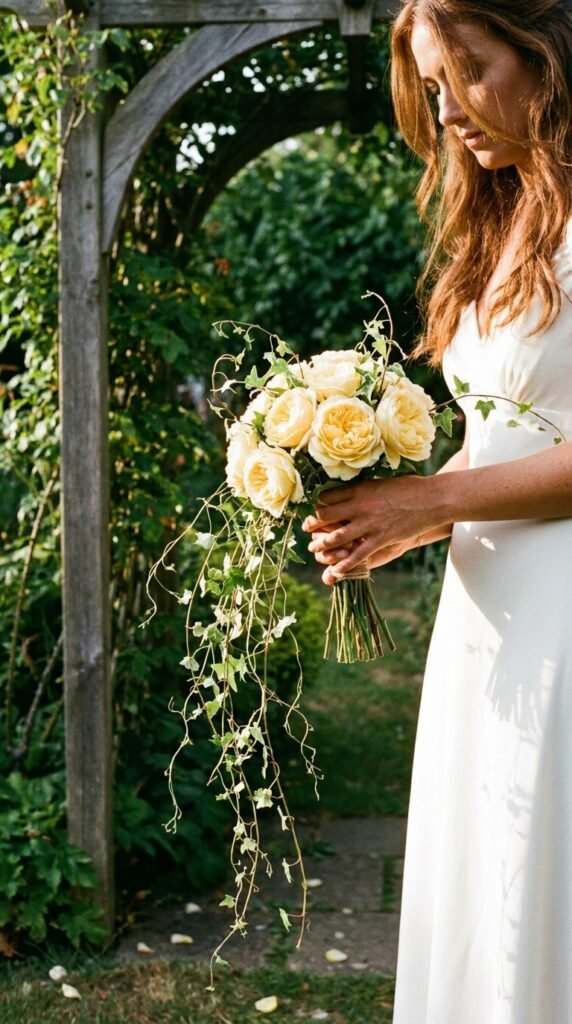
A trailing bouquet, but the 2026 version is far lighter than the Princess Diana original. Thin tendrils and vines trail down from the central bundle for a piecey, modern silhouette rather than a heavy waterfall. Yellow roses with trailing ferns and eucalyptus do this beautifully.
10. The loose garden gather
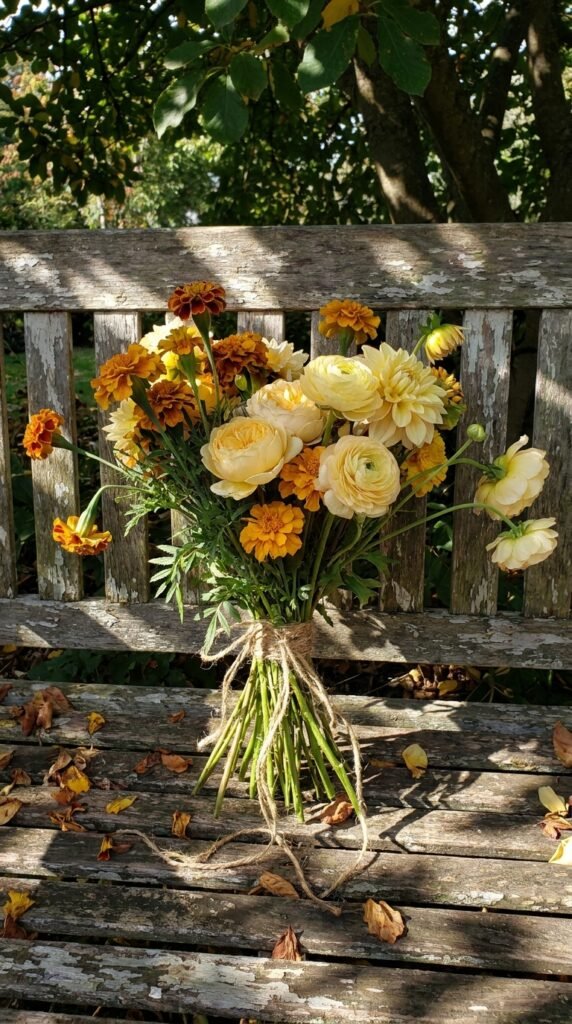
An unstructured, movement-heavy arrangement that looks picked rather than designed. This is the shape that makes yellow feel current, and it suits butter and lemon cream especially well. Ask for varied stem lengths and deliberate asymmetry.
Direction 3: The flowers themselves
11. Garden roses
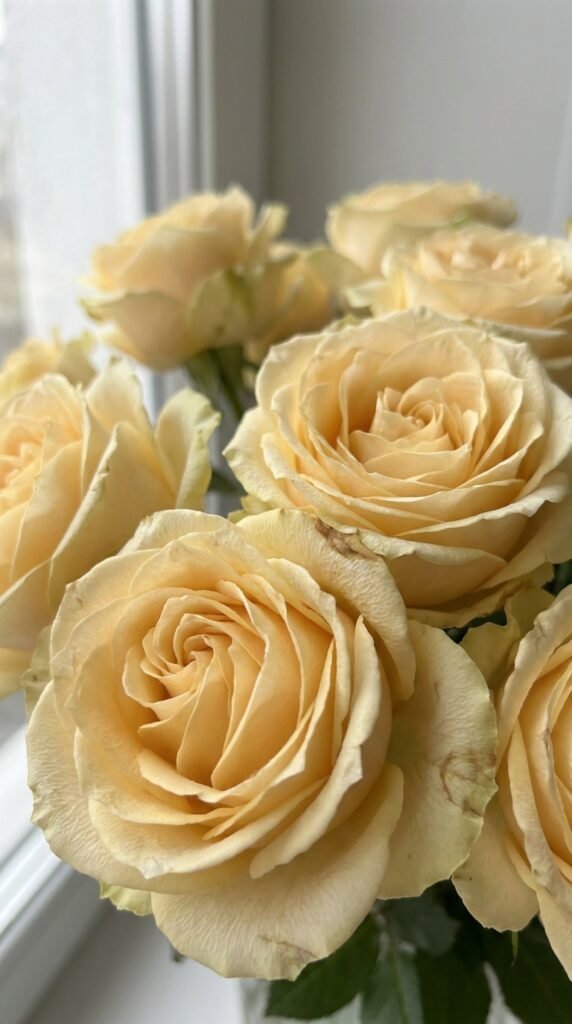
Full, ruffled and layered, in butter through to golden mustard. They give a bouquet lushness that a standard rose cannot, and they come in the widest range of yellows of any bloom here. A few large ones do the work of many small flowers.
12. Ranunculus
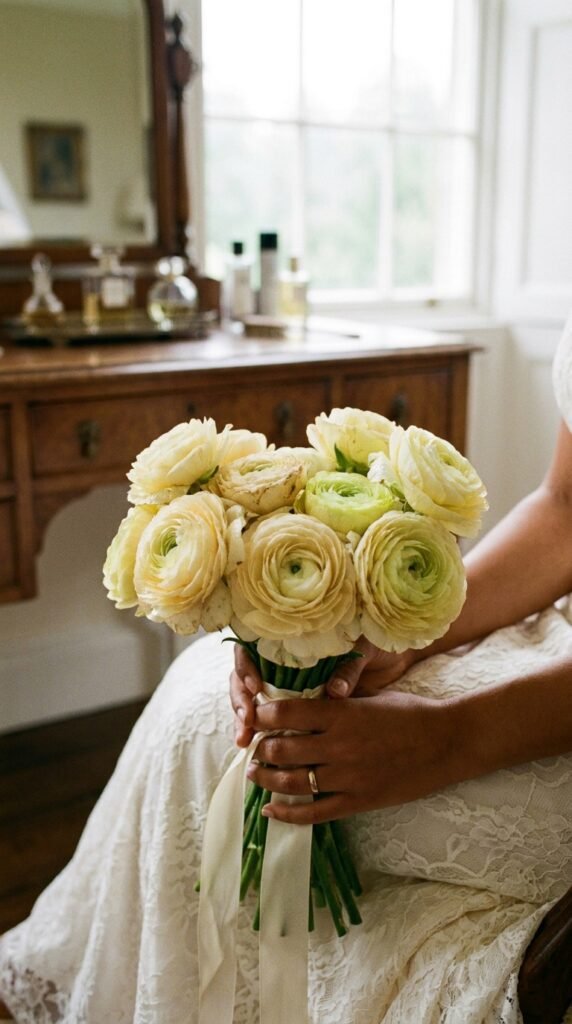
Tightly layered papery petals in clear, saturated yellow. They are the most delicate-looking bloom on this list and they photograph with remarkable detail. They peak in late winter and spring.
13. Tulips
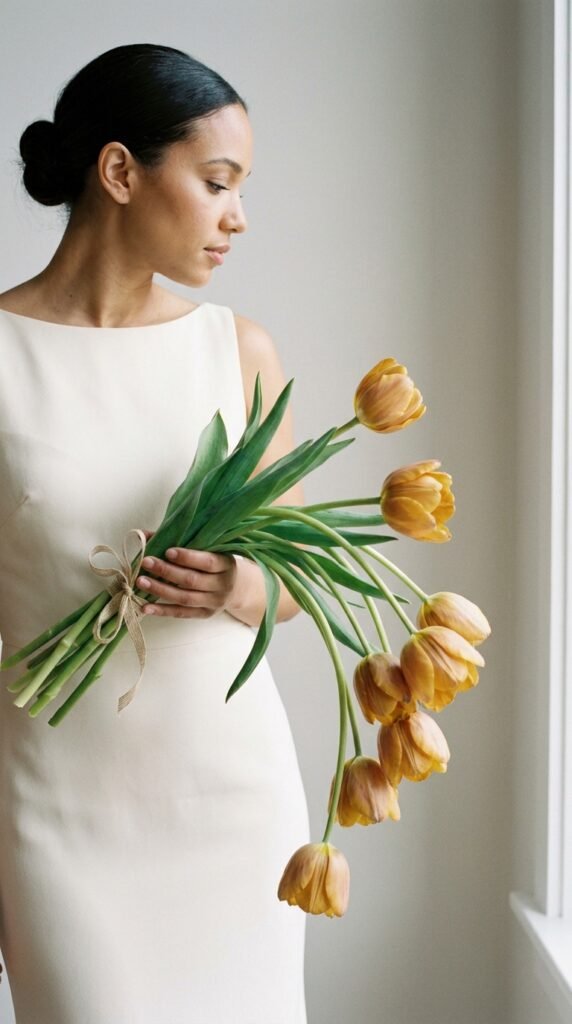
Clean, simple and sculptural, especially French tulips with their long curving stems. They suit minimalist and modern weddings where fussier flowers would feel wrong. Tulips keep moving after they are cut, which is part of their charm.
14. Dahlias
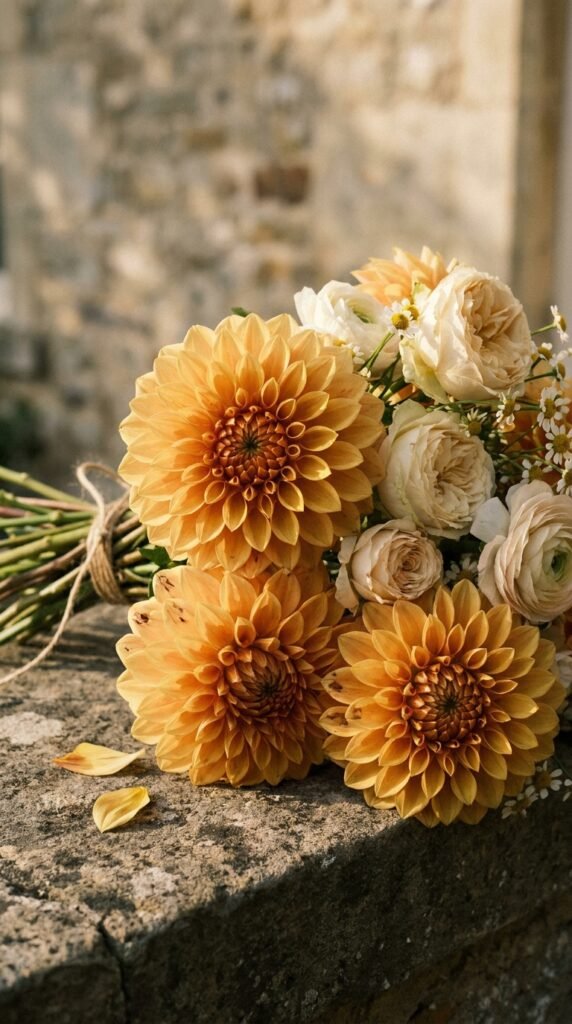
Big, structured and geometric, in honey and butter tones. One or two dahlias give a bouquet a focal point immediately. They are at their best from late summer into autumn.
15. Craspedia, the billy balls
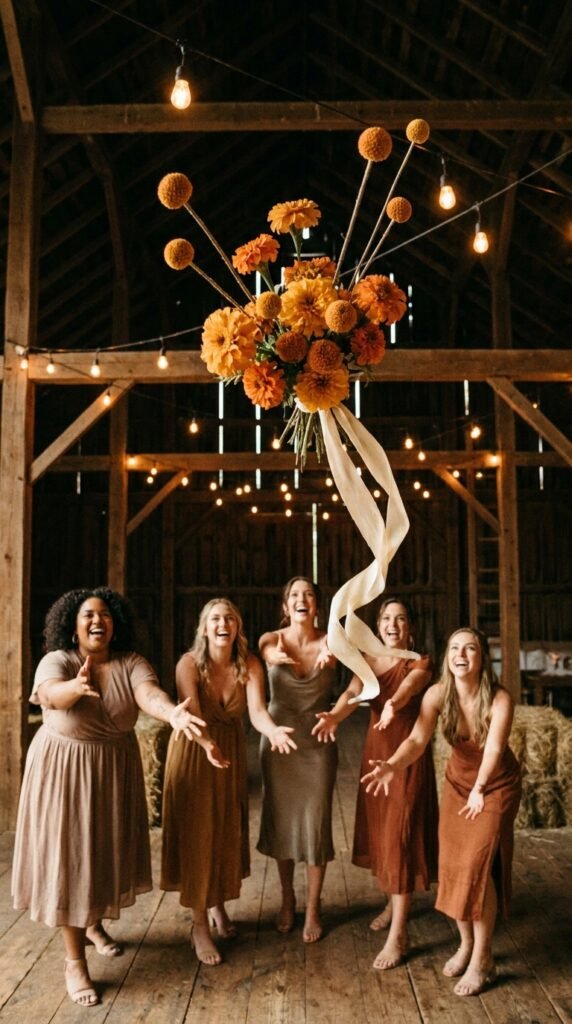
Perfectly round yellow spheres on bare stems, and nothing else looks like them. They add graphic texture and a bit of humour, and they are extremely hardy so they survive a long day. They also dry beautifully if you want to keep the bouquet.
16. Marigolds and chamomile
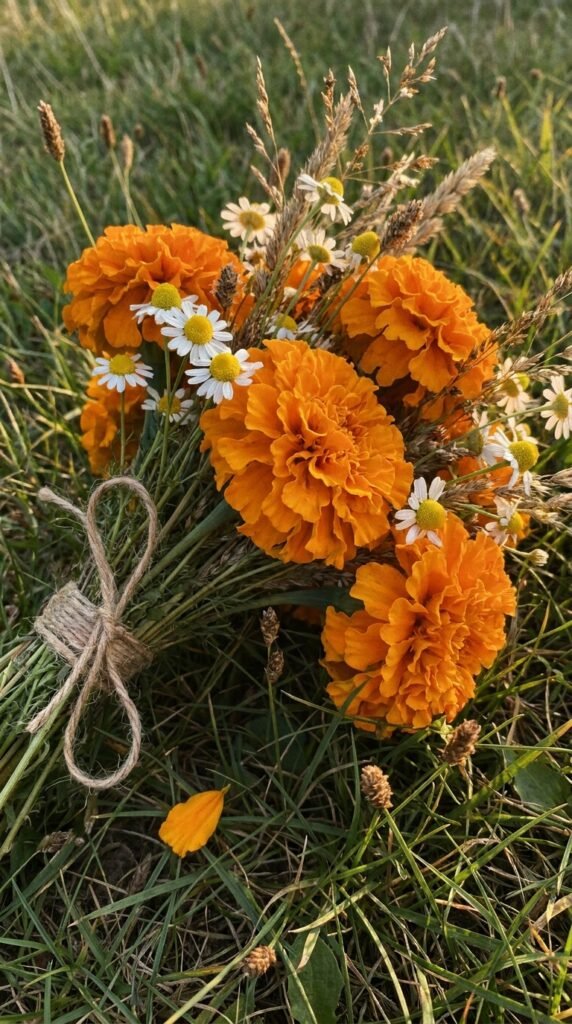
Marigolds for dense saturated colour, chamomile for tiny white and yellow daisy heads. Together they give a meadow-gathered feel that suits outdoor and garden ceremonies. Chamomile in particular softens anything too formal.
Direction 4: What to pair yellow with
17. White and greenery
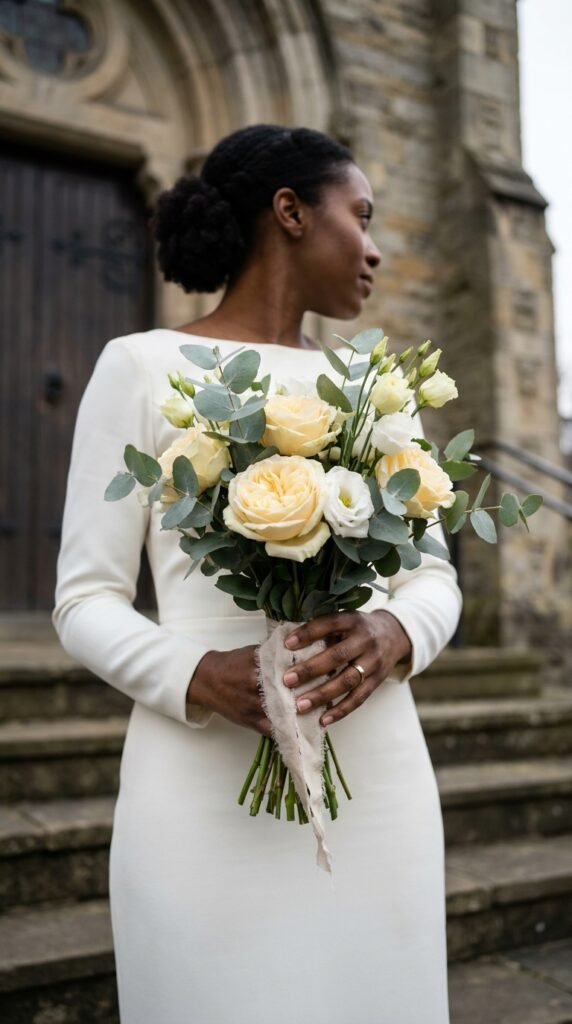
Yellow roses with white lisianthus or hydrangea and plenty of eucalyptus. It is the safest and most classic pairing, and the white keeps bright yellow from tipping into too much. It suits almost every venue.
18. Burgundy and deep red
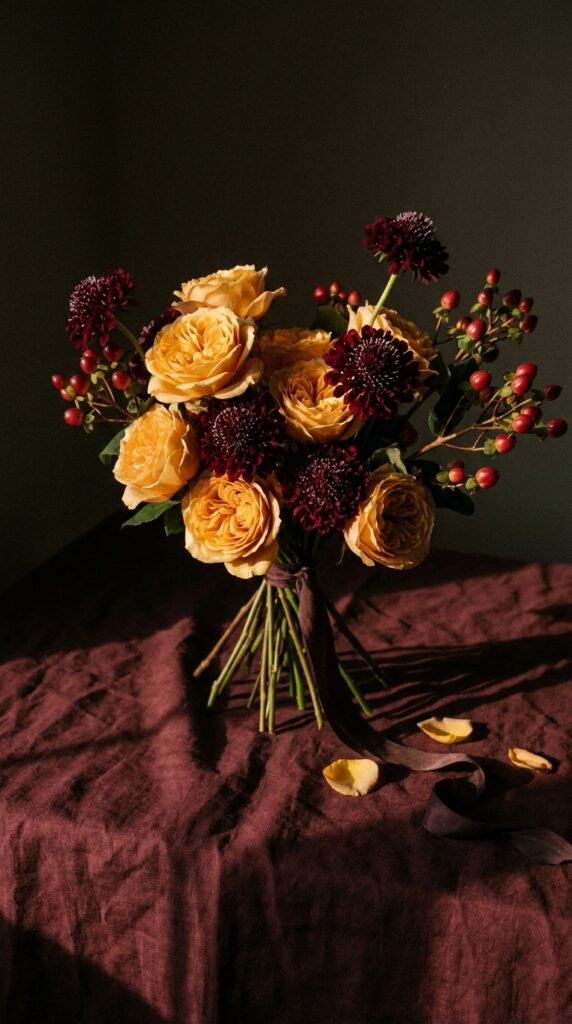
Sunny yellow against burgundy scabiosa, red hypericum berries or deep dahlias. The contrast is genuinely striking and it turns a cheerful bouquet into a dramatic one. It is the strongest autumn pairing here.
19. Brown and rust
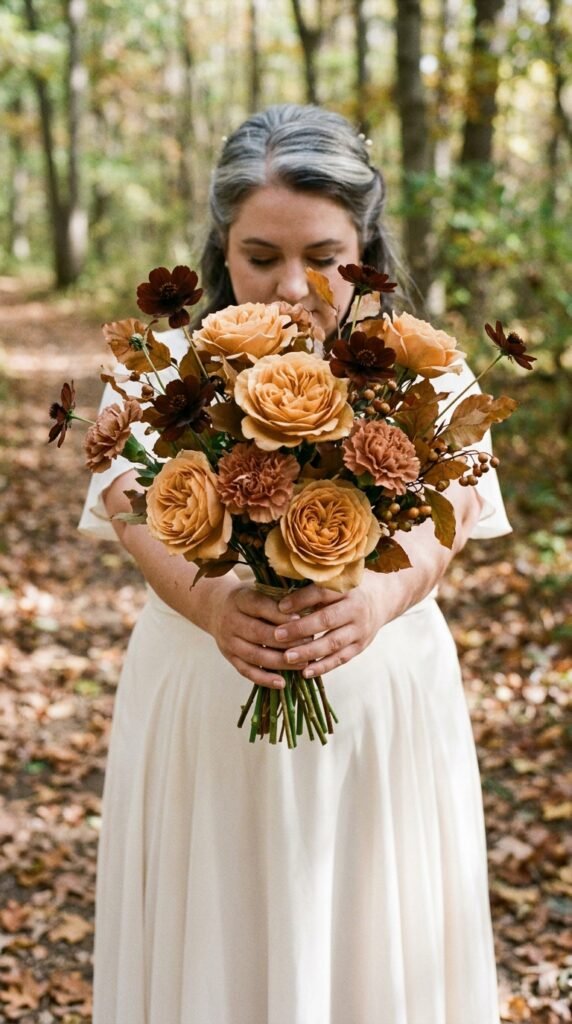
Golden yellow with chocolate cosmos, rust carnations and brown-toned foliage. Brown has quietly become one of the strongest accent colours for 2026 because it grounds brighter shades beautifully. It is the most current pairing on this list.
20. Blue
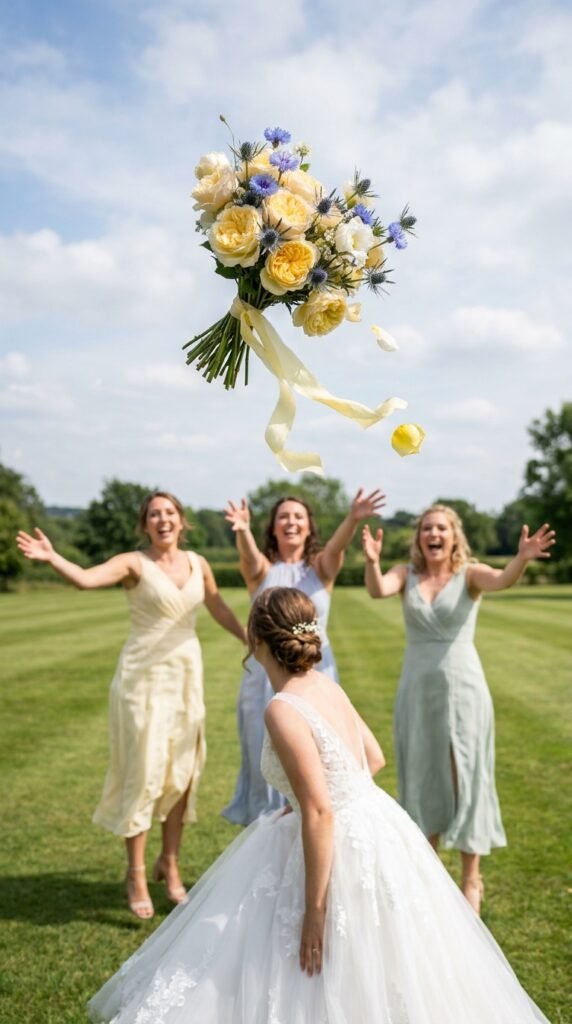
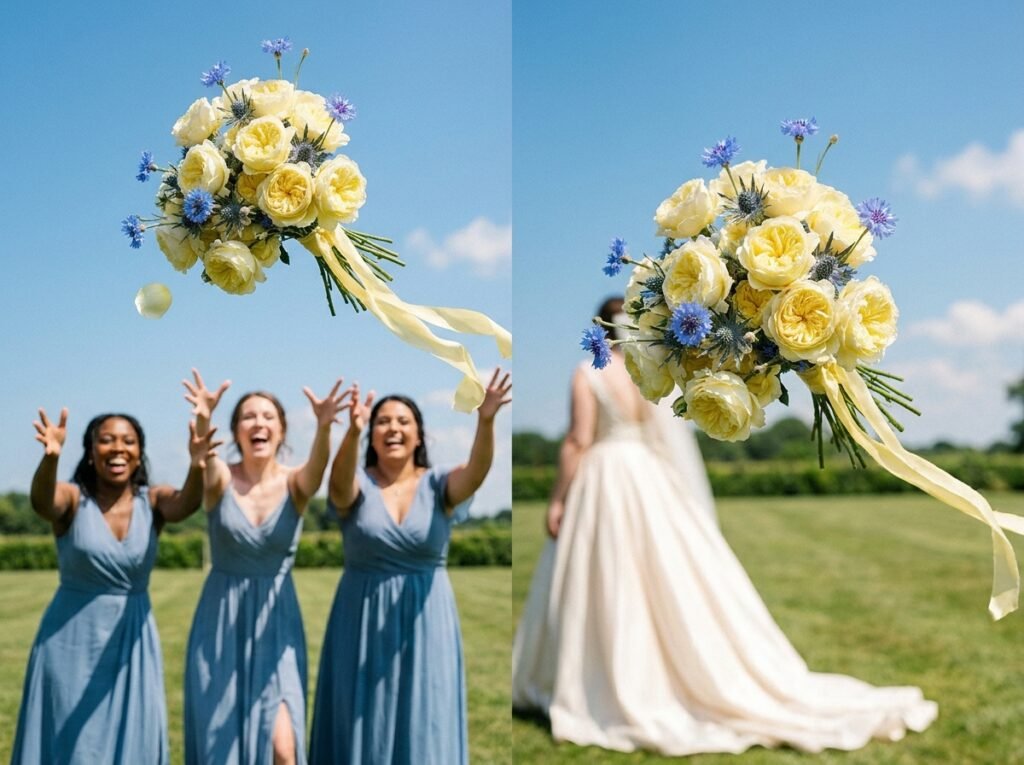
Yellow with delphinium, cornflower or dusty blue thistle. Blue and yellow sit opposite each other on the colour wheel, which is exactly why the combination has such punch. Keep the blue as the accent rather than the lead.
21. Pink and peach
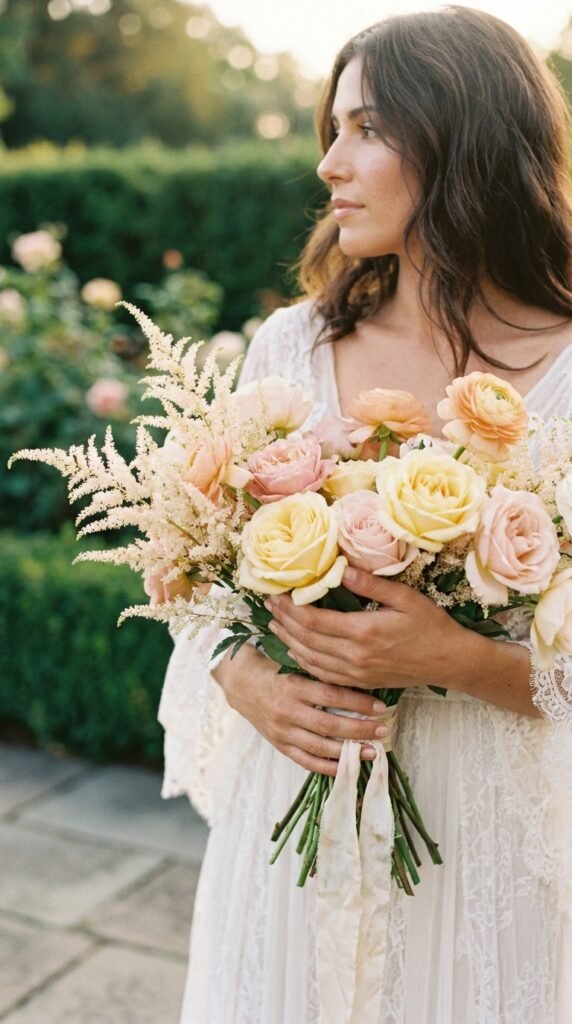
Butter yellow with blush roses, peach ranunculus and pale astilbe. It is the softest pairing here and the most romantic, and it suits spring and garden weddings. All three tones in similar strength is what makes it work.
22. Tonal yellow only
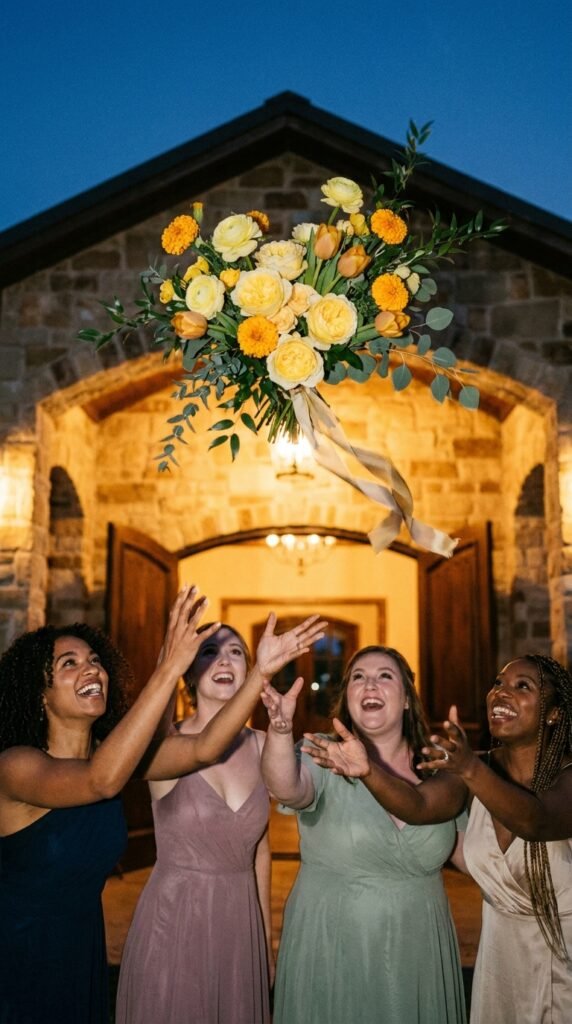
Every shade of yellow together, butter through marigold, with nothing else but greenery. Layering several yellows creates depth that a single shade never manages, and it is the most confident choice on this list. Vary the flower shapes so the one colour stays interesting.
A few practical things nobody mentions
Ask how heavy it will be. A large cascading bouquet held at chest height for a two-hour ceremony and an hour of photographs is genuinely tiring, and brides underestimate this constantly. Hold a sample at your consultation if you can.
Have a toss bouquet made separately. A smaller, cheaper version means you keep the real one intact and you are not throwing something you might want preserved. Most florists will make one for very little.
And think about what your bouquet sits against. Bright yellow photographs completely differently against a white gown, a green garden and a dark stone chapel, so send your florist photographs of the venue and your dress rather than only inspiration images. A bouquet is never seen in isolation.
If I am picking three to start with
Butter yellow in a loose garden gather, because it is the shade and the shape that define this year. Golden honey with brown and rust accents, if your wedding is in autumn and you want something genuinely current. And craspedia tucked into anything, because they cost very little, they survive the whole day and they make people smile. Save this to your wedding board on Pinterest before your florist consultation, and take your shade name with you rather than just saying yellow.
