

Dressed for the Wedding, Not Just the Photos
Winter weddings are the most atmospheric celebrations of the year and the hardest to dress for. You need something that works in a warm reception room and a freezing car park, that survives the walk from ceremony to venue, and that still looks like you made an effort rather than layered for a hike. The single most useful piece of advice comes from celebrity stylist Charlotte Harris, who says a great wedding guest outfit comes down to fabric: if the material feels season-appropriate, velvet, satin, crepe, or anything with a little weight, then any colour works. That reframes the whole decision. You don’t need to hunt for a specific winter colour, you need a fabric that reads winter, and the rest opens up. Her second tip is just as practical: three-quarter sleeves are the easiest sleeve length for a cold-season wedding, polished without feeling heavy, with a little wrist showing so the dress still feels light. I’ve gathered 45 winter wedding guest outfits across dress codes, silhouettes, alternatives to dresses, fabrics and colours, and the outerwear and layering that actually make it work.
Five Things to Sort Before You Buy
Read the dress code and then the venue. A black-tie hotel ballroom and a lodge ceremony with an outdoor drinks reception need genuinely different outfits, and the outdoor portions of the day are usually far colder than people plan for. Choose the fabric before the colour, because a season-appropriate material does the heavy lifting and frees you to wear whatever shade you like. Plan the whole silhouette including layers, since tights, boots and a coat all change your proportions and a hemline that worked bare can look wrong once layered. Try the shoes with the hosiery you actually intend to wear, which prevents the most common last-minute surprise there is. And avoid anything close to bridal, meaning white, ivory, champagne and pale silver, because the rule has not changed and jewel tones, deep hues and subtle metallics are the safe and better-looking alternative.
Direction 1: By Dress Code
1. Black Tie: The Floor-Length Velvet Gown
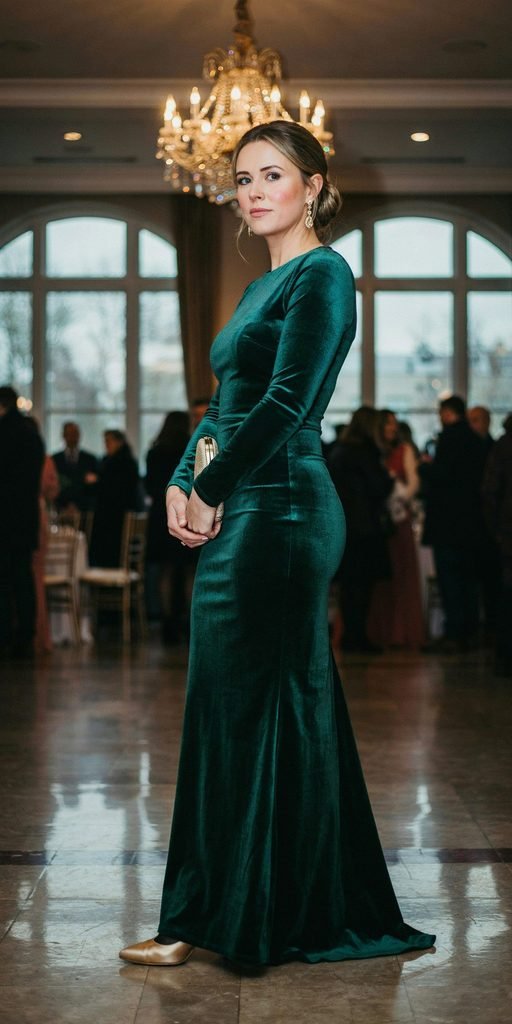
A full-length velvet gown in a deep jewel tone with metallic jewellery. Velvet reads formal, photographs richly in low light and is genuinely warm. It’s the single most appropriate black-tie fabric for winter.
2. Black Tie: The Sequinned Column
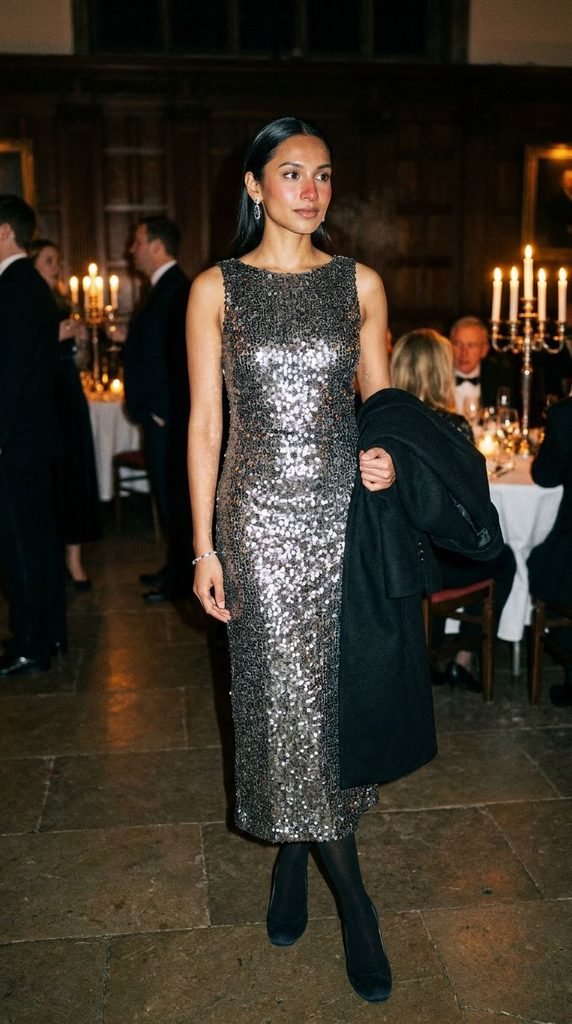
A slim floor-length sequinned dress in gold, pewter or deep green. Sequins catch every bit of candlelight at an evening reception. Keep the silhouette simple when the surface is this busy.
3. Formal: The Long-Sleeve Maxi
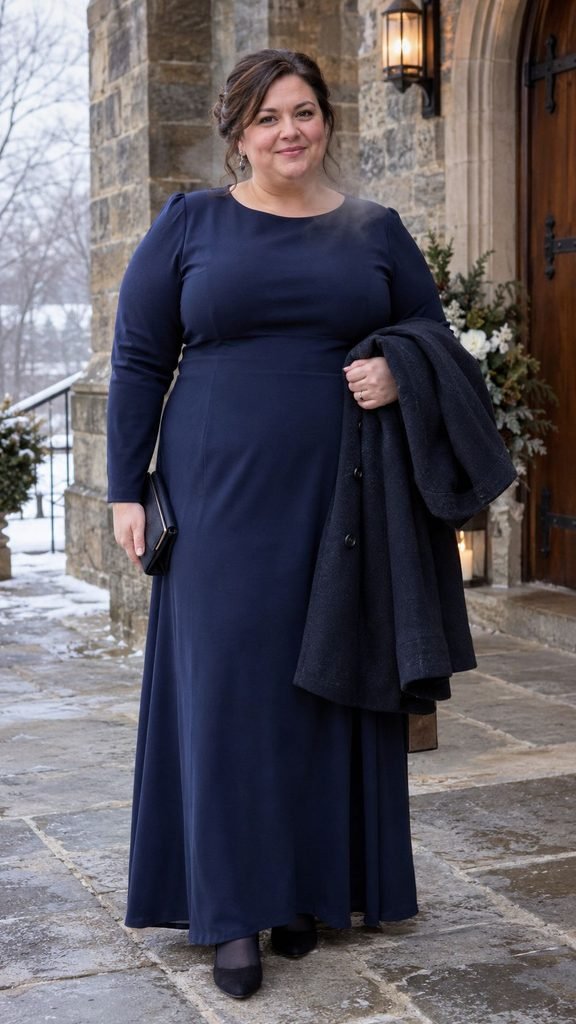
A floor-length dress with full sleeves in satin or crepe. Long sleeves read more formal than a strapless gown while solving the temperature problem entirely. Lace or sheer sleeves add romance without adding heat.
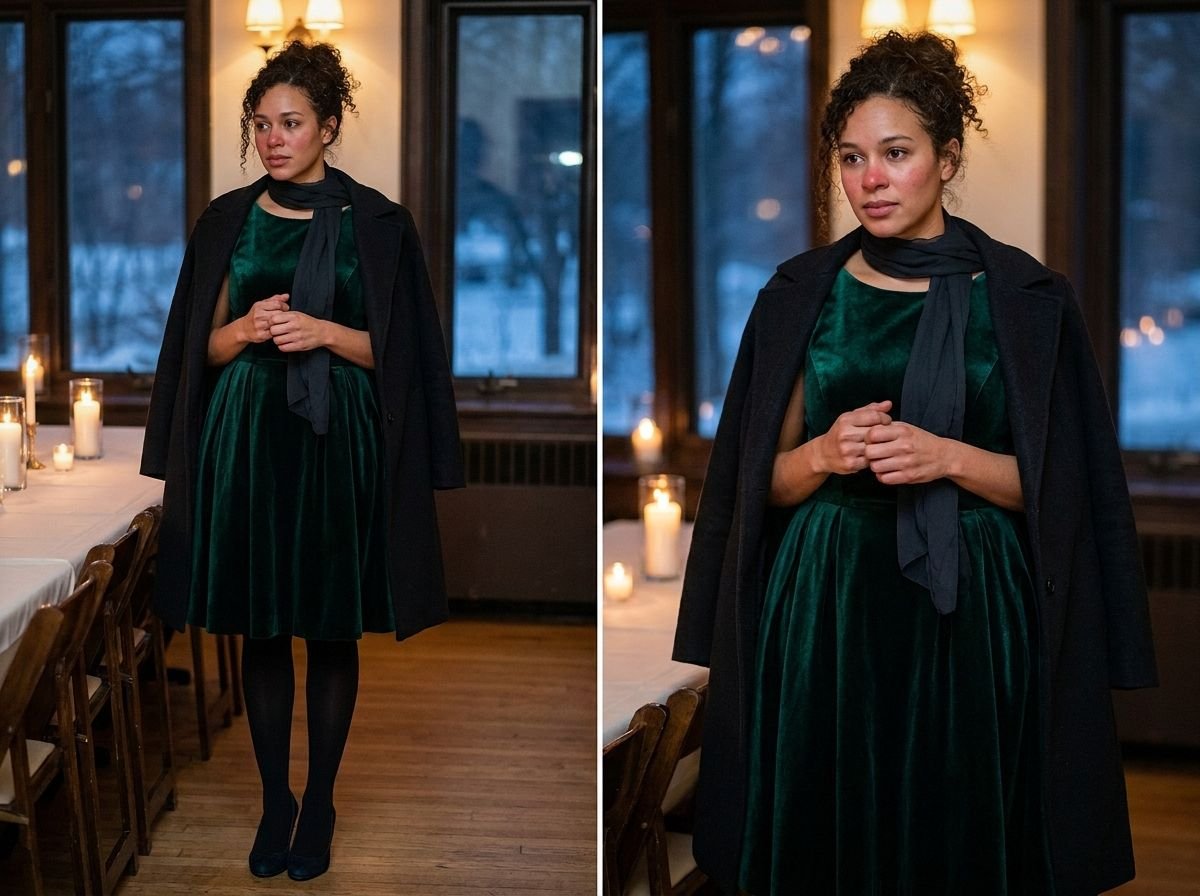
4. Cocktail: The Velvet Midi
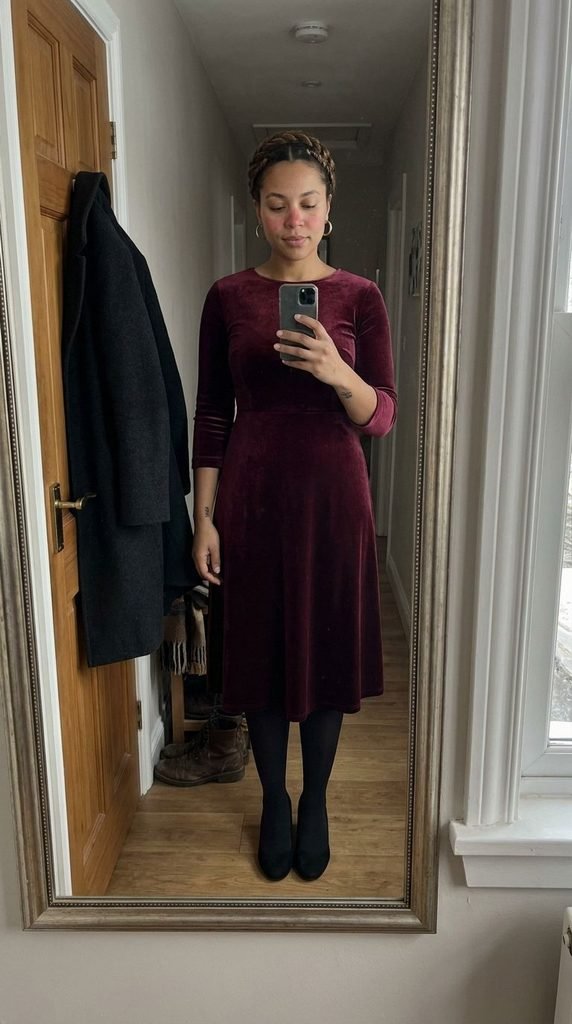
A midi-length velvet dress with three-quarter or long sleeves. It’s the most versatile winter wedding outfit there is and works for almost every evening dress code. It also rewears for Christmas parties and dinners.
5. Cocktail: The Satin Slip With a Knit Wrap
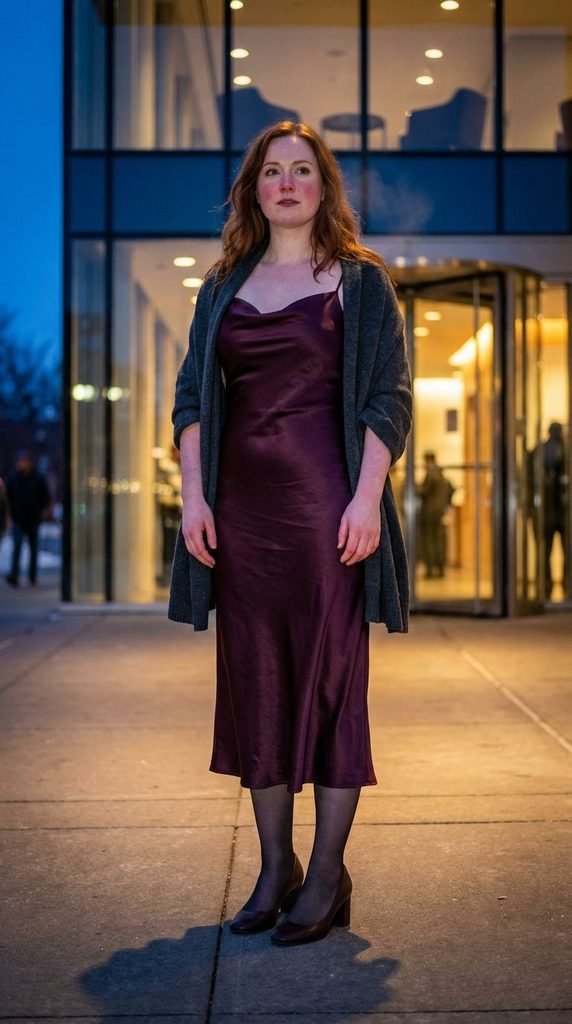
A satin midi slip worn with a fine knit wrap or shrug over the shoulders. The fluid-against-cosy contrast is what makes it look considered. Choose a heavier satin, thin satin reads summery.
6. Semi-Formal: The Knit Midi Dress
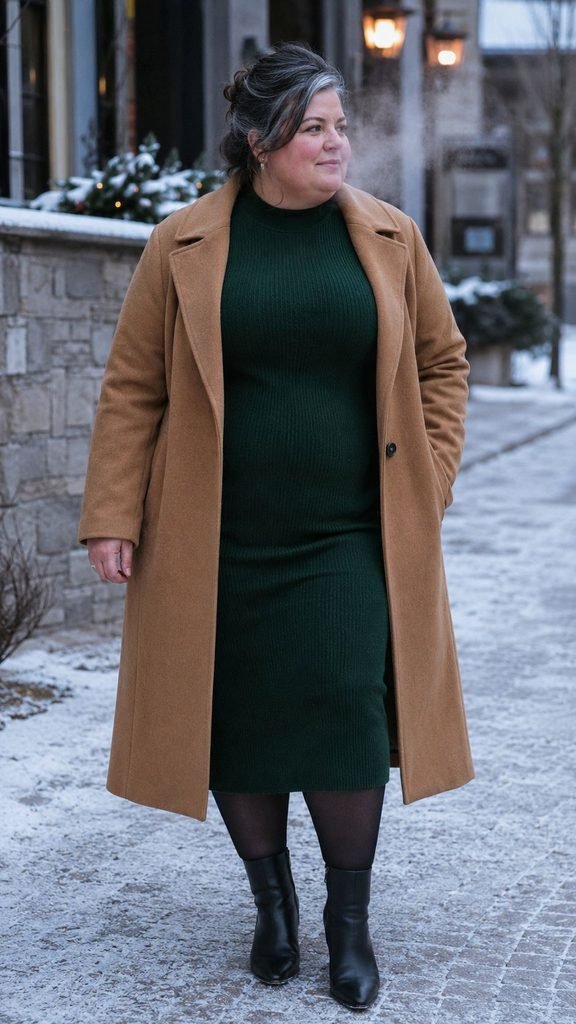
A fine-gauge knit midi in a deep shade with boots and a coat. It’s genuinely warm, comfortable for a long day, and it rewears constantly. It’s the most forgiving option for a daytime winter wedding.
7. Festive or Holiday: The Metallic Midi
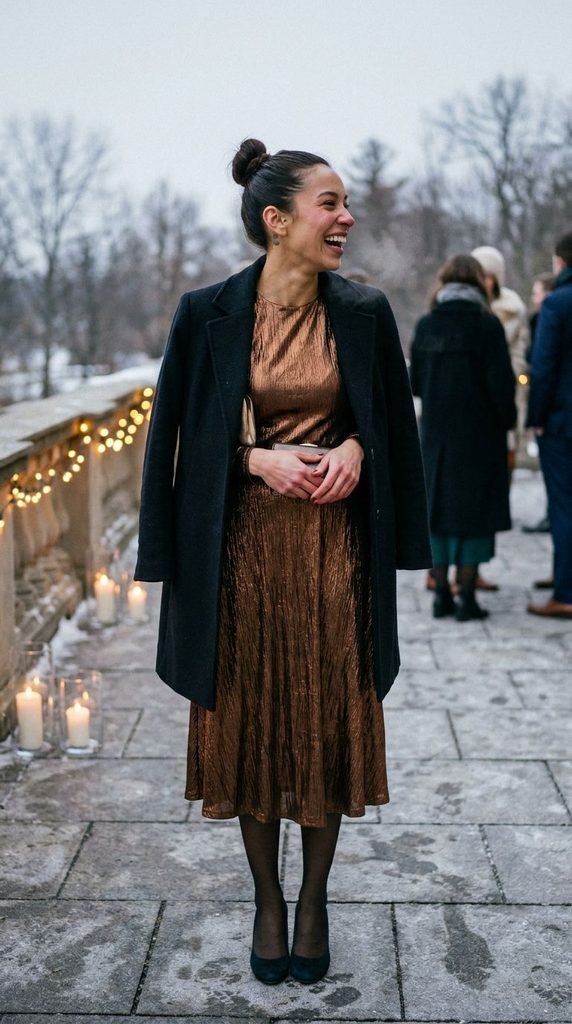
A metallic or lamé midi in gold, bronze or pewter. Holiday-season weddings invite a bit more sparkle than usual. Keep the accessories quiet so the fabric leads.
Direction 2: Dresses and Silhouettes
8. The Three-Quarter Sleeve Dress
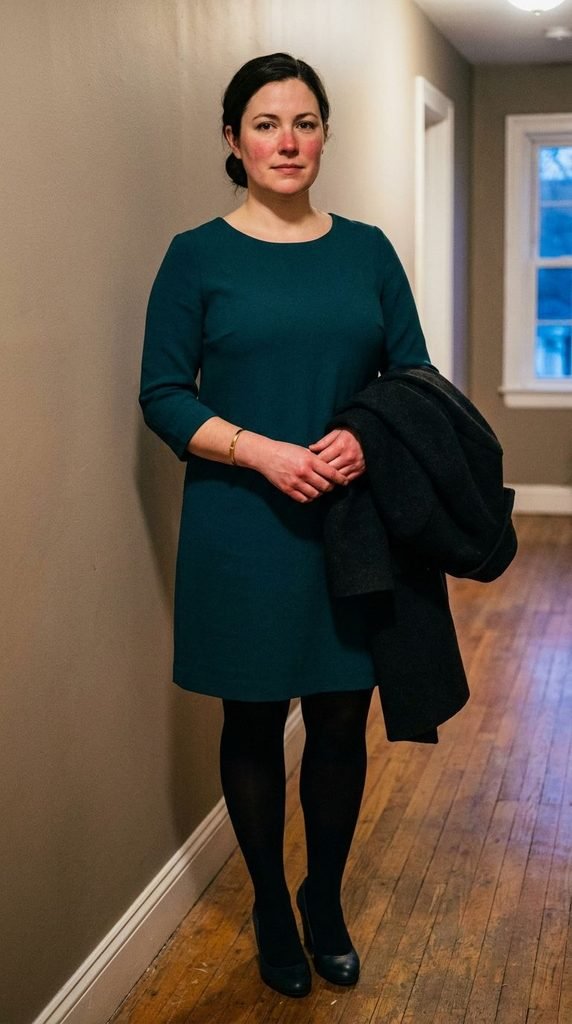
A dress with sleeves ending mid-forearm, the sleeve length stylists recommend most for cold-season weddings. It looks polished without feeling heavy and the exposed wrist keeps it light. It also photographs particularly well.
9. The Long-Sleeve Fitted Dress
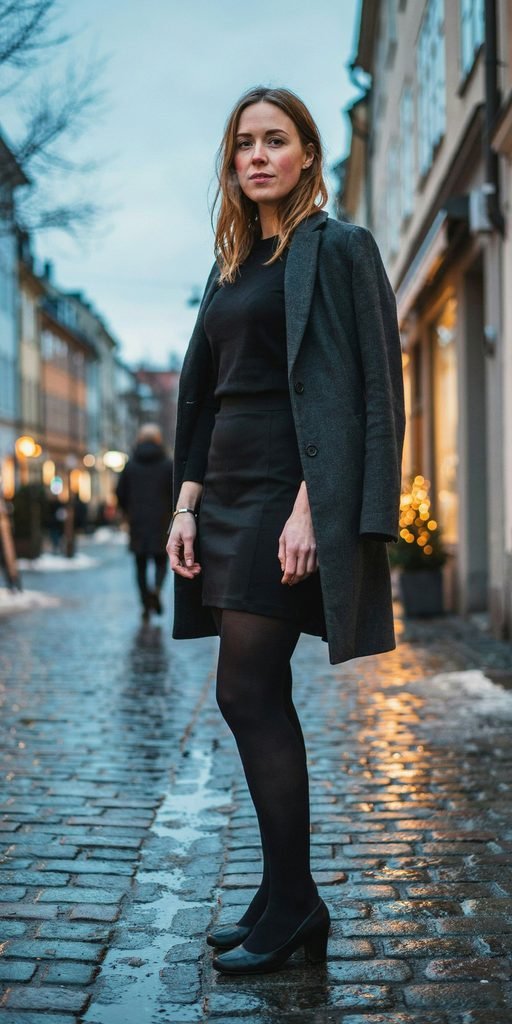
A body-skimming dress with full sleeves in crepe or jersey. It’s modern, warm and needs no cover-up indoors. It’s the easiest silhouette to accessorise.
10. The One-Shoulder Long Sleeve
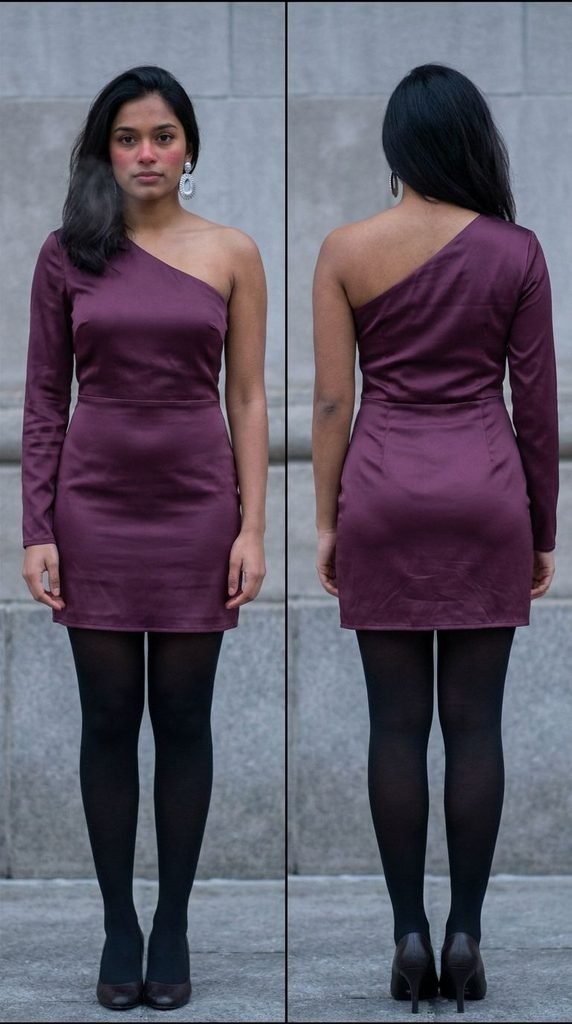
An asymmetric dress with a single long sleeve and one bare shoulder. It’s the compromise between showing skin and staying warm, and it’s effortlessly chic. Wear your statement earring on the bare side.
11. The High-Neck Column
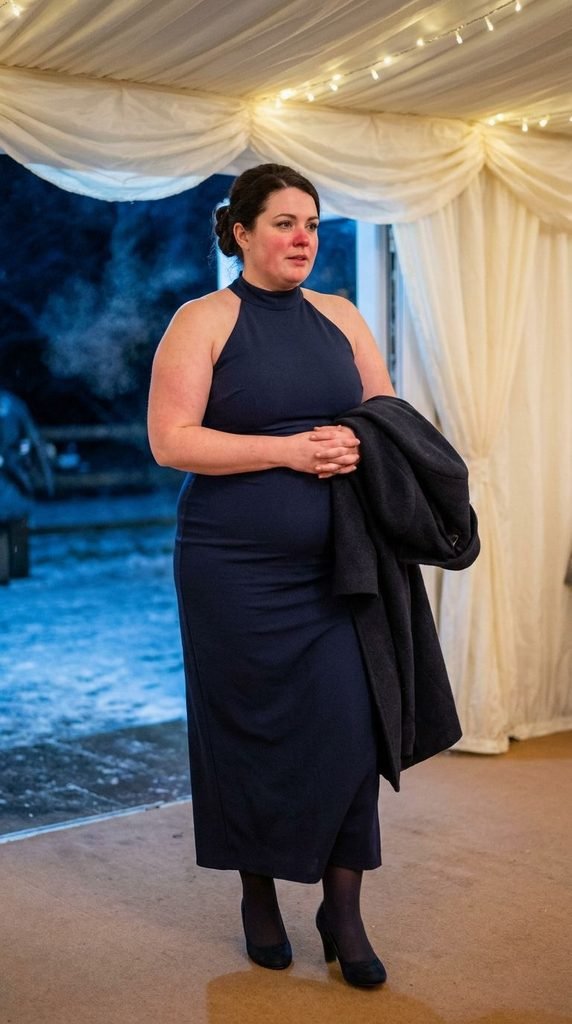
A high or funnel neckline in a floor-length column. Coverage at the neck is where you feel the cold most, so this is quietly practical. It looks striking with hair worn up.
12. The Cape-Sleeve Dress
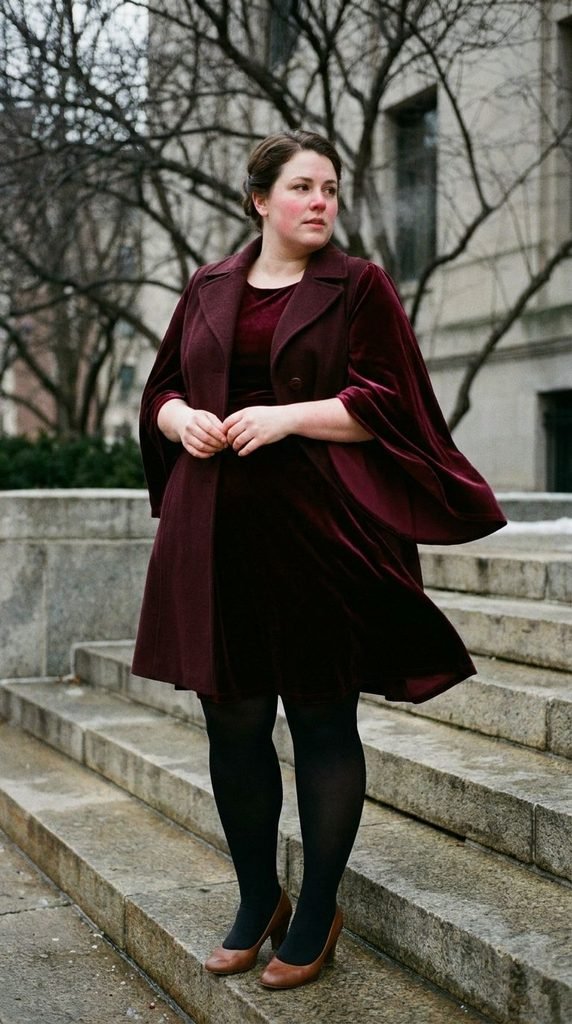
A dress with attached cape sleeves falling from the shoulders. It gives movement and coverage without a separate layer to keep track of. It solves the where-do-I-put-my-wrap problem permanently.
13. The Wrap Dress
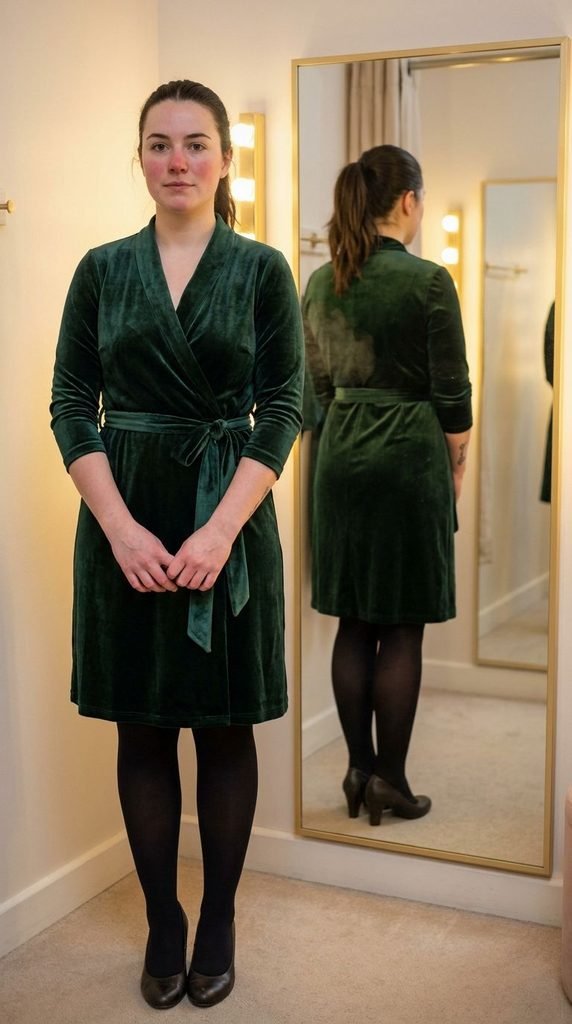
A true wrap in a heavier fabric, adjusting to you rather than the reverse. It’s the most forgiving cut here and the easiest to layer over tights. It also travels well for destination winter weddings.
14. The Pleated Midi
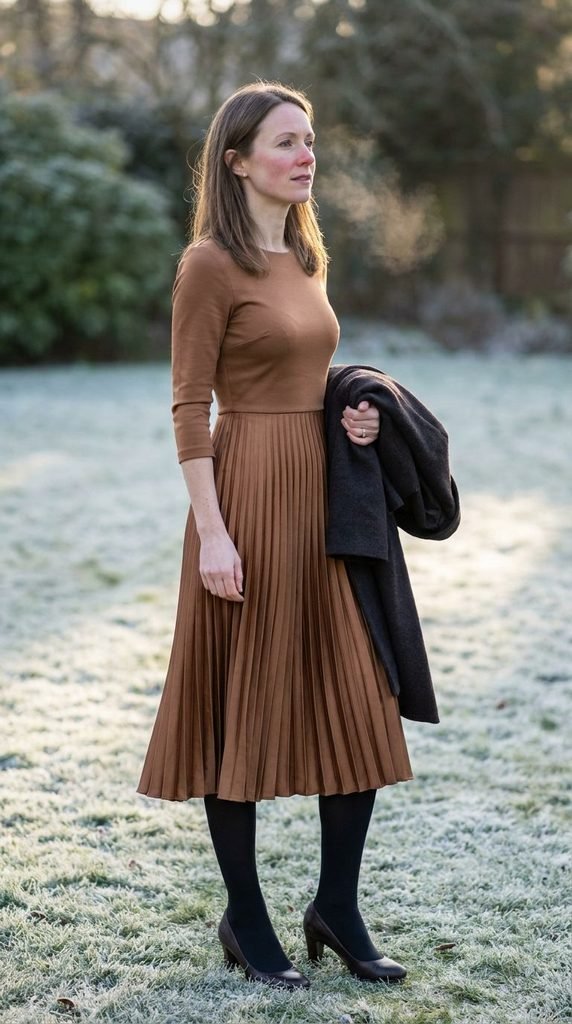
A pleated skirt in satin or jacquard with a fitted top half. Pleats add movement and texture, which reads richer in winter photographs. It’s flattering across almost every body type.
15. The Tea-Length Dress
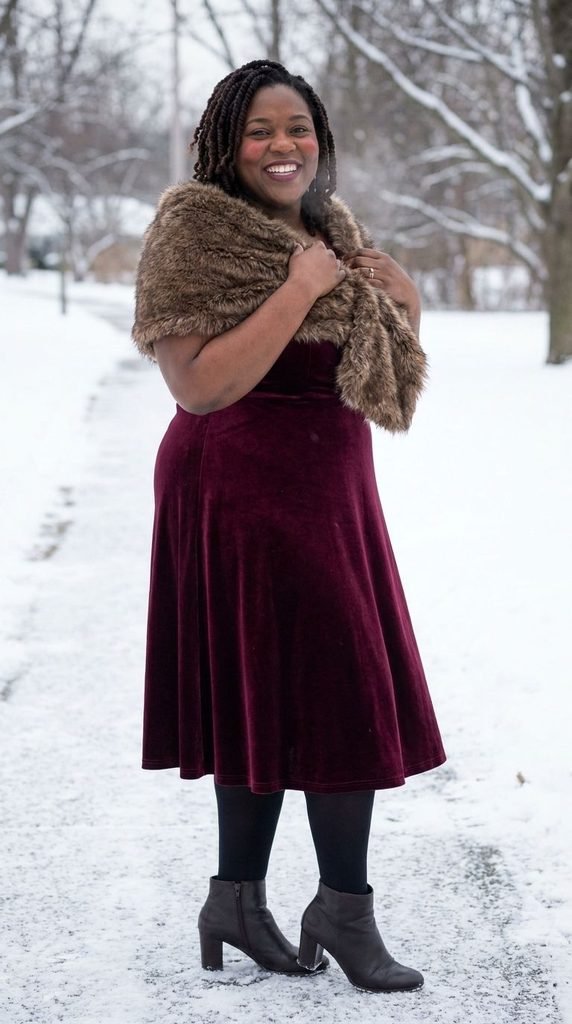
A hem between knee and ankle, worn with opaque tights and boots. It’s the most practical length for snow and it looks deliberately retro. It also avoids the dragging-hem problem entirely.
16. The Sleeveless Dress, Balanced
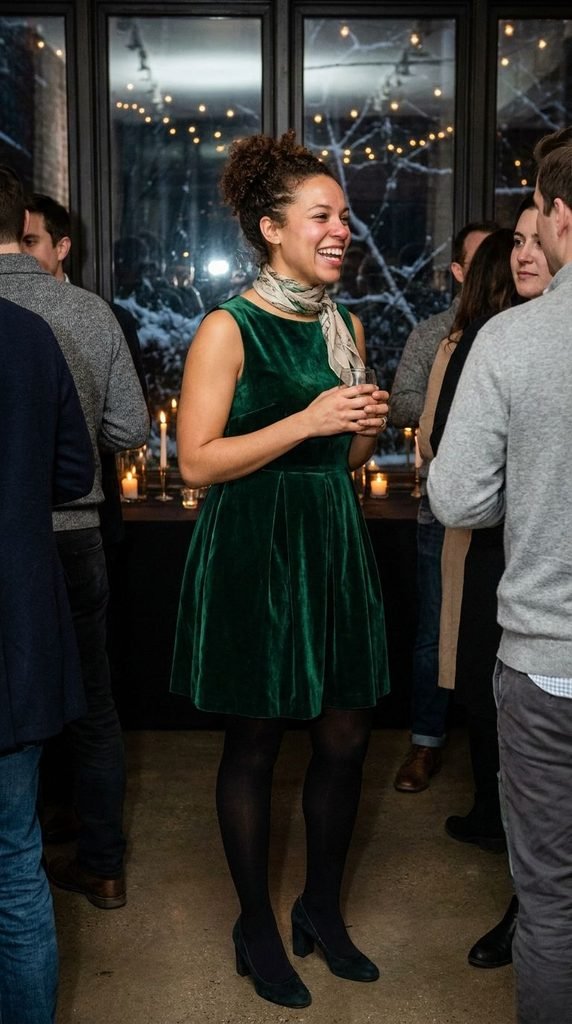
A sleeveless dress made winter-appropriate by a structured skirt, a wrap or a chiffon scarf detail. Stylists are clear that sleeveless works as long as something else grounds it in the season. The balancing element is not optional in January.
17. The Sheer-Sleeve Dress
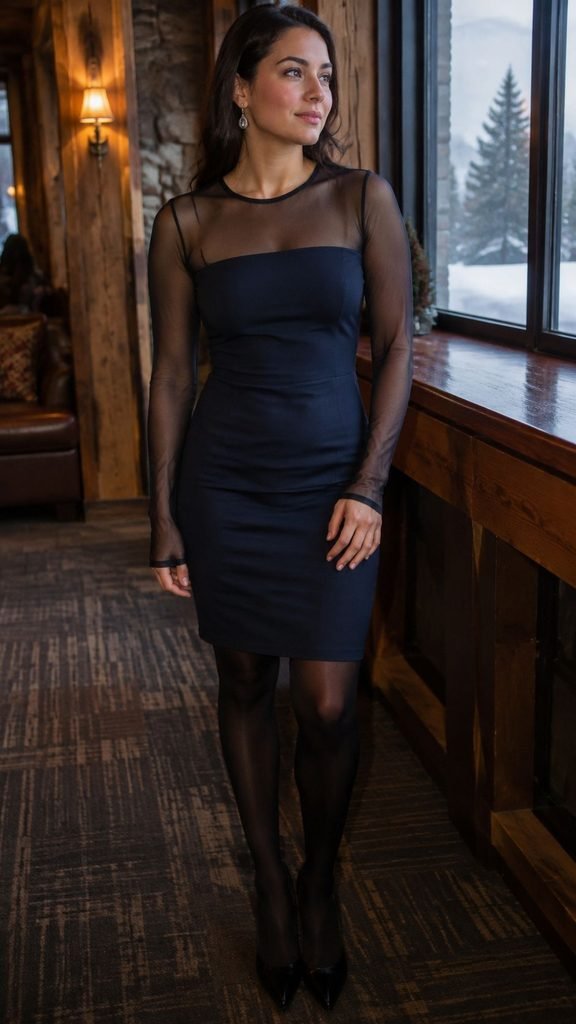
A dress with sheer mesh or lace sleeves over a solid body. You get the look of coverage with almost none of the warmth, which suits overheated reception rooms. It’s the most romantic option here.
Direction 3: Beyond the Dress
18. The Tailored Jumpsuit
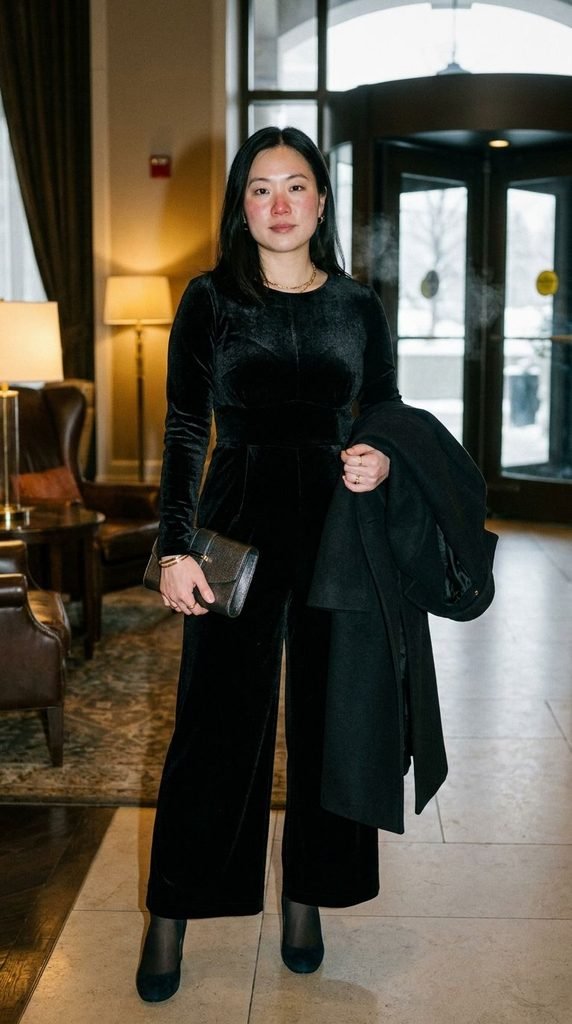
A one-piece in velvet or satin, elegant as a gown but warmer and more comfortable. With bare legs off the table in winter, a jumpsuit is genuinely the smarter choice. Check the bathroom logistics before the day.
19. The Trouser Suit
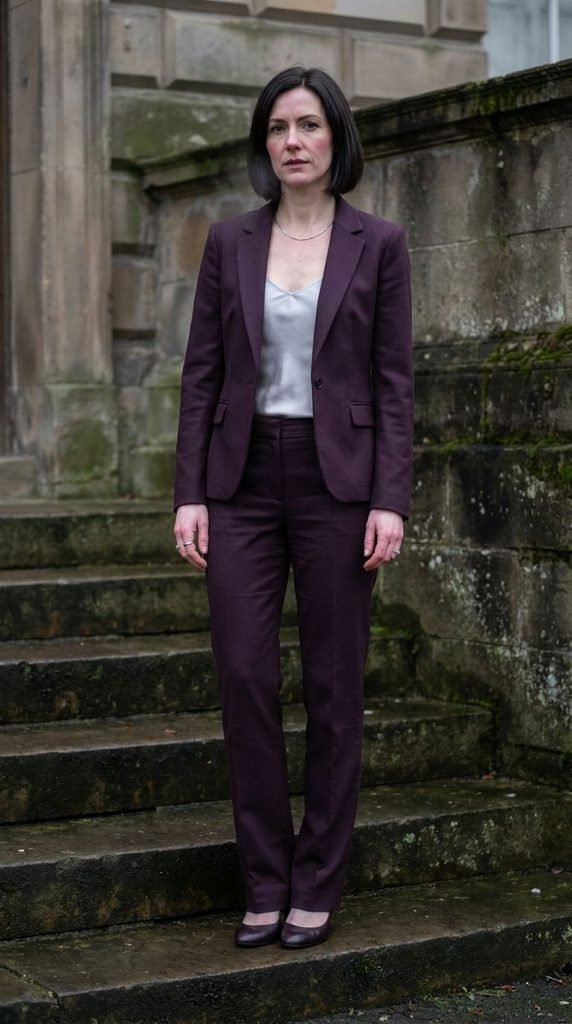
A properly tailored suit in a jewel tone or deep neutral, worn with a camisole or nothing beneath the jacket. It’s sharp, warm and increasingly common at winter weddings. Have the trousers hemmed for the shoes you’ll wear.
20. The Velvet Blazer and Trousers
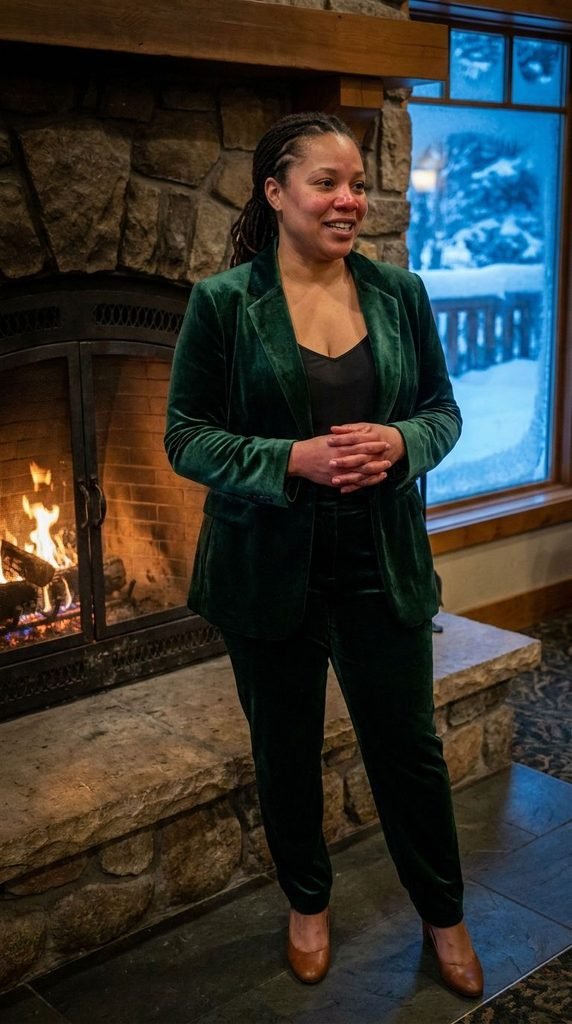
A velvet blazer with matching or contrasting tailored trousers. Velvet makes separates read occasion-appropriate rather than office-appropriate. Both pieces rewear separately, which is rare in occasionwear.
21. The Skirt Set
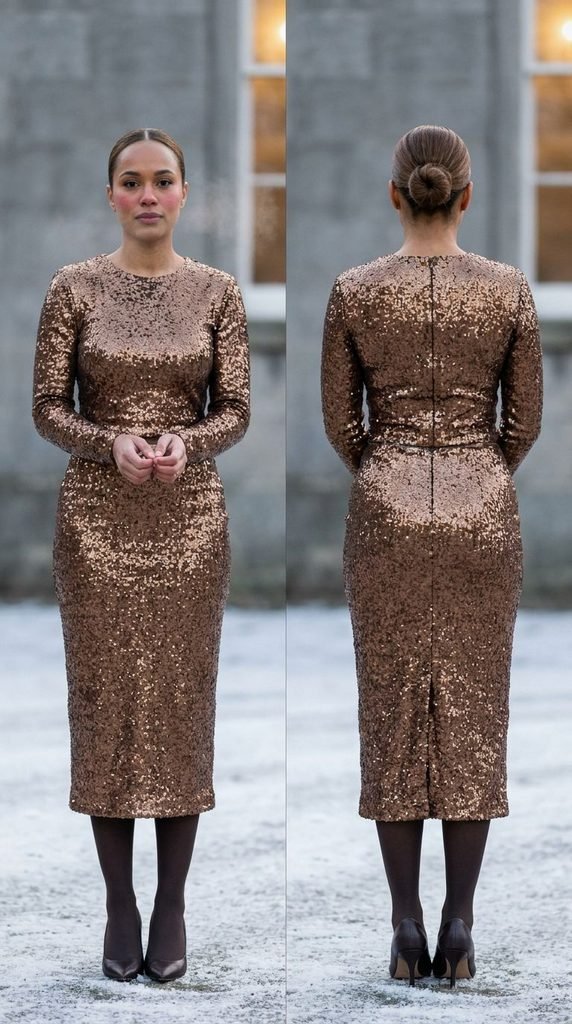
A matching top and midi or maxi skirt in one fabric. It reads as a dress from a distance but gives you two pieces you’ll wear again. Sequinned sets are particularly good for evening receptions.
22. The Knit Top and Satin Skirt
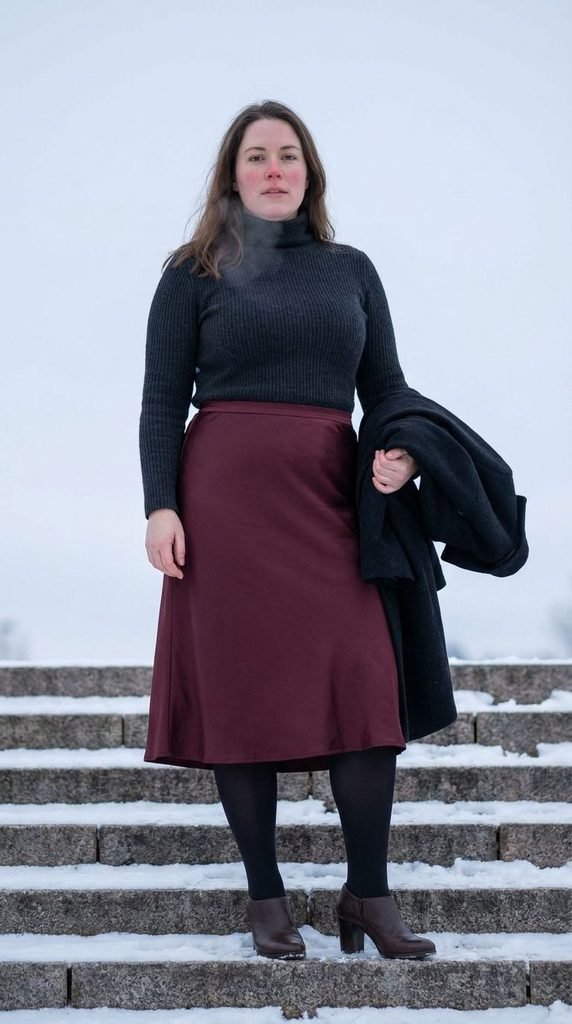
A fine knit tucked into a fluid satin or pleated skirt. It’s the warmest smart outfit on this list and the texture contrast looks expensive. It’s also the easiest to assemble from a wardrobe you already own.
23. The Wide-Leg Trousers and Statement Top
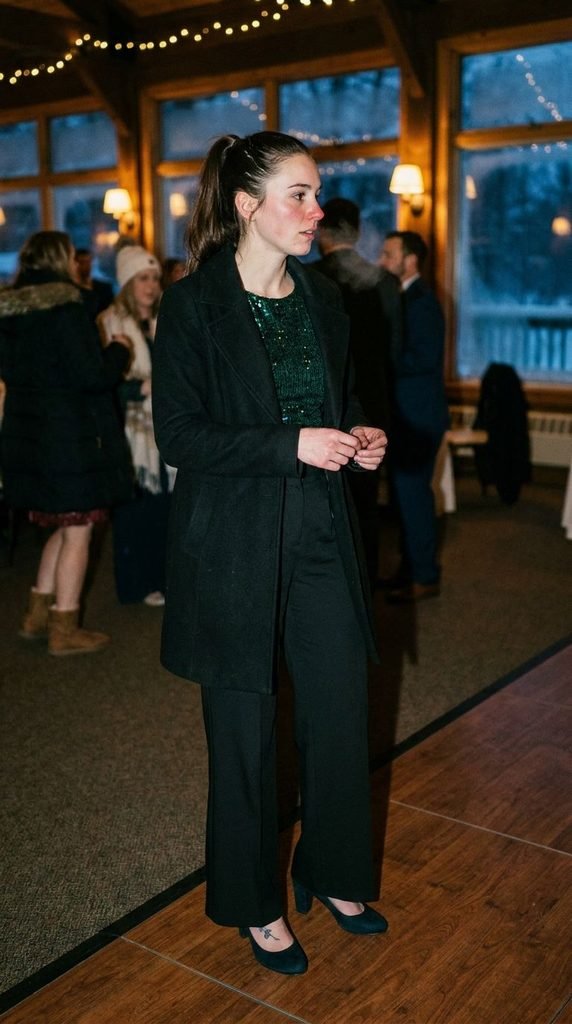
Flowing tailored wide-legs with an embellished or sequinned top. It’s comfortable enough for dancing and warm enough for a cold venue. Full-length trousers cover the ankle, which matters more than people expect.
24. The Midi Dress Over Trousers
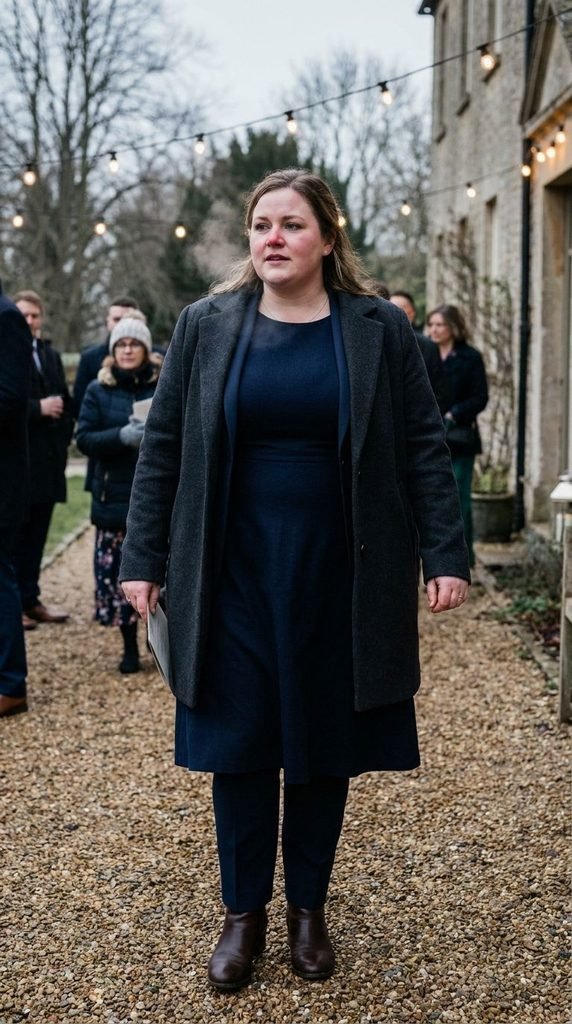
A midi or maxi dress layered over slim tailored trousers. It’s the most fashion-forward option here and genuinely practical for outdoor ceremonies. Keep both pieces in the same colour family.
Direction 4: Fabrics and Colours
25. Velvet
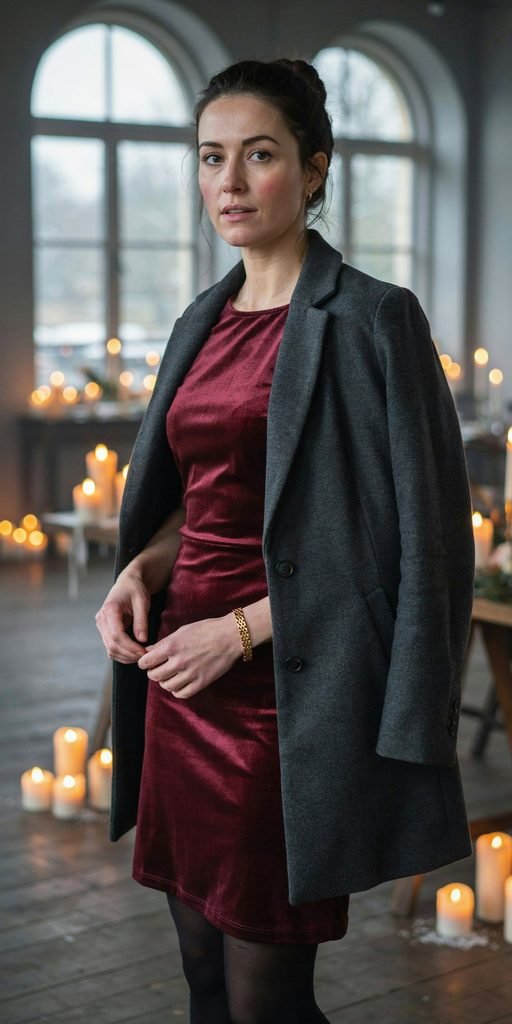
The defining winter occasion fabric, with depth, warmth and a pile that catches candlelight. It reads formal in almost any silhouette. Every stylist quoted on winter weddings names it first for a reason.
26. Satin
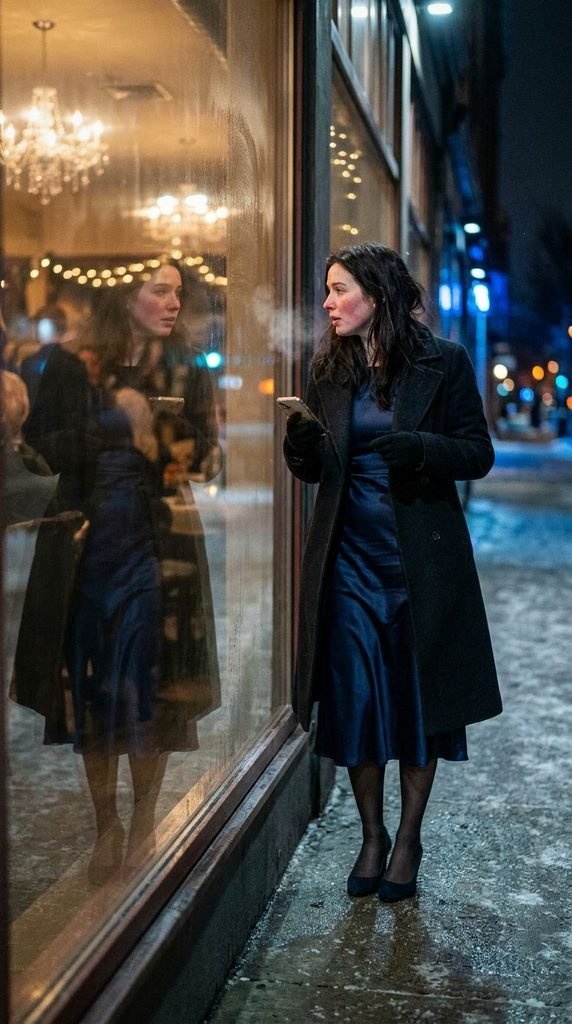
Fluid, polished and light-catching along every fold. Choose a heavier weight for winter, as lightweight satin reads summery. Matte satin photographs more forgivingly than high shine.
27. Crepe
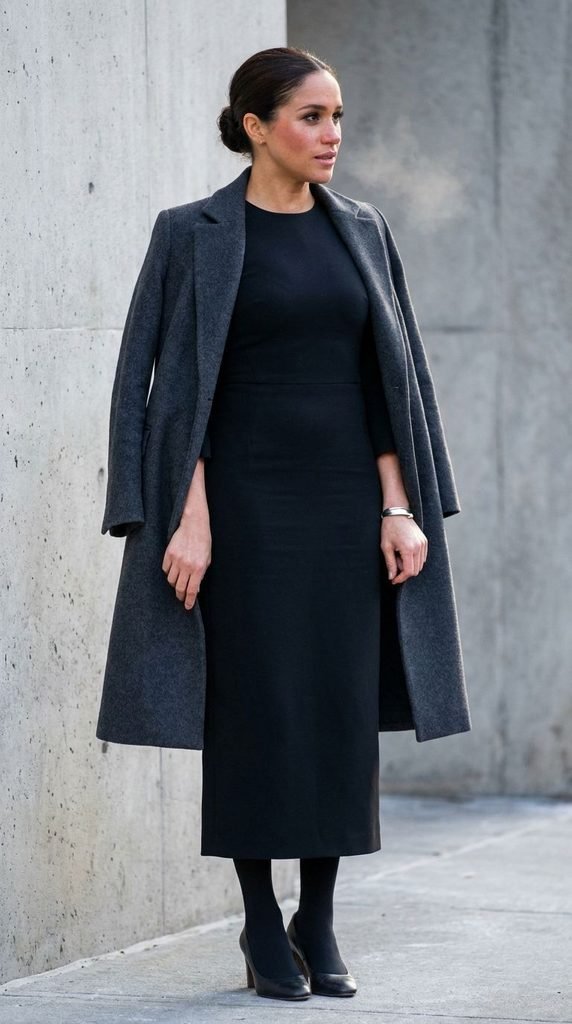
Matte, structured and modern, holding a clean silhouette without clinging. It has the weight that makes an outfit read season-appropriate. It’s the most rewearable of the four core fabrics.
28. Sequins and Beading
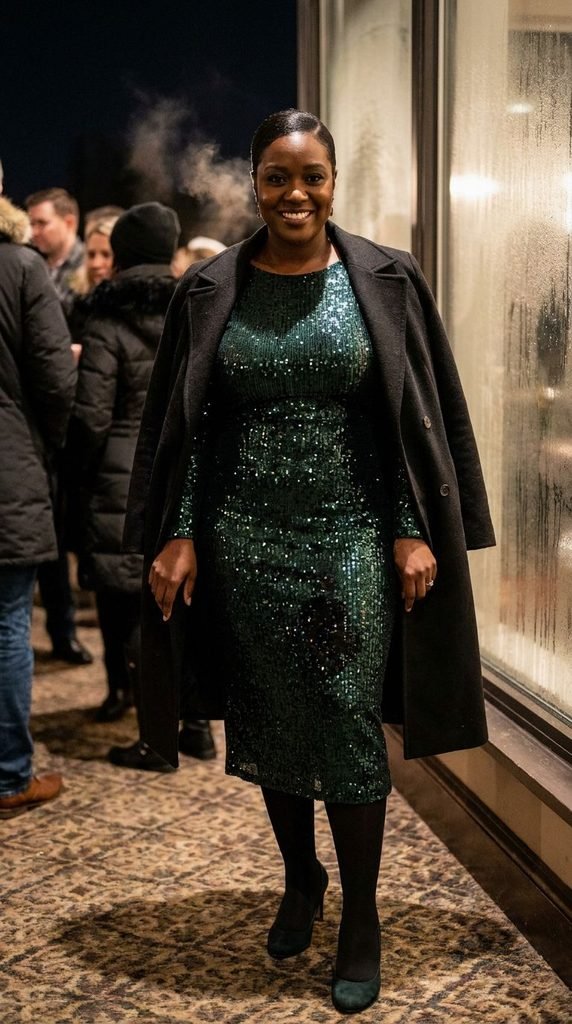
Full sequin coverage or beaded detailing for evening and holiday-season weddings. It’s the highest-impact fabric in low winter light. One sequinned piece against everything else plain is the rule.
29. Jacquard and Brocade
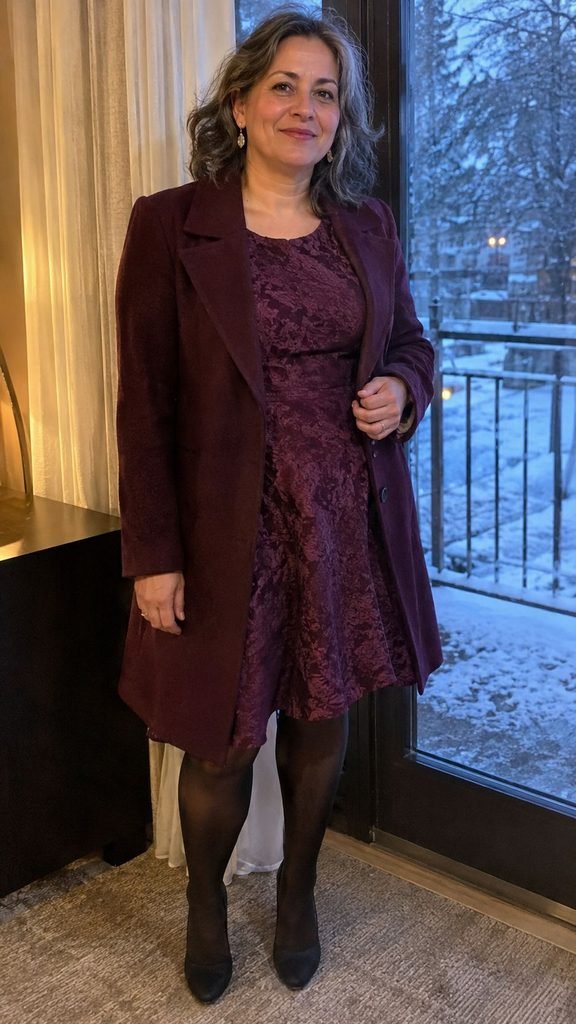
Woven patterned fabrics with genuine texture and structure. Jacquard adds richness without needing colour or embellishment. It’s the quietly expensive-looking choice.
30. Emerald and Forest Green
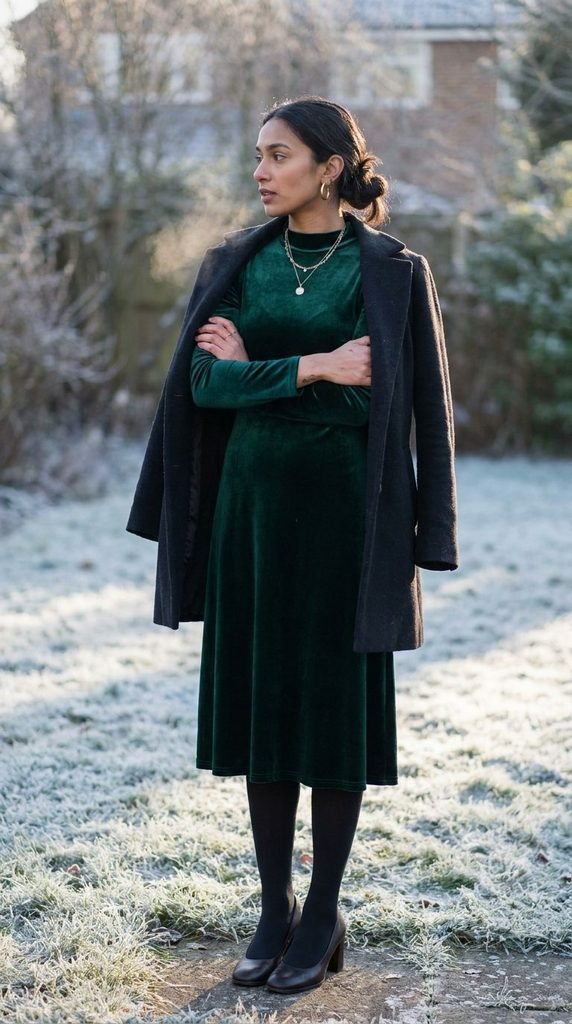
Deep saturated greens, the most December-appropriate jewel tone there is. Green photographs beautifully against winter light and candle glow. Gold jewellery warms it, silver sharpens it.
31. Burgundy and Wine
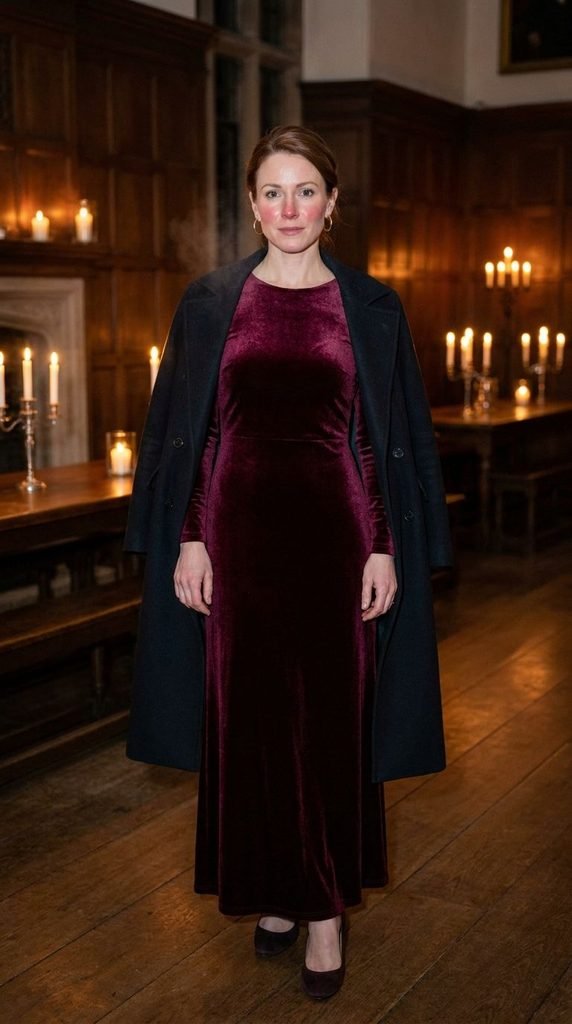
The deepest reds, rich and formal without being loud. It’s the most reliably flattering dark shade across complexions. In velvet it’s the definitive winter wedding guest dress.
32. Navy and Midnight Blue
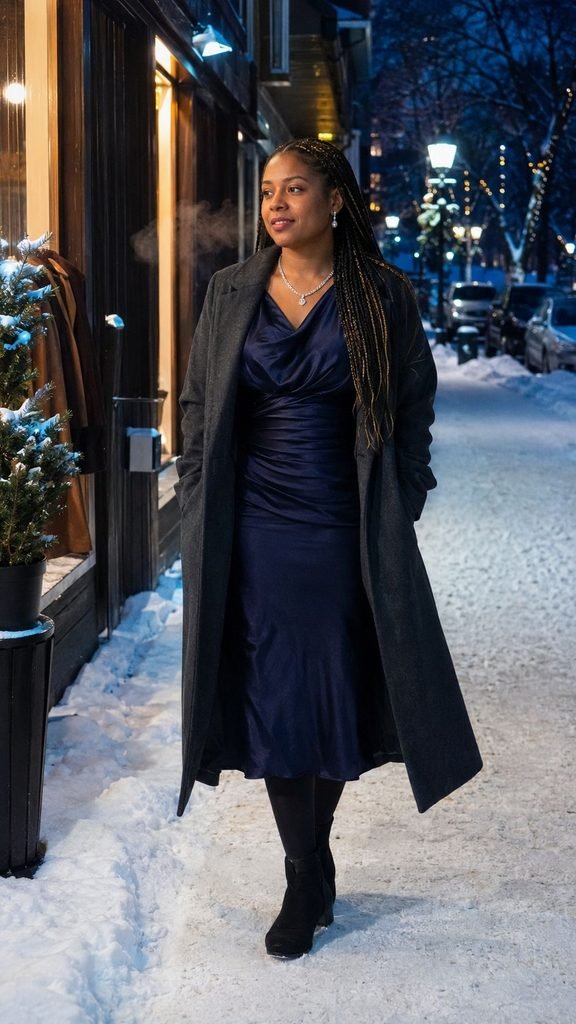
The alternative to black, warmer in photographs and just as safe. Navy suits nearly every dress code and venue. Silver or pewter accessories look sharper against it than gold.
33. Plum and Aubergine
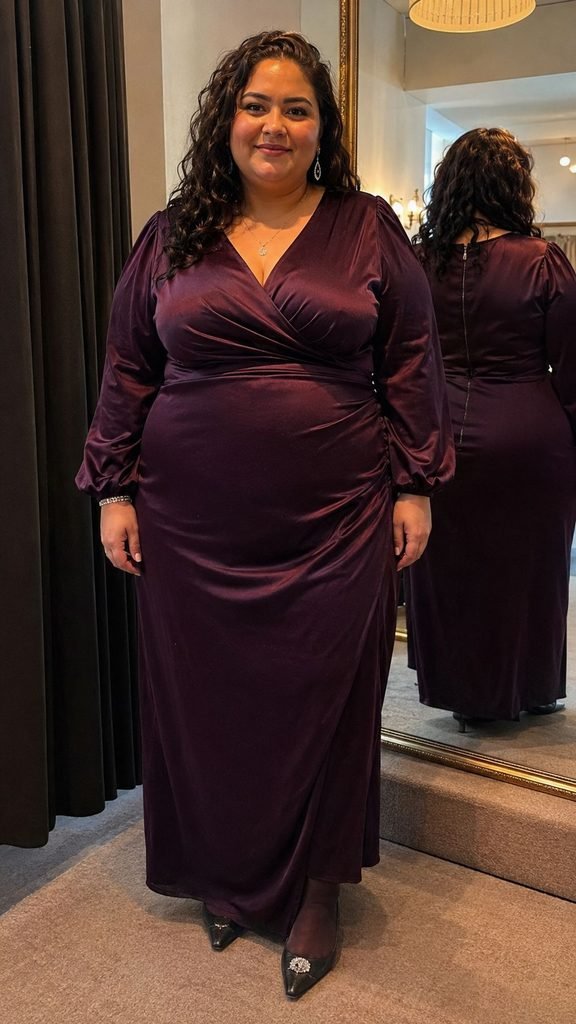
Deep purples, dramatic and less expected than green or burgundy. It’s the shade that gets asked about. It pairs particularly well with silver.
34. Black, Done Well
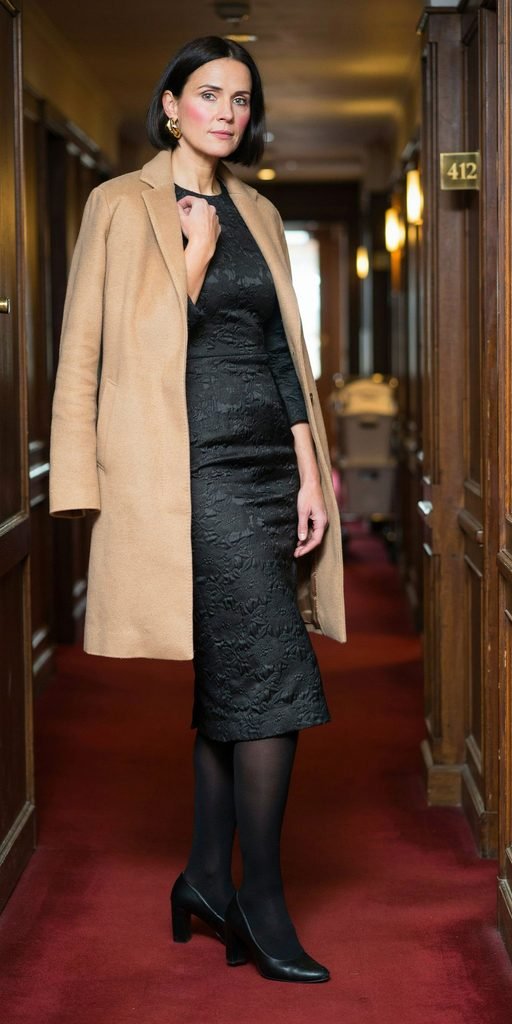
A black dress is entirely acceptable at a modern wedding, and it’s the easiest colour to rewear. The trick is making the fabric interesting, velvet, sequins or jacquard rather than plain crepe. Add a metallic accessory so it reads occasion rather than office.
35. Subtle Metallics
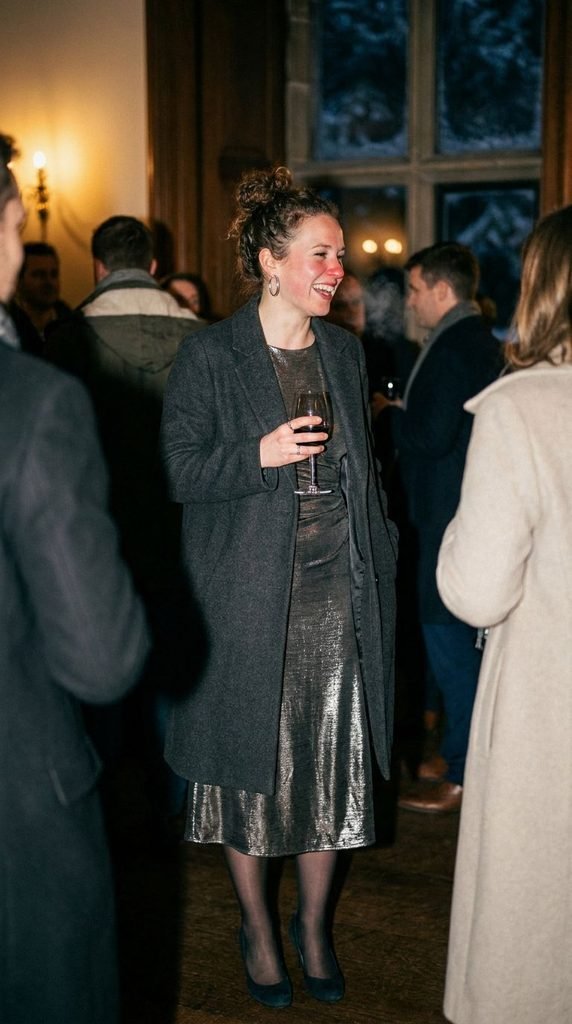
Pewter, bronze, antique gold and champagne-adjacent tones, staying clear of anything genuinely bridal. Metallics suit the season and the low light. Steer well away from pale silver and true champagne.
Direction 5: Outerwear, Layers and Accessories
36. The Wool Coat
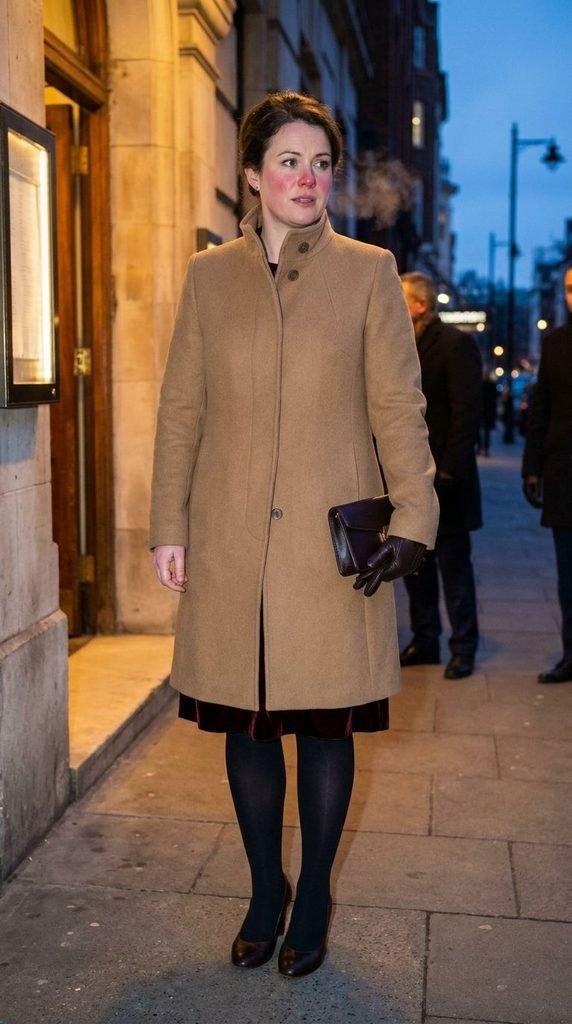
A proper tailored wool coat long enough to cover your hemline. It’s the most practical topper and it will appear in your arrival photographs, so choose it deliberately. Camel, black and jewel tones all work.
37. The Faux-Fur Wrap
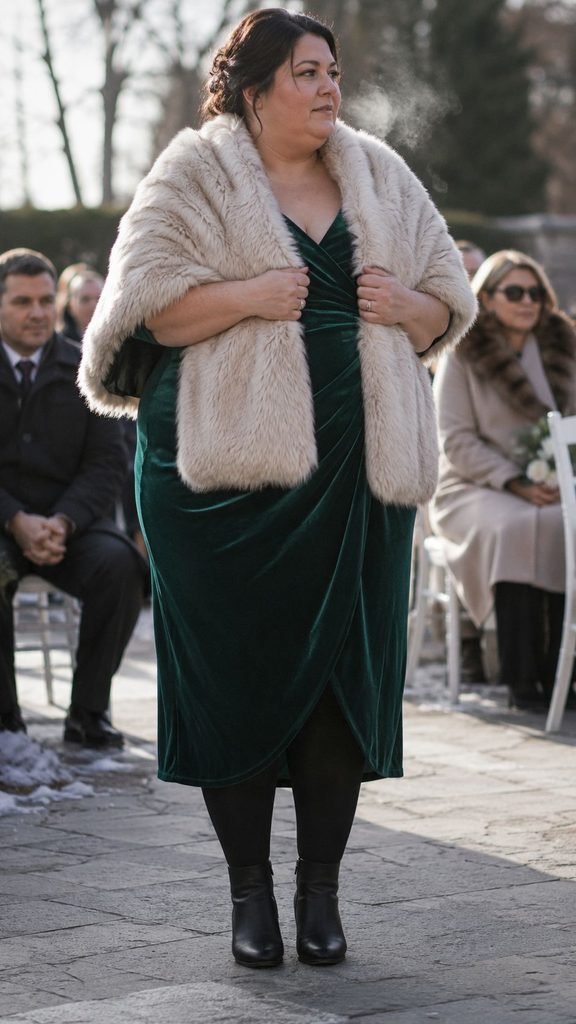
A faux-fur stole or shrug over the shoulders, for the ceremony and the walk between venues. Something to cover your shoulders is genuinely essential for outdoor portions of the day. It’s the most photogenic layer here.
38. The Velvet Cape
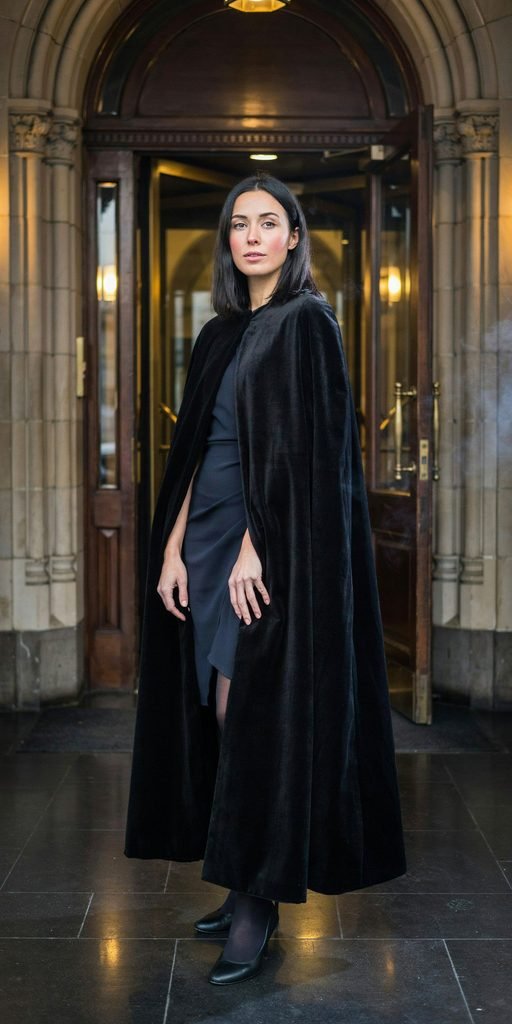
A full cape in velvet, dramatic and warm at once. It’s the most striking outerwear option and it suits black-tie particularly well. It also removes the need to carry a coat.
39. The Cashmere or Fine Knit Wrap
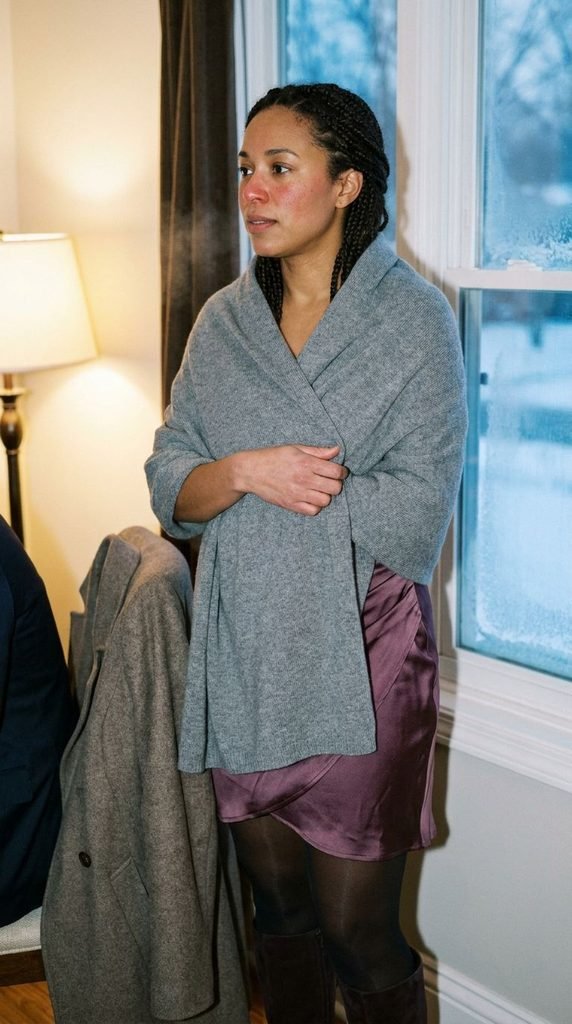
A large fine-knit wrap that folds small into a bag. It’s the least bulky option and the easiest to remove indoors. Neutral shades work with everything you own.
40. Opaque Tights
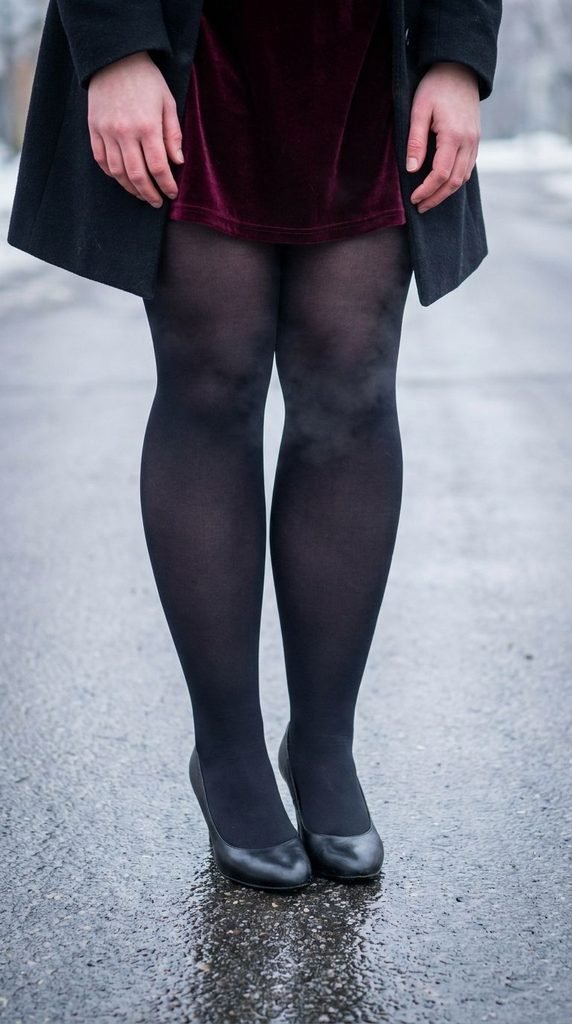
Matte opaque tights in black or a shade matching your shoes. Bare legs are not realistic at most winter weddings, and opaque tights are the warmer choice. Matte reads far more expensive than shiny.
41. Sheer Tights
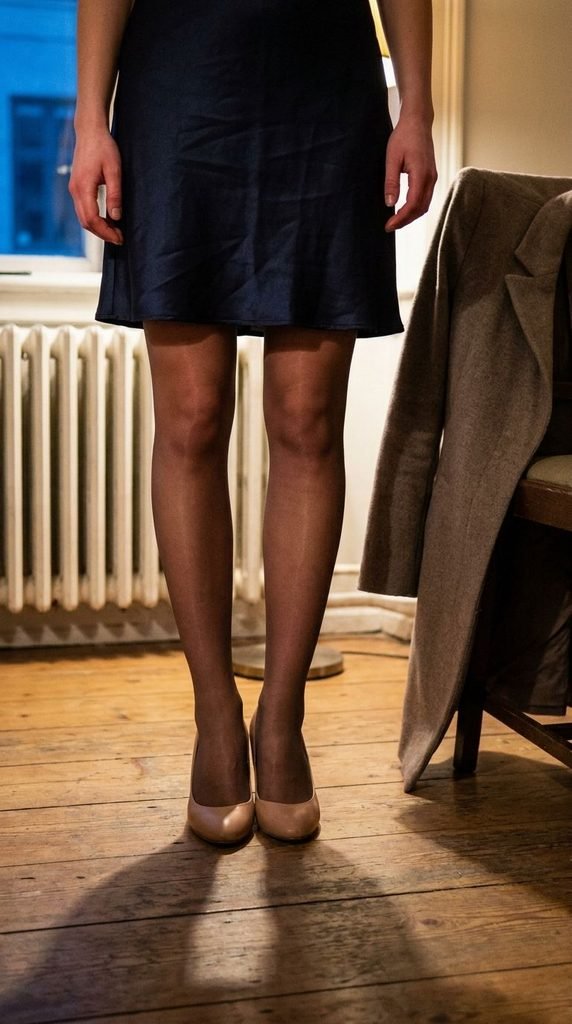
Fine sheer hosiery for milder climates or heavily heated venues. They give coverage and polish without the weight of opaques. Buy a spare pair and put it in your bag.
42. Closed-Toe Pumps
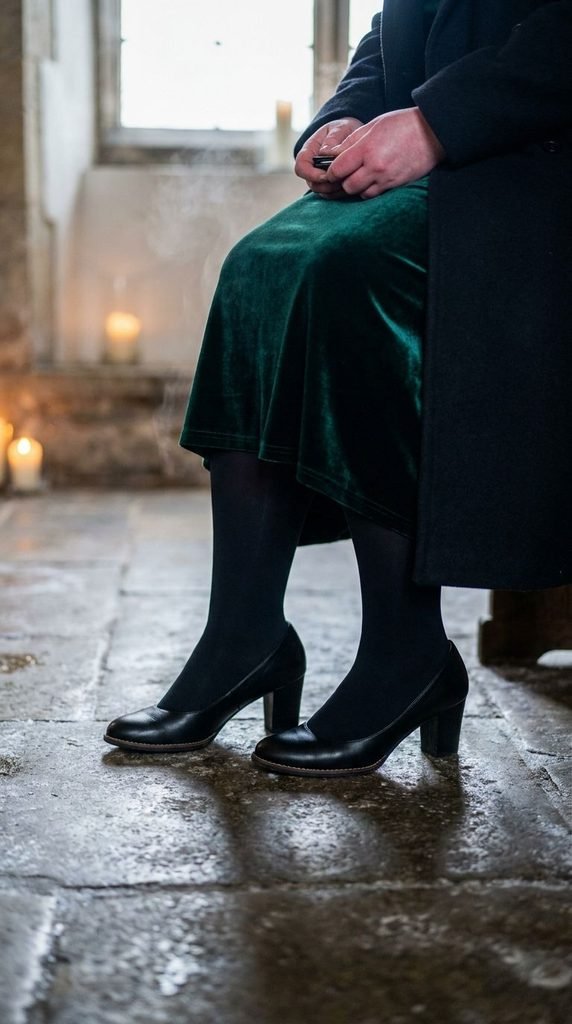
A classic closed-toe heel, which is the correct shoe for a winter wedding. Open toes and sandals are the most common winter guest mistake. A block heel survives grass, gravel and a full evening of dancing.
43. The Dressy Ankle Boot
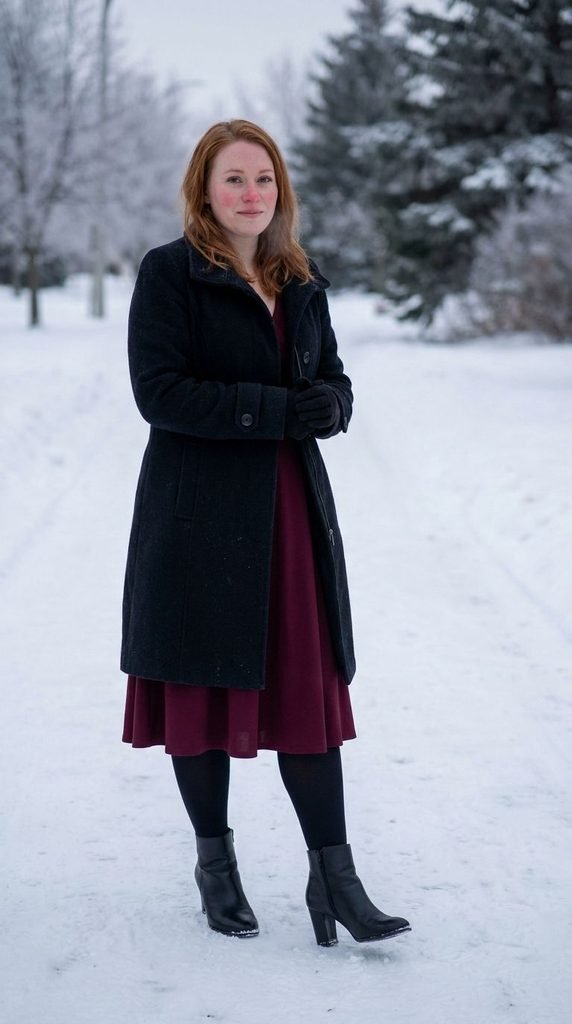
A sleek zipped ankle boot worn with tights under a midi or tea-length dress. Boots are genuinely acceptable at most winter weddings and vastly warmer. Keep them plain and heeled rather than chunky.
44. The Structured Clutch
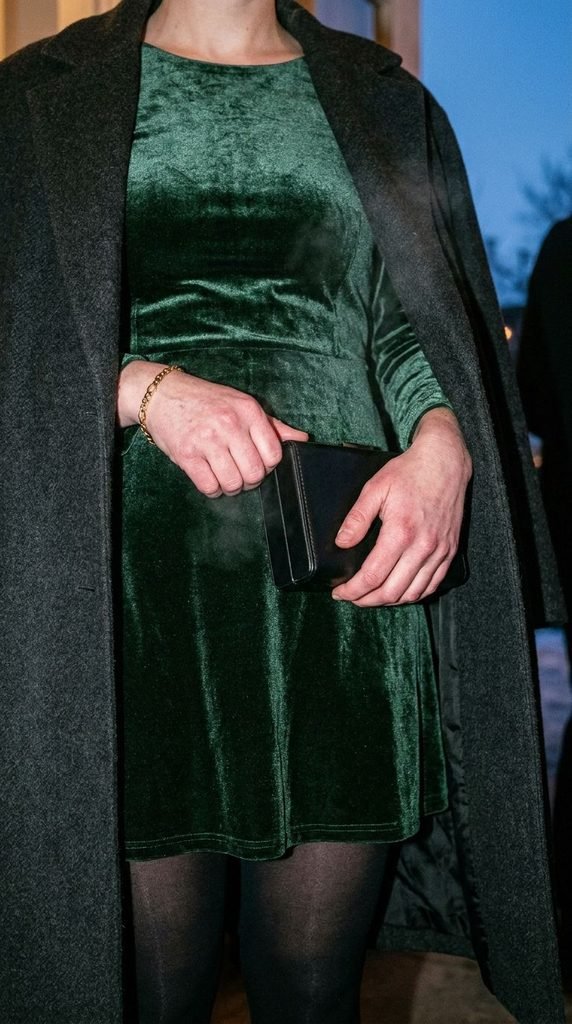
A small structured clutch or box bag that adds polish without bulk. It’s the accessory that finishes an outfit in every photograph. Choose one large enough for a phone and a lipstick, and no larger.
45. Metallic Jewellery, Chosen to Match
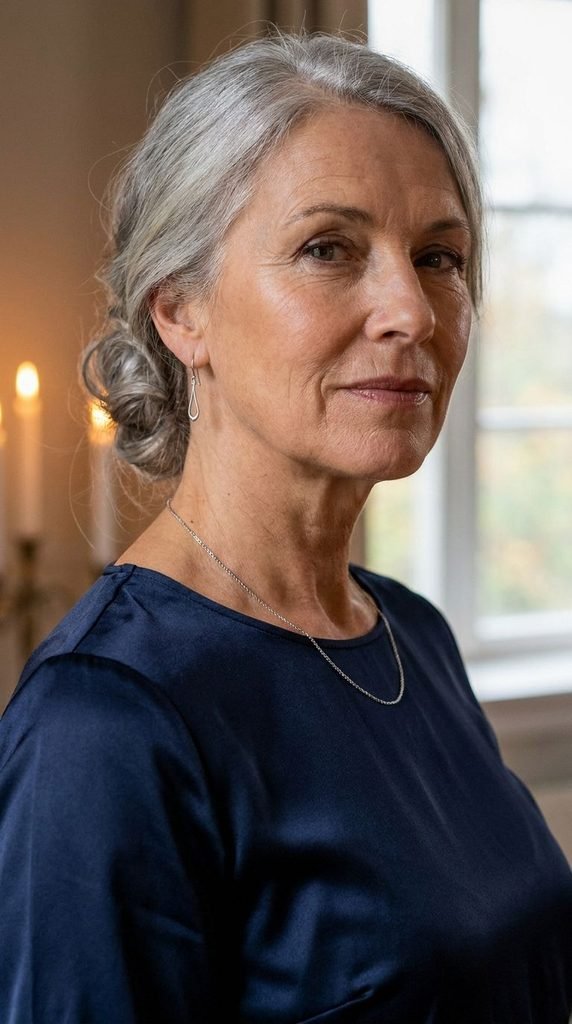
Gold with warm shades like burgundy and bronze, silver with cool ones like navy, green and plum. Matching your metal to your palette is the smallest change with the biggest effect. Pick one metal and stay with it head to toe.
Getting It Right on the Day
Ask about the venue’s temperature. Historic buildings, barns and marquees run genuinely cold, and outdoor portions of the day are colder still, so ask the couple or check the venue’s website rather than guessing. It changes which of these forty-five outfits is right.
Do a full dress rehearsal, layers included. Put on the dress, the tights, the shoes and the coat together, and look in a full-length mirror. Layering changes proportions, and a hemline that looked right bare can sit oddly over opaque tights and boots.
And build in the transitions. Winter weddings involve moving between cars, ceremonies and receptions far more than summer ones, so the outfit that works is the one you can add a layer to and remove it from easily. If you’re fighting your outfit during the day, you’ll be in photographs doing exactly that.
If I’m Picking Three to Start With
The velvet midi with three-quarter sleeves because it fits more dress codes than anything else here, the tailored jumpsuit if you’d rather not deal with tights at all, and a proper faux-fur or velvet wrap because the outdoor parts of the day are always colder than the invitation suggests. Save this list to your style board on Pinterest before you shop, and check the dress code line on the invitation first, it narrows forty-five options to about eight.
