

Some years ago a bride of mine came out of her portraits with a long cathedral train and a maid of honour who had never seen the bustle before. The seamstress had shown it to her mother, who was across the lawn greeting guests. We found her, the three of us crouched behind a hedge, and fourteen ribbons later the bride made her entrance with seconds to spare.
I still think about that hedge every time a bride shows me her train. A bustle is the small piece of tailoring that lets you dance and hug people at your reception without anyone stepping on your dress. There are more styles than most brides expect, and the right one depends on your fabric and silhouette as much as your taste. Here are the eight I see most, with the dresses that suit each one.
Over or under: the first question
Every bustle falls into one of two families. An over bustle lifts the train and fastens it on the outside of the skirt with hooks or buttons, so the fastenings show and the train becomes part of the look. An under bustle folds the train beneath and ties it inside with ribbons, so the skirt falls clean to the floor.
Names change from shop to shop. One seamstress’s English bustle is another’s ballroom. So when you talk to your tailor, say the family as well as the name, for example a French (under) bustle. That one habit saves a lot of confusion.
A quick rule. Heavy fabric like satin, crepe or mikado needs more points and usually goes under. Light lace and tulle can go over, which also shows off a decorated train.
Over bustles (styles 1 to 3)
1. American bustle on a lace A-line
The dress: an ivory lace A-line gown with a V-neckline, thin straps and a chapel-length lace train, bustled over with five buttons at the waist into soft scalloped swags.
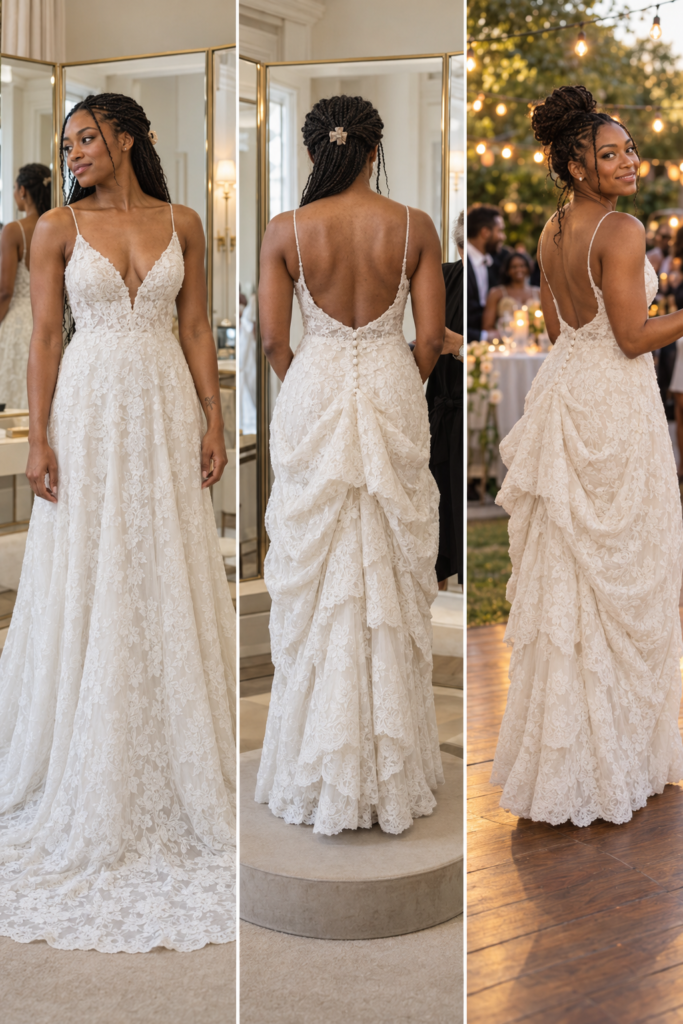
The American bustle is the all-rounder. One point gives a simple lift and five to seven give a fuller drape. It works on ballgowns, A-lines and sheaths, and it is the easiest for a bridesmaid to learn. Lace hides the hooks nicely, which is why I love it on a lace train.
2. Royal or Victorian bustle on a full ballgown
The dress: an ivory satin ballgown with a high neckline, long lace sleeves, a corset bodice and a cathedral train, bustled over with many pickups down the back into cascading folds, a small satin ribbon bow at each point.
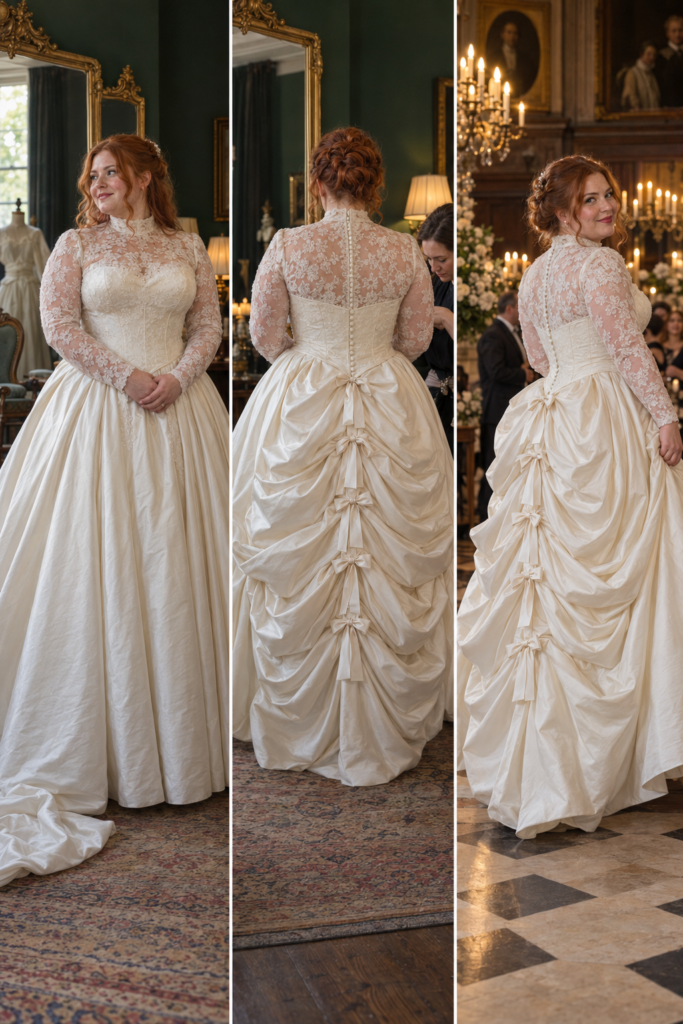
This is the grand one. Several pickups run down the back of the skirt and the train falls in tiers, with ribbons hiding each point. It needs a very full gown with plenty of fabric. Victorian romance was all over the spring 2027 runways, and this bustle matches it. If you like a moodier version of the look, my gothic wedding dressesare a good place to browse.
3. Bow bustle on a tulle ballgown
The dress: an ivory tulle ballgown with a strapless sweetheart neckline and an oversized ivory satin bow at the lower back, the tulle train bustled up so the folds fall from under the bow.
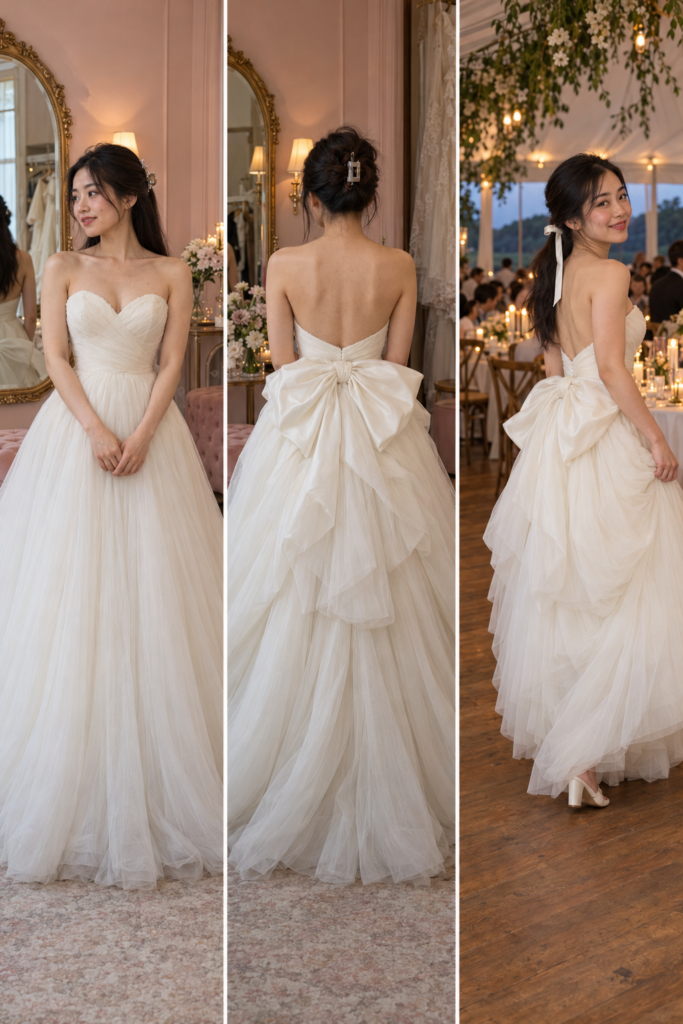
Bows are the biggest back detail for 2027 brides, and designers now let them run down into the train. A bow bustle hides the ties under the bow, so the back looks finished from every angle. It is easy for a helper to do, too. For more soft, romantic tulle, see my whimsical wedding dresses.
Under bustles (styles 4 to 6)
4. French bustle on a crepe mermaid
The dress: an ivory heavy crepe mermaid gown with a square neckline, a clean low back and a chapel train, bustled under with numbered ribbons into one soft rounded tier below the hips.
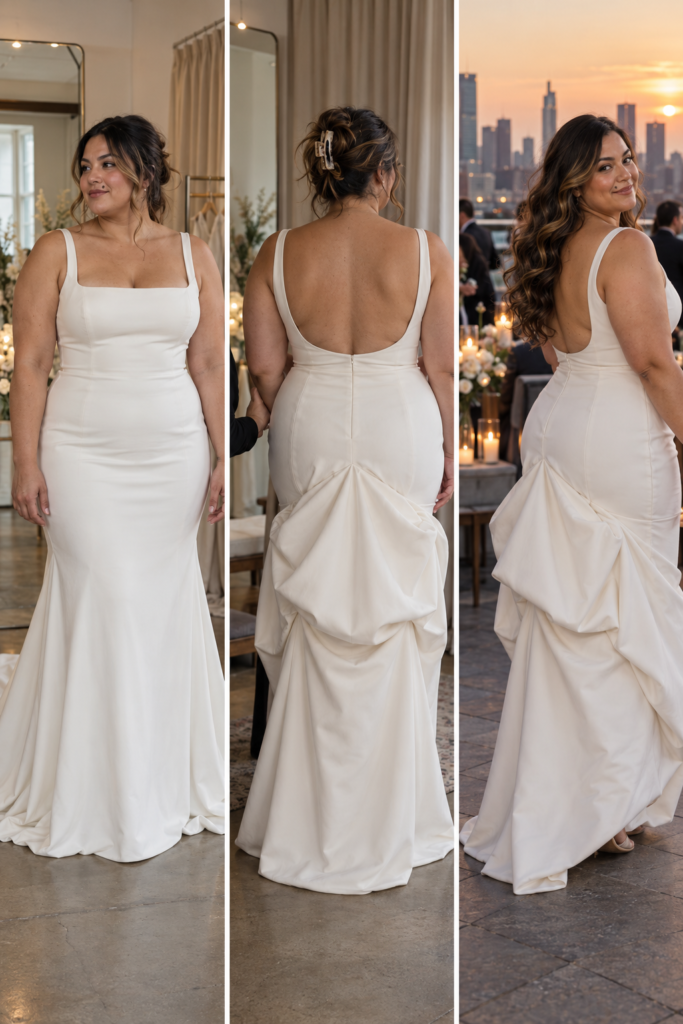
The French bustle ties inside with ribbons, numbered left to right, and the train folds under into a gentle pouf. It suits fitted shapes and heavier fabrics that a single hook could not hold. It takes the most practice, so learn it well. A sleek crepe gown like this sits well next to the clean shapes in my simple wedding dresses.
5. Ballroom bustle on a basque-waist ballgown
The dress: an ivory satin ballgown with an off-the-shoulder neckline, a basque waist and a cathedral train, bustled under so the whole train disappears into an even, floor-length skirt.
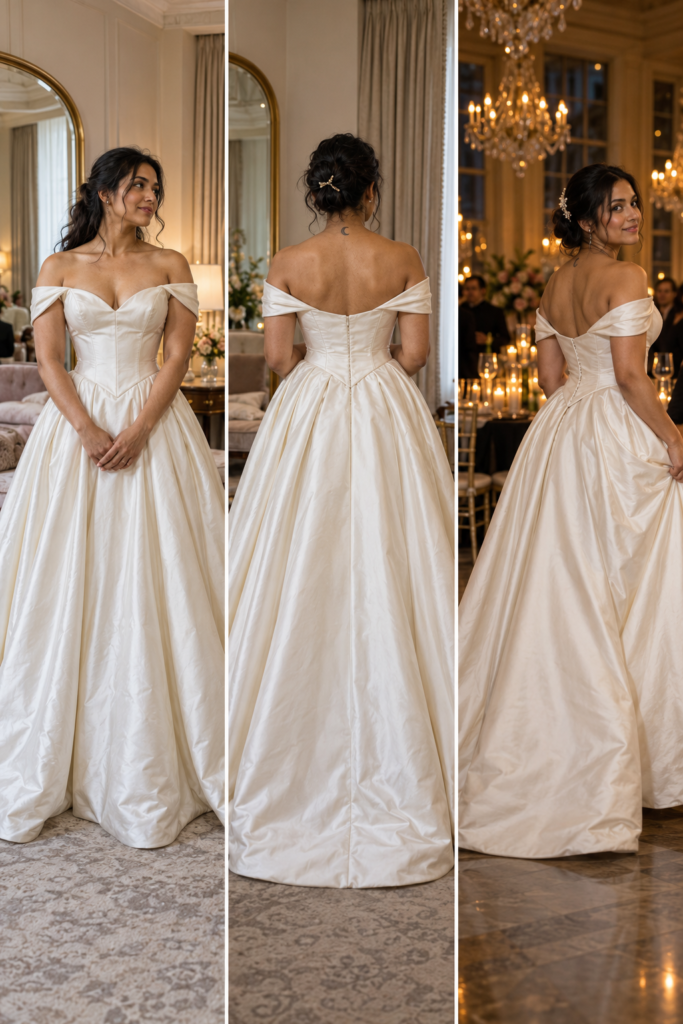
My favourite trick for a formal reception. Once it is done, nobody can tell there was a train at all. It uses many points and holds very securely, so you can dance freely. Basque and drop waists are among the fastest-growing bridal searches right now, and they suit this bustle well.
6. Train-flip bustle on a tulle A-line
The dress: a pale blush tulle A-line gown with a sweetheart neckline, a corset bodice and a chapel-length tulle train, the train flipped under and tied at the hemline so the skirt drops to the floor.
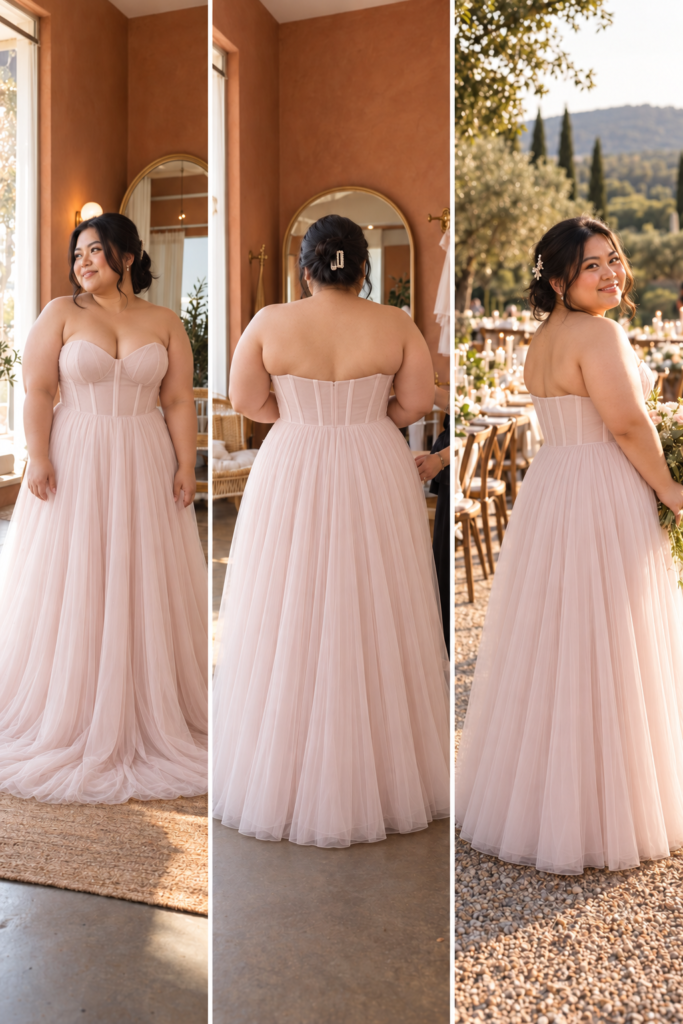
The simplest under bustle. The train flips up underneath and ties at the hem, which works well on light tulle with a plain edge. If your hem has heavy lace or beading, ask your seamstress for a different style, since the flip hides the edge.
Something different (styles 7 and 8)
7. Austrian bustle on a silk sheath
The dress: a champagne silk crepe sheath with a cowl neckline, thin straps and a chapel train, gathered up the back by hidden cords into soft vertical ruching.
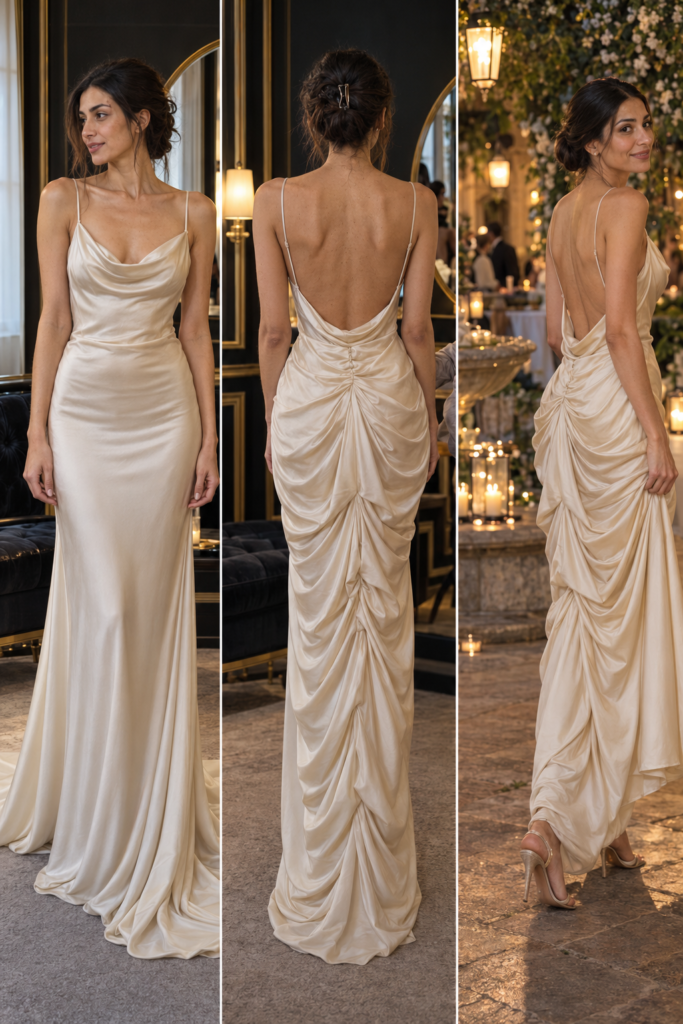
An Austrian bustle works like a window blind. Cords sewn inside the skirt pull the train up into soft gathers. It is fiddly to make but very easy to use on the day. It looks best on plain, fluid fabrics like silk, crepe and satin, so save it for a clean gown.
8. Detachable train or overskirt
The dress: a white crepe fitted sheath with a square neckline and thin straps, worn with a detachable white tulle overskirt with a long train for the ceremony that comes off for the reception.
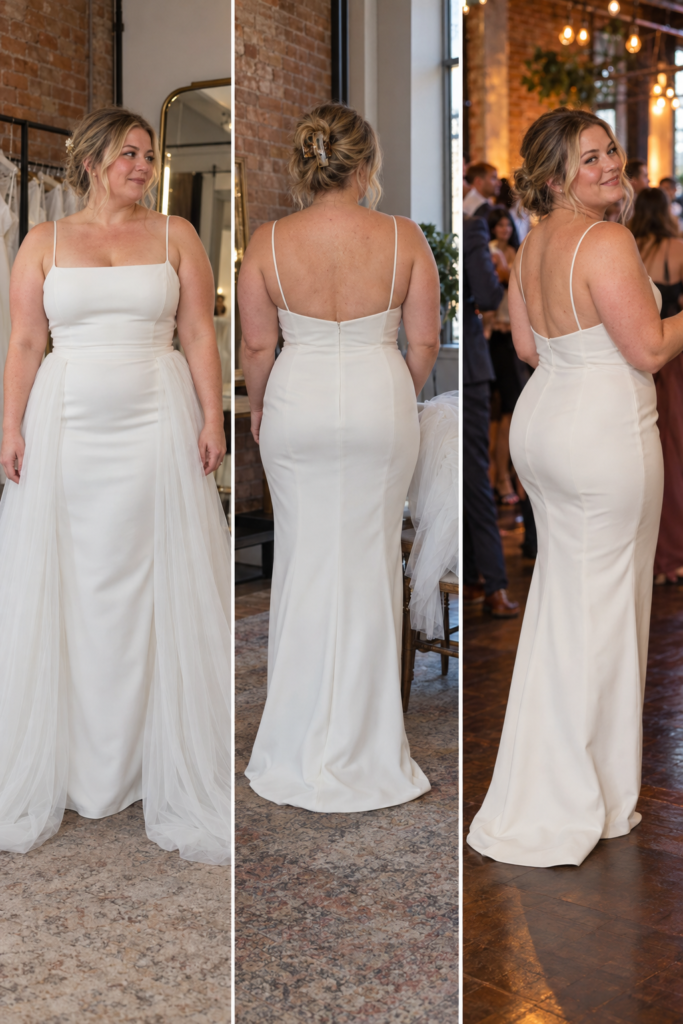
Not a bustle at all, but brides ask me about it constantly. Detachable trains and quick-change overskirts were a runway trend for both spring 2026 and spring 2027. You get the drama for the aisle and a sleek dress for dancing, and nobody has to learn any ribbons. For more reception-ready shapes, my wedding reception dressesguide has plenty.
Other names you might hear
A side bustle gathers the train to one hip. An English bustle can mean either a visible outside bustle or a low hidden pleat, depending on who you ask. A single-point bustle is usually an American bustle with one hook. A wrist loop is a small loop you hold, which only suits light fabric and a short train. If someone mentions an Italian or waterfall bustle, ask them to show you, because those names have no settled meaning.
Planning your bustle
What it costs. A simple bustle with two to four points usually runs about $60 to $175. A many-point ballgown bustle in heavy fabric can reach $200 to $400. Many shops charge per point, and rush work within about six weeks of the wedding adds 25 to 50 percent.
When to ask for it. Mention it at your first fitting so the seamstress can plan around your train. Alterations usually start eight to ten weeks before the wedding, and you learn the bustle at the final fitting.
Who does it. Pick one or two people and bring them to that final fitting. Film the seamstress doing it and take a photo of each step. If your ribbons are numbered, write the order on a card.
When on the day. Most brides bustle after the ceremony and portraits, during cocktail hour, before the grand entrance. Allow ten to fifteen minutes and a private corner. Not a hedge.
If it breaks. It usually happens on the dance floor when someone steps on the train. Bustles are made so a hook pops off before the dress tears. Pack sturdy safety pins, a needle and thread and a few spare hooks or ribbons from your seamstress, and give the kit to your maid of honour or planner.
Do you need one at all? A sweep train or a dress with no train usually doesn’t. A chapel or cathedral train does if you want to dance. Comfortable shoes help too; my 10 best comfortable wedding shoes are all dance-floor tested.
Where I’d start
Look at your fabric first. If it is lace or tulle, start with styles 1 and 3. If it is satin or crepe, go to 4 and 5. If you would like nobody to deal with ribbons at all, ask about style 8 before you order your gown, since a detachable train is much easier to plan from the start.
