

Showing Up Properly
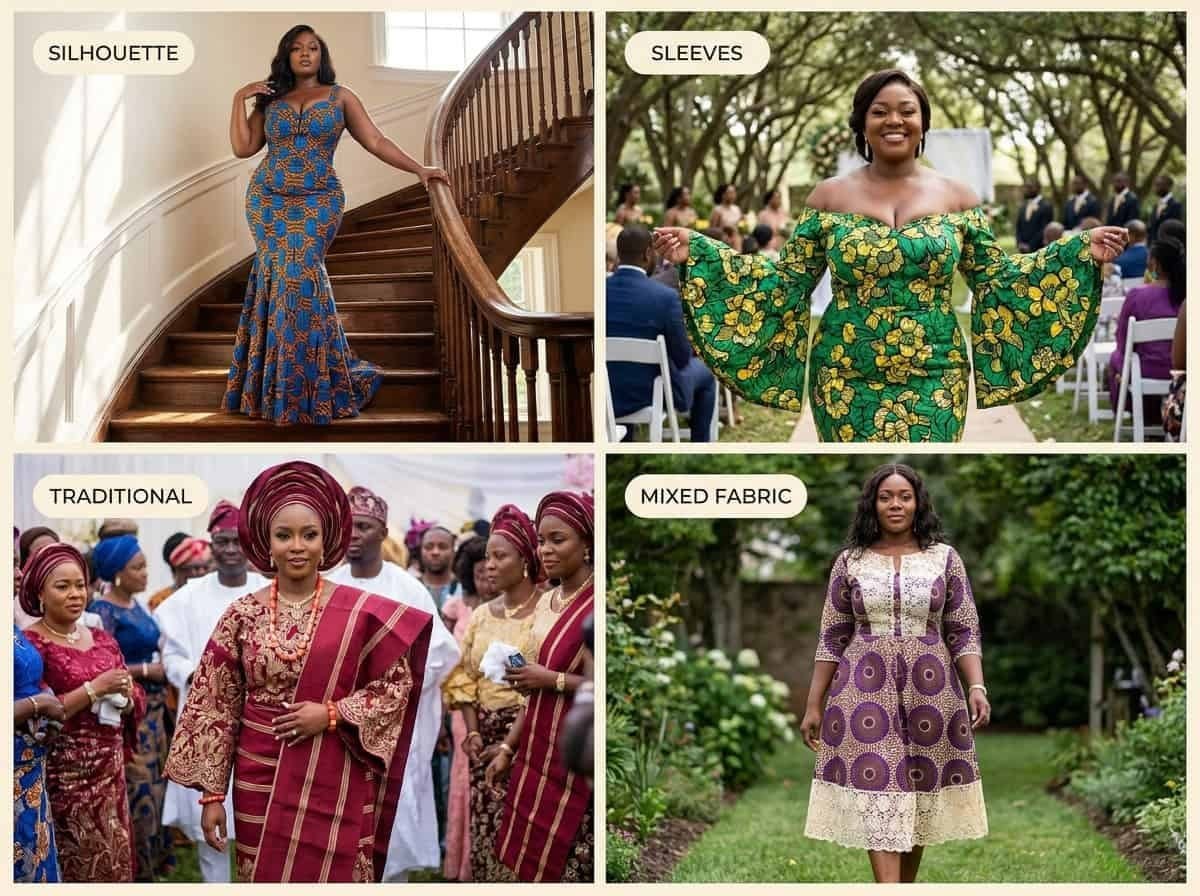
At a Nigerian wedding, what you wear is a message. Aso ebi, the coordinated attire worn by family and friends, is described by designers as a visual love letter to the community, a way of saying I’m with you without speaking a word, and there is genuinely nothing like the sight of a sea of coordinated styles moving together. So the pressure to get it right is real, and it isn’t only about looking good. It’s about reading the occasion, honouring the couple’s colours, and finding a silhouette your tailor can actually execute. Ankara sits beautifully in that world: bold, joyful, endlessly versatile, and particularly well suited to traditional ceremonies, introductions, and semi-formal celebrations where lace and aso oke lead at the most formal white weddings. I’ve gathered 24 Ankara dress designs across the silhouettes, sleeves, fabric combinations, and styling that wedding guests actually request, each with what defines it and an honest note for your tailor. Take the names with you, they’re what turn a photo into a finished outfit.
Before You Choose Your Style
Four things worth settling first. Check whether aso ebi has been assigned, because if the couple has chosen a fabric and colour, that decision is already made for you and your only job is picking the style you’ll have sewn from it. Match the fabric to the ceremony, since Ankara shines at traditional weddings, introductions, and receptions while the most formal white wedding usually calls for lace or aso oke, and choosing correctly is itself a mark of respect. Give your tailor real time, because Ankara styles with corsetry, structured sleeves, or fabric mixing take weeks rather than days, and the last-minute rush is where disappointments happen. And never compete with the bride, avoiding her exact colours and keeping anything close to bridal white off the table. Beyond that, the whole point of Ankara is that boldness is welcome.
Direction 1: The Classic Silhouettes
1. The Corset-Bodice Ankara Gown
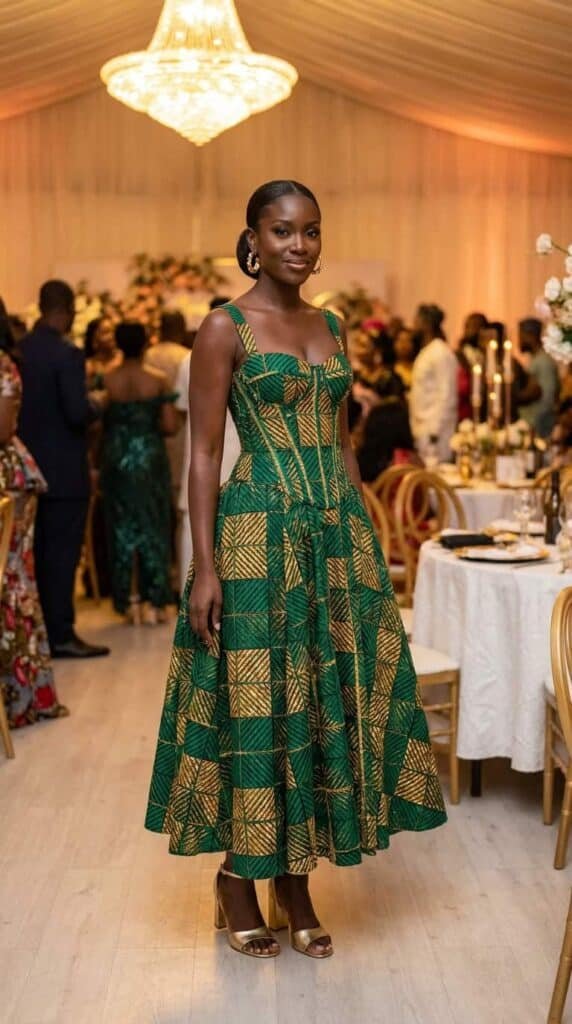
A structured, boned corset top in Ankara flowing into a full or fitted skirt, currently one of the most requested aso ebi styles there is. The corset does the shaping so the print stays the star, and it holds its line through hours of dancing. Get fitted twice, corsetry is unforgiving if the measurements are guessed.
2. The Mermaid Gown
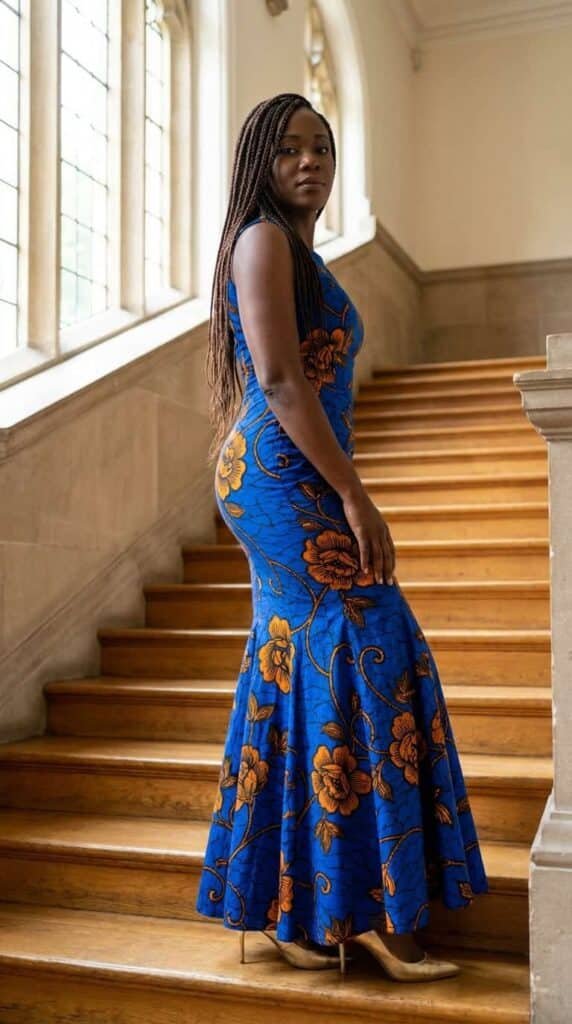
Fitted through the bodice, waist and hip, then flaring dramatically from the knee. It’s the most photographed silhouette at Nigerian weddings for good reason, and a bold Ankara print along the flare catches every camera. Ask your tailor about walking ease at the knee before the final fitting.
3. The Peplum Top and Pencil Skirt
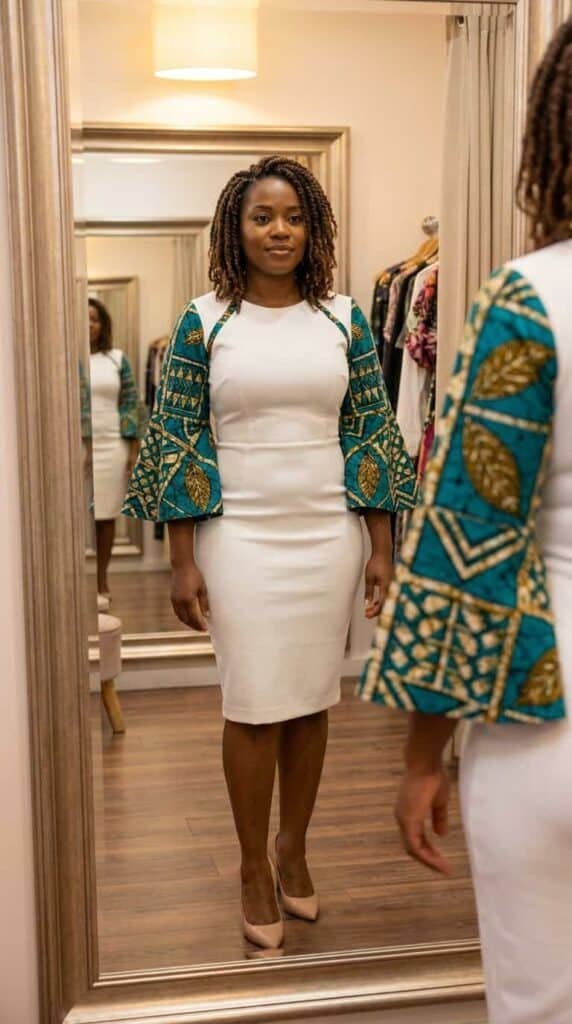
A fitted top with a flared peplum at the waist over a matching pencil skirt, one of the enduring aso ebi classics. The peplum flatters nearly every shape and gives the outfit structure without a full gown’s commitment. Net or lace beneath the peplum is a very popular finishing detail.
4. The A-Line Midi
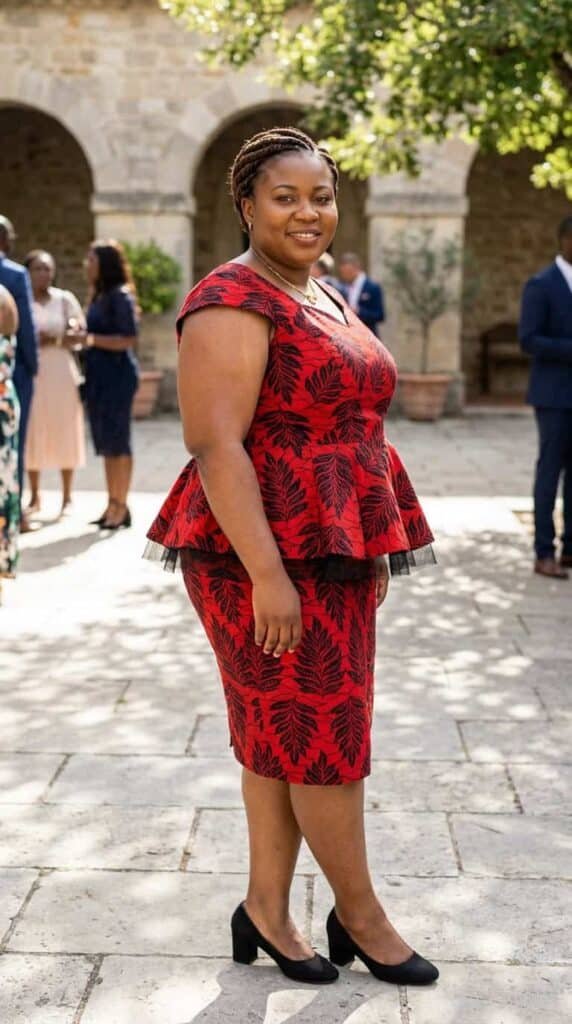
A fitted bodice releasing into a gentle A-line skirt at mid-calf or knee. It’s the most versatile length on this list and works for church services, receptions and semi-formal events alike. It also survives being sat down in for three hours, which matters more than people admit.
5. The Knee-Length Bodycon
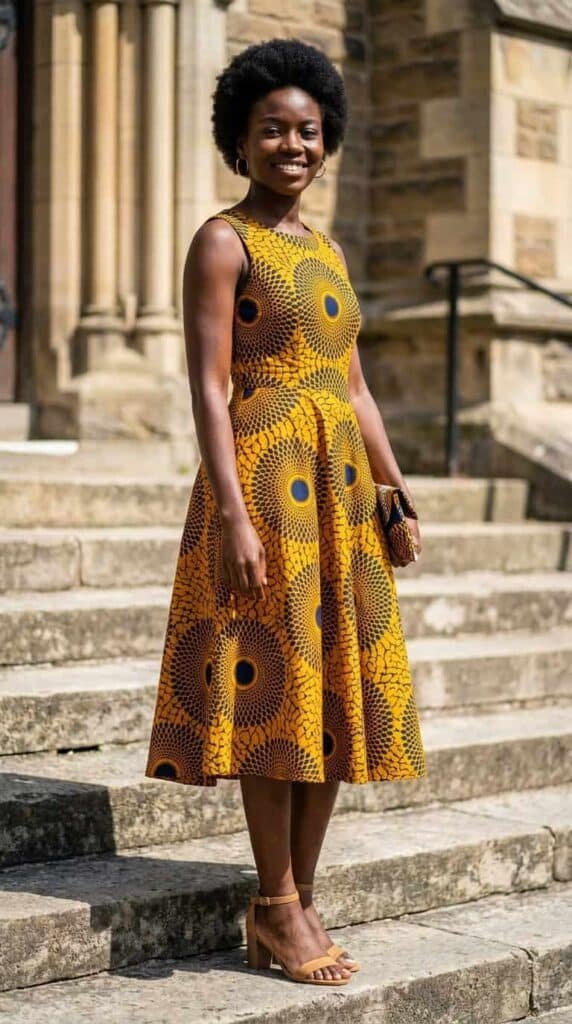
A fitted knee-length dress, often in a plain body with Ankara used only at the sleeves or panels. It reads bossy but simple, and it’s the pick for guests who want impact without volume. Structured fabric matters here, soft cotton will not hold the line.
Direction 2: Sleeves and Necklines That Do the Work
6. The Off-Shoulder Flare Sleeve
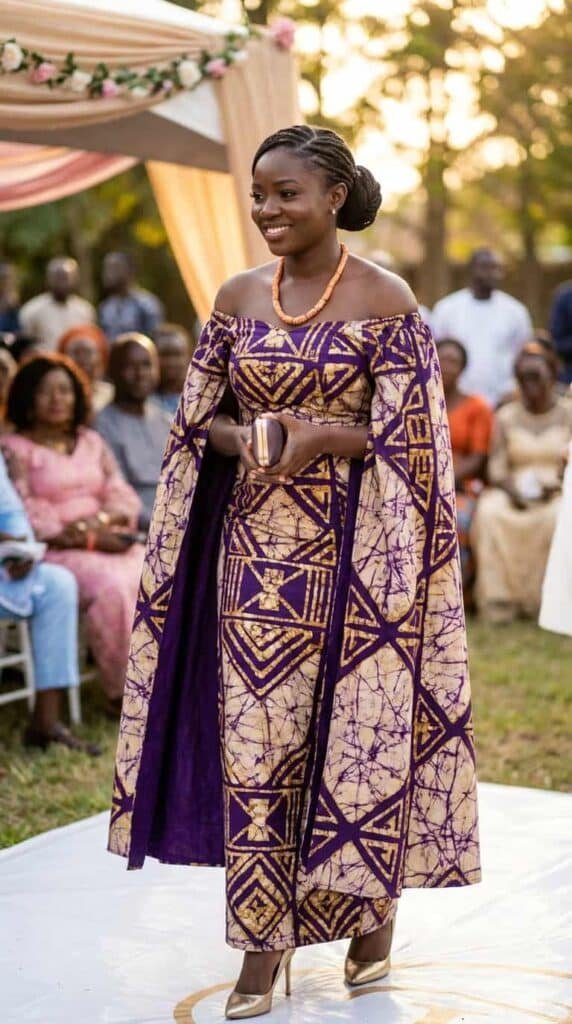
An off-shoulder neckline with wide flared sleeves falling from the upper arm, one of the most requested Ankara styles for wedding guests. The exposed shoulder line plus dramatic sleeve is a genuinely striking combination. The result depends heavily on your tailor’s skill, so this is not the style to try someone new with.
7. The One-Shoulder Style
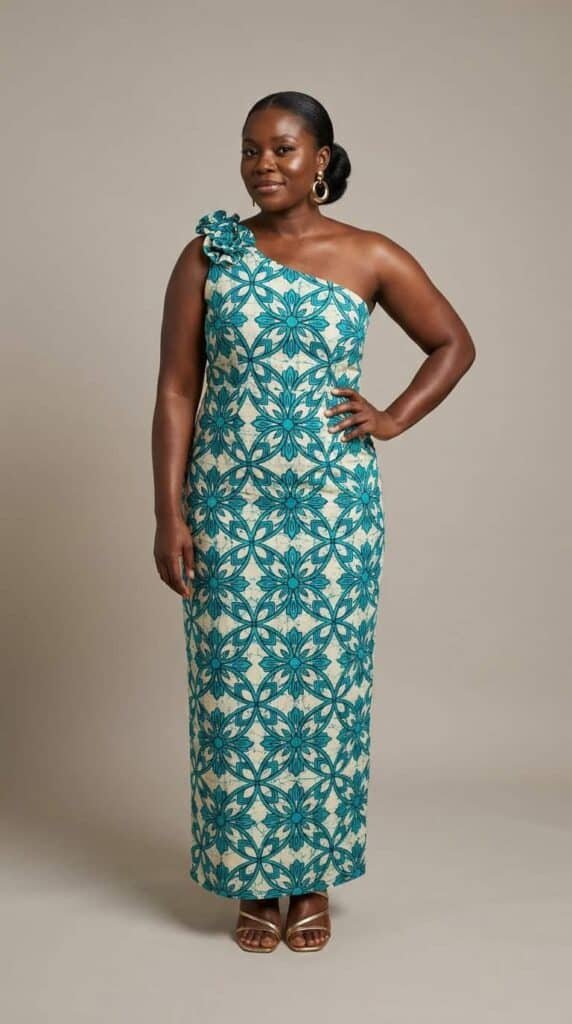
A single strap or sleeve across one shoulder leaving the other bare, sometimes with a flower or ruffle detail at the shoulder. It’s asymmetric, modern, and endlessly requested under the one-hand dress name. Wear your statement earrings on the bare side.
8. The Funnel Sleeve
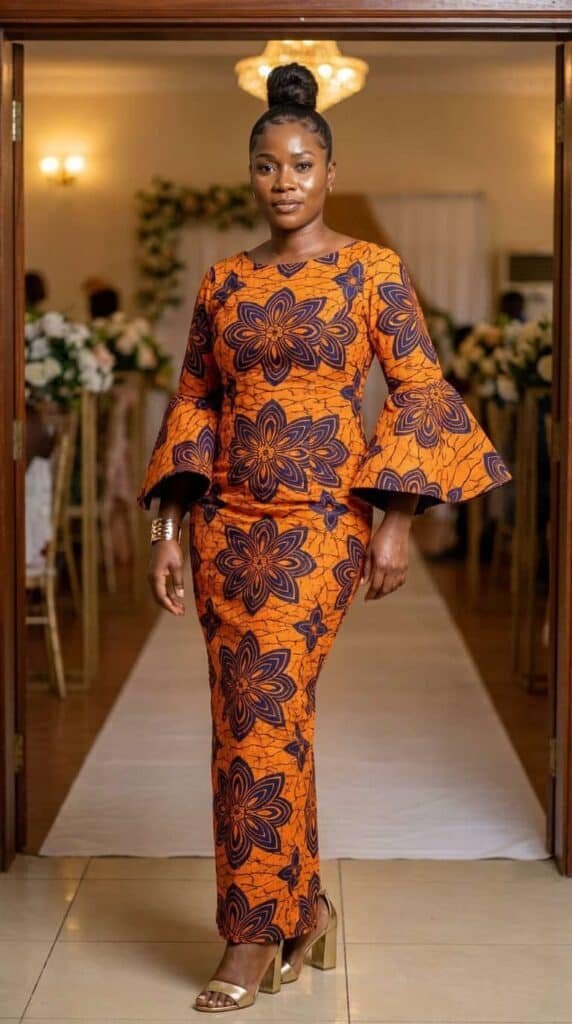
A sleeve that widens dramatically from the elbow into a deep funnel or trumpet shape. It’s architectural and it photographs beautifully in motion, especially in group shots. Confirm the sleeve won’t sit in your food, a real consideration at a seated dinner.
9. The Bell Sleeve
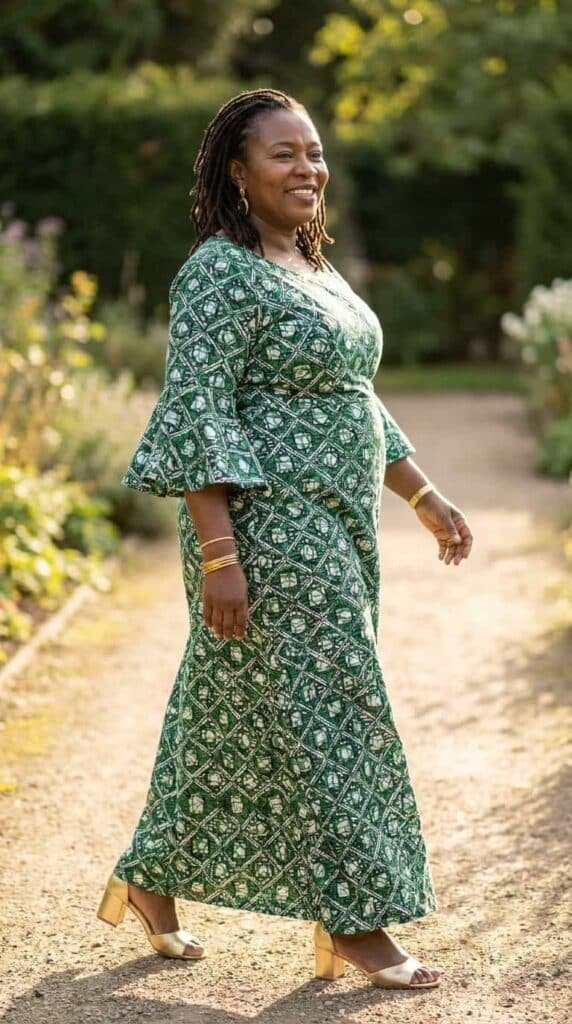
A softer flare from the elbow, gentler than a funnel and easier to wear all day. It’s the sleeve for guests who want movement without drama. It suits three-quarter and full-length versions equally.
10. The Cape-Sleeve Gown
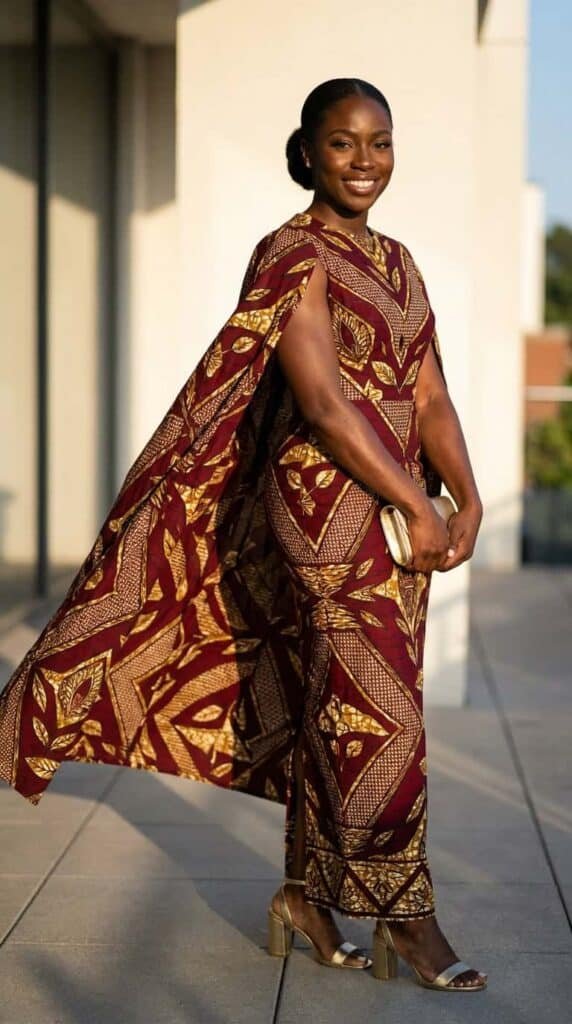
A fitted dress with a matching Ankara cape falling from the shoulders, sometimes to the floor. The cape gives you a full-length statement while the dress beneath stays simple. It also solves modest coverage without adding a separate layer.
Direction 3: Traditional and Flowing
11. Iro and Buba
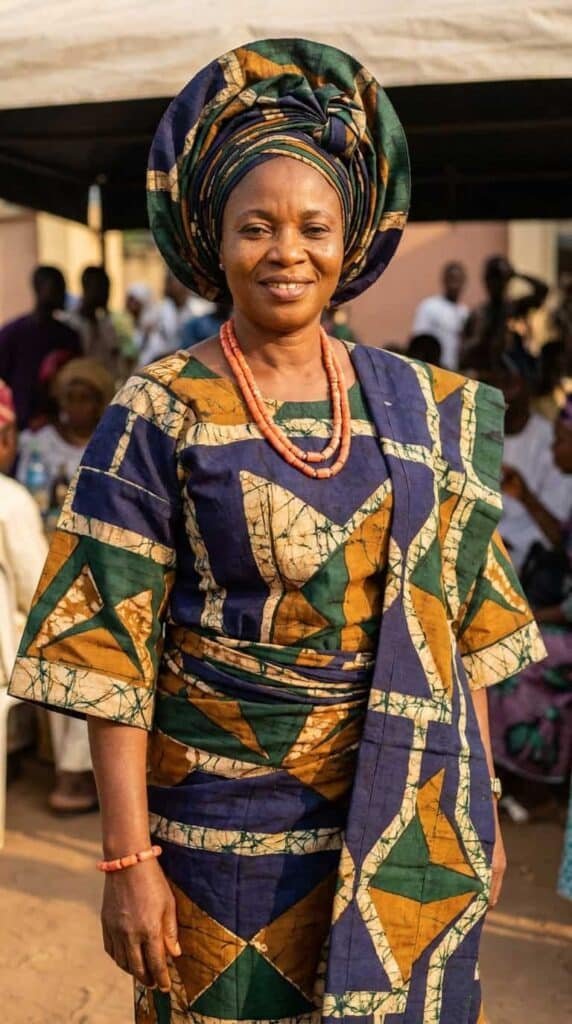
The traditional wrapper and blouse, the iro tied at the waist and the buba worn above, styled in Ankara rather than lace. It’s the most culturally rooted look on this list and it reads beautifully at traditional ceremonies and introductions. An older relative or your tailor can teach you to tie the iro properly, and it’s worth learning.
12. The Boubou or Bubu
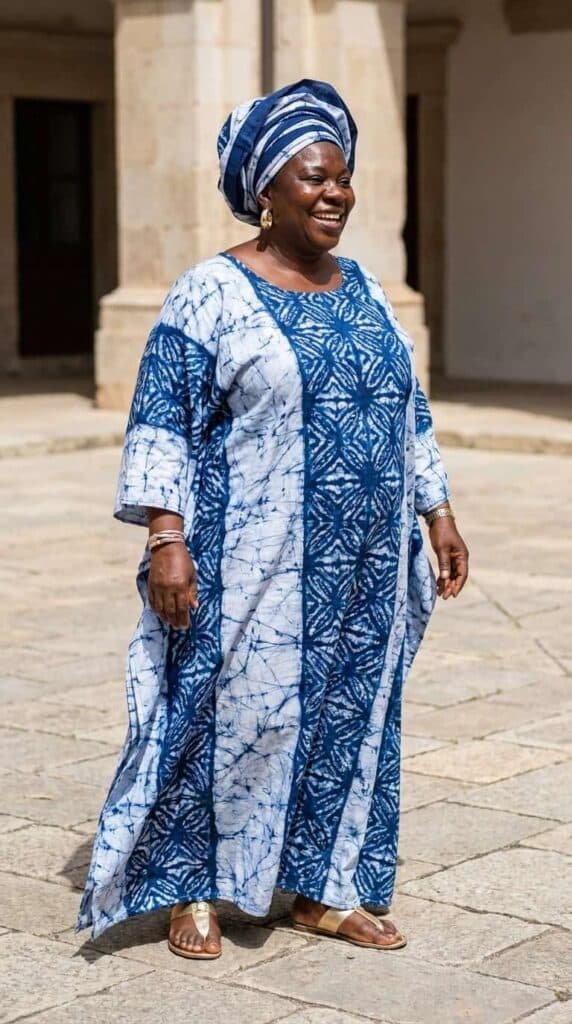
A long, flowing, loose-cut gown falling straight from the shoulders with wide sleeves. It’s the most comfortable option here by a wide margin, and it carries real elegance rather than being a compromise. Belt it at the waist if you want shape, or leave it entirely free.
13. The Wrap Dress
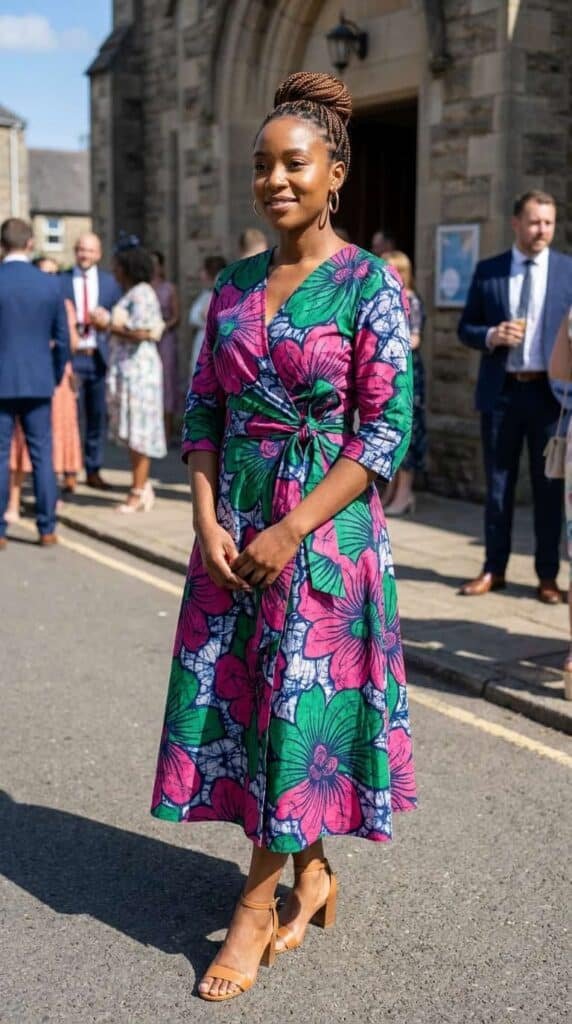
A true wrap that crosses at the front and ties at the waist, adjusting to your body rather than the reverse. It’s the most forgiving cut on this list and the friendliest to a rushed tailoring timeline. It also travels well, which matters for destination celebrations.
14. The High-Low Gown
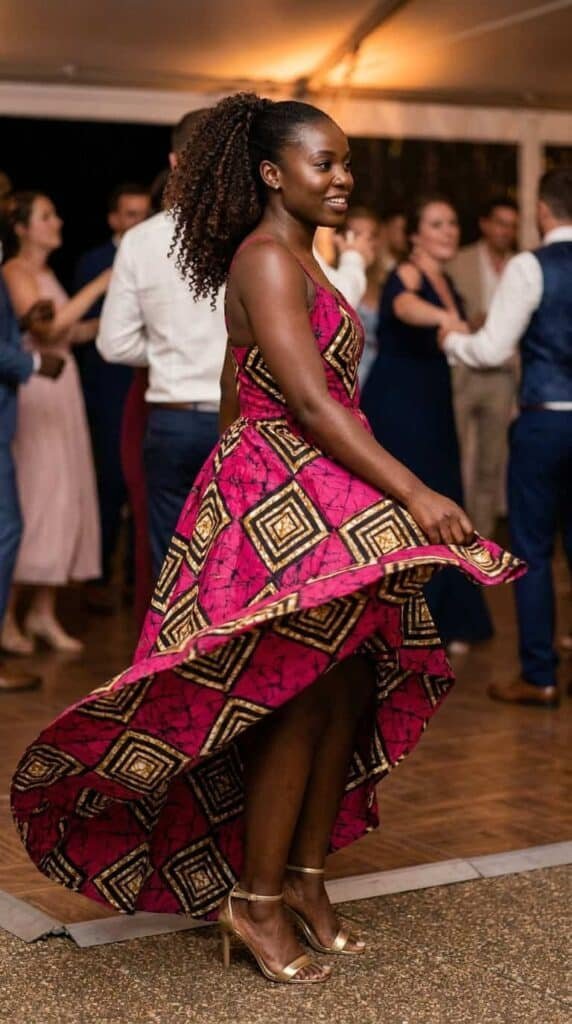
Short at the front, long at the back, showing your shoes while keeping the drama behind you. It’s a favourite for receptions where you plan to dance. The back length is what makes it, so make sure your tailor gives it enough sweep.
15. The Ball-Gown Skirt With Fitted Bodice
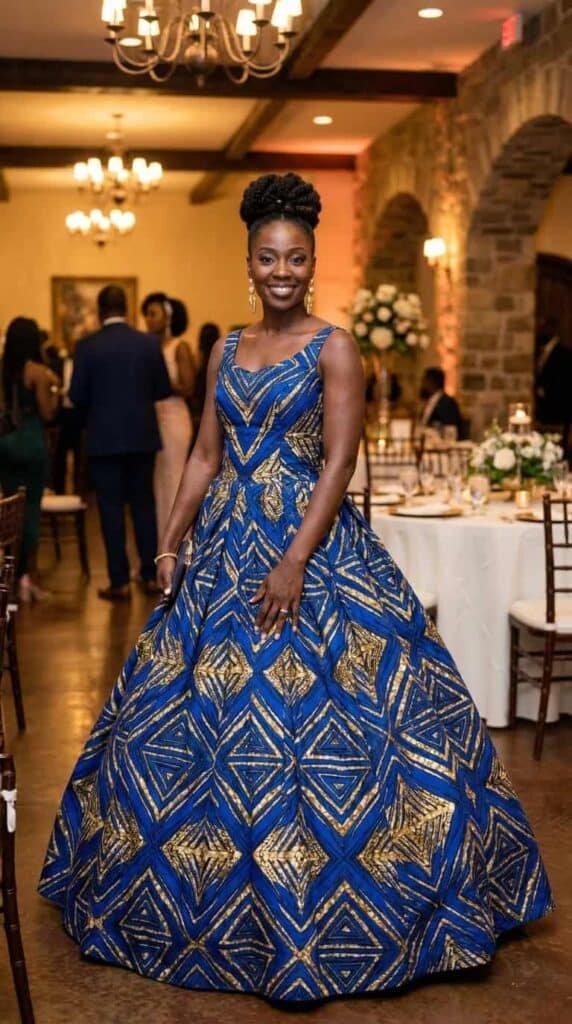
A fitted Ankara bodice above a full, voluminous skirt, the biggest silhouette here. It’s the choice for close family members and anyone attending a genuinely grand owanbe. Consider how you’ll sit and move, and whether the venue has the space for it.
Direction 4: Mixing Ankara With Other Fabrics
16. Ankara With Lace Panels
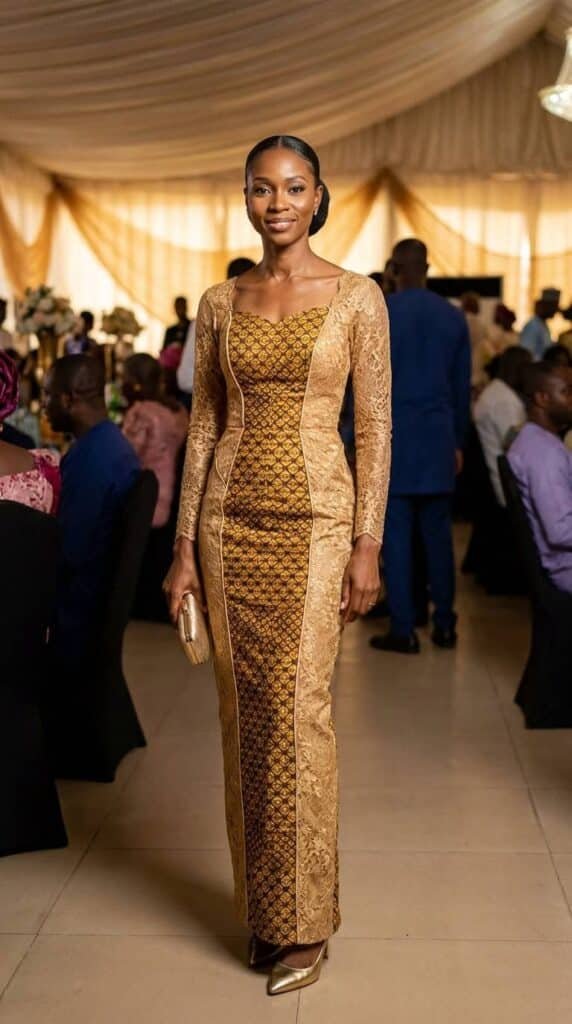
Ankara combined with lace at the sleeves, yoke, or side panels, blending the two dominant aso ebi fabrics in one outfit. It bridges the gap between a casual Ankara look and a formal lace one, which makes it useful when the dress code is unclear. Keep the lace tonal so the print stays the focus.
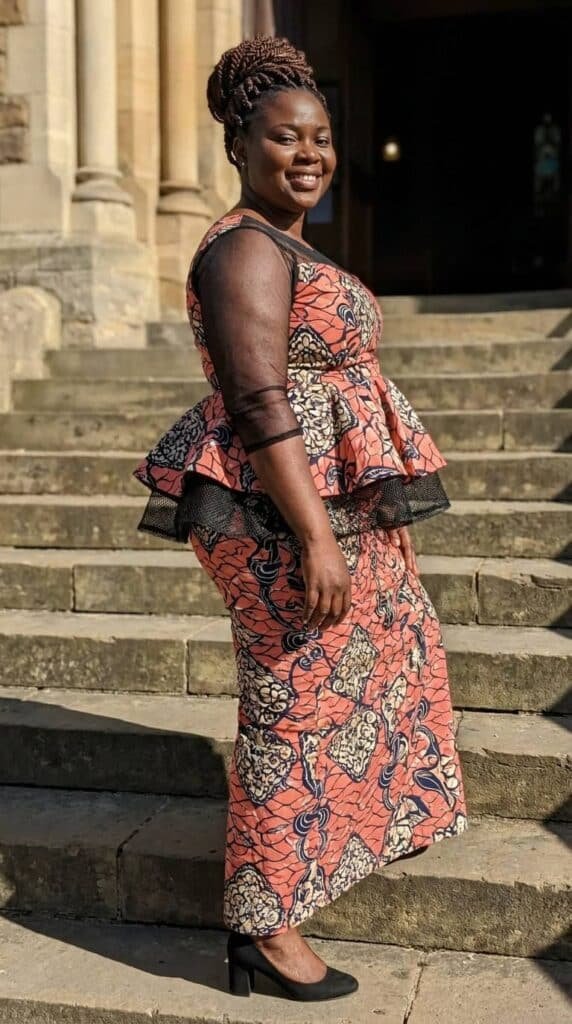
17. Ankara With Net or Tulle Sleeves
Sheer net sleeves or a net panel beneath a peplum, adding lightness against the print’s weight. It’s one of the most common finishing details on aso ebi styles and it costs very little to add. Illusion net at the shoulders also gives modest coverage that still feels dressy.
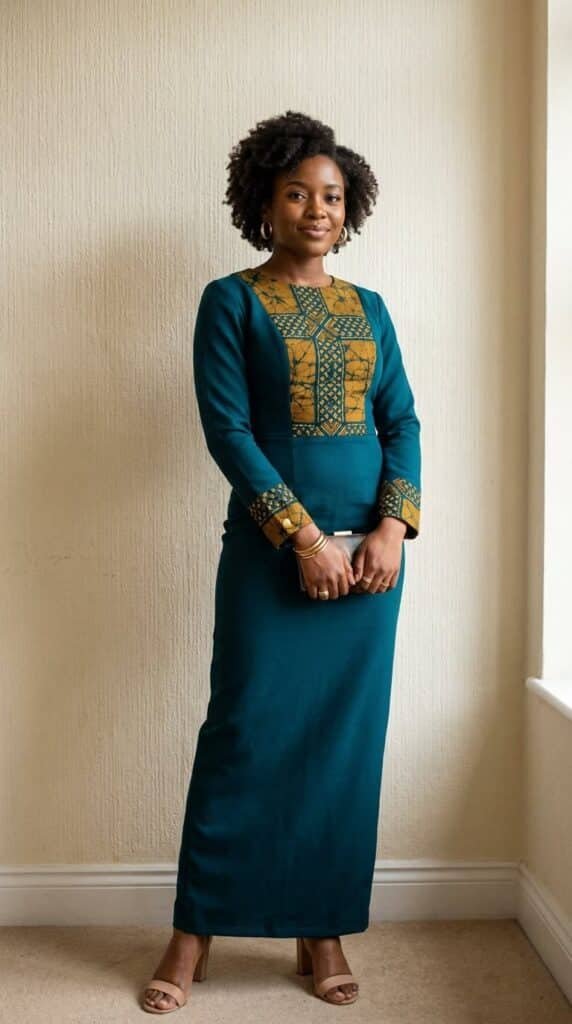
18. Ankara With Solid Colour Blocking
A plain fabric body in one of the print’s colours, with Ankara used only for sleeves, panels, or a bodice. It’s the quietest way to wear the print and it flatters guests who find full Ankara overwhelming. Pull the plain colour directly from the print so the pairing is deliberate.
19. Ankara With Adire
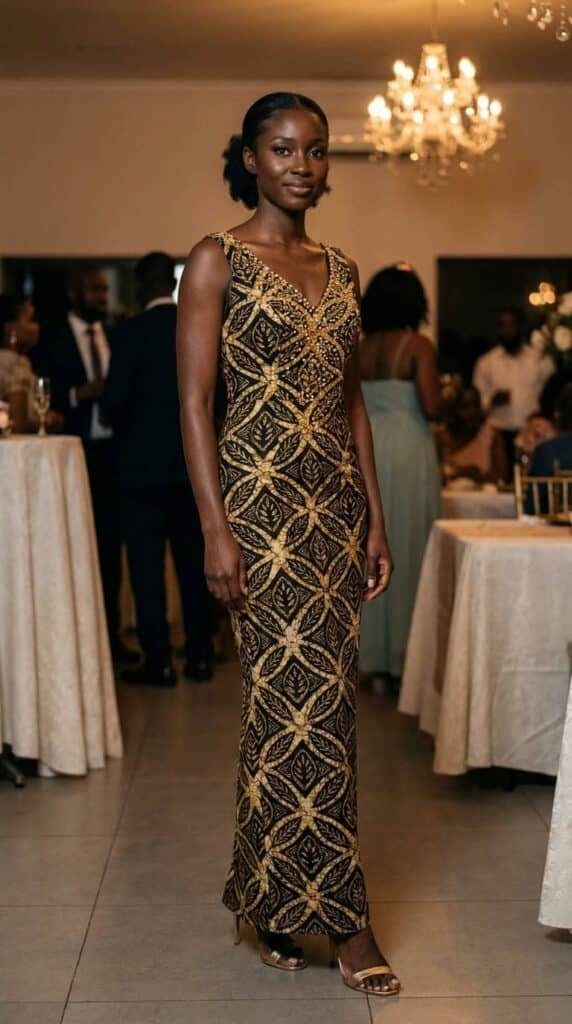
Wax print combined with adire, the indigo tie-dyed and resist-dyed cloth, mixing two distinct African textile traditions. It’s a more design-led choice and it reads as considered rather than loud. Let one fabric lead and the other support.
20. Embellished Ankara
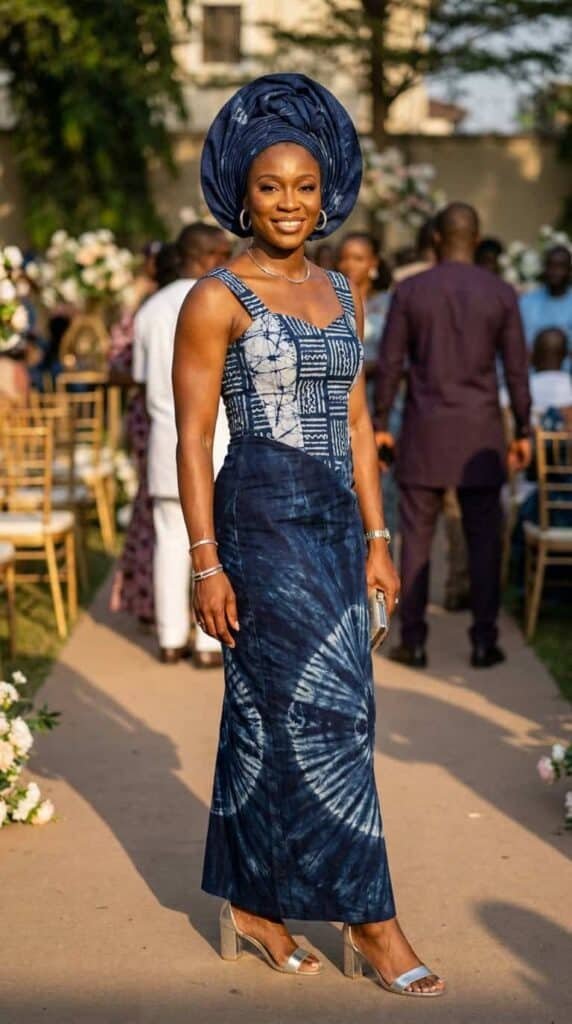
Ankara finished with beading, stones, or embroidery along the bodice, neckline, or hem. It lifts the fabric toward the formality of lace, which is exactly why guests choose it for bigger events. Restraint reads more expensive, so concentrate the embellishment in one area.
Direction 5: Styling It Properly
21. The Gele
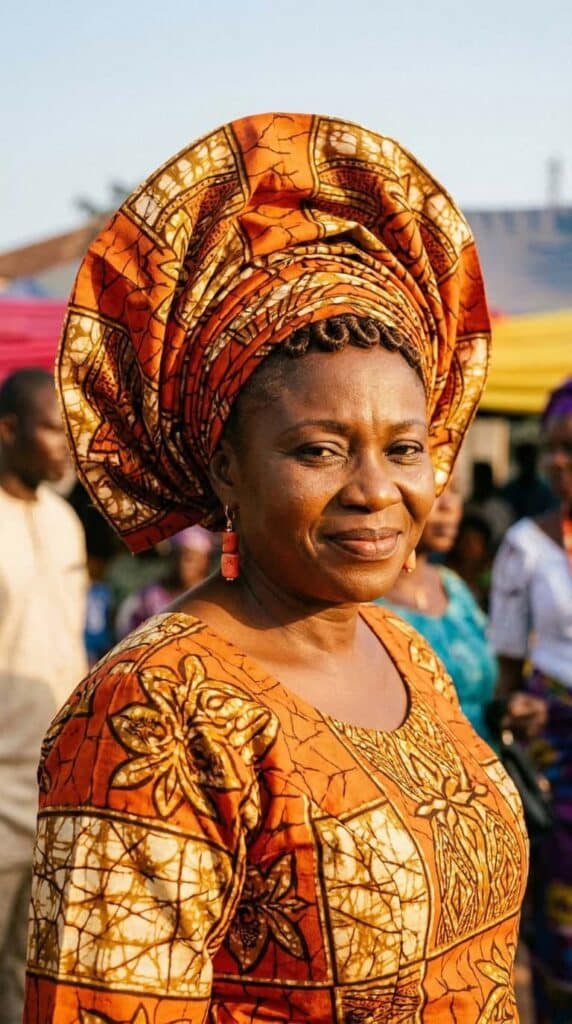
The headwrap, tied high and sculptural, in matching or deliberately contrasting fabric. It completes a traditional look more than any other single element, and a professionally tied gele transforms an outfit entirely. Book a gele tier for the morning if you can’t tie it yourself, they work fast.
22. The Ipele
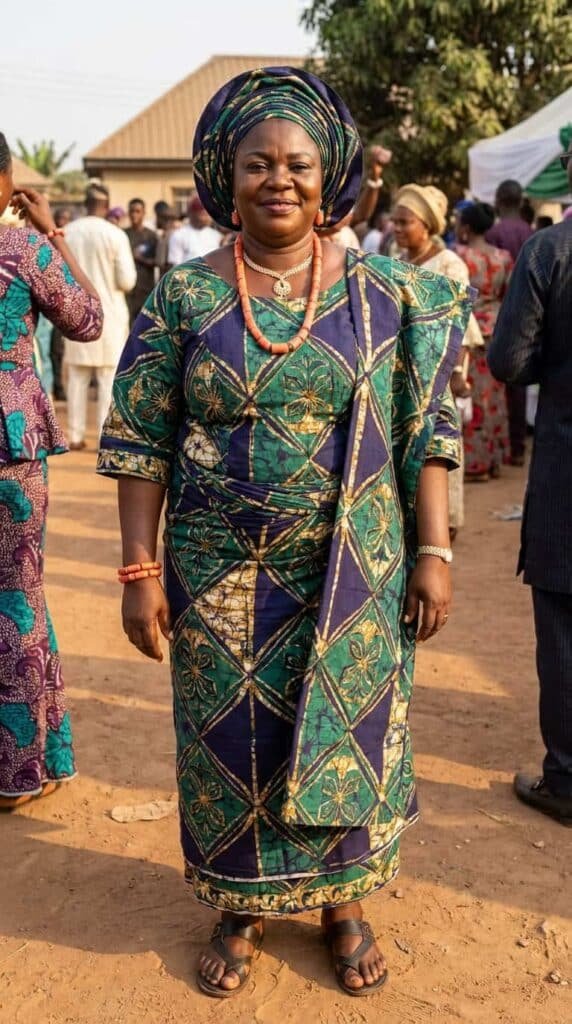
The shoulder sash draped over one shoulder, worn with iro and buba or over a fitted gown. It adds the finishing line that makes an outfit look complete rather than almost-there. Match it to your gele for the most traditional reading.
23. The Matching Clutch
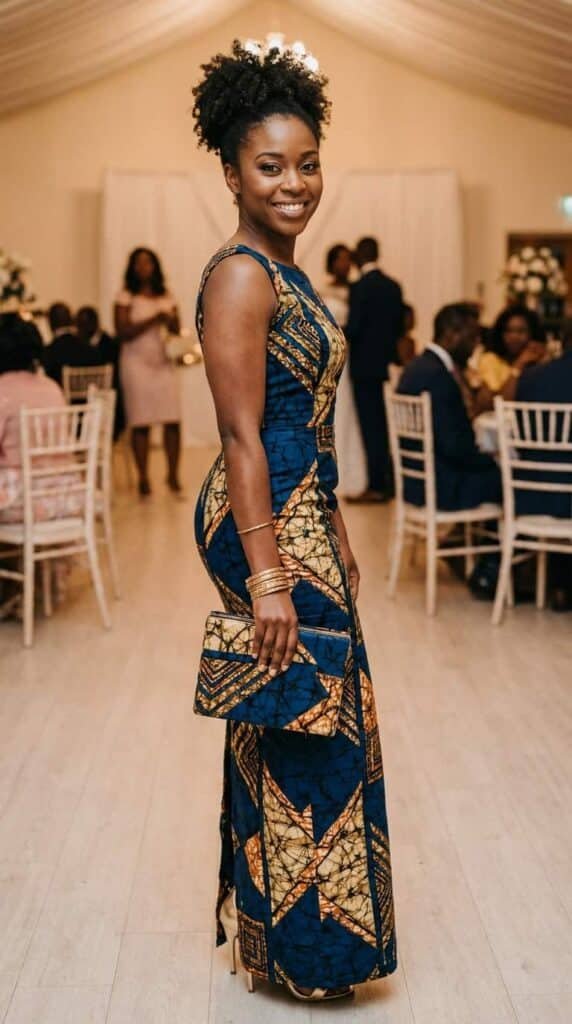
A small box or envelope clutch made from your leftover fabric, usually cut from the same yardage by your tailor. It’s the detail that signals the whole outfit was planned rather than assembled. Ask for it when you drop off the fabric, not after.
24. Gold Jewellery and Heels
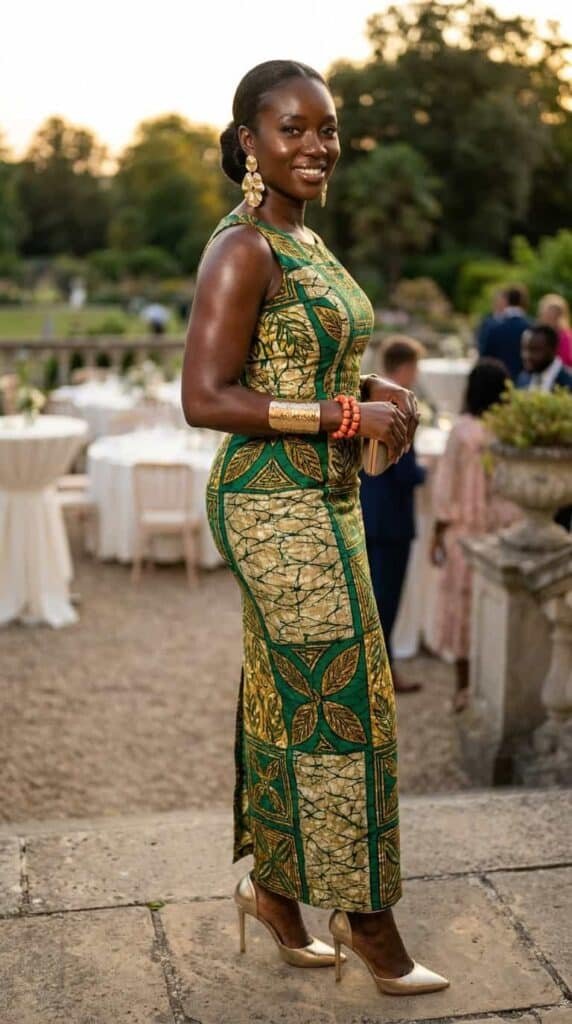
Statement gold pieces and a heel in one of the print’s colours or a metallic. Gold sits naturally against Ankara’s saturation where silver can fight it, and coral beads remain a classic pairing at traditional ceremonies. Keep one element bold and the rest quiet, the fabric is already doing a great deal.
Working With Your Tailor
Bring pictures and the style name. Saying corset bodice with a funnel sleeve and a mermaid skirt gets you what you pictured, where showing a photo alone leaves room for interpretation you may not want. Every style above is a term tailors use.
Buy enough yardage. Structured styles, full skirts, capes, gele and a matching clutch all take more fabric than a simple dress, so ask your tailor for a yardage figure before you buy rather than after, especially if the aso ebi fabric is only available in a limited run.
And book fittings, not just a delivery date. One measurement appointment and at least one fitting before the final collection is the difference between a dress that fits and a dress you fight with all night. Collect it at least three days early, so there’s still time if something needs adjusting, and then enjoy the celebration knowing you look exactly as you intended.
If I’m Picking Three to Start With
The corset-bodice gown for the style everyone is requesting right now, the peplum top and pencil skirt because it flatters almost every body and never dates, and iro and buba if the ceremony is traditional and you want to honour it properly. Save this list to your style board on Pinterest before your next fabric run, and send it to the group chat once the aso ebi colour is announced, twenty-four styles means nobody arrives in the same silhouette.
