
Why the fringe was there in the first place
Here is the detail that changed how I think about dressing for a twenties party. All that beading, all those sequins, the fringe on everything: none of it was purely decorative. Speakeasies were dimly lit, so the embellishment existed to catch what little light there was, and it was cut to move because people were doing the Charleston in it. The whole aesthetic was engineered for a dark room and an energetic dance floor. Once you know that, the choices get much easier. You want something that moves, something that catches light, and something that will survive four hours of being danced in. The 1920s was also the first moment in fashion history when women’s clothing prioritised comfort and movement over restriction, which is a genuinely nice thing to be wearing. Below are ten complete looks, from proper flapper dresses through to alternatives for people who do not want fringe at all.
Getting it right instead of getting it obvious
Most twenties outfits fail in the same three ways. The fit is wrong, usually because a costume-shop dress is cut for nobody in particular. The accessories are missing, and a plain dress only becomes a flapper look once the headband, the pearls and the gloves arrive. And the fabric is cheap, so it sheds beads by the second hour and photographs flat under party lighting.
Fabric weight is the one people underestimate. Substantial material, around 125 GSM or heavier, hangs properly, catches light the way it is supposed to, and survives a night of dancing. Thin polyester does none of those things and it looks thin in every photograph.
One more thing on the silhouette. A real twenties dress is loose and straight with the waist dropped to the hip, falling just below the knee. That drop waist is the single detail that separates a genuine twenties look from a generic sparkly dress, and it is the thing most costume versions get wrong. If a dress nips in at your natural waist, it is not a twenties dress. Also worth knowing: if the invitation says Great Gatsby, the dress code is formal, so err toward evening rather than costume.
Direction 1: Classic flapper looks
1. The black fringed drop-waist dress
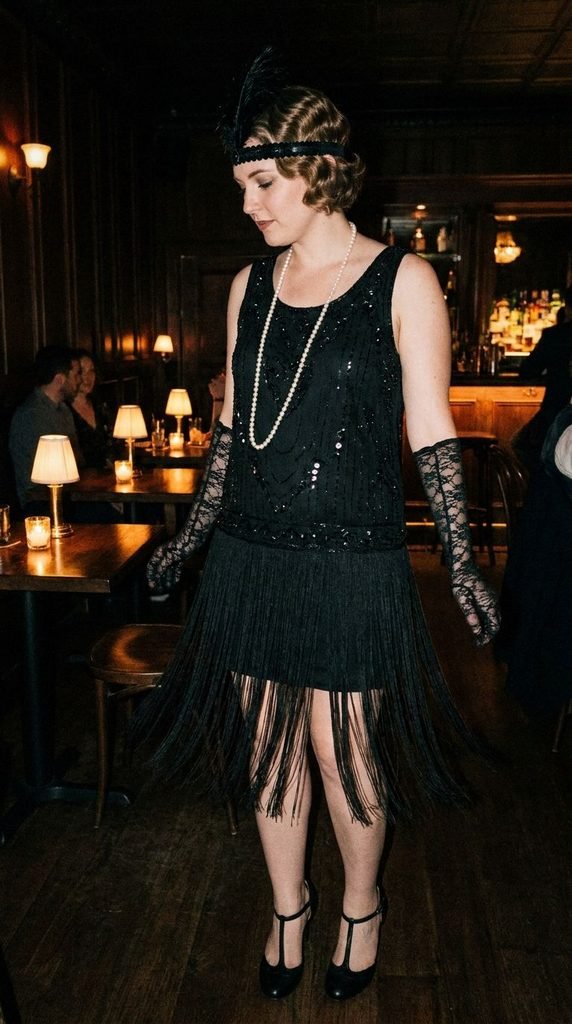
A black knee-length fringed flapper dress with a dropped waist and a beaded bodice, worn with a black feather headband, a long strand of pearls, black T-strap heels and elbow-length black lace gloves. This is the outfit everyone pictures and it is popular for a reason. The fringe does exactly what it was designed to do the moment you move, and black hides everything you might spill on it.
2. The gold fringe dress
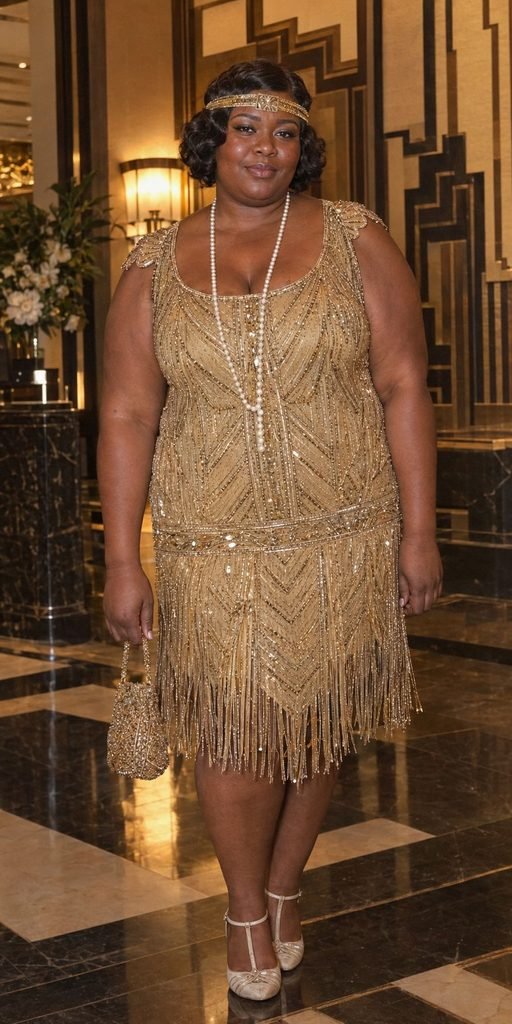
An antique gold fringed dress with scalloped cap sleeves and heavy beadwork, worn with a gold Art Deco headband, long pearls, a beaded bucket bag and cream T-strap heels. Gold is the shade that photographs best under warm party lighting, which is most party lighting. It reads as Daisy Buchanan without needing a single explanation.
3. The silver Art Deco dress
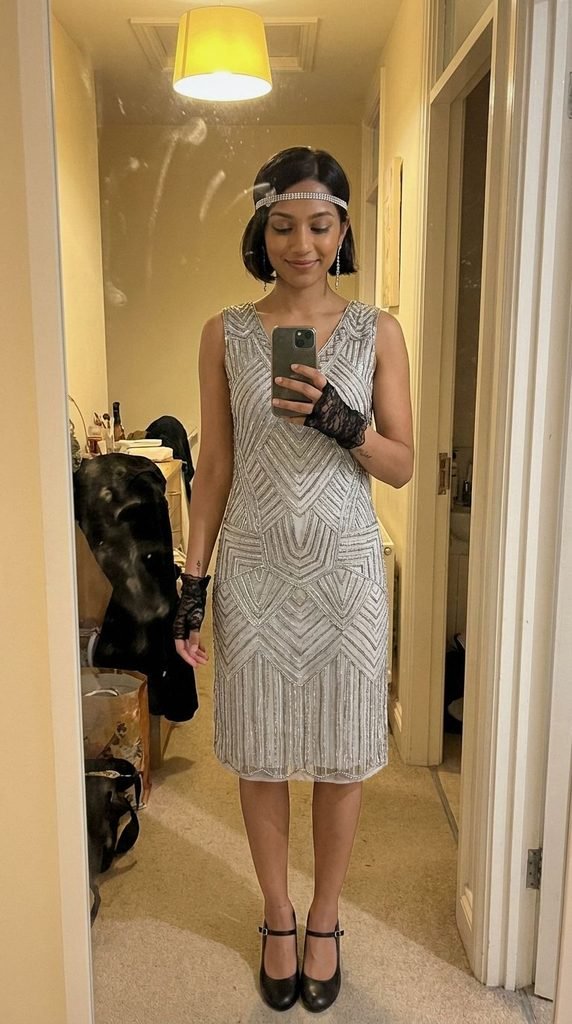
A knee-length silver dress with Art Deco geometric beading, worn with a silver rhinestone headband, black lace wrist gloves, black Mary Jane heels and drop earrings. The geometry is what makes it read as twenties rather than generic sparkle, so look for chevrons, sunbursts and stepped patterns. Silver suits cooler lighting and photographs sharply against a dark room.
Direction 2: Elegant Gatsby glamour
4. The beaded champagne sheath
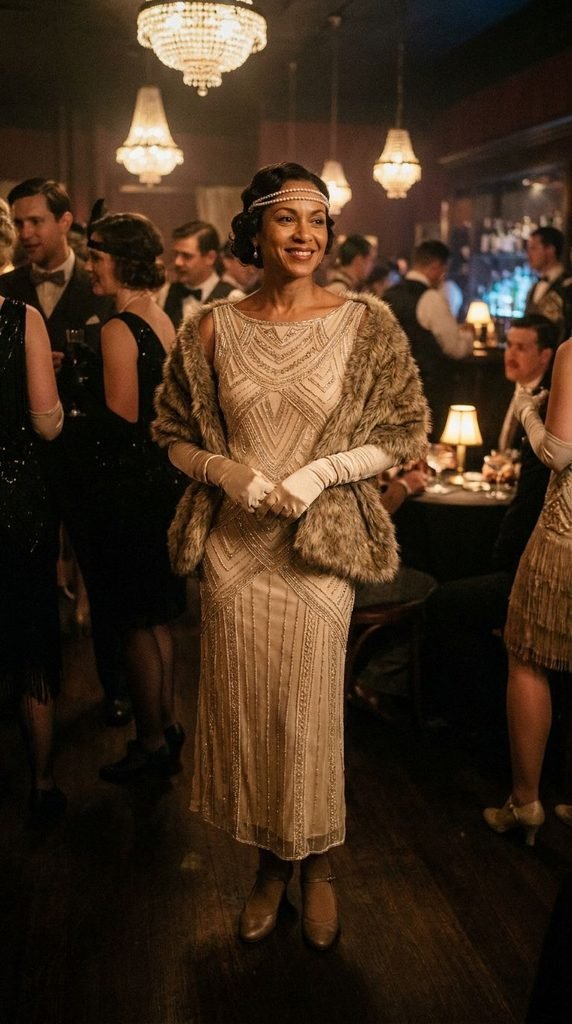
A champagne beaded sheath gown falling to mid-calf with a boat neckline and no fringe at all, worn with a pearl headpiece, opera-length gloves, a faux fur shawl and low heels. This is the formal end of the theme and it suits a black-tie Gatsby event far better than a costume dress. The shawl earns its place the moment you step outside.
5. The black satin evening gown
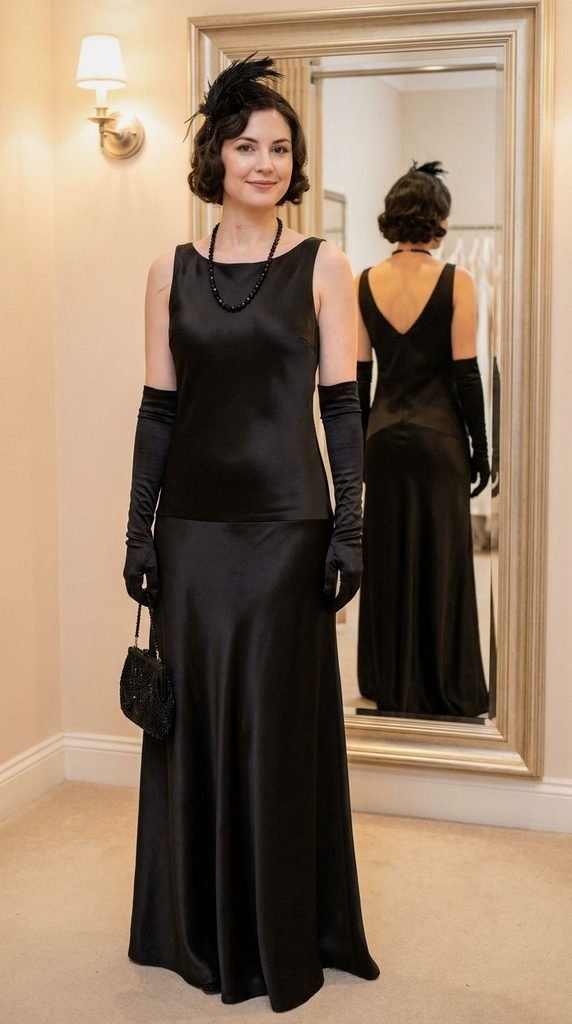
A floor-length black satin bias-cut gown with a low back, worn with a jet bead necklace, a black feather fascinator, satin gloves and a small beaded clutch. It is the most grown-up look on this list and the one you could genuinely wear to something else afterwards. Satin catches light along the folds rather than sparkling, which reads expensive.
6. The emerald velvet drop-waist dress
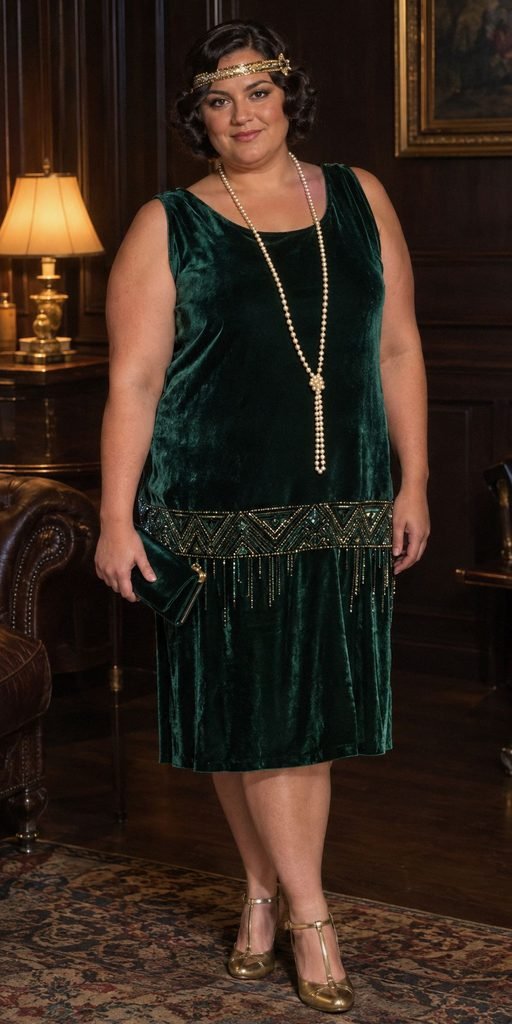
A deep emerald velvet dress with a dropped waist and a beaded hip band, worn with a gold headband, long pearls, gold T-strap heels and a velvet clutch. Velvet was as much a part of the era as sequins and it photographs with real depth under low light. Emerald and gold together is the most underused combination in this whole theme.
Direction 3: Alternatives to the fringe dress
7. The beaded top and wide-leg trousers
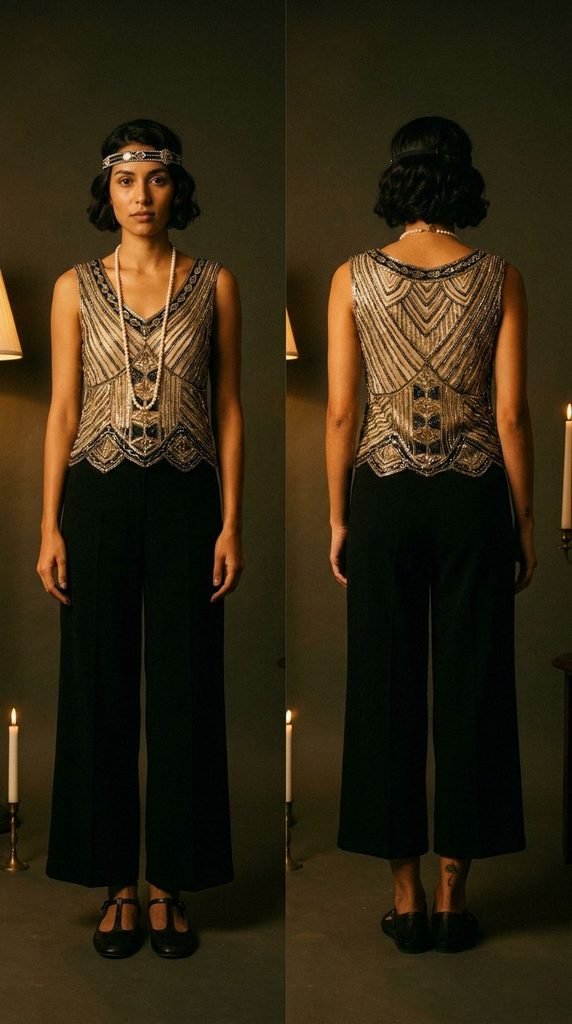
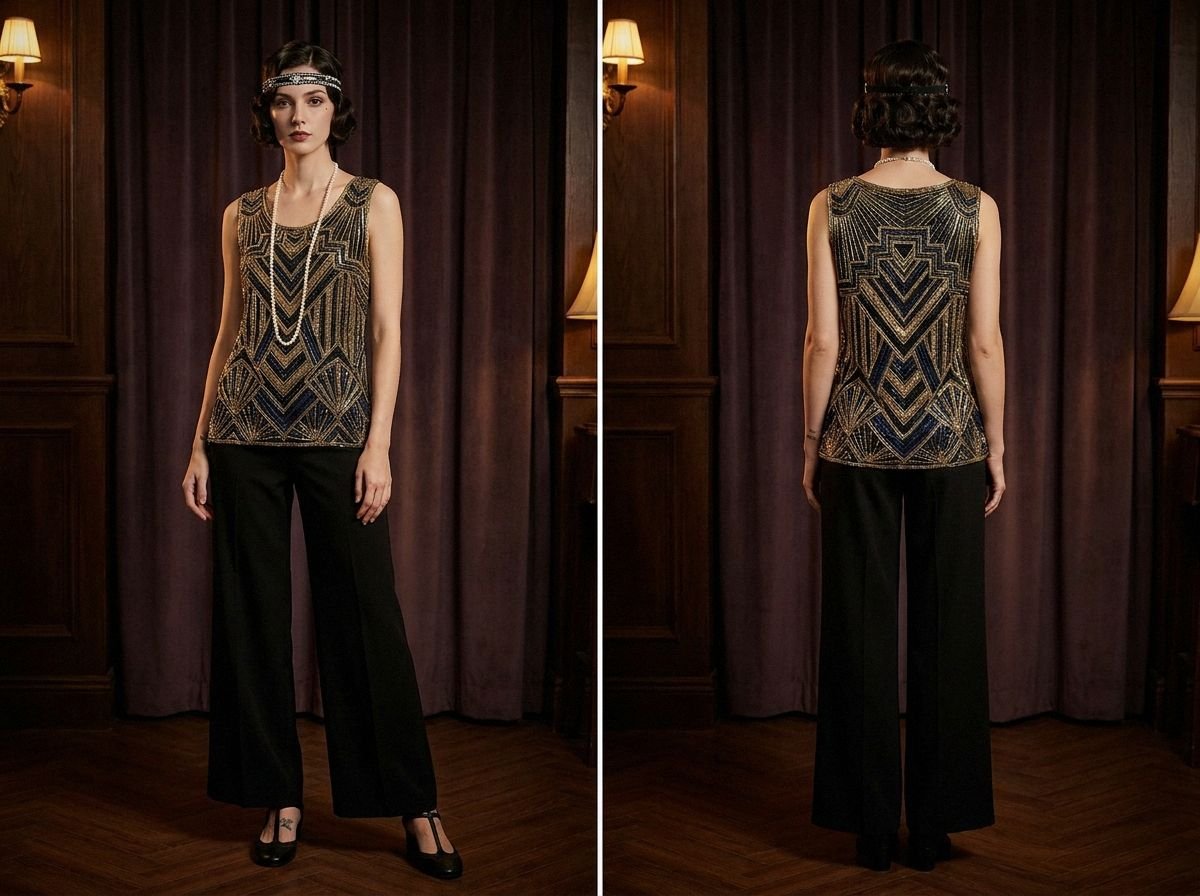
A heavily beaded sleeveless top with high-waisted wide-leg black trousers, worn with a jewelled headband, long pearls and flat T-strap shoes. If you do not want to wear a dress, this is the answer, and the wide leg is genuinely period-accurate. It is also the most comfortable outfit here by a wide margin.
8. The day dress with a cloche hat
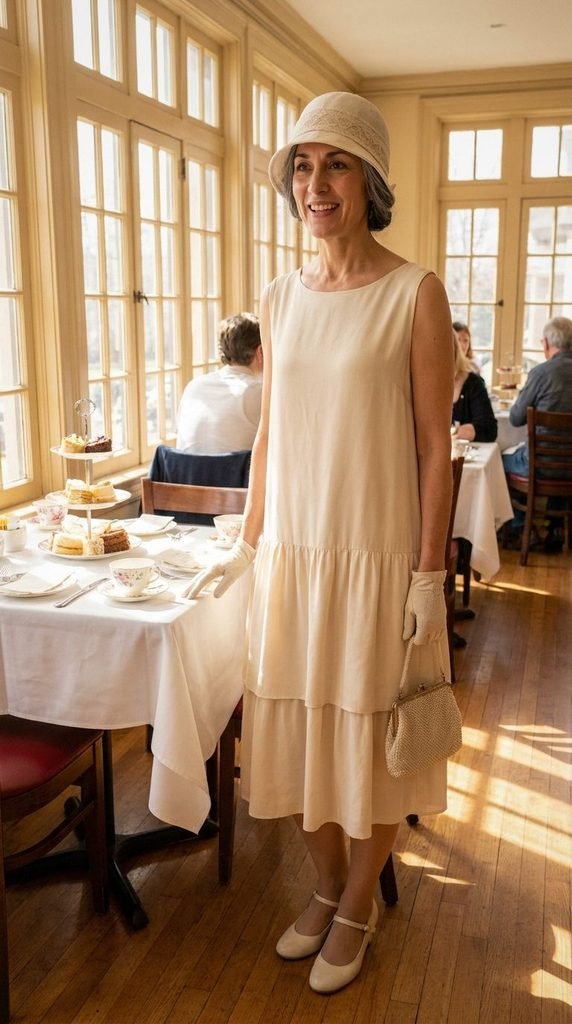
A cream drop-waist day dress with a tiered skirt in soft crepe, worn with a linen cloche hat with a lace band, short gloves, a small handbag and low Mary Jane shoes. Not every twenties party is a speakeasy, and for an afternoon event or a vintage tea this is the correct register. The cloche is the piece that does all the work.
Direction 4: Menswear-inspired looks
9. The pinstripe three-piece
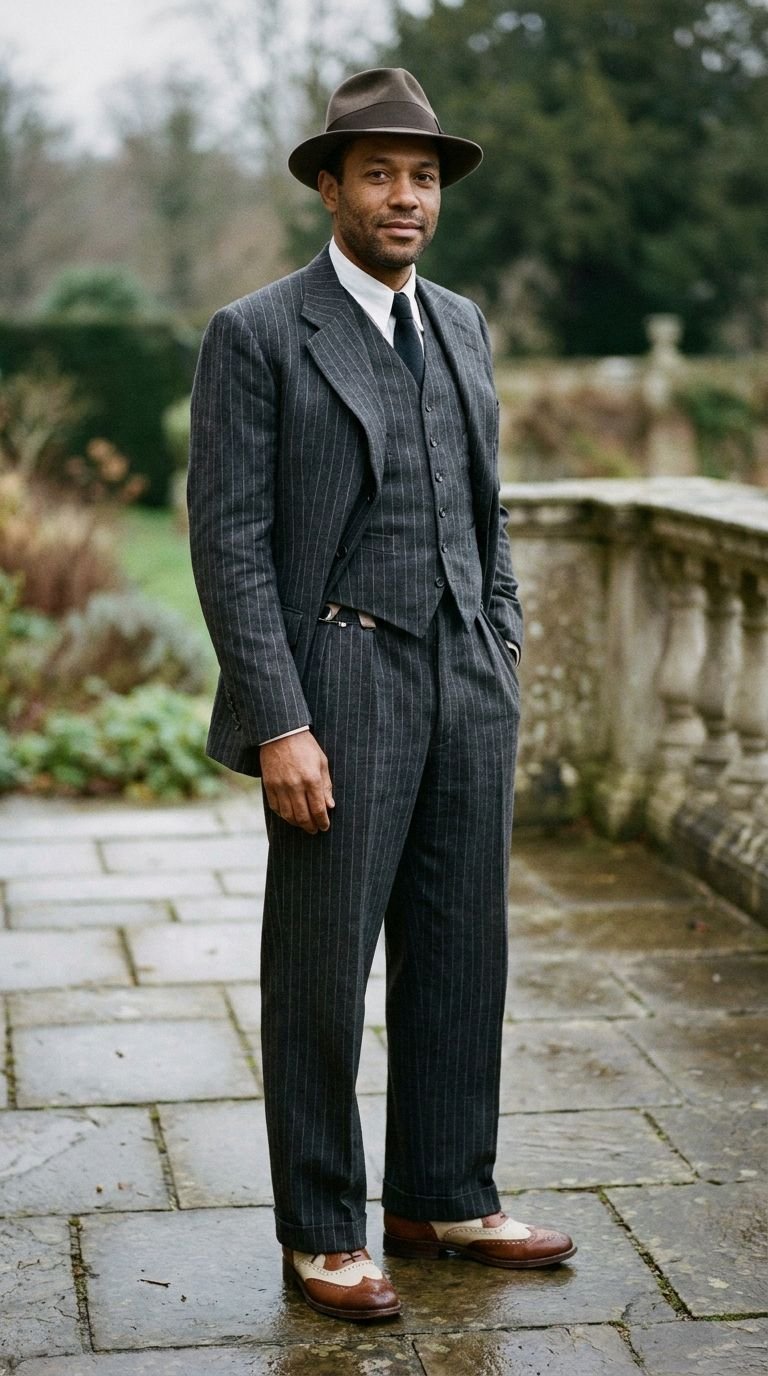
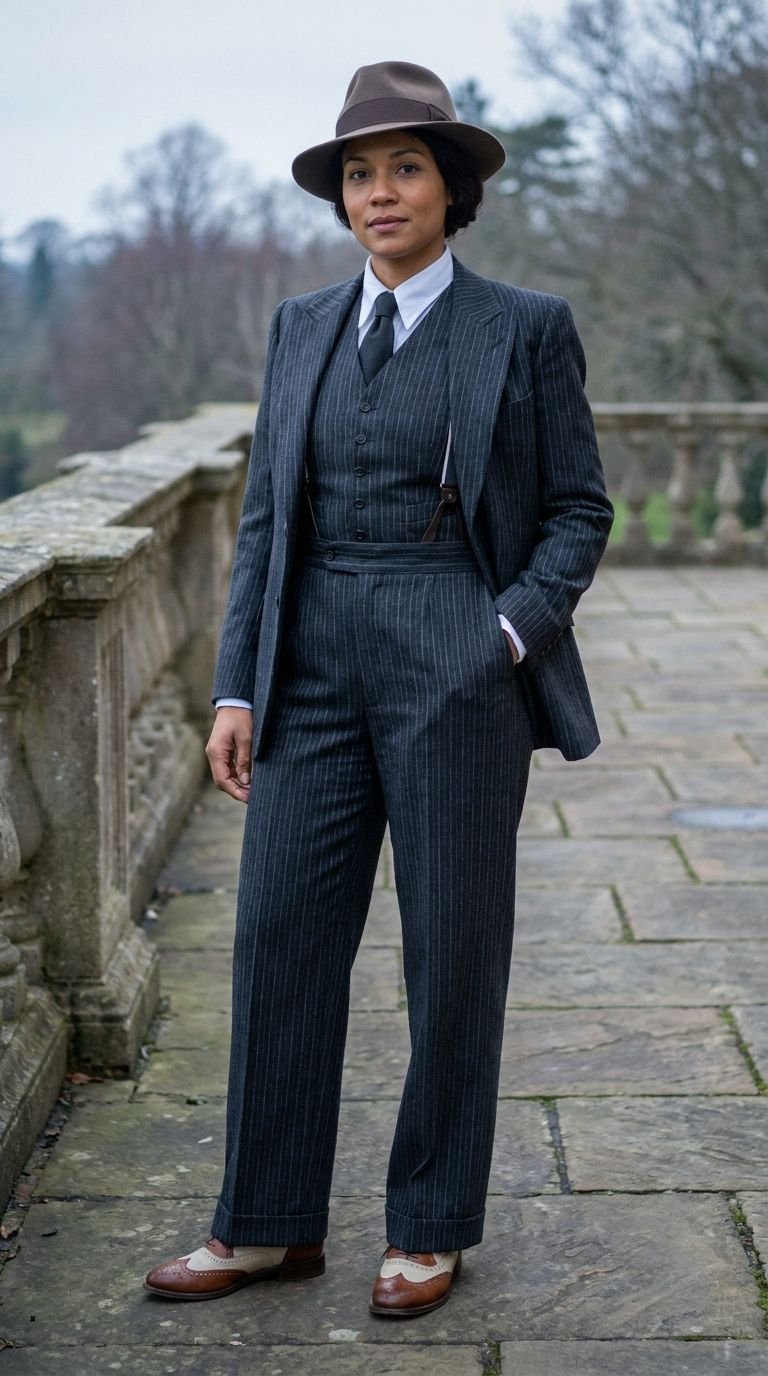
A charcoal pinstripe three-piece suit with high-waisted wide-leg trousers and a fitted waistcoat, worn with braces, a white shirt, a dark tie, a fedora and two-tone brogues. The waistcoat and the trouser rise are what make this read as twenties rather than modern tailoring. Get the trousers taken in at the waist, because the high rise only works if it actually sits high.
10. The tailored suit with a bow tie
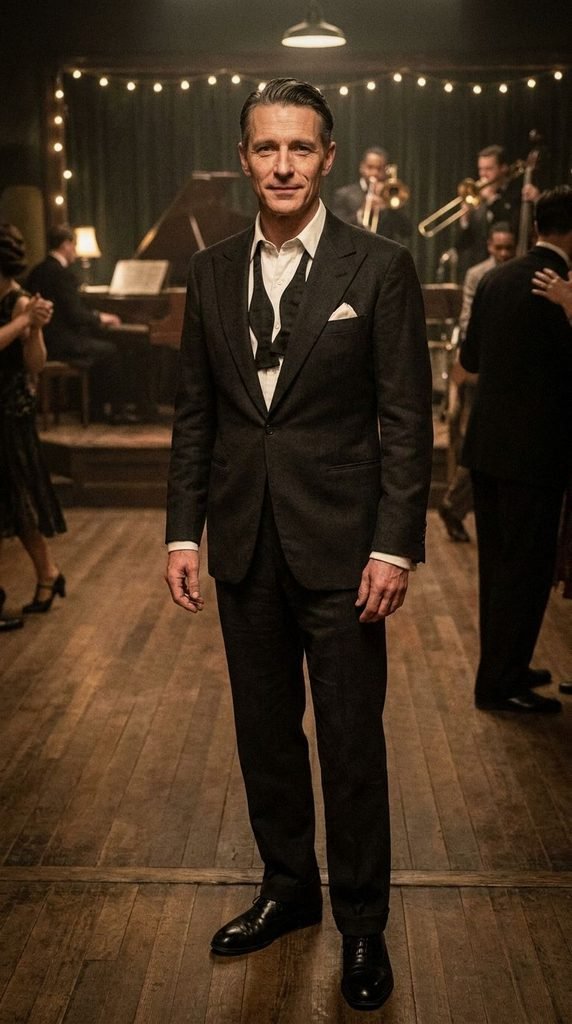
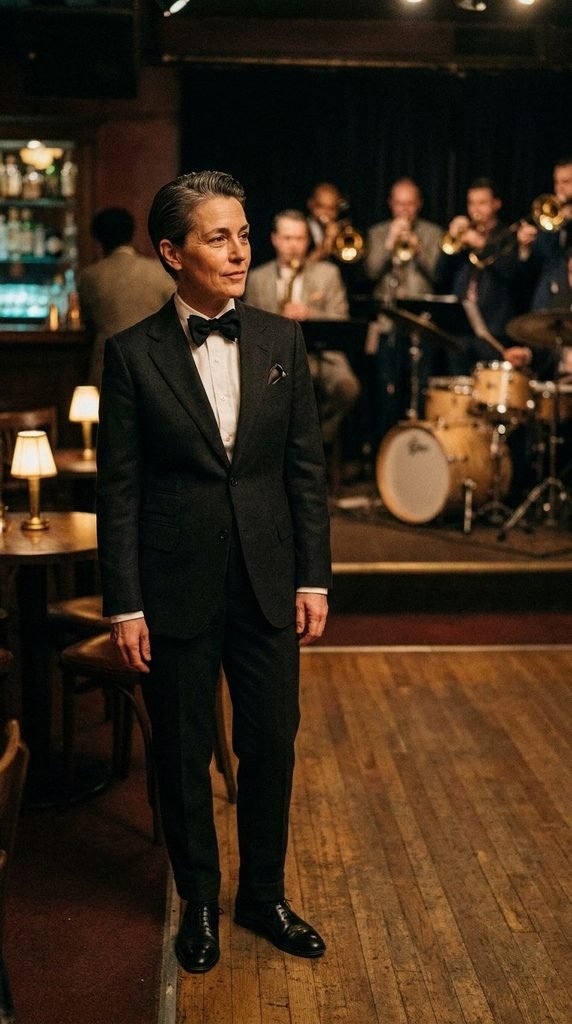
A black tailored suit with a white shirt, a black bow tie, a pocket square and polished oxfords, finished with a slicked side part. It is the simplest look on this list and it never looks like a costume. If you already own a decent suit, you are most of the way there.
Where to spend and where not to
Spend on the dress and rent or borrow the rest. The dress is the piece where fabric weight, fit and construction actually show, and it is the thing that either photographs well or does not. Headbands, pearls and gloves are cheap and nobody can tell whether they cost eight pounds or eighty.
Try dancing in it before the night. Sit down, raise your arms, walk quickly and do something approximating a Charleston in your living room. Costume dresses are notorious for shedding beads and splitting at the seams under real movement, and finding that out at the party is not fun.
And pick shoes you can stand in. T-strap and Mary Jane heels are the period-correct shapes and both come in low heights, which is fortunate because a twenties party involves a great deal more dancing than most themed events. Nobody will look at your heel height. They will notice if you are sitting down all evening.
If I am picking three to start with
The black fringed drop-waist dress, because it is the definitive look and the easiest to accessorise. The beaded champagne sheath, if the invitation says formal and you would rather look elegant than costumed. And the beaded top with wide-leg trousers, if you want to be comfortable and still obviously on theme. Save this to your party board on Pinterest before you shop, and check the invitation wording first, because Gatsby formal and speakeasy casual are two different nights.
