

Fewer Guests Is Not a Smaller Wedding
Here’s the maths that changes how you plan everything. The average American wedding in 2026 runs somewhere around thirty to thirty-five thousand dollars, while weddings under fifty guests typically land between eight and seventeen thousand. But the genuinely interesting number isn’t the total, it’s the spend per person. At two hundred guests on a thirty-thousand-dollar budget you have roughly a hundred and fifty dollars a head. At forty guests on twenty thousand, you have five hundred. That difference shows up in the food, the flowers, the stationery and above all the venue, and it’s why a small wedding often feels more luxurious than a large one rather than more modest. The other shift is emotional: a two-hundred-person wedding becomes a performance, with cocktail-hour rounds and table visits and a schedule to keep, while a forty-person wedding lets you actually have a conversation with every guest and genuinely remember the dinner. I’ve gathered 14 small wedding ideas built for under 40 guests, each with what it costs you and an honest note. Small is a different plan, not a reduced one.
How to Think About Planning at This Scale
Four principles reframe the whole thing. Plan per head rather than per total, because two hundred dollars a head on dinner for forty produces a categorically better experience than a hundred a head for a hundred and twenty, even though the second costs more overall. Cut the guest list by asking who you can’t imagine celebrating without rather than who you feel obligated to invite, and know that intimate weddings are common enough now that most people genuinely understand an inner-circle list. Choose vendors who actually specialise in small weddings, because many now offer proper micro-wedding packages and a photographer or caterer geared to two hundred guests will price and staff it wrong. And scale everything down honestly, since a DJ rig and speaker system built for two hundred people is overkill in a room of forty, where an acoustic guitarist or a small trio fits both the space and the mood. Get those four right and the rest is detail.
Direction 1: The Venue and the Setting
1. Buy Out a Restaurant You Already Love
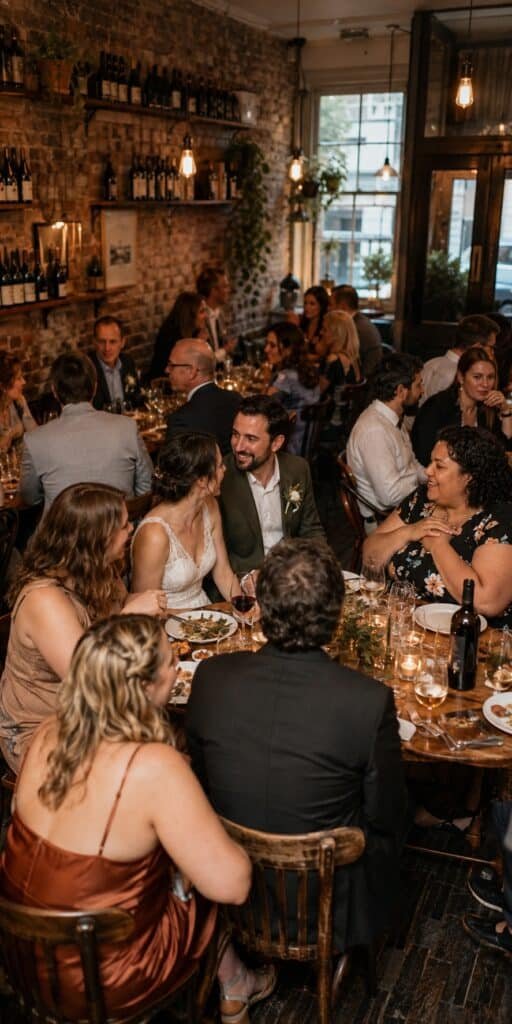
Book the whole of a favourite restaurant rather than hiring a blank venue and building it from nothing. At forty guests this is genuinely achievable at many places, and it removes catering, rentals, staffing and styling in one decision because the room already looks good. Ask about weekday or Sunday buyouts, the pricing is usually noticeably better.
2. The Backyard Wedding
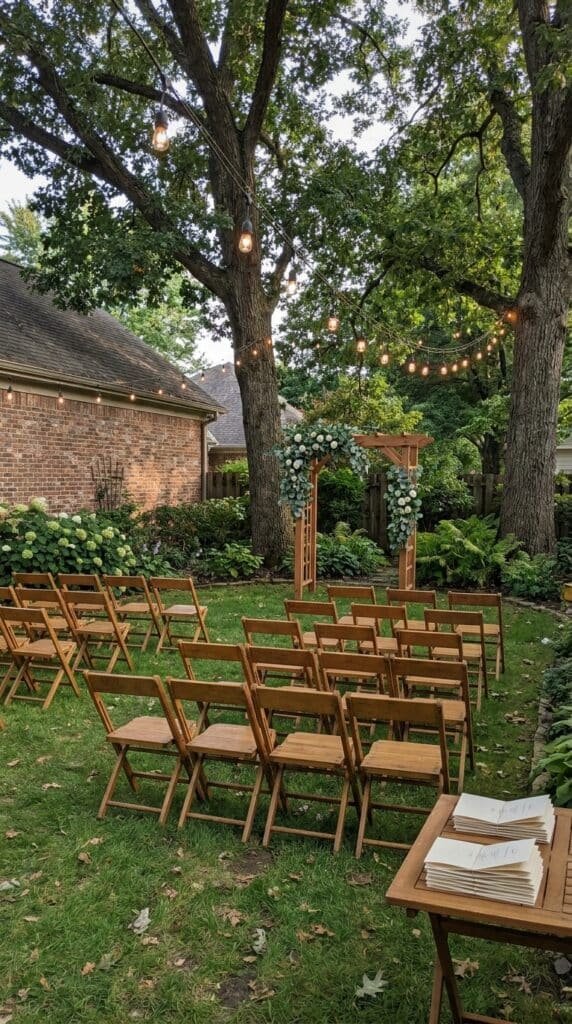
A garden or backyard is one of the most natural fits for this guest count, and a useful rule of thumb for a small wedding is the number of people who fit comfortably in one. It’s personal, flexible and removes venue hire entirely. Budget properly for the things a venue would otherwise provide, bathrooms, power, lighting and a wet-weather plan.
3. One Long Table for Everyone
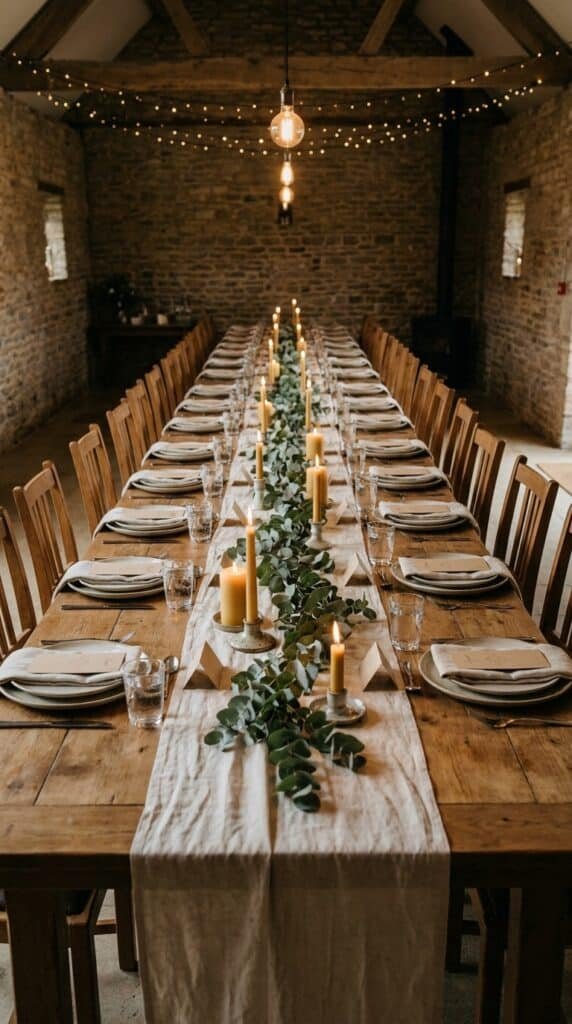
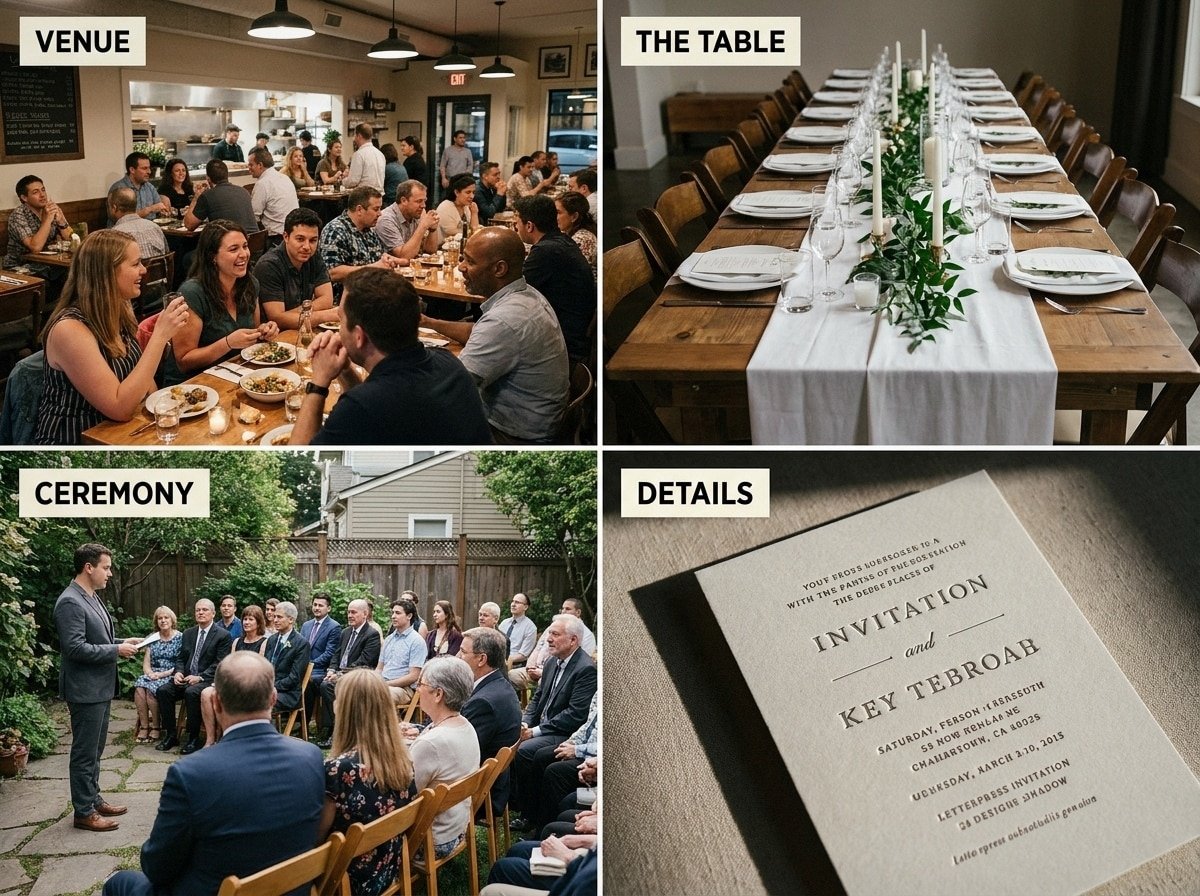
Seat every guest at a single long table rather than scattered rounds. It’s only possible at this scale and it’s the layout that makes a wedding feel like a dinner party, with one shared conversation instead of eight separate ones. Ask your venue for the longest table configuration the room allows before assuming rounds.
4. Make It a Weekend Instead of a Day
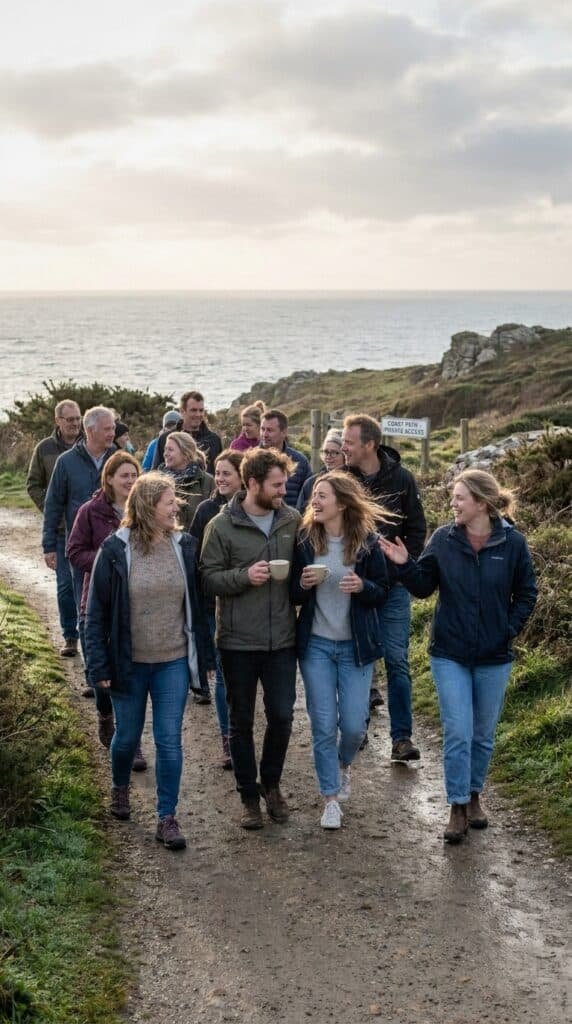
Spread the celebration across two or three days, a welcome dinner, the ceremony day, a slow breakfast after. With forty people it’s genuinely coordinatable, and it gives you real time with guests who travelled. A shared activity, a hike, a boat trip, a long lunch, often becomes the part everyone talks about.
Direction 2: Food and Drink, Where the Money Shows
5. Spend Properly on Dinner
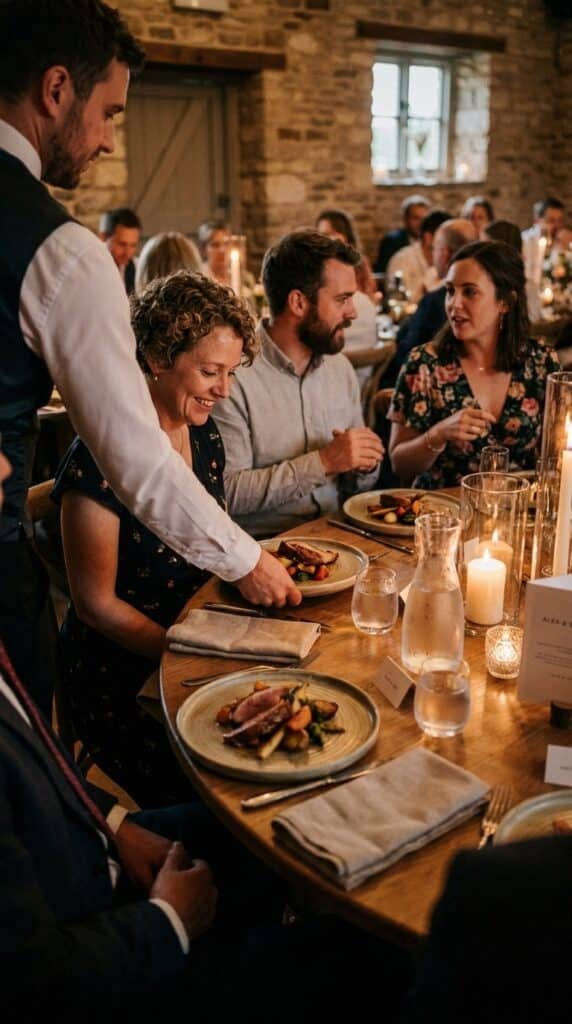
Put a genuinely high per-head figure into the food, because quality scales per person in a way that simply isn’t possible at large guest counts. Two hundred dollars a head for forty people produces a better meal than a hundred a head for a hundred and twenty, and costs less in total. This is the single clearest advantage of a small wedding.
6. Serve It Properly Seated
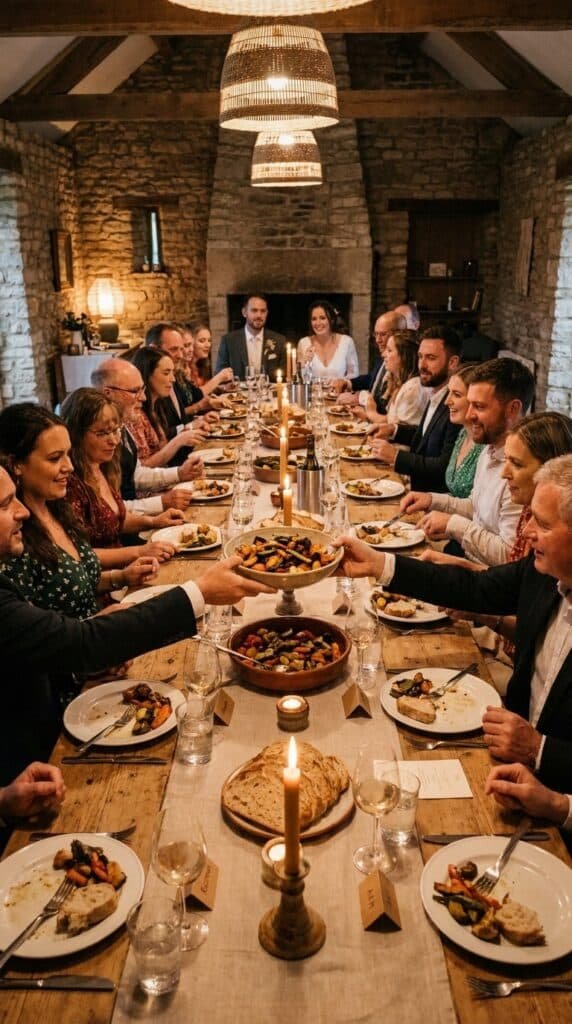
A plated, served dinner is achievable at this size in a way it rarely is at scale, and it turns the meal into an event rather than a queue. Guests stay seated, conversation builds, and the evening has a natural shape. Family-style sharing platters are the warmer alternative and often the better one.
7. Add a Drinks Pairing or Tasting Moment
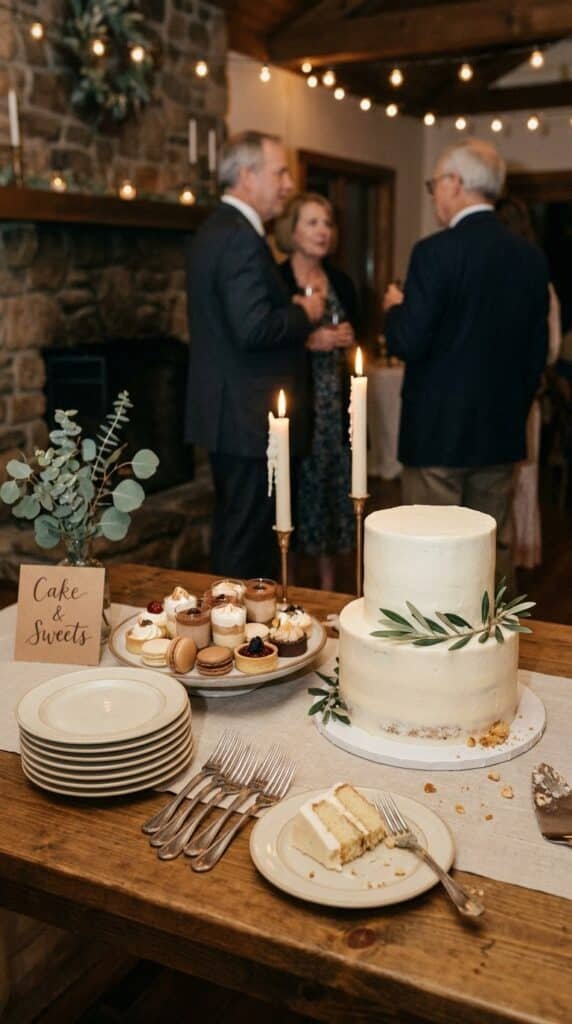
A sommelier-led wine pairing, a whisky flight, or a cocktail designed for the two of you, served to everyone at once. At forty guests this becomes a shared moment rather than a logistical problem. It’s also a natural point for a toast without adding another speech.
Direction 3: The Ceremony and the Personal Touches
8. Have Someone Who Knows You Officiate
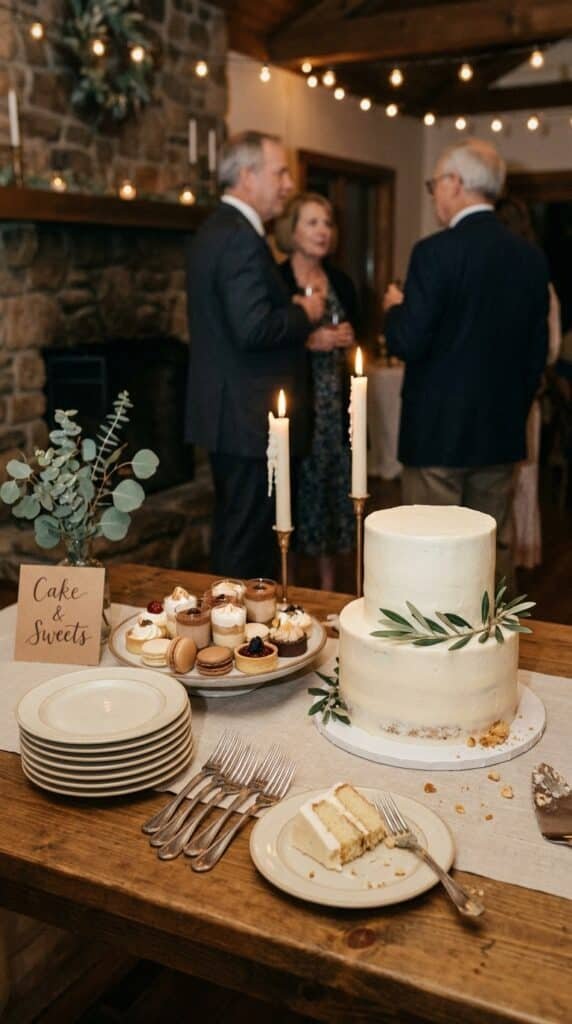
Ask a close friend or family member to officiate rather than booking a stranger. At small weddings the officiant usually has a real relationship with the couple, and it changes the tone of the entire ceremony. Check your local legal requirements early, since the rules vary enormously by country and state.
9. Write Custom Vows and Choose Readings That Mean Something
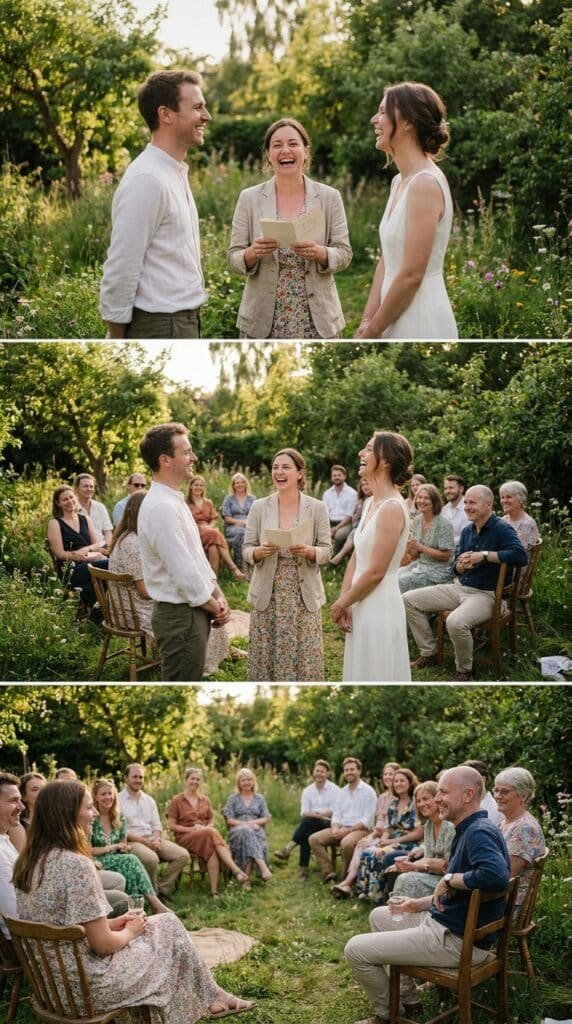
Drop the generic script for vows written specifically for the moment and readings taken from literature or letters that genuinely matter to you. When every person in the room knows you well, you have permission to be specific, naming inside jokes and shared history. The result is a ceremony guests remember because it was true rather than produced.
10. Book Live Music Scaled to the Room

An acoustic guitarist, a string duo or a small jazz trio instead of a full DJ setup. At this size live musicians fit the scale and the atmosphere far better, and they change a room the way a playlist can’t. Book them for the ceremony and dinner, and use a simple playlist later if you want dancing.
11. Write a Handwritten Note for Every Guest
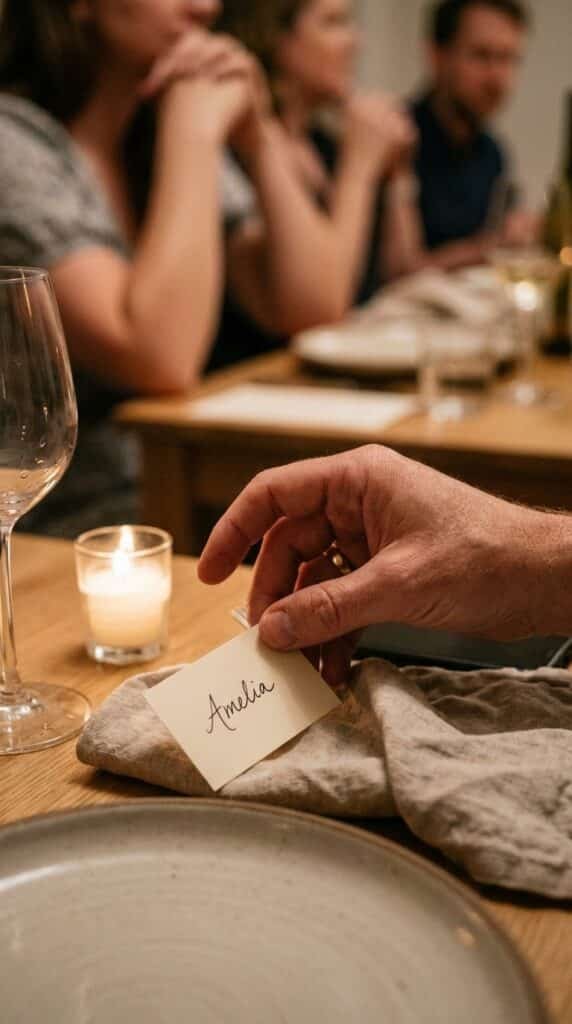
Leave a personal handwritten note at each place setting. Forty notes is genuinely achievable over a few evenings, and it’s the detail guests keep and mention years afterwards. Write them well before the week of the wedding, when you will not have the time or the composure.
Direction 4: The Details and the Spend
12. Upgrade the Stationery You Couldn’t Afford at Scale
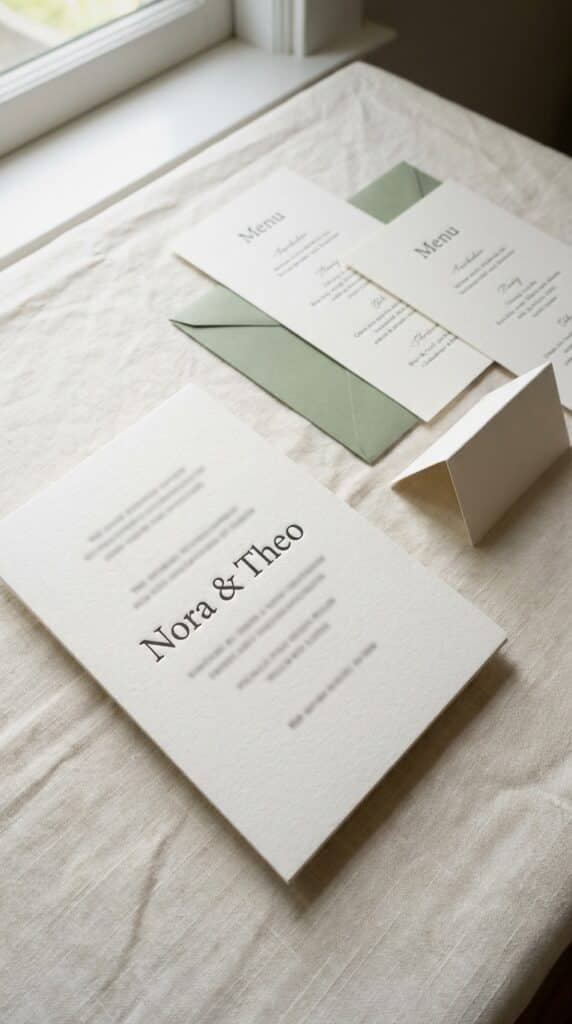
Letterpress or foil-stamped invitations become genuinely affordable at thirty to forty pieces, because the same total spend that covers digital printing for a hundred and fifty guests can fund a beautiful specialty suite for forty. Individually printed menus become realistic too. It’s the clearest example of small-wedding maths working in your favour.
13. Make Photography the Priority Spend
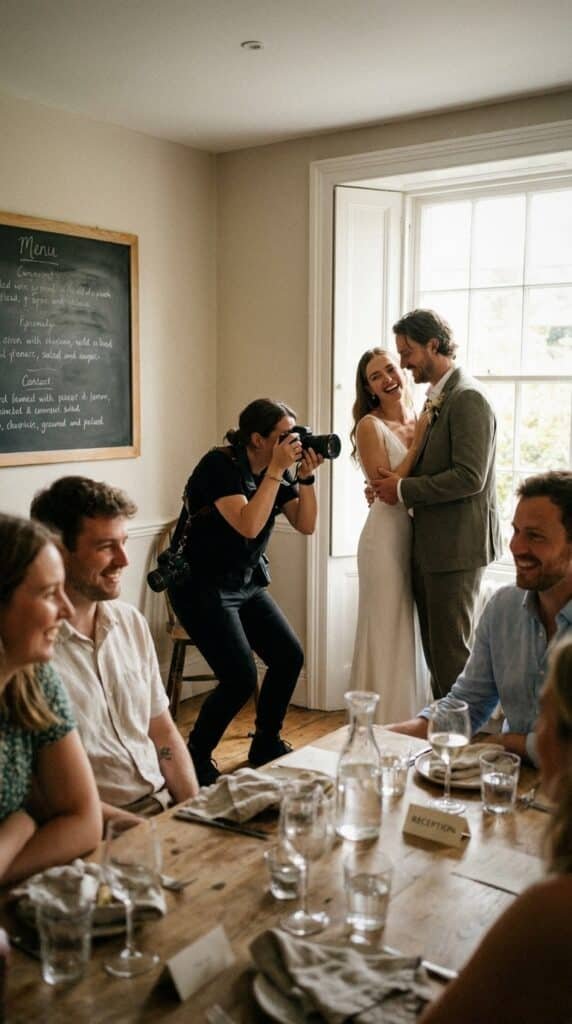
Put a meaningful share of the budget, around a fifth is a reasonable target, into a photographer who specialises in intimate weddings. The day goes quickly and the photographs are what remains, so this is prioritisation rather than extravagance. Small-wedding photographers shoot differently, closer and more documentary, and it matters.
14. Build an Unhurried Timeline
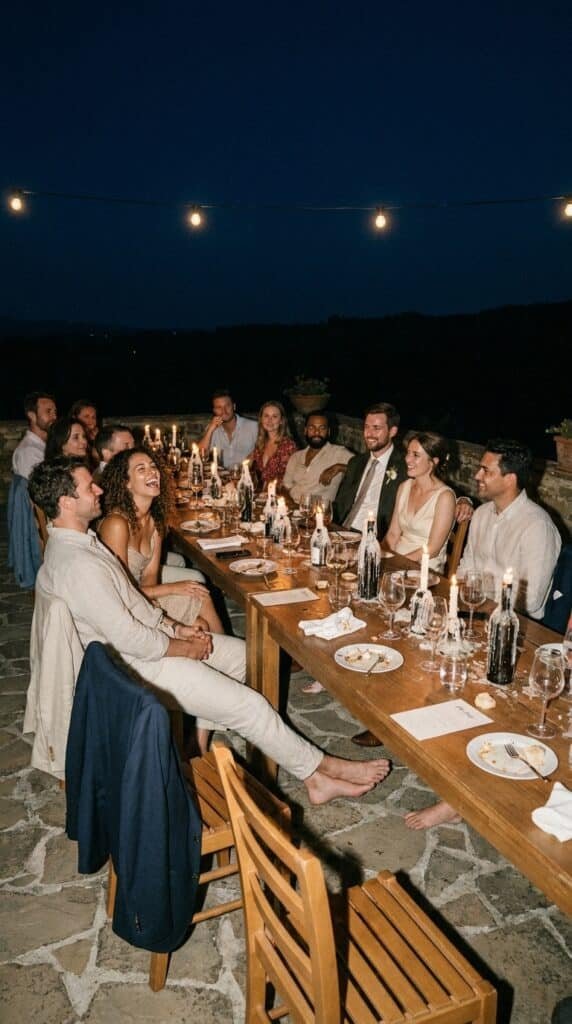
Deliberately schedule less than you think you need. The whole advantage of forty guests is time, so leave long gaps, let dinner run, skip the segments that exist purely to manage a crowd. A timeline with room in it is the difference between attending your wedding and administering it.
Making the Guest List Without the Guilt
Start from who you can’t imagine the day without. That question produces a clearer list than working down from everyone you know, and it usually lands close to forty on its own. Family and close friends only is a completely acceptable answer.
Keep the wedding party small too. If you’re inviting fewer than fifty people, you don’t need ten of them standing beside you, and a smaller party is easier to coordinate and less expensive for everyone involved. Two each, or none at all, is increasingly normal.
And say it plainly on the invitation. Intimate weddings are common enough now that a short line explaining you’re keeping the celebration small is understood rather than resented, and it saves the awkward conversations later. Anyone genuinely close to you will be pleased to be in the forty, and that’s rather the point of the whole exercise.
If I’m Picking Three to Start With
The restaurant buyout because it solves venue, food and styling in one booking, spending properly on dinner because it’s the clearest place small-wedding maths pays off, and the handwritten notes because they cost almost nothing and are the thing guests still mention years later. Save this list to your wedding board on Pinterest before you book anything, and send it to whoever is helping you plan, the per-head reframe changes most of the early decisions.
