

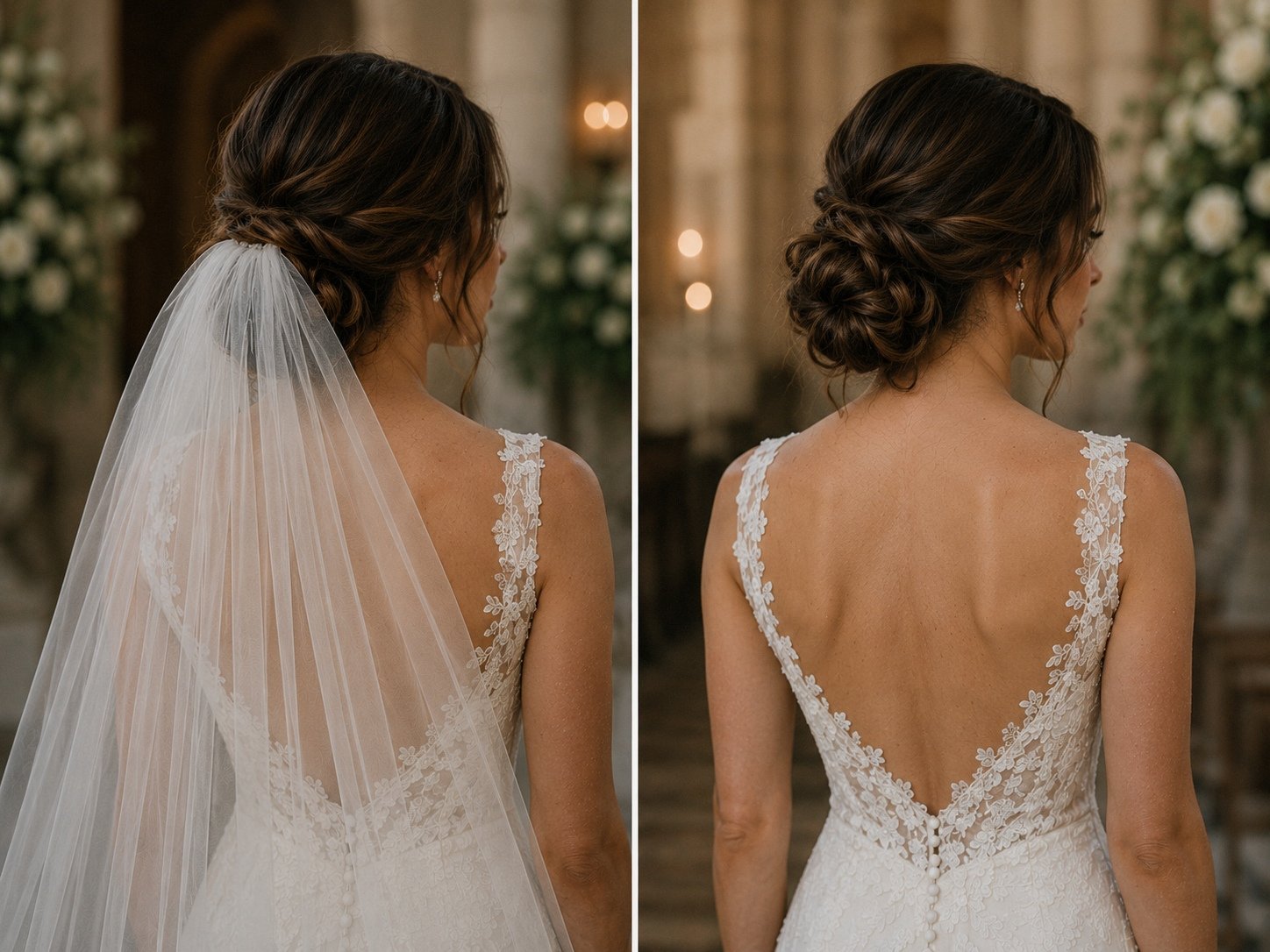
The veil-off test I would use at your hair trial
If you are choosing wedding hairstyles with a veil, I would plan the hair for two different moments: the ceremony while the veil is attached, and the reception after it comes out. That second view is where a lot of pretty inspiration falls apart. A veil comb can flatten a crown, disturb a braid, or leave an awkward gap if the style was built only for the aisle. For 2026, bridal hair is moving toward softer texture, lived-in shape, romantic curls, polished chignons, and details that still look good once the veil is gone. I picked 19 styles that make sense from both angles, including buns, half-up hair, braids, waves, ponytails, short hair, and natural texture.
Bring the actual veil, or at least its comb, to your trial. Ask your stylist to photograph the back before the veil goes in, with the veil attached, and again after it is removed. The anchor should sit in a small reinforced section of hair rather than depend on decorative pins alone. If you plan to remove the veil after the ceremony, practice that exact motion. One person should support the hair near the comb while another slides the comb out in the same direction it entered. Do not pull the veil upward like a handle.
Recent 2026 bridal coverage keeps returning to soft sculpted updos, half-up styles, romantic waves, natural texture, vintage curls, and restrained accessories. These work well with a removable veil because the hairstyle already has a finished shape underneath.
Low and sculpted styles
1. Soft low chignon with a hidden veil anchor
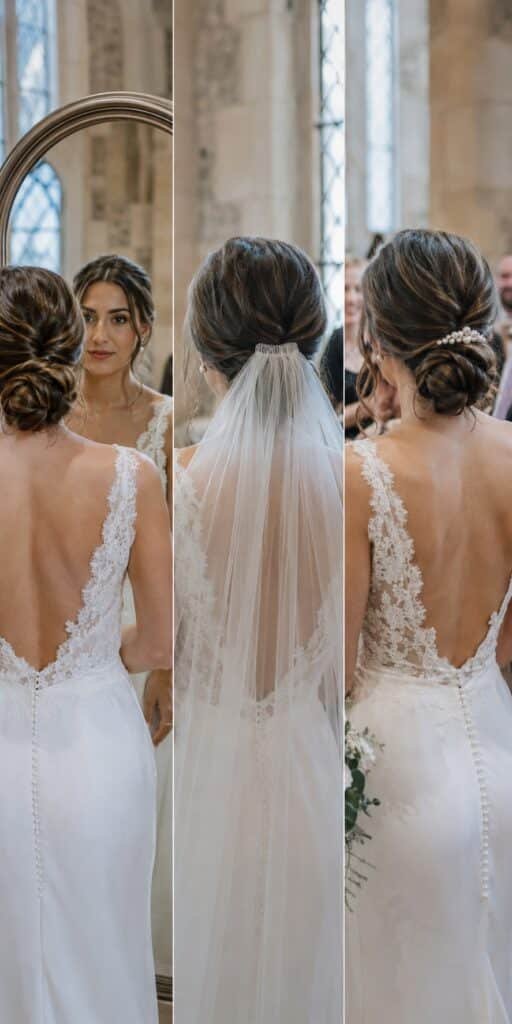
A low chignon is still one of my safest choices for a cathedral or chapel veil. Keep the bun softly sculpted instead of shellacked flat, with a few natural pieces around the hairline.
2. Center-part polished bun with soft edges
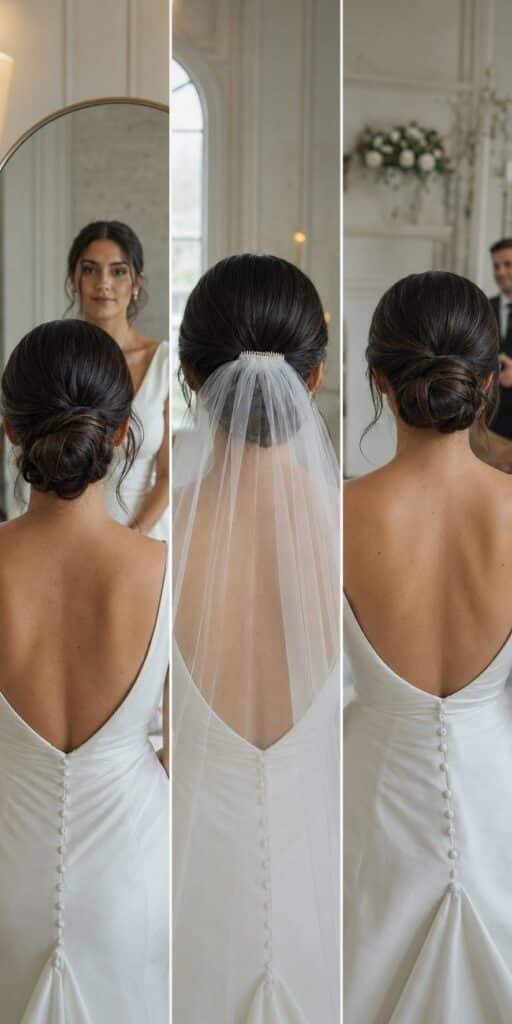
This is cleaner than the romantic chignon but it should not look sprayed into plastic. A center part gives the front a modern line while the bun creates a strong base for a veil. I would use a lightweight veil if the bun is small.
3. Brontë-inspired loose low bun
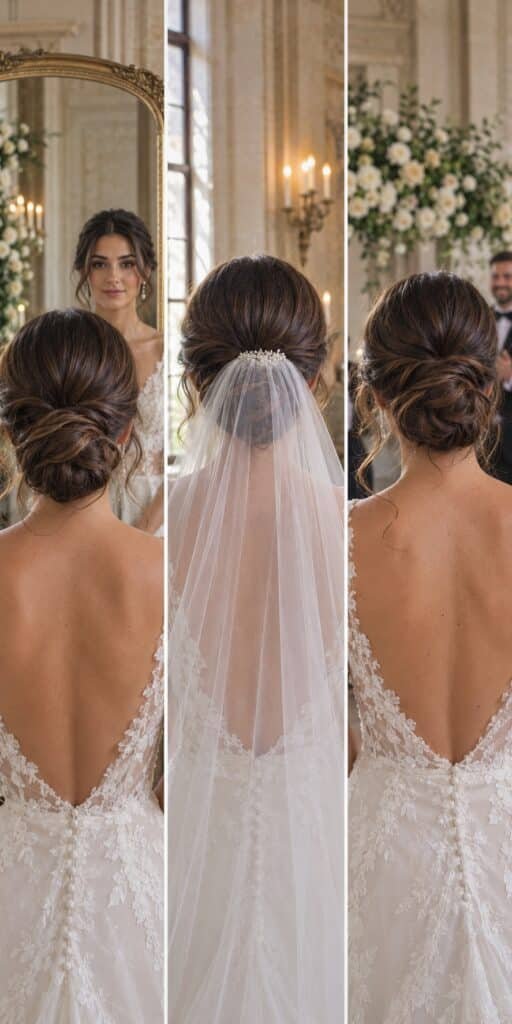
The 2026 return to vintage softness makes this one especially pretty. Think airy volume, loose bends, and a low bun that feels slightly literary rather than perfectly symmetrical. A sheer veil can sit above the bun without hiding all that texture.
4. Twisted chignon with side tendrils
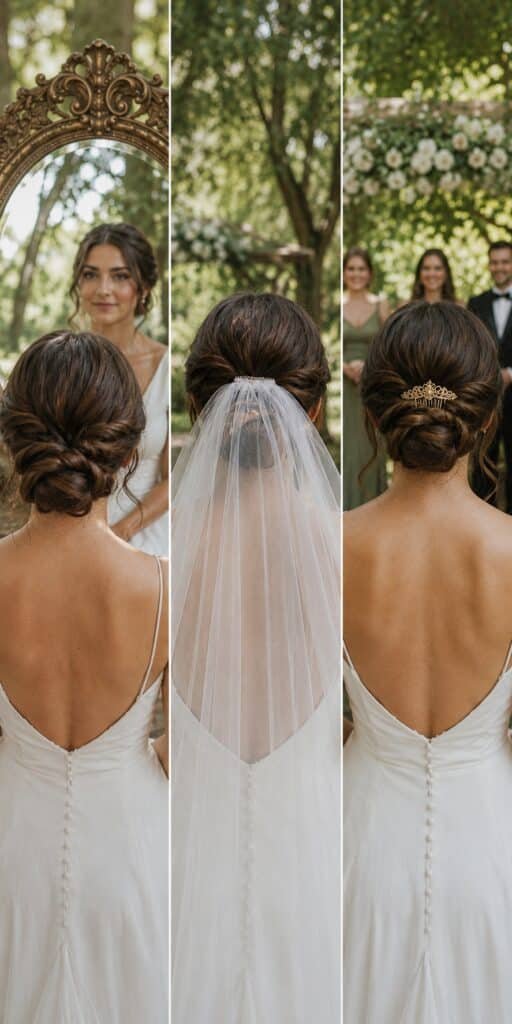
Two or three broad twists feeding into a low chignon give the back enough detail to survive the veil-off moment. The comb can slide into a reinforced section between the twists and bun. Once it is removed, the twists still create a finished focal point.
Half-up styles that keep their shape
5. Half-up waves with a concealed mini braid
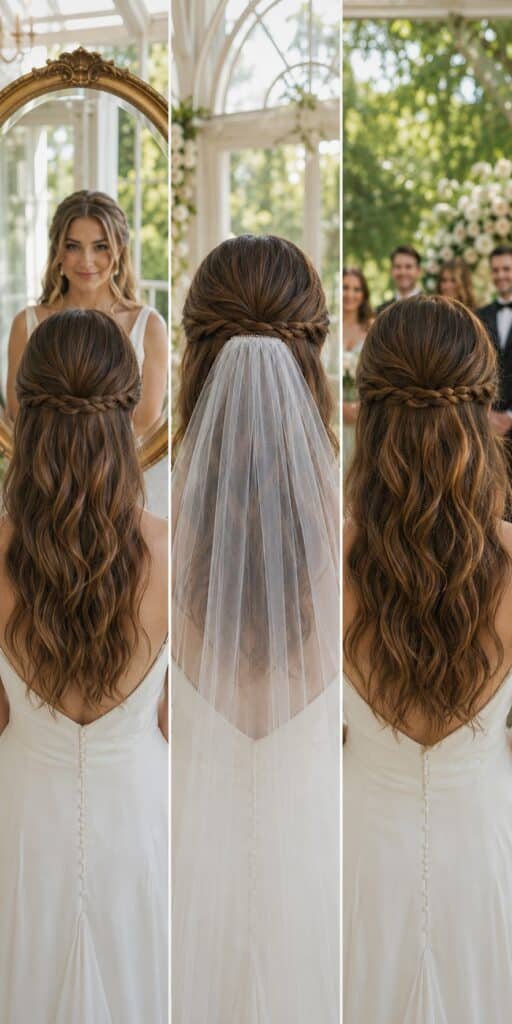
This is one of the most practical tricks for brides who want their hair down. A tiny horizontal braid hidden beneath the half-up section gives the veil comb something secure to grip. The braid should disappear under the top layer.
6. Soft half-up twists with pearl pins
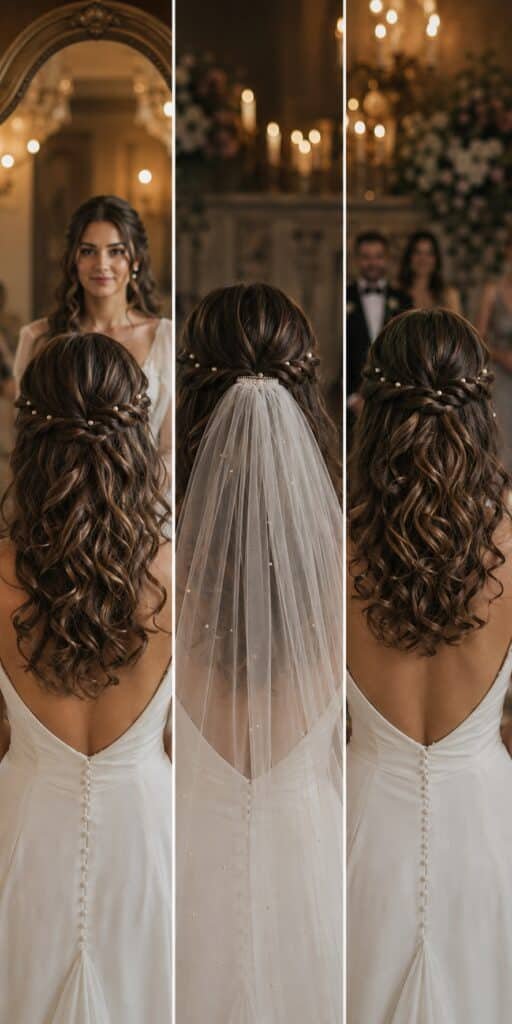
Loose twists from each side meet at the back and create a natural landing point for a fingertip or chapel veil. I like scattered pearl pins placed around the twists, not directly through the veil comb.
7. Half-up bow shape with romantic curls
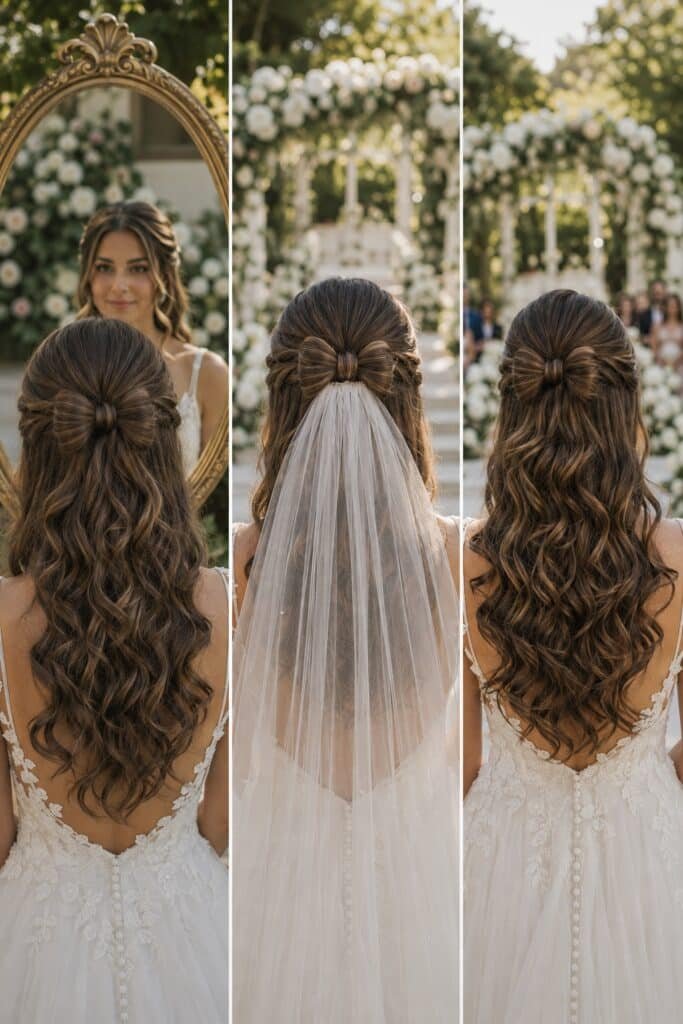
A bow-shaped twist made from the bride’s own hair gives the back a distinct shape before the veil even arrives. Place the veil beneath the bow if you want the detail visible during the ceremony.
8. Crown lift with loose Hollywood waves
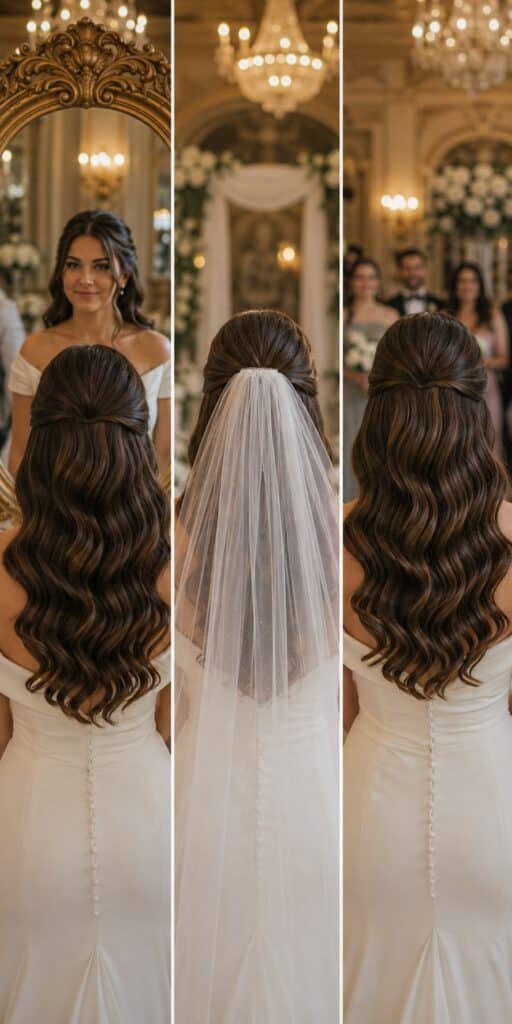
For brides who want glamour without a full updo, a gently lifted crown gives the veil a stable area while the lengths stay in glossy waves. The 2026 version should still move. Avoid a stiff teased bump.
Braids and textured updos
9. Airy braided low bun
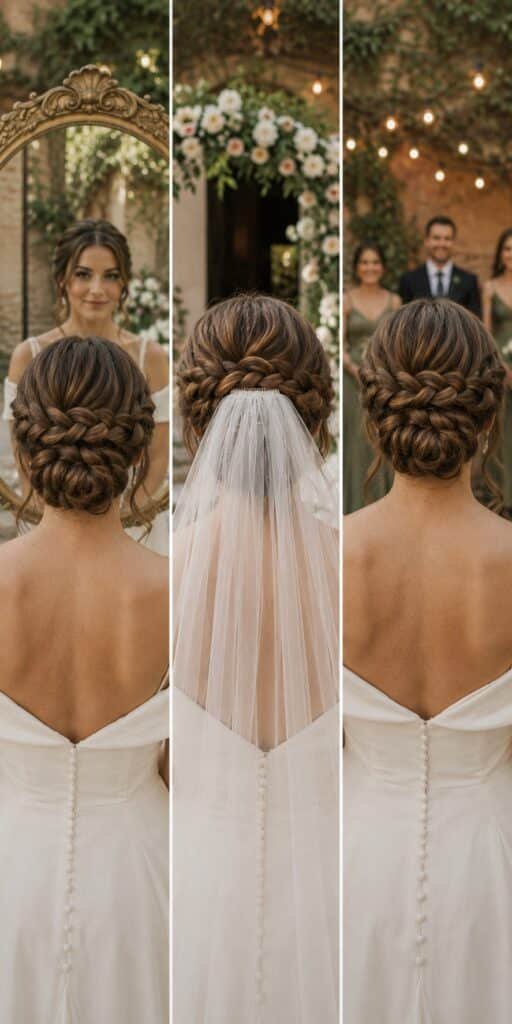
A broad braid wrapped into a low bun gives you texture, structure, and several discreet places to anchor a comb. I would keep the braid loose enough to show its pattern but not so pulled apart that it loses strength.
10. French twist with a veil tucked beneath
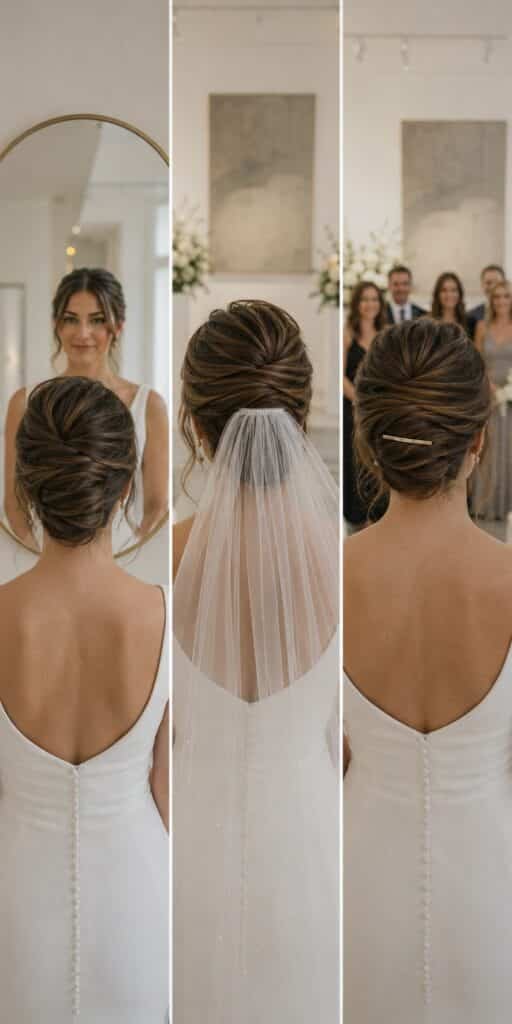
A modern French twist feels sharp from the side but still romantic from the back. Tucking the veil beneath the twist keeps the silhouette visible and makes the veil look as if it is flowing out of the style.
11. Textured curly updo
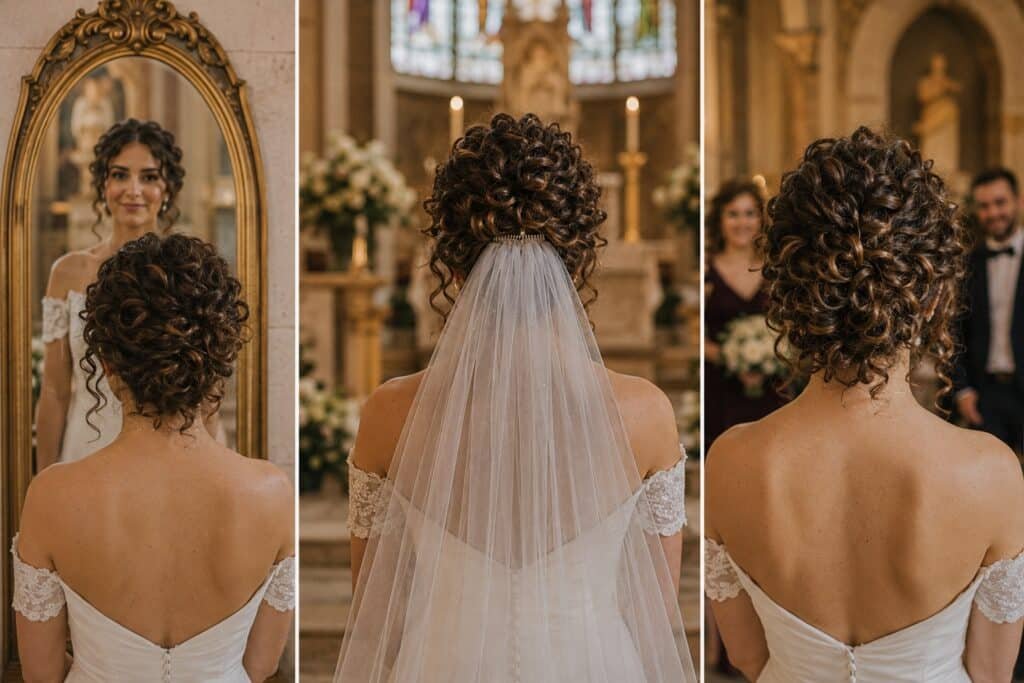
Natural curls do not need to be flattened into a conventional bridal bun. Gather them into a soft updo that keeps individual curl shape visible. The veil anchor should be built into a secure base underneath the curls, not forced through delicate curl clusters.
12. Braided crown into a low knot
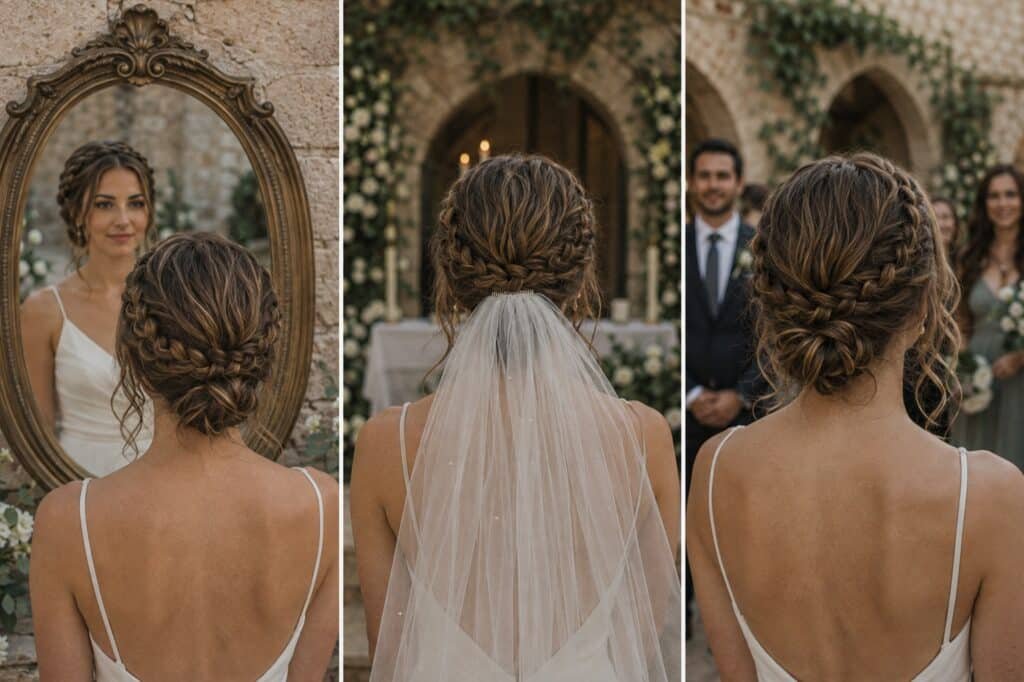
A crown braid gives the front and sides detail while a small low knot handles the veil weight. This is especially useful if you want the hairstyle to look complete from every angle after the ceremony.
Hair-down and ponytail options
13. Romantic brushed waves with a hidden anchor
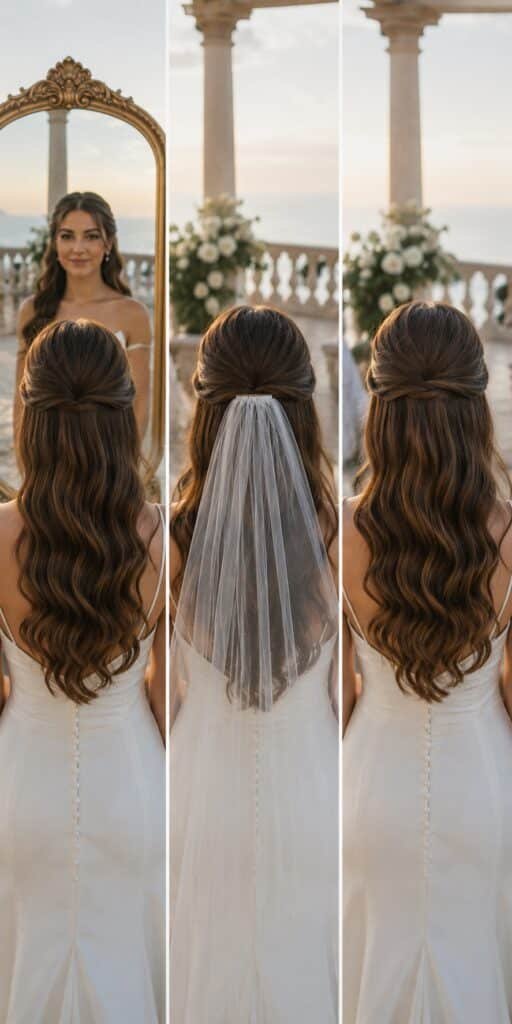
Hair fully down can absolutely work with a veil, but I would never rely on loose hair alone to hold the comb. Ask for two tiny hidden braids or crossed pins under the top layer. The veil grips that base while the surface stays soft.
14. Old-Hollywood side waves
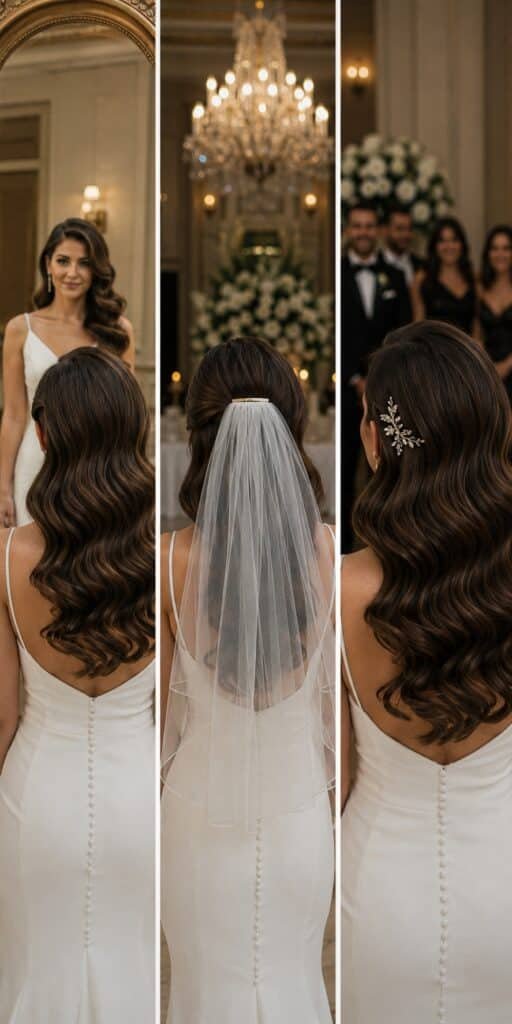
Deep side waves look beautiful with a simple veil because the front already has a strong shape. Keep the veil placement toward the back of the crown so it does not crush the wave pattern.
15. Low ponytail with wrapped base
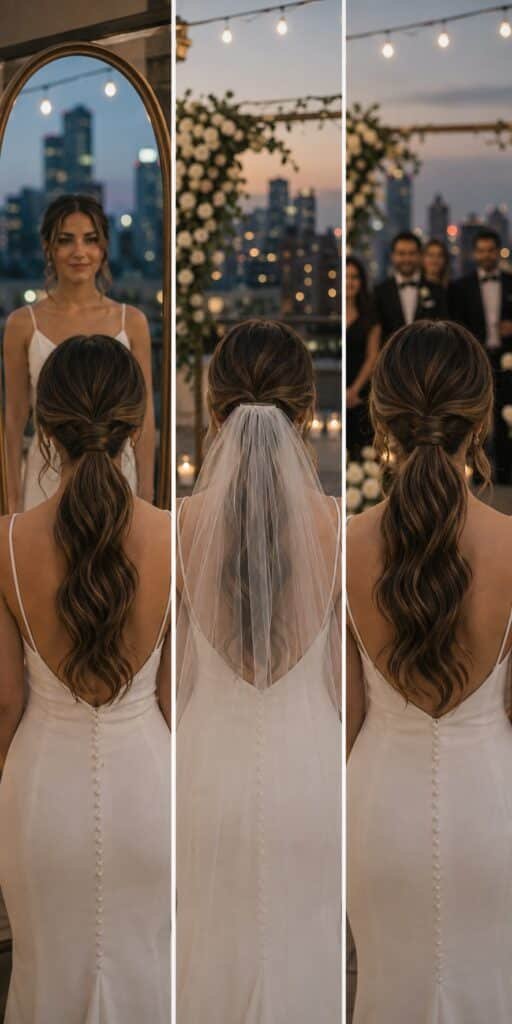
A low ponytail is underrated for bridal hair. The wrapped base gives you a neat structural point for a light veil, while the ponytail can be waved, curled, or kept sleek. Place the comb above the wrap rather than through it.
16. Bubble ponytail with delicate texture
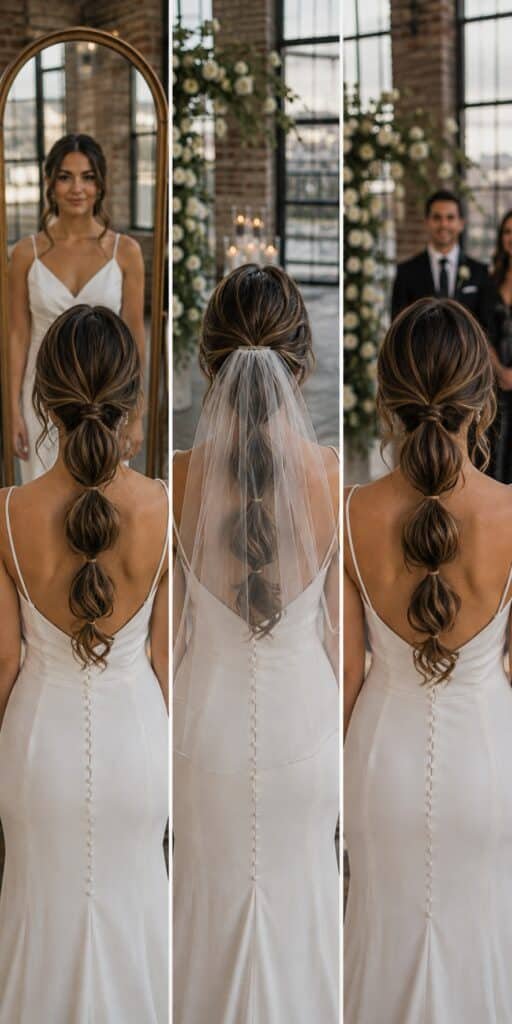
For a more fashion-forward bride, a soft bubble ponytail can carry a veil surprisingly well. Keep the sections relaxed and proportional rather than oversized. The veil should attach near the first elastic so the weight is supported.
Short hair, vintage texture, and natural curls
17. Feathered bob with a short veil
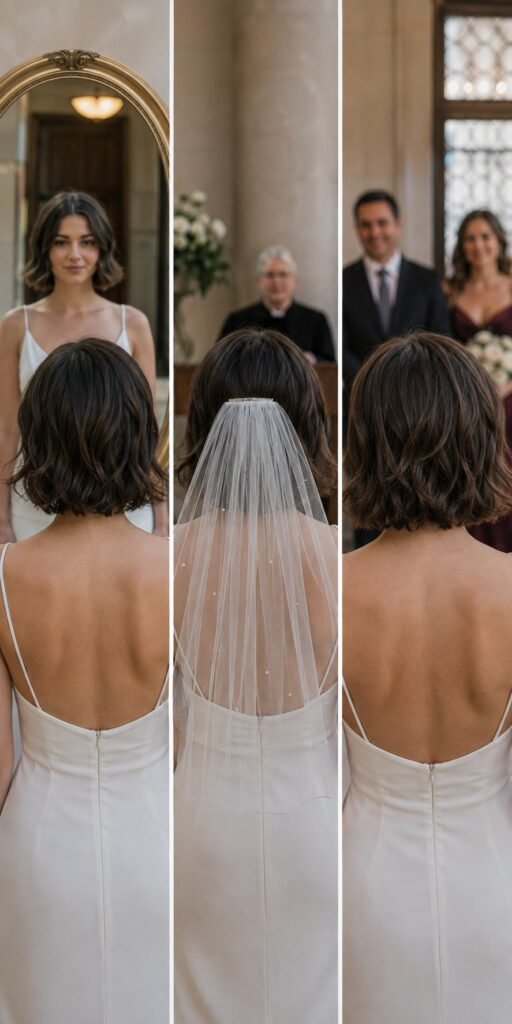
Short hair does not need fake volume to look bridal. A chin or jaw-length bob with soft feathered movement pairs beautifully with a birdcage, shoulder, or light fingertip veil. Use discreet crossed pins or a small comb at the crown.
18. Edwardian-inspired curls with a low veil
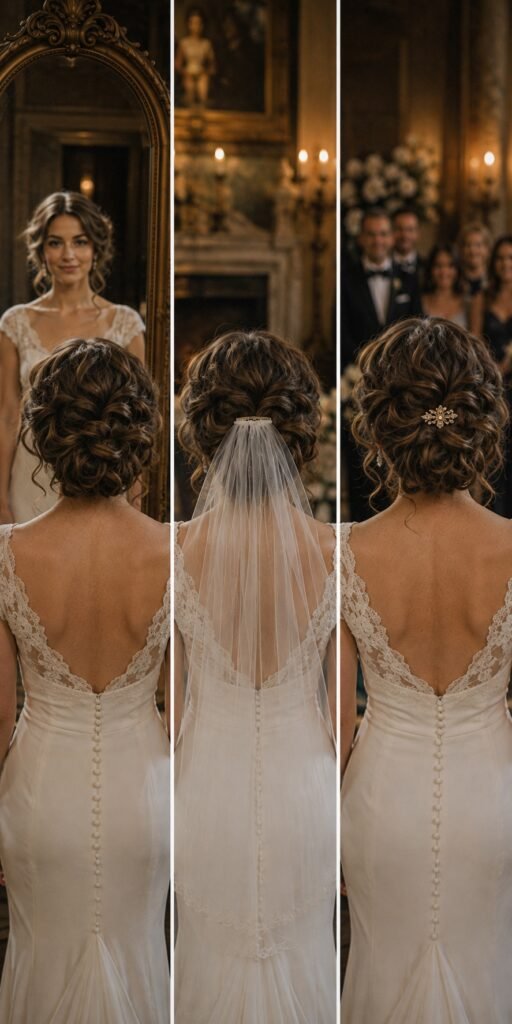
Soft historical curls are appearing again in 2026 bridal hair, and they are ideal if you want something romantic without a standard bun. Keep the curl pattern airy around the sides and back, then place the veil low so it does not flatten the crown.
19. Defined natural curls with a half-up veil base
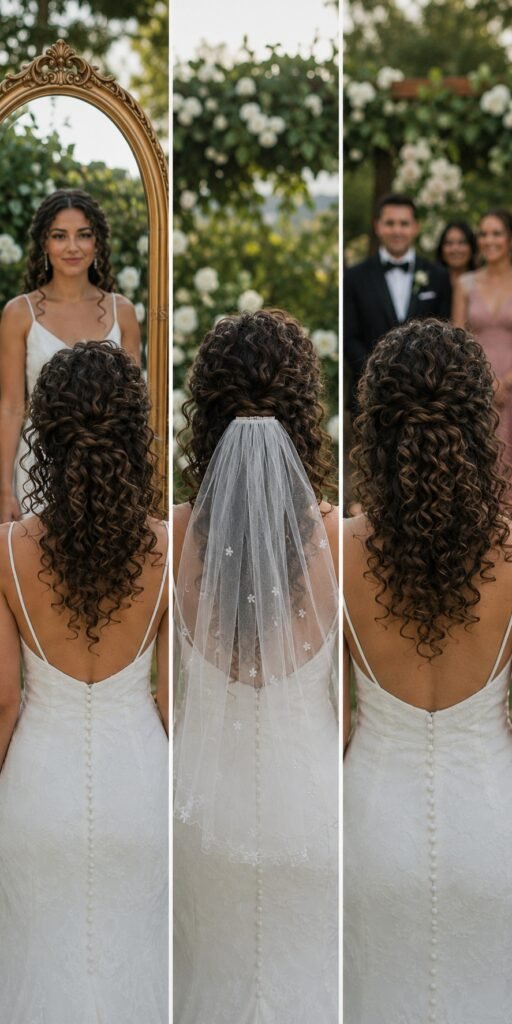
For defined curls, I like a half-up base that secures the veil while leaving the curl pattern visible. The stylist can create a hidden anchor beneath the gathered section and keep the surface curls untouched.
How to remove a wedding veil without wrecking the hairstyle
Assign the job before the wedding. Your hairstylist, maid of honor, sister, or another calm person should know where the comb sits and which direction it needs to travel. Before touching the veil, remove any pins that were added specifically through the comb. One hand supports the hairstyle at the anchor. The other grips the comb itself, not the tulle, and slides it out slowly. If a strand catches, stop and free the strand. Pulling harder is how a neat chignon turns fuzzy in ten seconds.
Keep a tiny reception kit nearby: pins matched to your hair color, flexible-hold spray, and the accessory that will replace the veil. The goal is one small repair, not a bathroom restyle.
The three I would shortlist first
If I were narrowing these 19 wedding hairstyles with a veil to three trial appointments, I would start with the soft low chignon for reliable hold, the half-up waves with a concealed mini braid for hair-down romance, and the defined natural curls with a half-up base for texture that still looks like the bride’s own hair. Whichever one you choose, photograph it three ways at the trial: before the veil, with the veil, and after removal. Save the version you love to your wedding hair board and bring those photos to the final appointment.
