There is nothing quite like the panic of checking the weather app three days before a birthday party and seeing a 90% chance of rain. I have been there, staring at a muddy backyard and wondering how to fit fifteen energetic kids into a living room without destroying the house. But here is the secret: Indoor birthday party themes often end up being more memorable than their outdoor counterparts because they force you to get creative with your space.
Whether you are pivoting due to a storm or just prefer the climate-controlled comfort of your home, this list covers the best indoor birthday party themes to save the day. We have analyzed trends, costs, and “chaos levels” to bring you options that range from high-energy obstacle courses to chill creative sessions.
How We Chose & Ranked
To ensure this list actually helps you plan and isn’t just fluff, we ranked these themes based on three weighted criteria important to parents and hosts:
- Fun Factor (40%): Does this theme keep kids engaged for at least 2 hours, or will they be bored in 20 minutes?
- Setup Ease (30%): How much effort does it take to transform a standard living room or basement?
- Budget Flexibility (30%): Can this be done on a shoestring budget, or does it require expensive rentals?
The Top 10 Indoor Party Themes
1. The “Indoor Glamping” Sleepunder

Snapshot:
- What it is: A cozy campsite set up in your living room with individual tents or a pillow fort.
- Best For: Ages 6–12 who love aesthetics and chilling.
- Effort Level: Medium (Requires furniture moving).
Key Details
This is the reigning champion of indoor parties. You set up A-frame tents or teepees, string up fairy lights, and serve “indoor s’mores” (using a fondue pot or oven). It works as a sleepover or a “sleepunder” where kids get picked up at 9 PM.
Cost & Evidence
- Rentals: Professional glamping companies charge $170 to $325 USD for a 5-tent package (Source: Party Perfect Niagara / Twinergy Party Rentals, checked Nov 2024).
- DIY: You can buy simple canvas A-frame tents for roughly $40–$60 USD each at major retailers like Walmart or Amazon.
Pros / Cons
- Pros: Highly “Instagrammable,” keeps kids contained in their “zones,” cozy atmosphere.
- Cons: Requires significant floor space; renting is expensive.
Use Cases
- A “Winter Wonderland” campout with white lights and hot cocoa.
- A “Jungle Safari” with green vines and animal plushies.
Why It Ranks
It hits the highest scores for “Fun Factor” because the visual impact delights kids immediately. It ranks #1 because it turns a rainy day into a cozy advantage.
Where to Learn/Buy:
Check local listings or browse Sweet Dreams Glamping Packages for inspiration.
2. Junior Chef Pizza Kitchen
Snapshot:
- What it is: An interactive cooking class where kids make their own lunch.
- Best For: Ages 5–12; Foodies.
- Effort Level: Medium (Prep work required).
Key Details
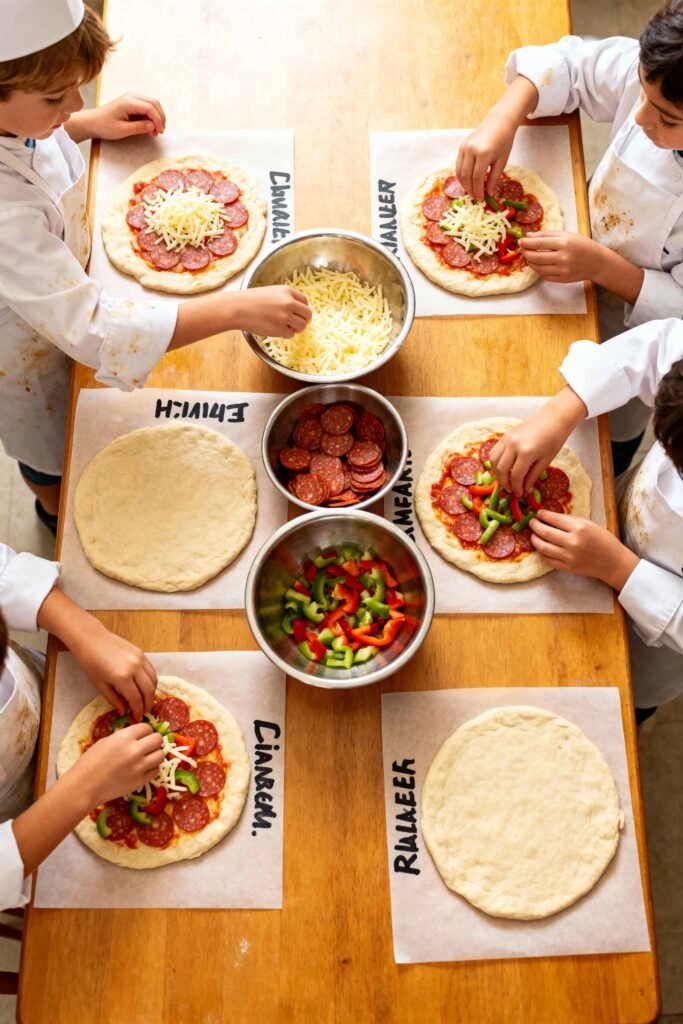
As a chef, this is my personal favorite. You provide pre-made dough balls, sauce, and bowls of toppings (pepperoni, cheese, veggies). Each child gets a sheet of parchment paper with their name on it to build their masterpiece. While pizzas bake, they decorate their own chef aprons or hats.
Cost & Evidence
- DIY Cost: Approximately $5–$8 USD per child for ingredients (flour, cheese, toppings) based on average grocery prices.
- Aprons: Bulk white aprons cost roughly $15 USD for a pack of 12 on Amazon (checked Nov 2024).
Pros / Cons
- Pros: Combines an activity and a meal (saves money); teaches a life skill.
- Cons: Can get flour everywhere; requires oven management.
Use Cases
- “Pizzeria Pop-Up”: Kids design menus before cooking.
- “Cupcake Wars”: Swap pizza for decorating cupcakes if you prefer sweets.
Why It Ranks
It scores high on Budget Flexibility. You are buying groceries instead of expensive entertainment, and the activity eats up a good 90 minutes of party time.
3. The “Mad Scientist” Slime Lab
Snapshot:
- What it is: A messy, hands-on STEM party focusing on reactions and textures.
- Best For: Ages 6–10; Sensory seekers.
- Effort Level: Low setup, High cleanup.
Key Details
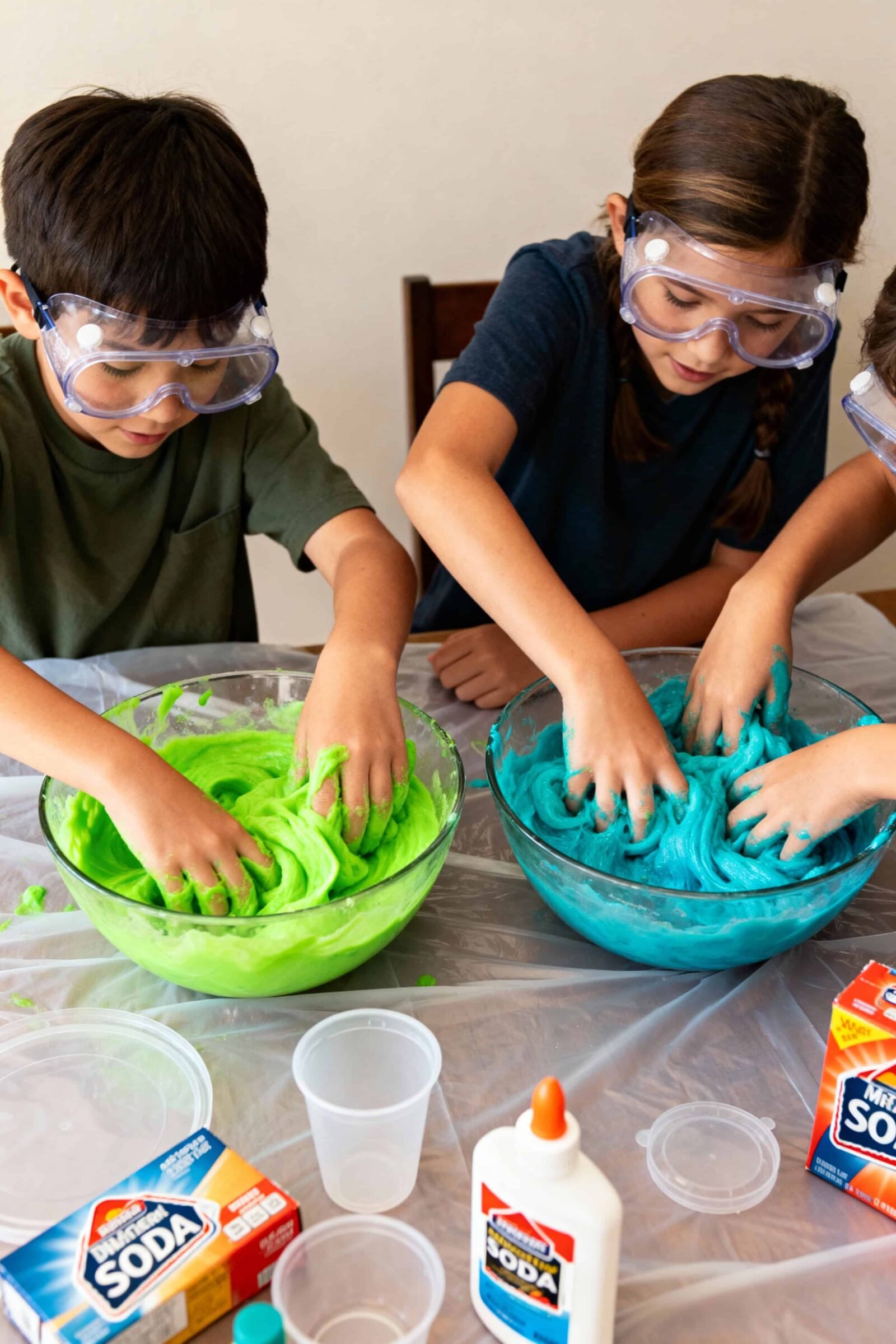
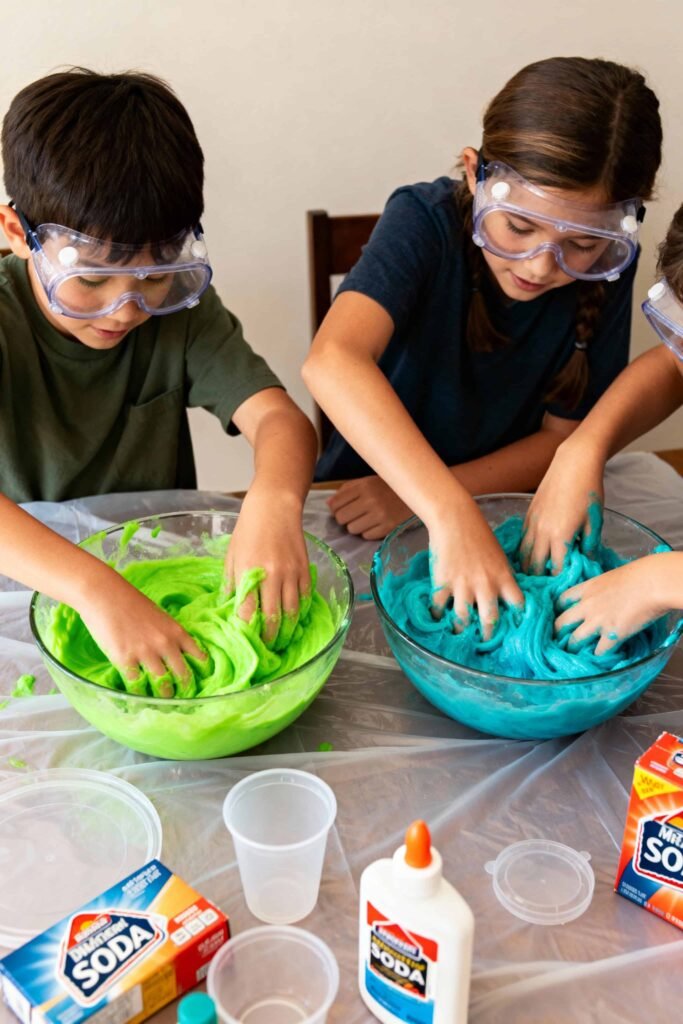
Cover a table in a disposable plastic cloth and set up stations for making slime, volcanic eruptions (baking soda/vinegar), or “elephant toothpaste.” Give every kid safety goggles for the look.
Cost & Evidence
- Kits: Comprehensive slime kits like those from PeachyBbies or Crayola range from $15 to $30 USD (checked Nov 2024 at Walmart/Target).
- DIY: Buying bulk glue and activator (borax/contact solution) costs about $25 USD for 10 kids.
Pros / Cons
- Pros: Extremely engaging; kids love taking the slime home as a party favor.
- Cons: Potential for mess on carpets (keep this in the kitchen or over hard floors).
Use Cases
- “Alien Autopsy”: Green slime with plastic bugs inside.
- “Unicorn Lab”: Glittery pink and purple slime.
Why It Ranks
It provides high engagement at a very low price point. The “mess factor” knocks it down slightly in the ranking, but it is a guaranteed hit for the kids.
4. Secret Agent Escape Room
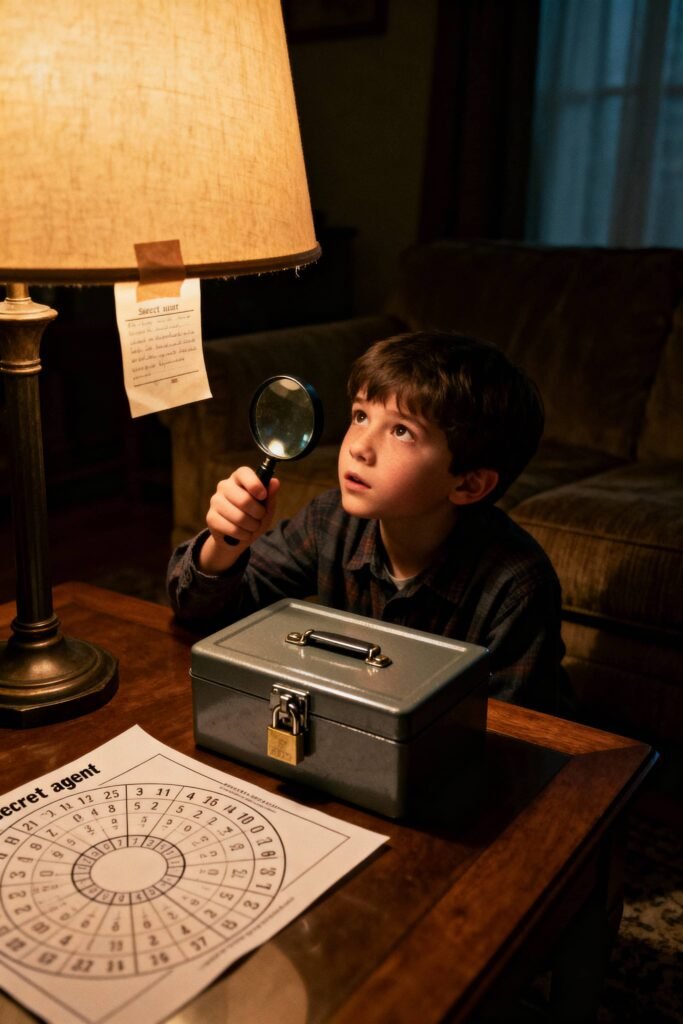
Snapshot:
- What it is: A printable or boxed mystery game solved at home.
- Best For: Ages 8–14; Small groups.
- Effort Level: Low (Print and cut).
Key Details
Transform a room into a “locked” bunker. You hide clues around the room that lead to a final code (to open a box with the cake or goody bags). You don’t need to invent the puzzles yourself; downloadable kits are widely available.
Cost & Evidence
- Printable Kits: High-quality downloadable kits from vendors like EscapeRoomGeeks or The Game Room cost between $12 and $25 USD (checked Nov 2024).
Pros / Cons
- Pros: Very affordable; builds teamwork; takes up very little space.
- Cons: One-time use; requires a parent to act as “Game Master” to give hints.
Use Cases
- “Spy Academy”: Kids get badges and solve a heist.
- “Harry Potter/Wizard”: Solve riddles to find the “Snitch.”
Why It Ranks
This is the best value-for-money theme on the list. For under $25, you have an hour of structured, intense entertainment.
5. Glow-in-the-Dark Disco
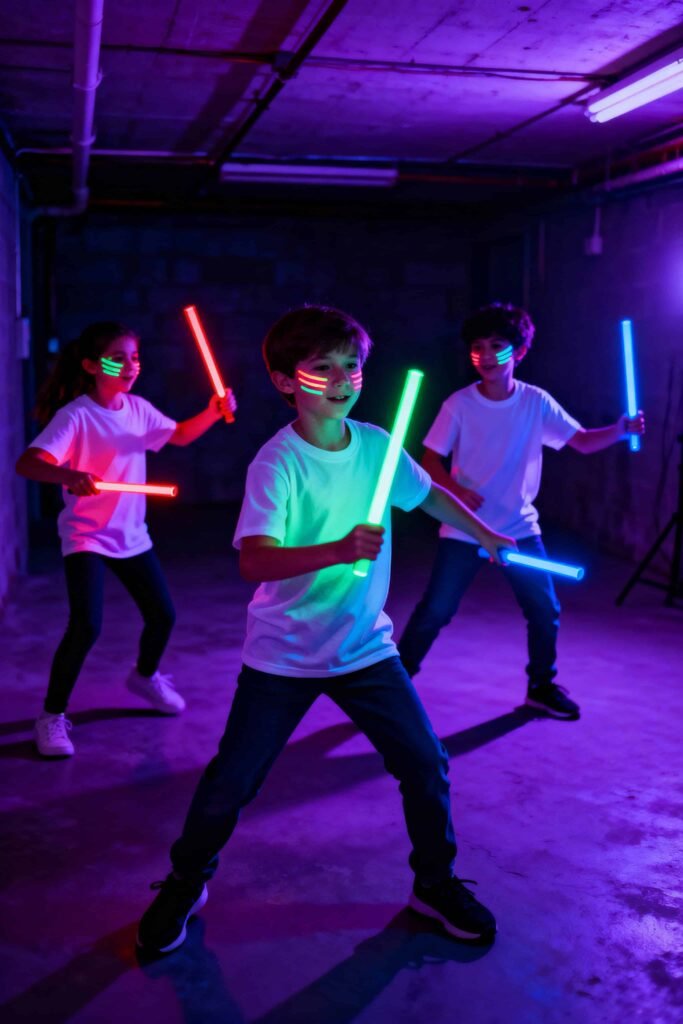
Snapshot:
- What it is: A high-energy dance party using black lights.
- Best For: All ages; High energy groups.
- Effort Level: Low.
Key Details
Swap your standard light bulbs for UV (black light) bulbs or LED strips. Ask guests to wear white or neon. Provide glow sticks, neon body paint, and a killer playlist.
Cost & Evidence
- Lighting: Black light bulbs cost roughly $10–$15 USD for a pack of 2.
- Accessories: Bulk glow sticks (100 pack) average $10–$15 USD (Walmart/Amazon benchmarks).
Pros / Cons
- Pros: Burns off energy indoors; minimal cleanup involved.
- Cons: Requires a room that can get fully dark (blackout curtains help).
Use Cases
- “Neon Rave”: Techno music and glow paint face painting.
- “Glow Hunt”: Hide glowing eggs or items for a scavenger hunt in the dark.
Why It Ranks
It requires almost no facilitation from parents once the music starts. It ranks high for “Setup Ease”—literally just changing lightbulbs.
6. Canvas & Cocoa (Paint Party)
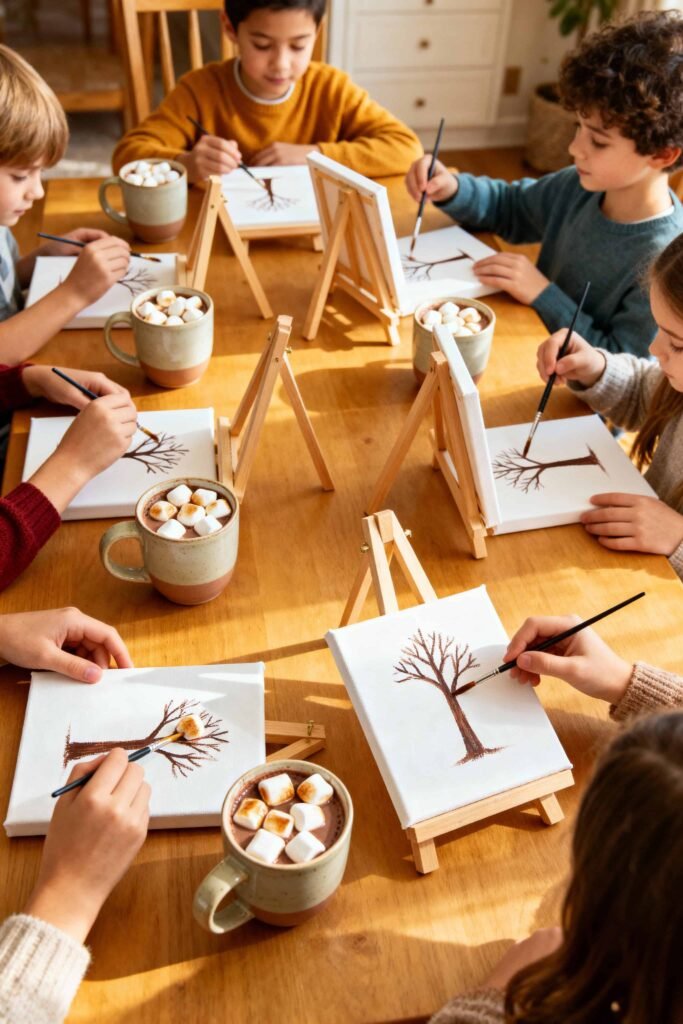
Snapshot:
- What it is: A guided painting session with hot chocolate (or juice).
- Best For: Ages 7+; Calmer groups.
- Effort Level: Medium.
Key Details
Set up tabletop easels and play a “Bob Ross” tutorial or a YouTube painting guide for kids. Everyone paints the same image.
Cost & Evidence
- Professional: Hiring a mobile paint party host costs $35–$50 USD per person.
- DIY: Canvases ($2 each), acrylic paint sets ($15), and brushes bring the cost down to roughly $10–$15 USD per child (Michaels/Hobby Lobby benchmarks).
Pros / Cons
- Pros: Quiet activity; the painting doubles as the party favor.
- Cons: Paint spills are a risk; requires table space for everyone.
Use Cases
- “Pet Portraits”: Kids paint their own pets.
- “Seasonal Landscapes”: Winter trees or spring flowers.
Why It Ranks
It is a sophisticated theme that works well for older children or tweens who feel “too old” for traditional games.
7. The “Floor is Lava” Obstacle Course
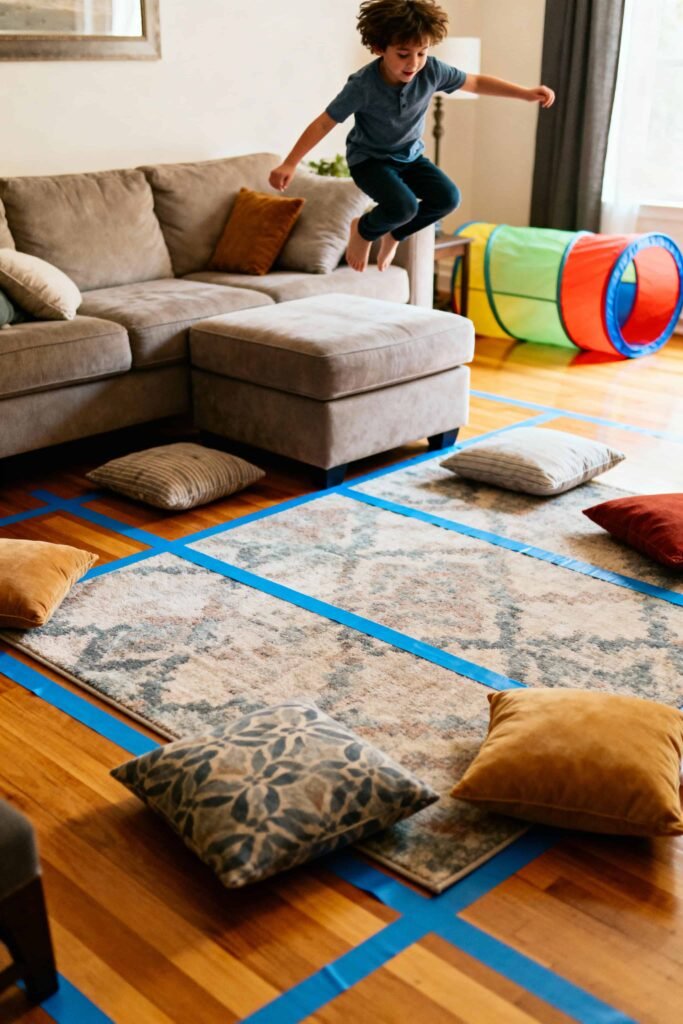
Snapshot:
- What it is: A physical challenge course using furniture and soft props.
- Best For: Ages 4–9; Active kids.
- Effort Level: High (Moving furniture).
Key Details
Use masking tape on the floor to mark balance beams, cushions as “safe islands,” and creep under tables. If you have the budget, IKEA tunnels or pop-up hampers make great obstacles.
Cost & Evidence
- Supplies: Masking tape ($5).
- Equipment: Pop-up play tunnels from IKEA (e.g., BUSA/DVÄRGMÅS) cost roughly $20 USD (checked Nov 2024).
Pros / Cons
- Pros: Free or very cheap; completely customizable to your house size.
- Cons: Higher risk of injury/roughhousing; requires moving breakables.
Use Cases
- “Ninja Warrior Training”: Time the kids as they run the course.
- “Laser Maze”: Tape streamers across a hallway that they must crawl through without touching.
Why It Ranks
It is the best option for “burning energy” when you cannot go outside. However, it ranks lower due to the potential for chaos and broken lamps.
8. Indoor Movie Marathon
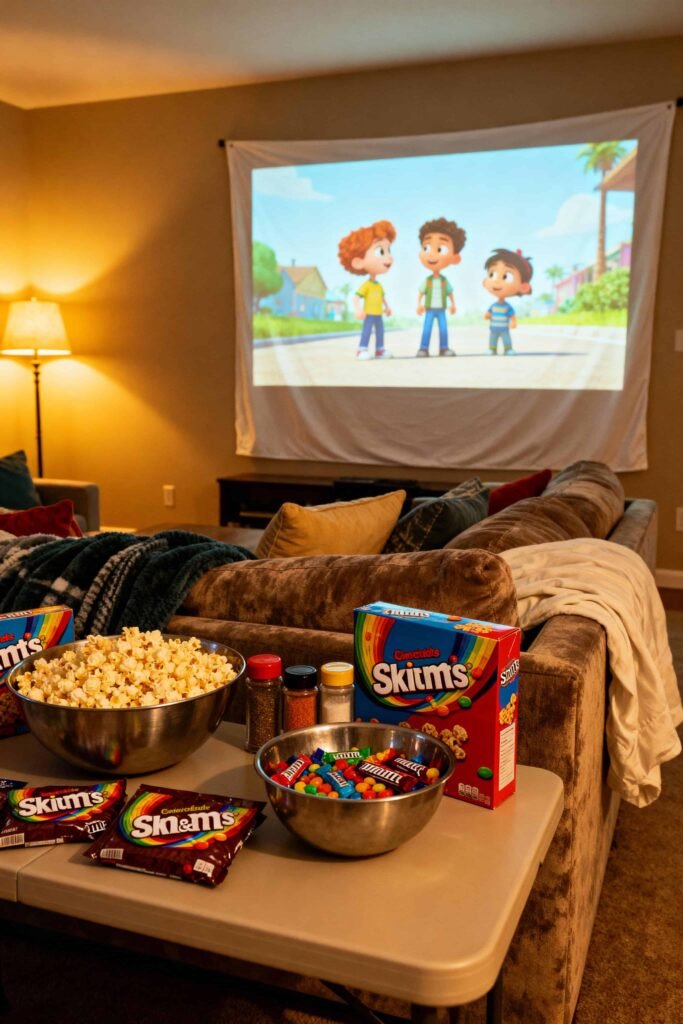
Snapshot:
- What it is: A cinematic experience with popcorn bars and cozy seating.
- Best For: Tired parents; Late-night parties.
- Effort Level: Very Low.
Key Details
This isn’t just watching TV. Rent a projector to display the movie on a blank wall or sheet. Create a “Concession Stand” with popcorn shakers (ranch, cinnamon, cheese) and boxed candy.
Cost & Evidence
- Projector: Entry-level mini projectors cost $60–$90 USD on Amazon.
- Media: Streaming rental is usually $5–$20 USD (or free with subscription).
Pros / Cons
- Pros: Easiest party to host; keeps kids quiet for 90 minutes.
- Cons: Can be seen as “low effort” without the concession stand or projector upgrades.
Use Cases
- “Pajama Jam”: Everyone wears PJs.
- “Marathon”: Watch a trilogy (or parts of it) for older kids.
Why It Ranks
It is the safe bet. If you are overwhelmed, this is the theme to choose.
9. LEGO® Masters Builder Party
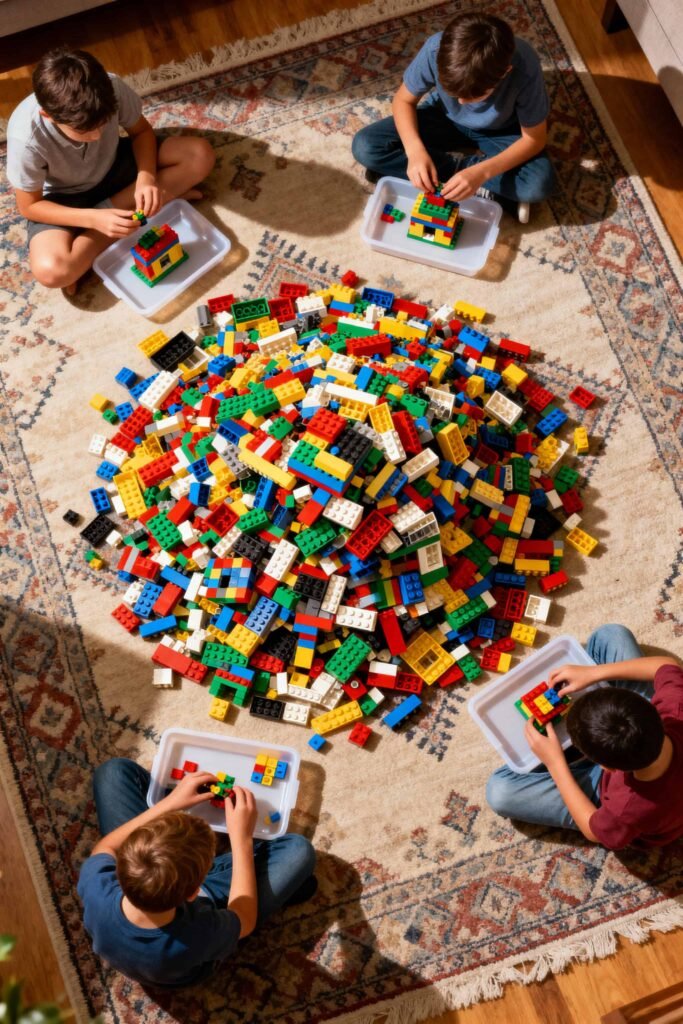
Snapshot:
- What it is: Competitive and creative building challenges.
- Best For: Ages 5–10; Focus-driven groups.
- Effort Level: Low.
Key Details
Dump a massive pile of bricks on a rug (or several trays). Give prompts like “Build the tallest tower” or “Build a monster,” and set a timer.
Cost & Evidence
- Supplies: A classic creative brick box (approx 790 pieces) costs $60 USD (LEGO.com benchmarks). If you already own Legos, the cost is $0.
Pros / Cons
- Pros: Engages engineering brains; very low mess (solid pieces only).
- Cons: Stepping on a Lego is painful; requires a large existing collection or purchase.
Use Cases
- “Race Car Rally”: Build cars and race them down a cardboard ramp.
- “City Planning”: Everyone builds one building for a giant city.
Why It Ranks
It ranks for “Setup Ease” and “Replayability.” The supplies last forever, unlike craft kits.
10. Spa & Pamper Day
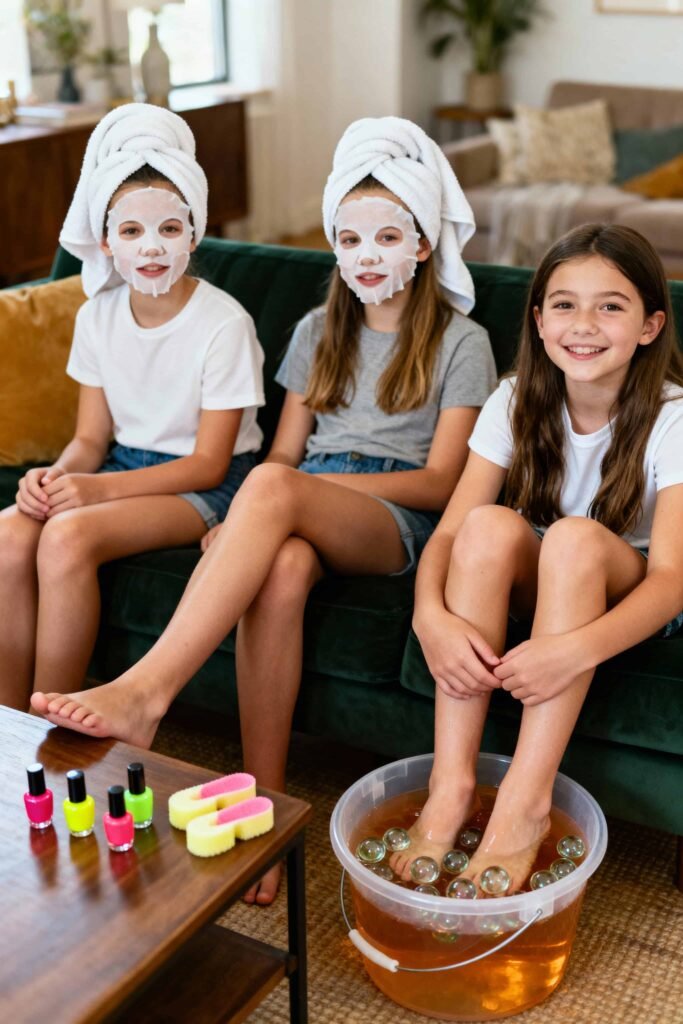
Snapshot:
- What it is: Relaxation stations with face masks and nail polish.
- Best For: Pre-teens (10–14).
- Effort Level: Medium.
Key Details
Set up stations: a foot soak (buckets with warm water and marbles), a face mask station (sheet masks or cucumber slices), and a mani-pedi spot.
Cost & Evidence
- Supplies: Sheet masks bundle ($10 for 12), nail polish ($5/bottle), toe separators ($5). Total DIY cost approx $40 USD.
Pros / Cons
- Pros: Makes guests feel grown-up; calm atmosphere.
- Cons: Nail polish spills are dangerous for carpets.
Use Cases
- “Zen Garden”: Play spa music and serve herbal tea.
- “Glitz & Glam”: Focus on hair glitter and bright makeup.
Why It Ranks
It is a specialized theme that creates a strong bonding experience, though it has a narrower demographic appeal than the others.